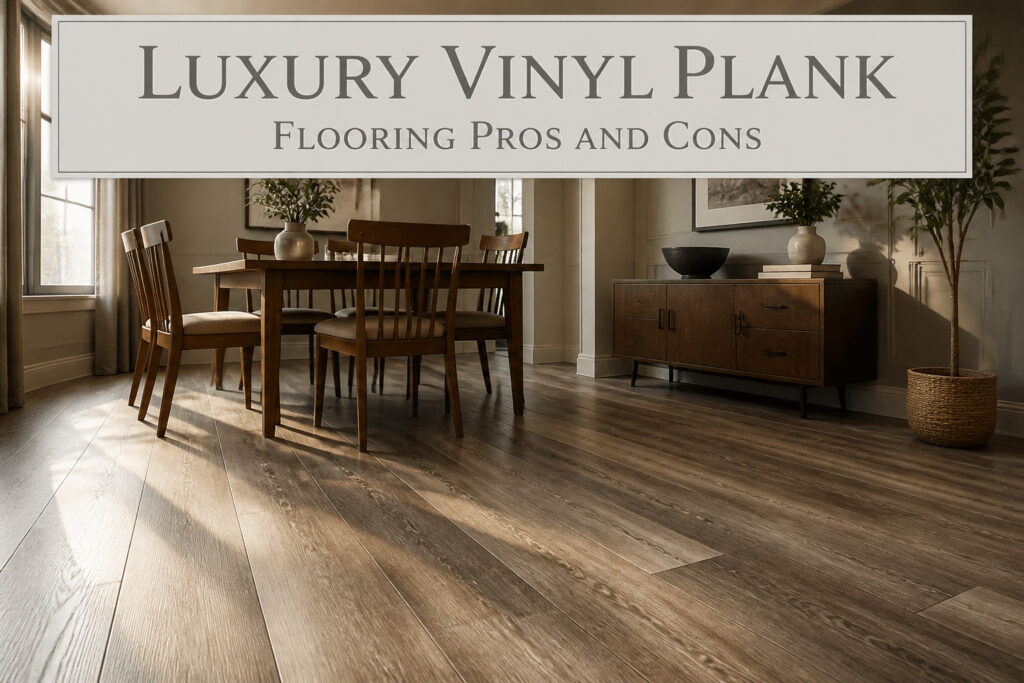
Luxury vinyl plank flooring is a synthetic, multi-layer floor that clicks together and floats over your existing surface without glue or nails.
Its value depends entirely on the wear layer thickness, measured in mils, because a 6-mil layer suits a rarely used bedroom while a 20-mil layer survives kitchen grit, dog nails, and rolling casters.
Most residential options run $2 to $5.50 per square foot, with that wear layer driving most of the price spread within that band.
[link-whisper-related-posts]What Luxury Vinyl Plank Actually Is
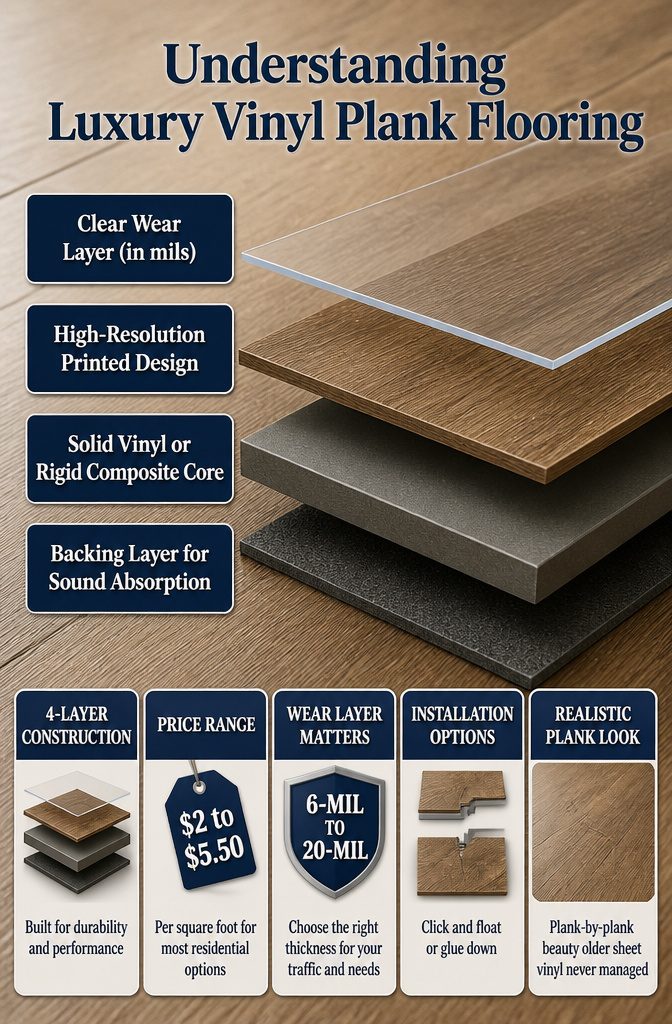
Luxury vinyl plank flooring is built in four distinct layers, and understanding them keeps you from overpaying for specs you will not notice or underpaying for ones you will regret.
The top layer is a clear wear layer, measured in mils, that takes the scratches and scuffs so the image underneath stays intact.
Below that sits the printed design layer, a high-resolution film that gives the plank its wood grain or stone look.
The core is where LVP separates from laminate: it is solid vinyl or a rigid composite, not wood byproducts, so water will not swell or warp it.
A backing layer finishes the stack, sometimes cork or foam for sound absorption and a slight cushion underfoot.
The planks click together and float over your existing floor, or you can glue them down if the substrate demands it. That locking edge is what creates the realistic plank-by-plank look older sheet vinyl never managed.
Prices run $2 to $5.50 per square foot for most residential options, with the wear layer thickness driving most of the spread within that band. A 6-mil wear layer is fine for a bedroom you rarely cross in shoes.
A 20-mil layer is what you want for a kitchen that sees grit, dog nails, and rolling casters.
Budget lines often cut the wear layer first, and the floor looks fine for two years before the pattern starts wearing through at the traffic paths.
100% Waterproof
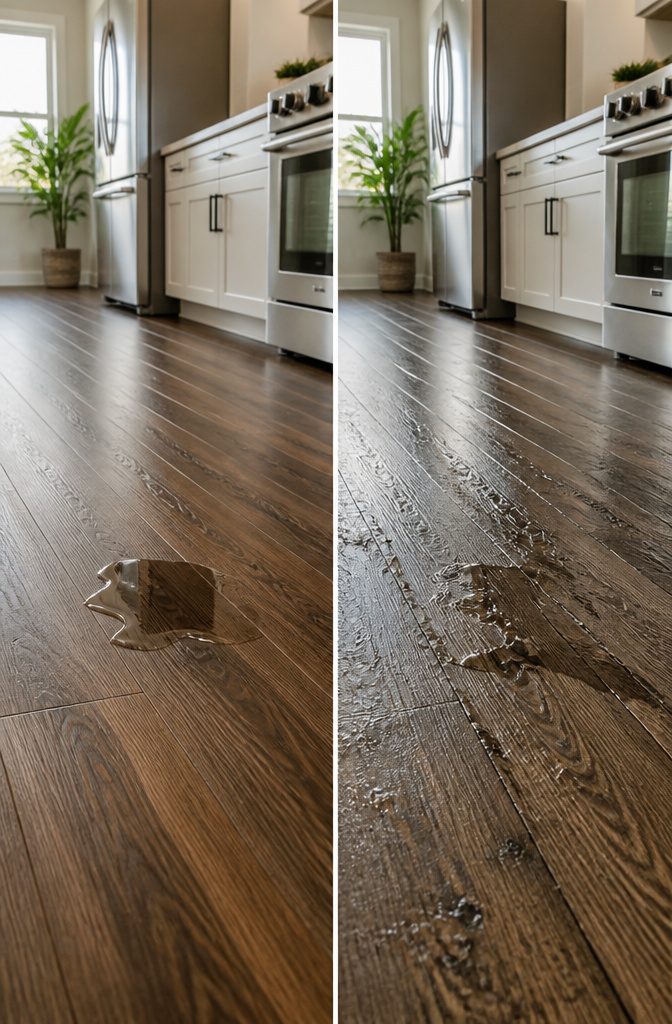
The synthetic core of high-quality luxury vinyl plank is 100% waterproof from top to bottom, which is why I stopped worrying about the kitchen floor every time the dishwasher backed up.
Water sits on the surface instead of soaking in, so the planks will not warp, swell, buckle, or crack the way natural hardwood does in the same situation.
That difference matters most when you compare LVP to laminate. Both materials click together in planks and both imitate wood at a similar price point, but laminate carries a wood-based core that absorbs moisture and swells.
I have seen the seam lift on a friend’s laminate bathroom floor after one humid summer; LVP would have handled the same conditions without damage.
Engineered hardwood fares a little better than solid wood because of its layered construction, yet it still contains enough real wood to react to standing water.
For basements, mudrooms, laundry areas, or any space that sees actual puddles, LVP is the safer choice of the three.
The waterproofing also simplifies cleanup after the small disasters of daily life: a tipped water glass, a leaking boot tray, condensation from a window unit.
The moisture stays on the surface where a mop can reach it, rather than migrating into the material to breed mildew or weaken the structure underneath.
Scratch Resistance
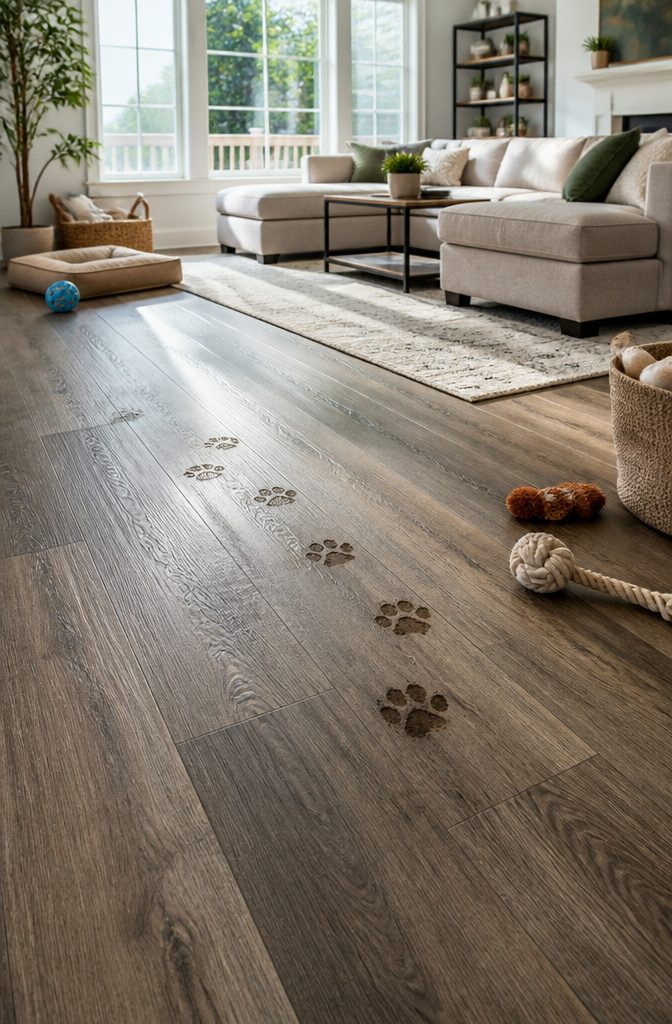
The wear layer is the clear top coat you will actually walk on, and its thickness decides how well luxury vinyl plank flooring holds up to claws, chair legs, and the grit that rides in on shoes.
A residential plank with a 12 mil wear layer or thicker handles most homes fine, but households with dogs or busy hallways should look for 20 mil or more.
That extra depth buys forgiveness: a nail that might score a thinner plank gets stopped at the surface instead.
I have watched a 70-pound Lab sprint across a 20-mil kitchen floor for three years without leaving tracks, and the planks still look new where a thinner product in the same house showed hairline scuffs after one.
The scratch resistance is real, but it has a ceiling. Dragging a refrigerator without a slider, or sliding a metal filing cabinet, can gouge even the best wear layer.
Sharp gravel caught in a boot tread works like sandpaper if you grind it in. For daily life the protection is excellent; for moving heavy furniture, you still need the same care you would give any floor.
Easy Cleaning
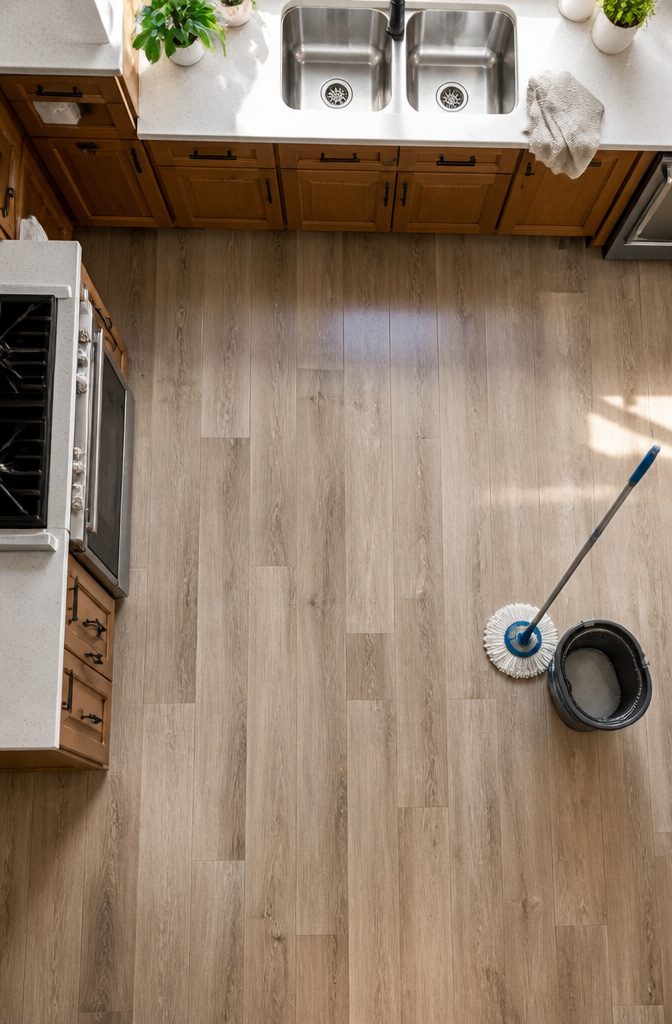
The wear layer on luxury vinyl plank does most of the work for you.
Daily grit gets swept or vacuumed away, and when the floor needs more, warm water with a cup of white vinegar handles mopping without calling for wax, polish, or refinishing schedules.
I have watched friends block out weekends to sand and re-coat hardwood while I run a damp mop over planks that still look the same three years in.
The comparison with tile is just as lopsided. Grout lines collect whatever shoes drag in, and scrubbing them back to clean is a project, not a chore.
LVP has no grout to darken and no porous surface to stain.
The cleaner you mix matters more than the mop you use. Avoid bleach, ammonia, and anything abrasive; those chemicals eat at the protective wear layer over time, and once that layer thins, the floor is not coming back.
All-purpose or commercial cleaners need a check with the manufacturer first. The vinegar-and-water mix costs almost nothing and leaves no residue, which is why I keep coming back to it.
Cost Against Hardwood and Tile
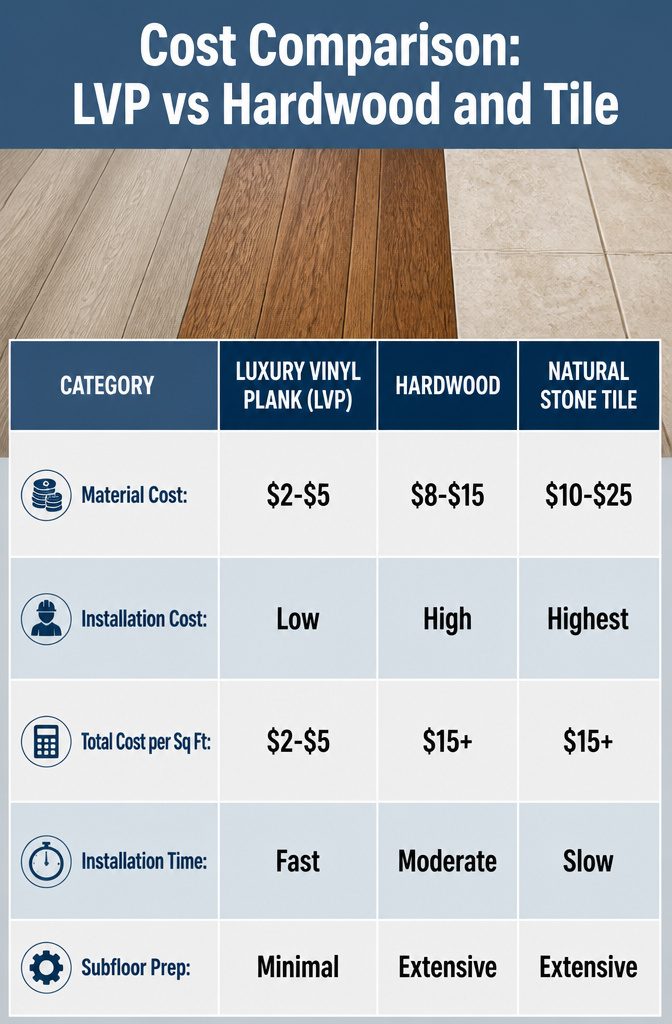
LVP runs about $2 to $5 per square foot, which puts solid hardwood and natural stone tile in a different league entirely. The gap widens once installation enters the picture.
Hardwood demands a clean, stable subfloor and professional labor that can push the total toward $15 or more per square foot. Natural stone tile climbs higher still, between material costs and the slow, precise work of setting and grouting.
Where LVP quietly wins is on what you do not pay for. Many products float directly over existing flooring, so demolition and subfloor prep disappear from the budget.
That saved weekend and those skipped dumpster fees matter when you are fitting the project between workdays.
For a typical 12 by 15 foot bedroom, the plank itself lands around $360 to $900. A living room twice that size might run $700 to $1,800 in material.
Those numbers stay manageable for a single-project budget, and the floor goes down fast enough that the room is usable again by Sunday evening.
Noise Suppression
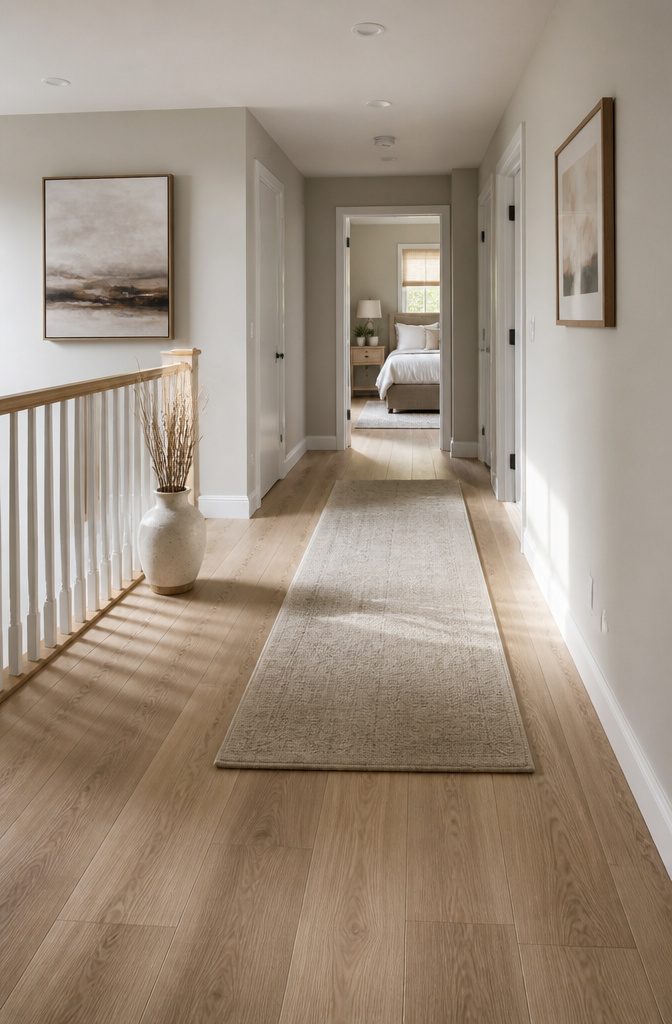
Sound transfer through floors is a real concern in upstairs bedrooms, apartments, and any multi-level home where footsteps travel.
Luxury vinyl plank handles this better than tile or bare hardwood, but only if you choose the right construction or prep the subfloor yourself.
The difference comes down to the underlayment. Some planks arrive with an attached foam pad, usually IXPE or EVA, built right onto the back.
That layer absorbs impact and cuts the hollow click you get with floating floors. Other products leave the backing bare, which means buying a separate roll of underlayment and adding that cost and labor to your weekend.
Attached underlayment saves a step and usually performs more consistently, since the factory bond eliminates gaps or shifts you might create during a DIY install.
Not every LVP includes this layer, and the ones that do tend to sit at a higher price point.
For my own projects, the upgrade has been worth it in second-floor rooms where I did not want to hear every footfall from below.
If you are in a rental or a condo with neighbors underneath, skipping the sound-rated product is a mistake you will notice every morning.
Floating Floor Installation
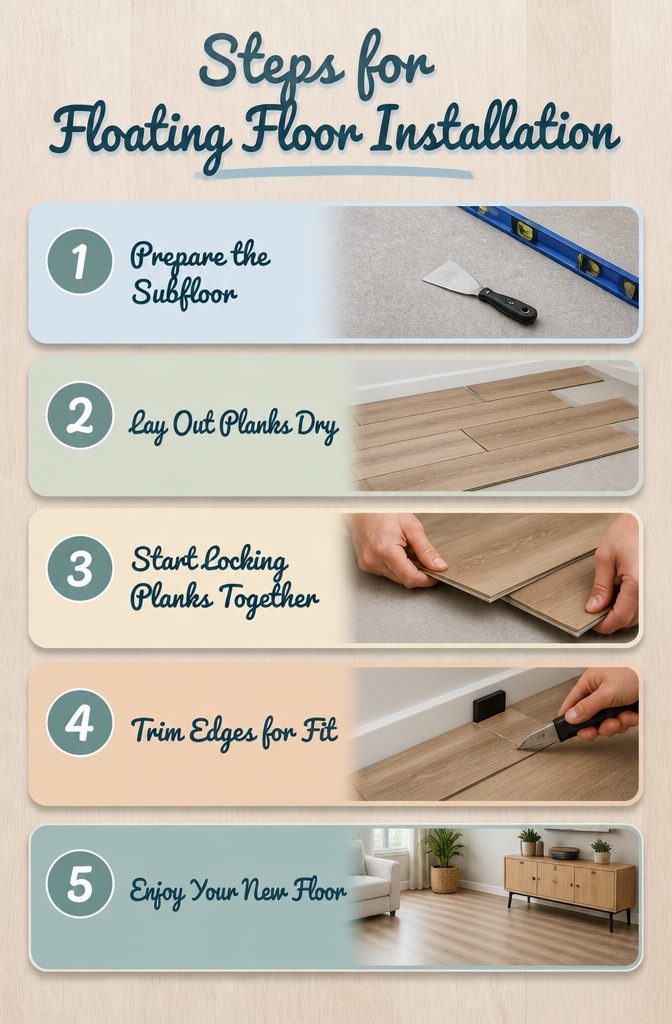
Click-lock floating installation is what turned luxury vinyl plank from a flooring-store sample into something I could actually finish in a weekend.
The planks lock together at the edges and sit on top of whatever hard, flat surface is already there, ceramic tile, concrete, even old sheet vinyl, without glue or nails.
That last part matters when you’re renting and the lease says nothing permanent, or when you want to start Saturday morning and walk on it by Sunday evening.
Your subfloor has to be flat, or the planks rock and click.
The existing surface has to be structurally sound and level, because deep grout lines, dips, or any unevenness will eventually telegraph right through the new planks or stress the joints until they separate.
I spend more time with a level and filler than I do actually laying planks, and that prep is the difference between a floor that lasts and one that starts gapping in six months.
For large open areas or subfloors that need serious leveling, professional installation still makes sense. But a bedroom or a small living room with a reasonably flat base is exactly the kind of project the floating system was built for.
No mortar to cure, no adhesive to trowel, and the floor is usable the minute the last plank drops into place.
Style Range
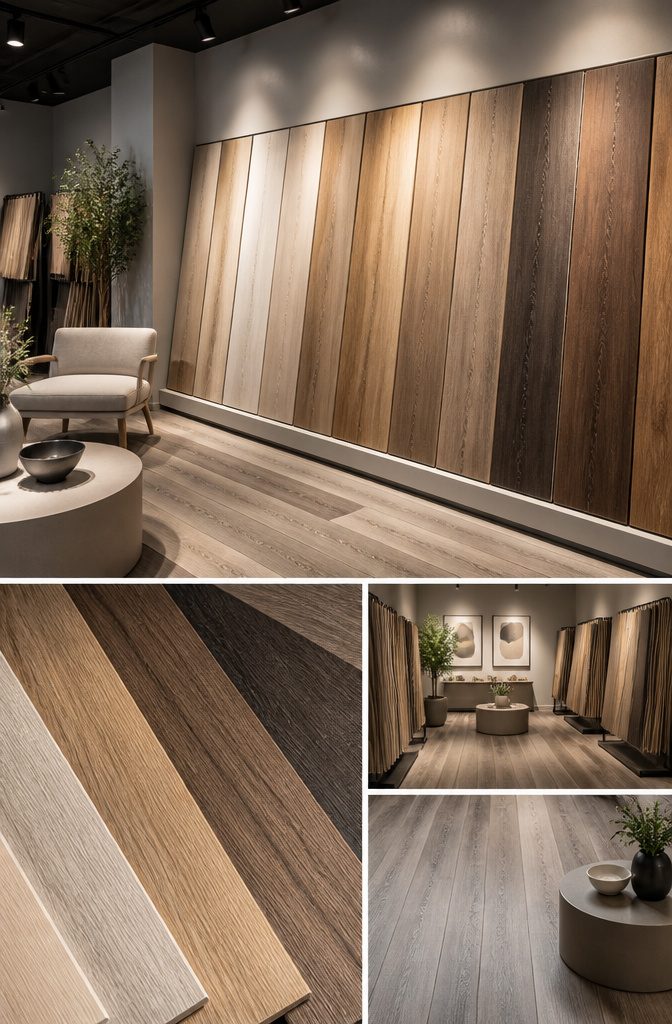
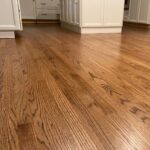
The photographic printing on luxury vinyl plank flooring has gotten sharp enough that I pause sometimes in a showroom, plank in hand, checking whether the knot I see is actually raised or just a flat image.
Embossed-in-register texturing is what closes that gap: the surface is pressed to match the printed grain, so the knot you spot is the knot your thumb finds.
Without it, the plank reads as a photograph laminated to plastic, which is exactly what it is.
Thickness and wear layer quality decide whether the illusion holds up to daily use.
A thin wear layer scuffs through to the white core in a few years, and the beveled edges on cheaper planks can look painted on rather than cut.
I lean toward planks with at least some dimension to the edge, because flat, square-shouldered boards laid in a grid tend to telegraph "vinyl" the fastest.
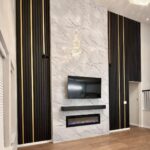
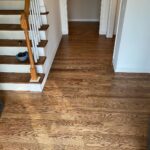
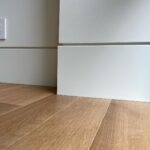
The range runs from pale wide-plank white oak to walnut dark enough to hide dust, and stone-look options that skip the wood grain entirely.
Comfort Underfoot
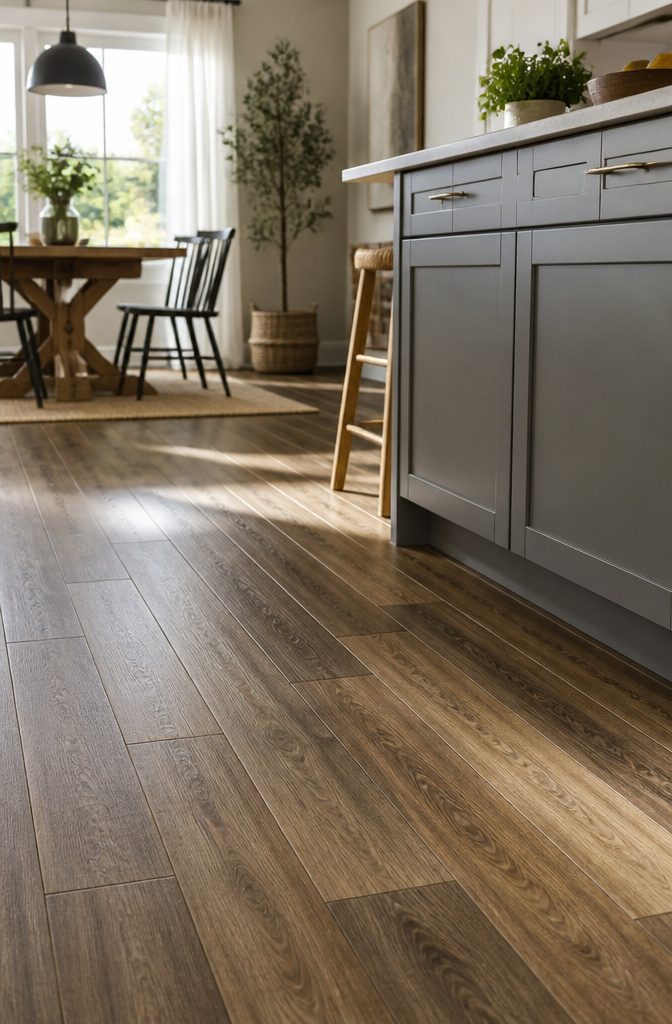
The morning chill in a tile bathroom is the kind of detail that sells you on a different material. Luxury vinyl plank stays at room temperature, so the floor doesn’t pull heat from your feet when the heat is running.
That matters more than I expected before I laid it in a basement over concrete.
Attached foam underlayment changes the feel entirely. The plank thickness plus that IXPE or EVA backing gives just enough give that standing for an hour cooking doesn’t travel up your legs the way it does on porcelain.
SPC core planks without that layer run harder, closer to tile, which is the tradeoff if you want maximum rigidity.
Wood itself isn’t harsh, but it doesn’t cushion either. LVP splits the difference: softer than hardwood or tile, not as yielding as carpet you can’t keep clean.
For a weekend install with a few hundred dollars, the comfort upgrade over a cold subfloor is immediate and noticeable.
Sun Fading
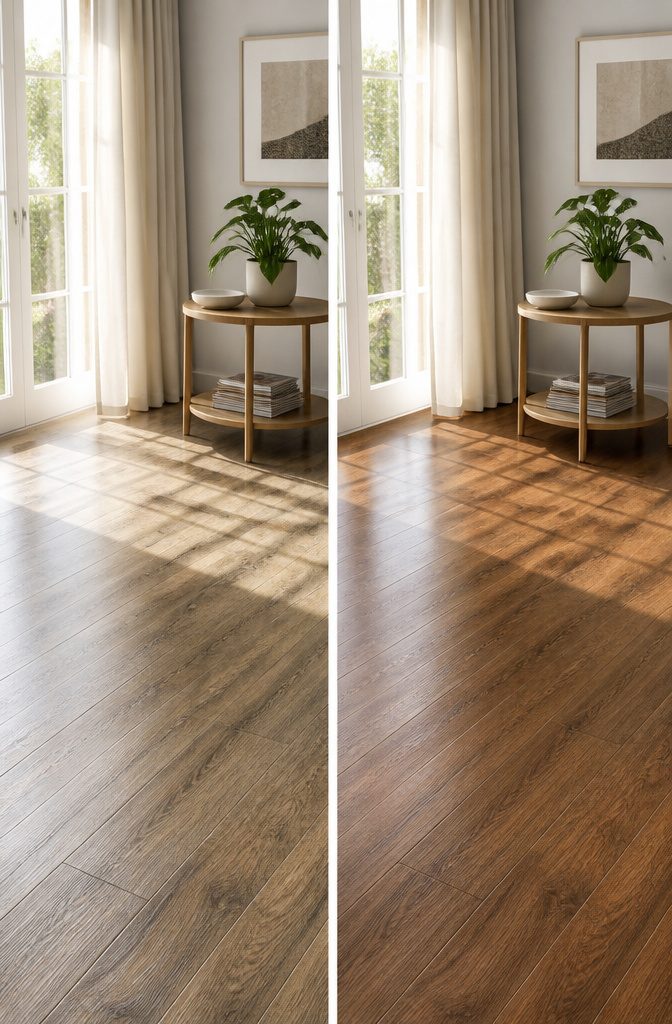
South-facing rooms with large windows or sliding glass doors put LVP at the highest risk for fading. The thinner wear layers in budget products discolor fastest under constant direct light, and the change is permanent.
I learned to check the fade resistance rating before buying; higher-quality vinyl holds its color longer, though no plank is immune.
Curtains or UV window film cut the exposure without changing the room’s feel, and both cost less than replacing a sun-bleached floor. Rubber-backed mats cause a similar discoloration, so the backing matters as much as the sun.
For a rental with wall-to-wall glass, I would budget for window treatments first and treat the flooring choice as secondary protection.
Damage From Heavy and Sharp Objects
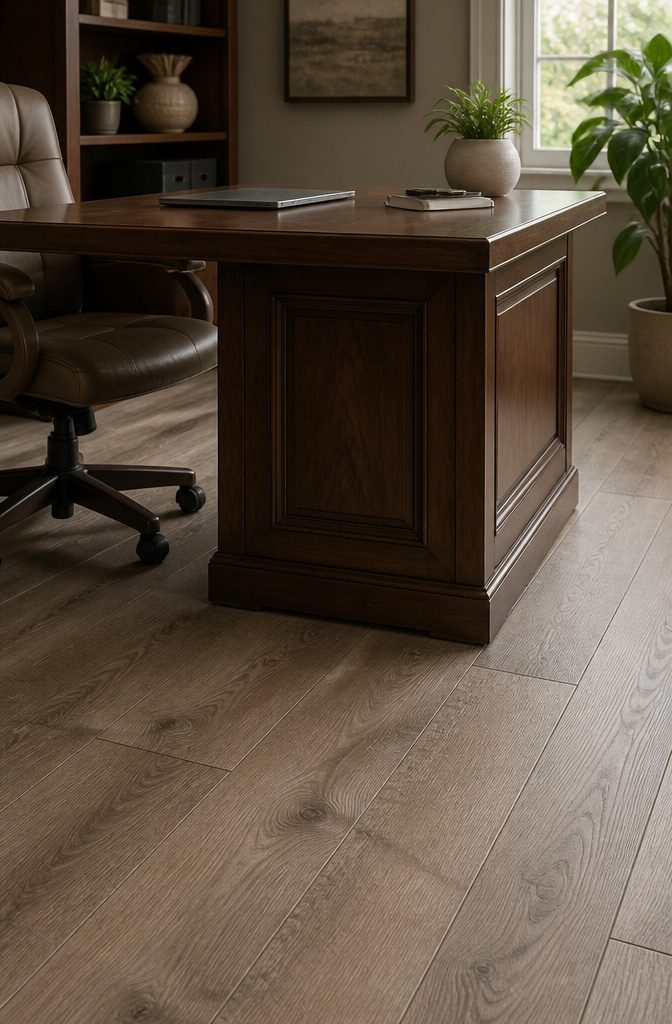
The wear layer on luxury vinyl plank resists surface scratches better than you might expect, but that protection only runs so deep.
Drop a heavy tool or drag a piano without lifting it and the core underneath can compress, leaving a dent that no amount of cleaning will lift.
I learned this after watching a contractor set a countertop sample directly on my new floor; the small circular mark is still there two years later, hidden under a rug I did not plan to own.
Furniture pads are non-negotiable for anything that sits in place, and not the thin stick-on kind that peel off in a season. The slight softness that makes LVP comfortable underfoot is exactly what works against it under concentrated weight.
Sharp heels, dropped cast-iron pans, and appliance legs without distribution plates all pose the same risk.
Individual plank replacement is possible in theory because of the locking-edge installation, but in practice it demands lifting everything from the nearest wall to the damaged board.
If your layout runs under kitchen cabinets or a built-in wardrobe, that theoretical fix becomes a demolition job.
I keep a few spare planks from the original batch in a closet for this reason, though I hope never to use them.
Not Biodegradable
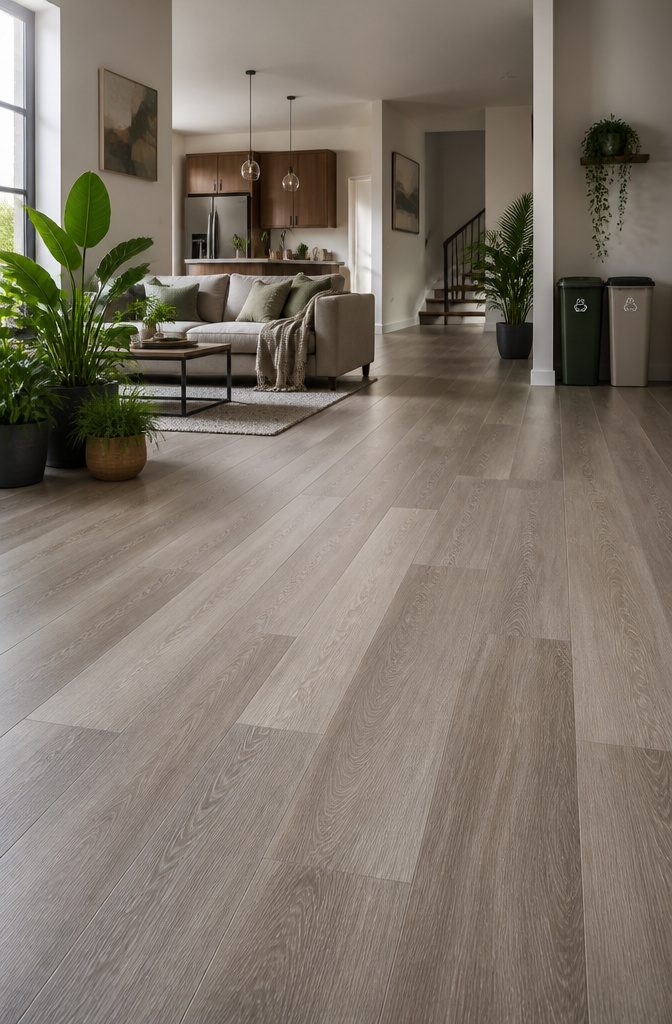
The core material in luxury vinyl plank is PVC, and that PVC will outlast every generation that installs it. Once the wear layer is gone and the plank is pulled up, it does not decompose.
It sits in a landfill, slowly fragmenting into microplastics, or it enters one of the limited recycling programs that exist for vinyl flooring. Those programs are not widely available, so most LVP follows the first path.
Hardwood operates on a completely different timeline. A solid oak floor can be sanded and refinished several times across a century of use.
When it finally reaches the end of its life, the material breaks down. That difference matters if you are someone who weighs the full lifespan of a product before buying it.
Some brands now offer phthalate-free or low-VOC certifications, which helps with indoor air quality while the floor is in use. But the end-of-life problem remains: the planks are still PVC-based, and the certifications do not change what happens after disposal.
For buyers who rank sustainability near the top of their list, this is the trade-off that usually pushes them toward engineered or solid wood instead.
Limited Repair Options
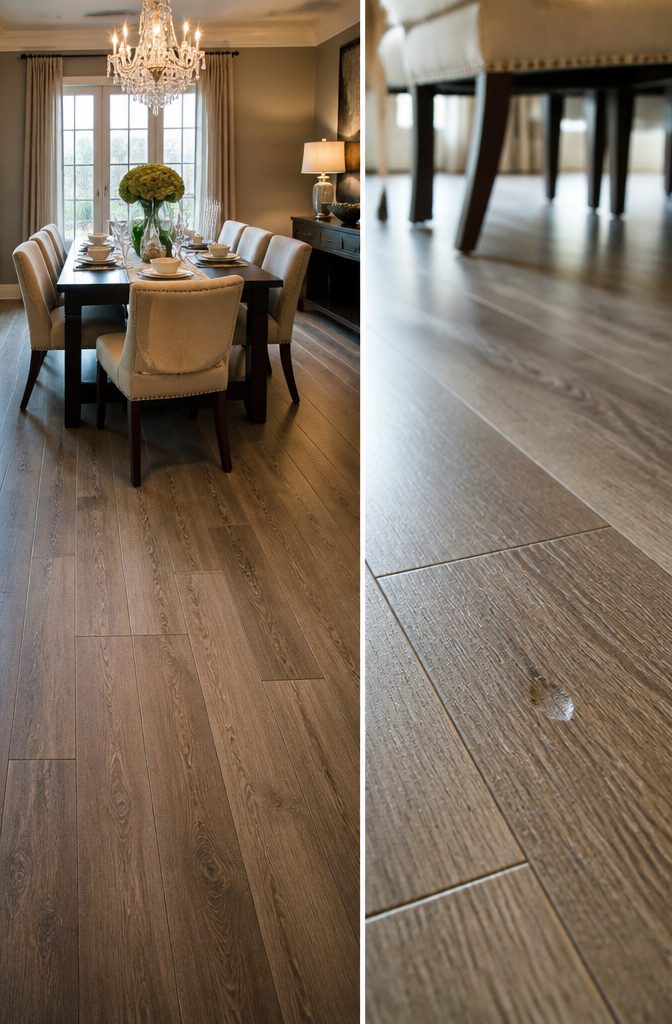
A damaged plank in a floating LVP floor can be lifted out if you are willing to unclick the boards from the nearest wall all the way to the problem spot, which is tedious but possible.
The real trouble starts when the floor is glued down or when the damaged plank sits in the middle of the room with furniture on every side; then the replacement cost is measured in hours of disassembly, not dollars.
Hardwood offers a cleaner path: a deep gouge gets sanded level and refinished in place without touching the boards around it.
Tile is even simpler: one cracked piece pops up with a grout saw and cold chisel, and the new piece beds in the same footprint.
Neither hardwood nor tile asks you to take apart half the room to fix a single flaw. For renters or anyone who moves furniture only when forced, this access problem tilts the math toward materials that forgive localized damage.
Resale Value Below Hardwood
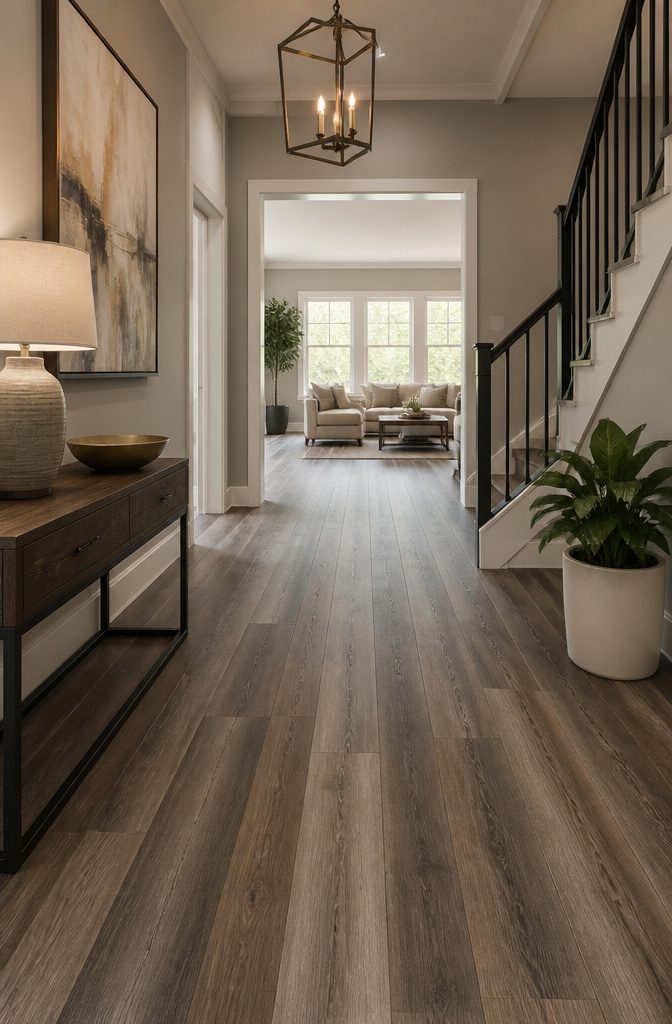
Appraisers treat luxury vinyl plank as a cosmetic upgrade, not a structural improvement. Solid hardwood still commands a higher line on the valuation sheet, which matters if you are refinancing or setting a sale price based on comparable sales.
The distinction stings if you installed premium LVP expecting the same return.
Buyers walking through the door see it differently. A home with fresh, uniform flooring photographs clean and reads move-in ready, especially against the alternative of stained carpet or dated sheet vinyl.
That visual appeal can speed the sale even when it does not lift the appraisal number.
I learned this the hard way on a previous project: the floor looked sharp in listing photos, but the appraiser noted it as vinyl throughout. The buyer loved it; the bank did not care.
If resale value is your primary goal, LVP wins on marketability, not on paper.
VOC Emissions in Budget Products
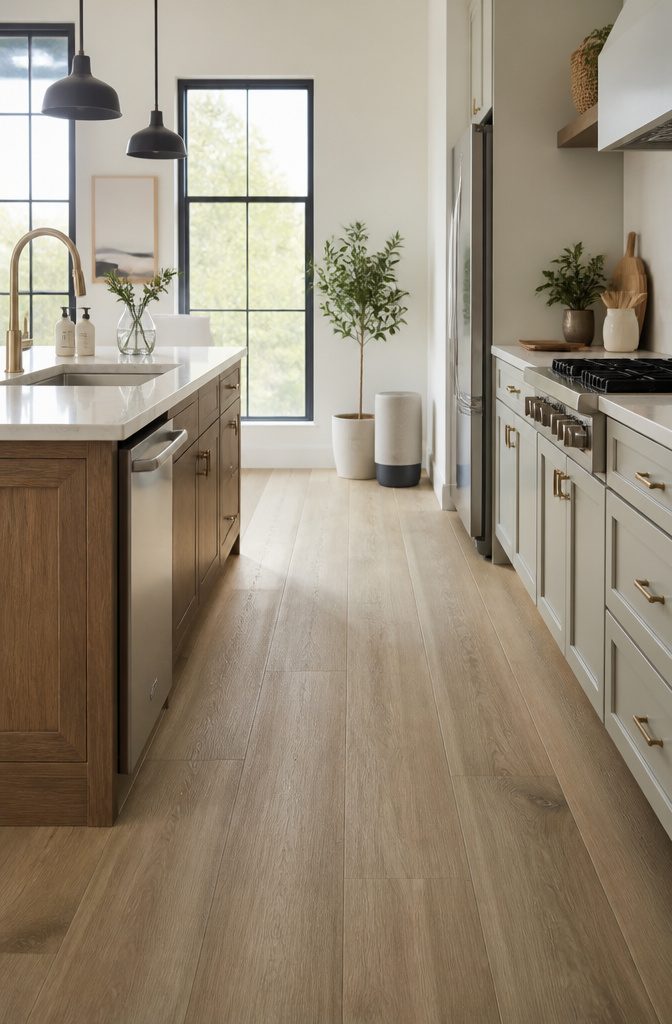
New vinyl plank can smell sharp and chemical for the first few days, and that odor is volatile organic compounds off-gassing from the material.
The cheaper the plank, the stronger the smell tends to be, because low-cost production relies on adhesives and plasticizers that emit more.
FloorScore and GREENGUARD Gold certifications exist specifically to cap those emissions, and a box that carries either mark has been tested to stricter indoor air quality standards than uncertified alternatives.
I would not install budget vinyl in a basement bedroom or a windowless office without both of those certifications and a plan to run a fan and keep the door open for at least the first week.
The off-gassing period varies by product and by how sensitive you are; some people notice nothing after three days, others still catch a whiff at two weeks.
If someone in the house has asthma or reacts to chemical smells, the certification is not optional, it is the filter that keeps the project from becoming a regret.
15 to 20 Year Lifespan
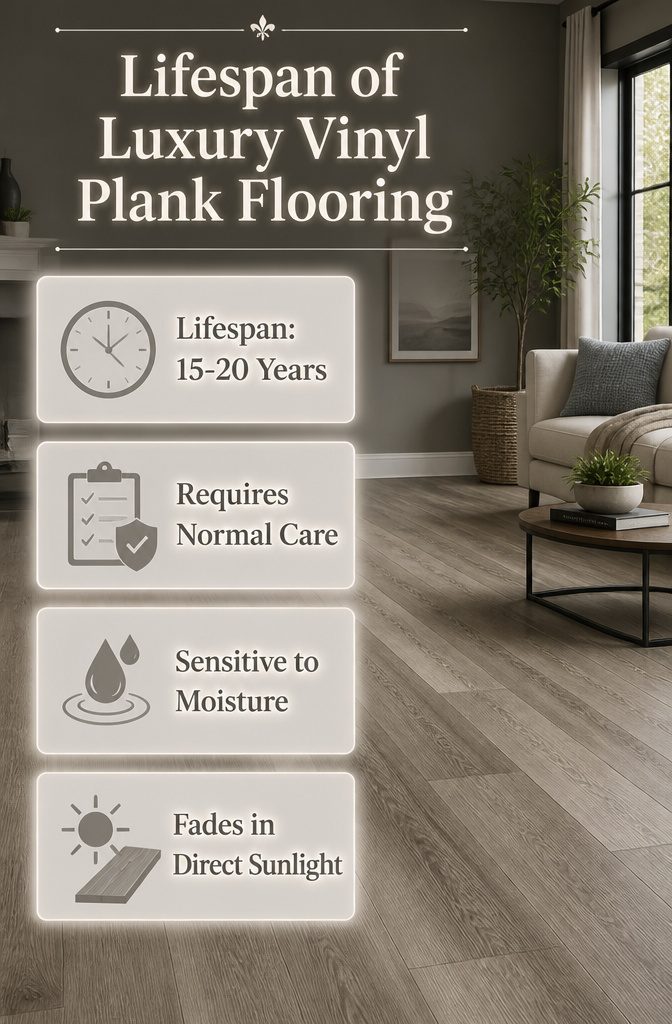
Most residential-grade luxury vinyl plank flooring holds up for 15 to 20 years with normal care, which is a solid run for a weekend-install floor that costs a fraction of hardwood.
The wear layer does the heavy lifting; once it thins past a certain point, scratches stop buffing out and the plank underneath starts showing through.
Edges can lift if moisture creeps in along the seams, and the printed design layer fades in direct sun even while the plank itself stays structurally sound.
Hardwood, by contrast, can last 25 to 50 years or more, but that lifespan comes with refinishing every decade or so, humidity control, and a much larger upfront check.
For a renter or a first-time owner planning to sell within ten years, the shorter LVP lifespan rarely matters. The question is whether you want a floor you can reset easily or one you invest in for the long haul.
Where I Would and Would Not Use It
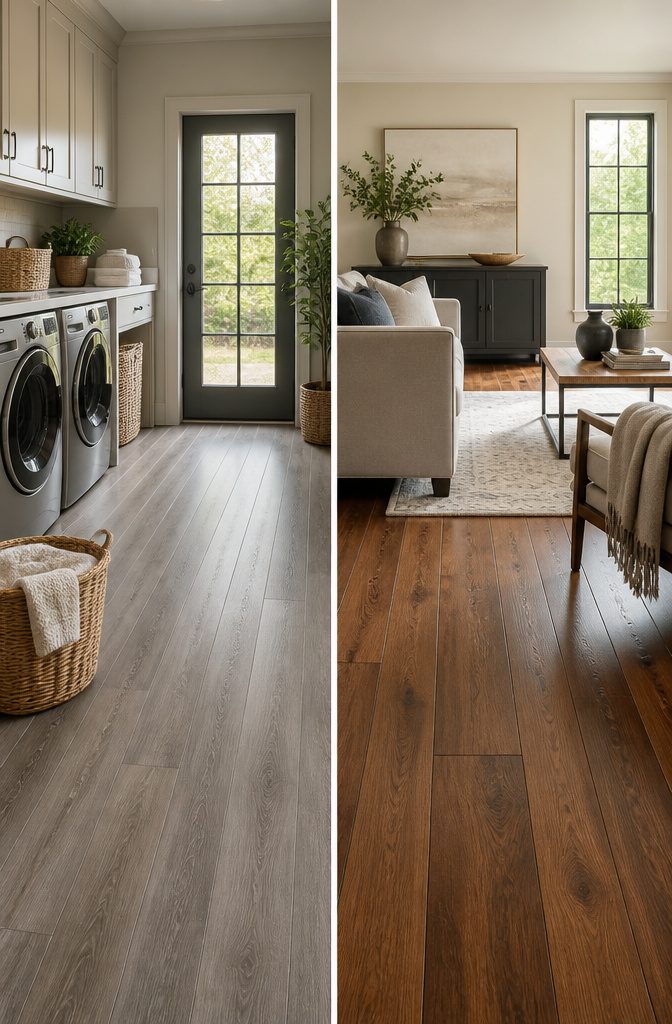
The places where luxury vinyl plank earns its keep are the ones that punish real wood.
Basements finished into family rooms, kitchens that see actual cooking, bathrooms where steam collects, rental units that turn over every couple of years: these are the spots where water resistance and durability matter more than pedigree.
A dog’s nails or a tenant’s moving day won’t phase it, and the warm look of wood arrives without the risk.
Sun-filled formal living rooms are where I would pause. Hardwood still carries more resale value there, and LVP can fade in direct sunlight over time.
The same goes for workshops with heavy equipment. Dropping a tool or dragging a cabinet without lifting it will scuff or gouge the plank, and unlike hardwood, you cannot refinish it.
Felt pads under furniture feet help, but the material has its limits.
The pattern is straightforward. Rooms that work hard, stay damp, or belong to someone else first: vinyl plank belongs there.
Spaces where the floor itself is the selling point, or where a dropped wrench is likely, call for a different calculation.
Frequently Asked Questions
How long does luxury vinyl plank flooring last?
Most residential-grade luxury vinyl plank flooring lasts between 15 and 20 years with normal care. The wear layer thickness drives that span; a 20-mil layer in a busy kitchen outlasts a 6-mil layer in a rarely used bedroom by years.
Once the clear top coat wears through, the plank underneath starts showing and the floor cannot be refinished.
Is luxury vinyl plank flooring completely waterproof?
Yes, high-quality luxury vinyl plank is 100% waterproof from top to bottom. The synthetic vinyl or rigid composite core does not absorb water, so planks will not warp, swell, or buckle the way laminate or hardwood does.
That makes it the safer choice for kitchens, bathrooms, laundry rooms, and basements where puddles or leaks happen.
Does luxury vinyl plank flooring increase home resale value?
LVP generally does not increase a home’s appraisal value the way solid hardwood does; appraisers treat it as a cosmetic upgrade, not a structural improvement.
Where it wins is marketability: a home with fresh, uniform LVP photographs clean and reads move-in ready, which can speed a sale even if the appraisal number stays flat.
Can luxury vinyl plank flooring be installed over existing floors?
Yes, most LVP installs as a floating floor that clicks together and sits directly over flat, hard existing surfaces such as tile, concrete, or old sheet vinyl.
The surface must be level; deep grout lines or dips will telegraph through or stress the joints. No glue or nails are needed, so the room is usable the same weekend.
What are the pros and cons of luxury vinyl plank flooring?
The pros include 100% waterproofing, strong scratch resistance from a thick wear layer, easy cleaning with just vinegar and water, and fast floating installation at $2 to $5.50 per square foot.
The cons include potential sun fading in south-facing rooms, dents from heavy or sharp objects, limited repair options that may require disassembling half the room, no biodegradability at end of life, and lower resale value on paper than hardwood.
What’s better than luxury vinyl plank?
Solid hardwood lasts 25 to 50 years and raises appraisal value, but it costs far more, demands professional installation, and cannot handle water.
Tile beats LVP for heat resistance and single-piece replacement, yet it is cold, hard underfoot, and grout lines demand scrubbing. The better material depends on whether you prioritize lifespan and resale value, or water resistance, comfort, and speed of install.
Do high end homes use luxury vinyl plank?
High-end homes sometimes use premium LVP in utility spaces, basements, or rental units where water risk and turnover matter more than pedigree.
For formal living rooms or spaces where the floor itself is a selling point, solid hardwood still dominates because appraisers and many buyers assign it higher status.
Does luxury vinyl plank devalue a home?
LVP does not actively devalue a home, but it does not add appraisal value the way hardwood does. It can still improve marketability by replacing stained carpet or dated sheet vinyl, making the home photograph better and sell faster.
The financial hit comes only if you expected the same return on investment as a structural hardwood floor.