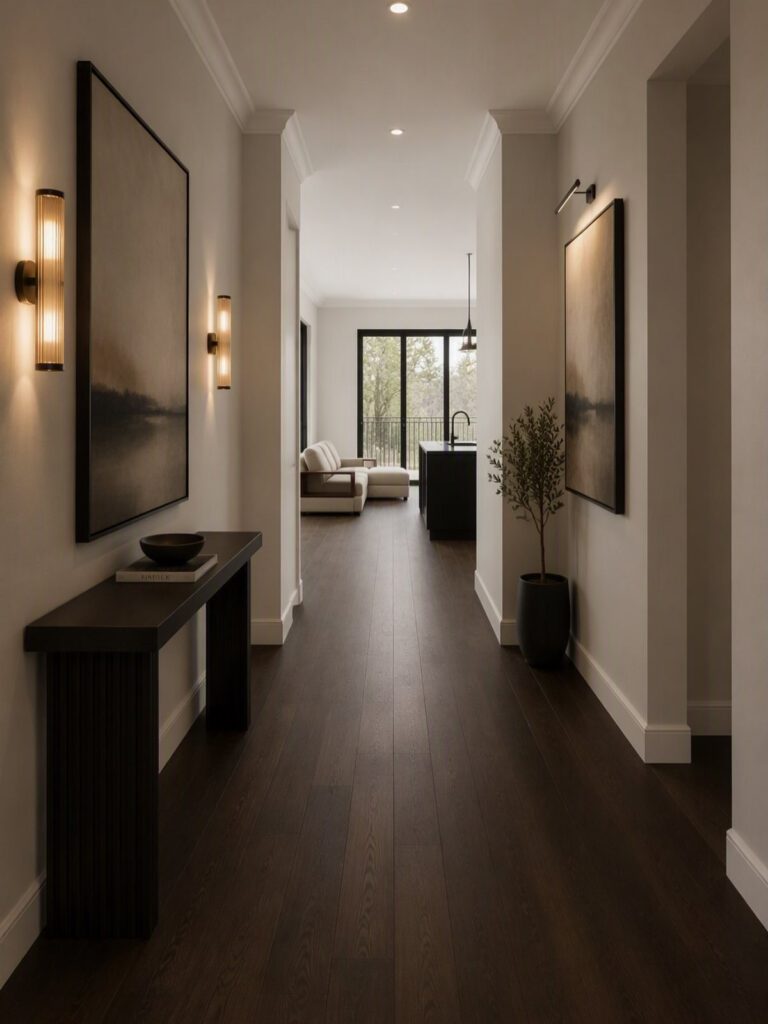
Wooden floors run from a weekend’s worth of stain on standard planks to a pro install with marble inlay that doubles your material cost, and the list below covers most of what falls between.
The deciding factor is how much of the work you can do yourself and how much drama the room can handle, which is what the 7 ideas below sort out for you.
A 5/8-inch European oak plank over plywood will take radiant heat; reclaimed barn wood with its nail holes and saw marks will take someone who has laid floors before.
[link-whisper-related-posts]1. Dark Tones Wooden Floor Interior
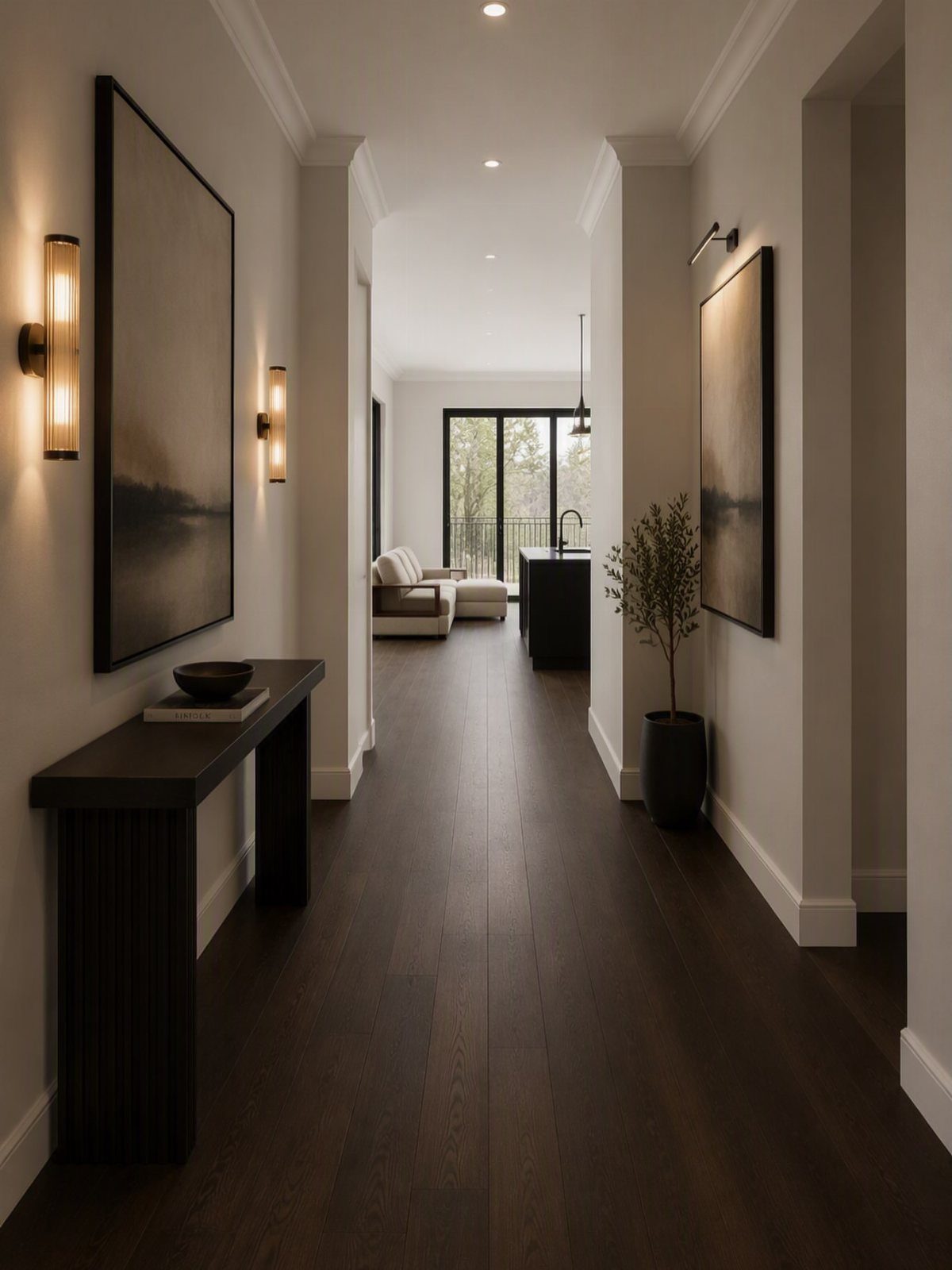
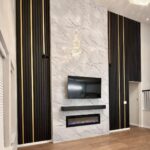
Dark floors read as intentional, not accidental. I like them in hallways that open into lighter rooms; the contrast creates depth without closing the space in.
Warm undertones keep it from feeling cold against white walls. Medium-dark oak or walnut both work; maple turns muddy at this depth and I’d skip it.
The finish matters more than the species here. Satin or matte hides dust and pet hair that gloss would spotlight.
Plan on more frequent cleaning than with mid-tones, but the drama pays off in rooms where you want furniture to float rather than ground.
Best for: gallery walls, minimal spaces, anyone tired of the same honey oak look.
2. Wide Planks Wooden Floor Interior
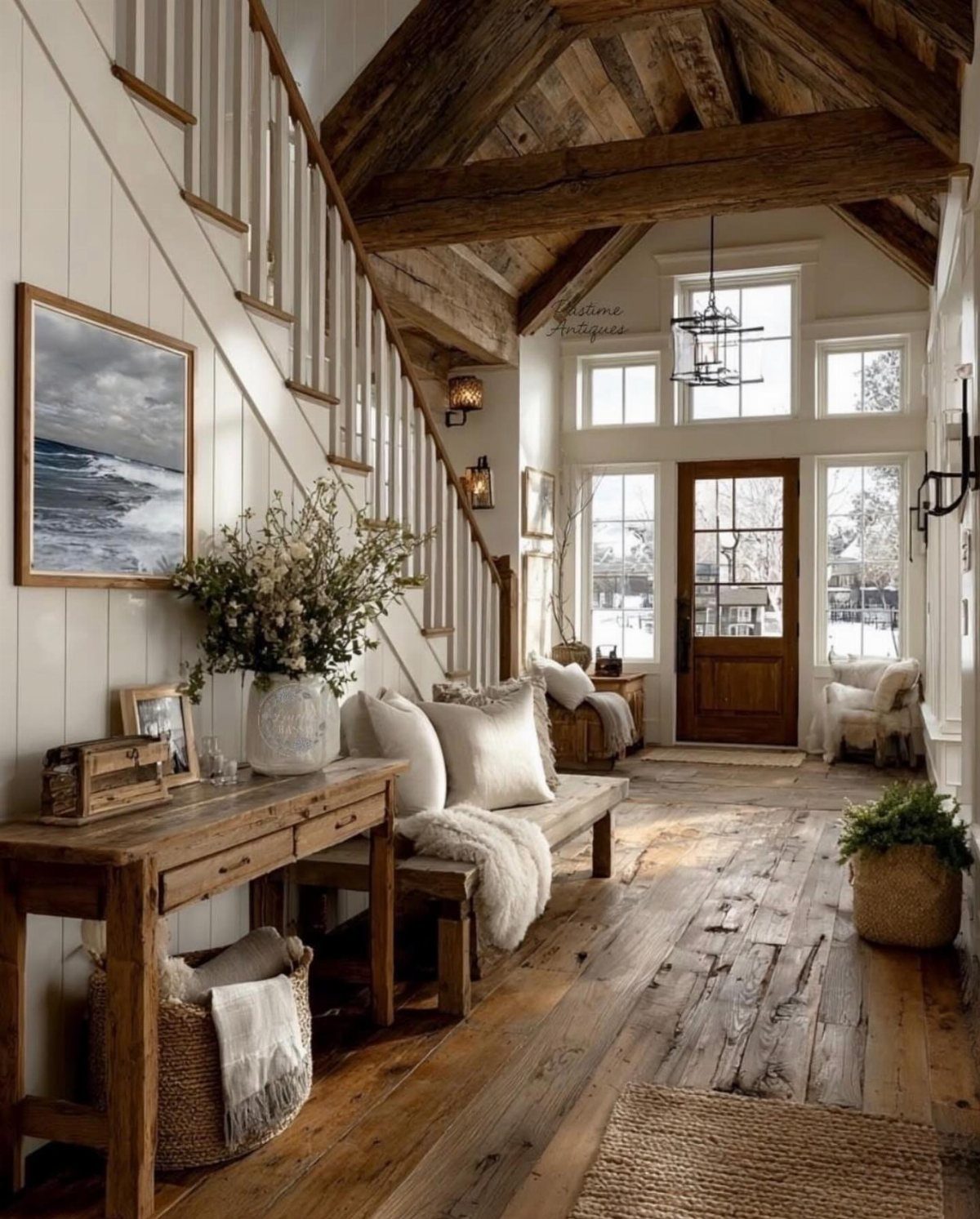
Wide planks trick the eye into seeing more square footage than you have. Wide planks let the grain run uninterrupted so the wood itself becomes the pattern.
European oak runs common for this width because it stays stable across seasonal swelling. A 5/8-inch thickness over plywood core handles radiant heat without the gaps you get with solid planks.
Matte finish keeps the modern feel; anything shinier reads rustic fast. Neutral undertones leave room to swap furniture later without clashing.
Cost runs higher per square foot than standard narrow planks, and fewer mills stock true wide boards. Order samples and lay them out; the scale changes everything.
3. Reclaimed Wood Flooring
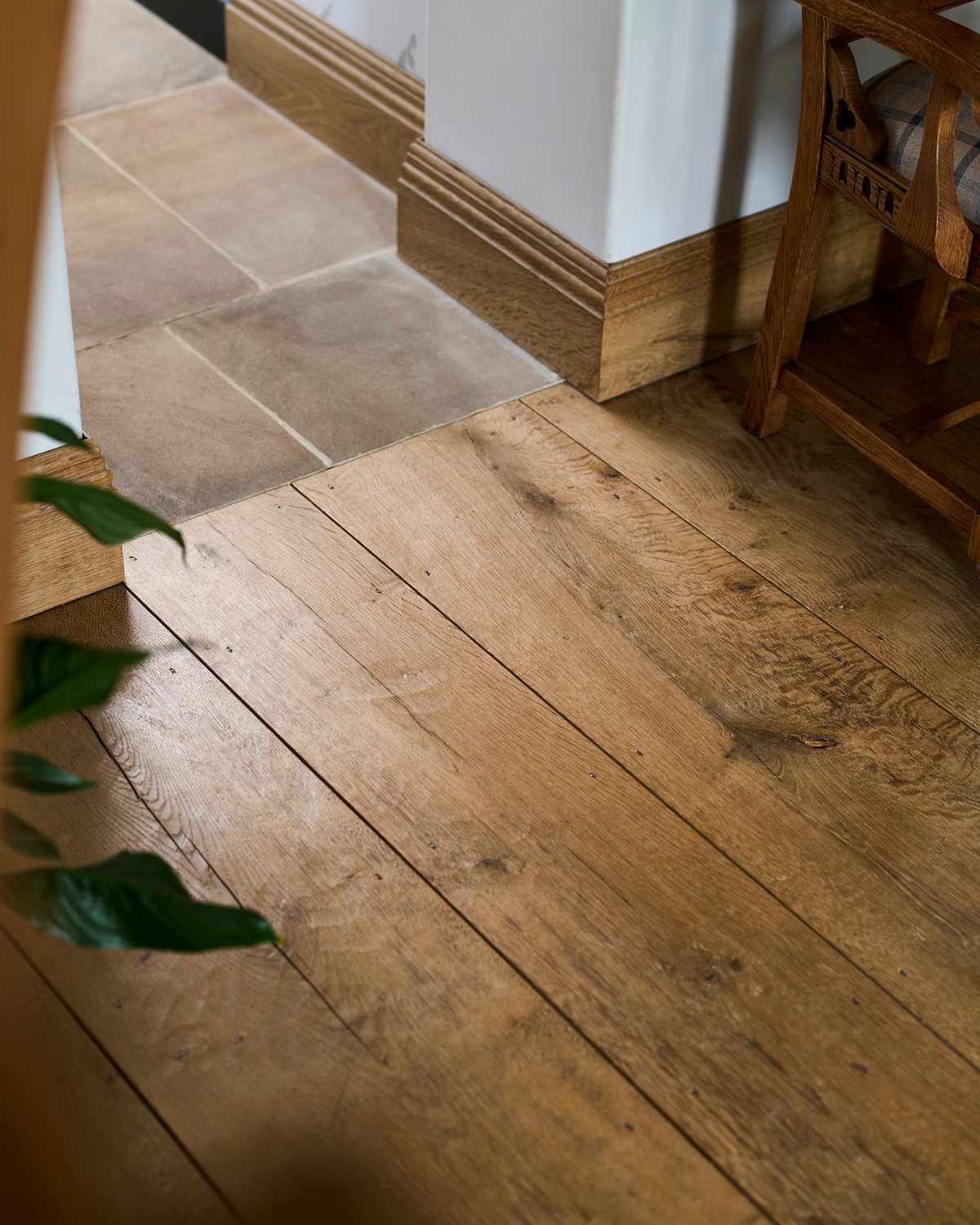
Salvaged wood carries nail holes, saw marks, and color variation that new boards can’t replicate. Each plank came from somewhere: a barn, a factory floor, a demolished pier.
The labor drives the price. Someone pulled those nails, milled the tongues and grooves, graded for usable length.
Expect to pay more than new character-grade oak, with limited supply if your job runs large.
Installation takes longer too; irregular thickness means careful subfloor prep and a patient installer. I wouldn’t DIY this unless you’ve laid floors before.
The floors look lived-in from day one. Best for smaller areas where the story shows: entryways, powder rooms, a single accent wall.
4. Herringbone Wood Flooring Pattern
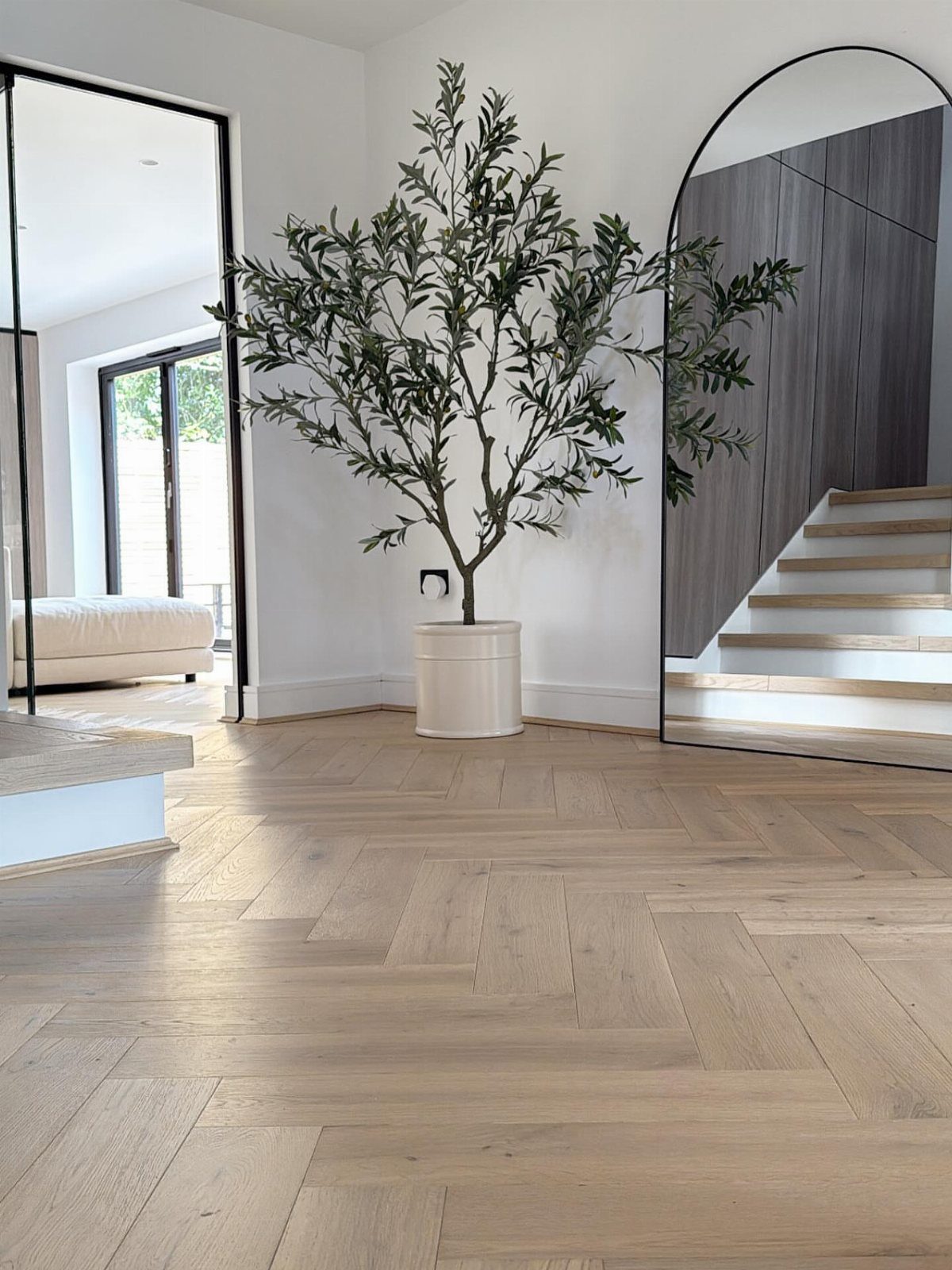
Herringbone reads formal without feeling stiff. The zigzag breaks up long, narrow rooms and adds movement to open plans that risk feeling flat.
Installation costs more than straight lay; you’re cutting twice the pieces and the pattern tolerates no sloppy corners. Oak takes the angle well, and lighter stains keep the geometry from overwhelming the room.
I prefer herringbone scaled to the space: smaller blocks in a foyer, wider planks in a living room. Chevron looks similar but needs mitered ends; the price jumps again and the joints can open in dry climates.
Save it for one room, not the whole house. It becomes wallpaper that way.
5. Light Wood Plank Flooring
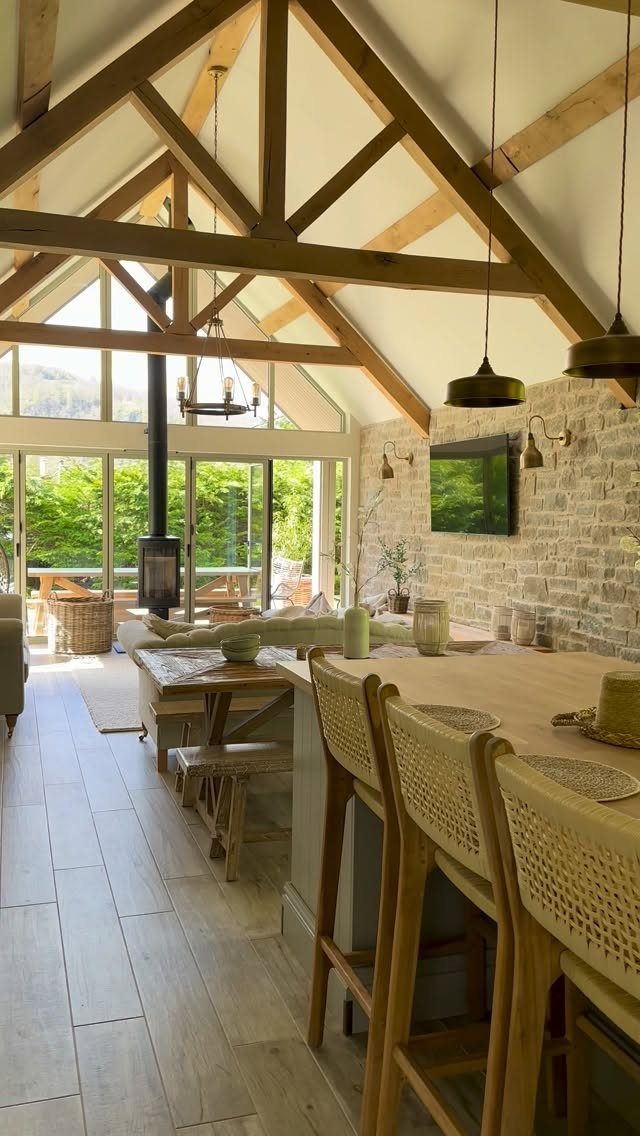
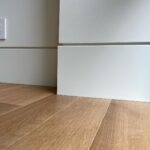
Light floors bounce daylight around rooms that face north or sit shaded by trees. White oak or ash, bleached or natural, keeps the Scandinavian feel without going full pine-knot rustic.
The risk is looking sterile. I add warmth through texture: wire-brushed or lightly hand-scraped surfaces catch shadow and feel alive underfoot.
Gloss would kill the effect; matte or satin only.
Maintenance surprises people. Scratches show less than on dark floors, but water spots and grime stand out more.
A microfiber mop and quick spills, no big deal.
Pairs naturally with exposed beams, stone, black metal. The palette stays quiet so your furniture and art carry the weight.
6. Polished Medium Wood Flooring
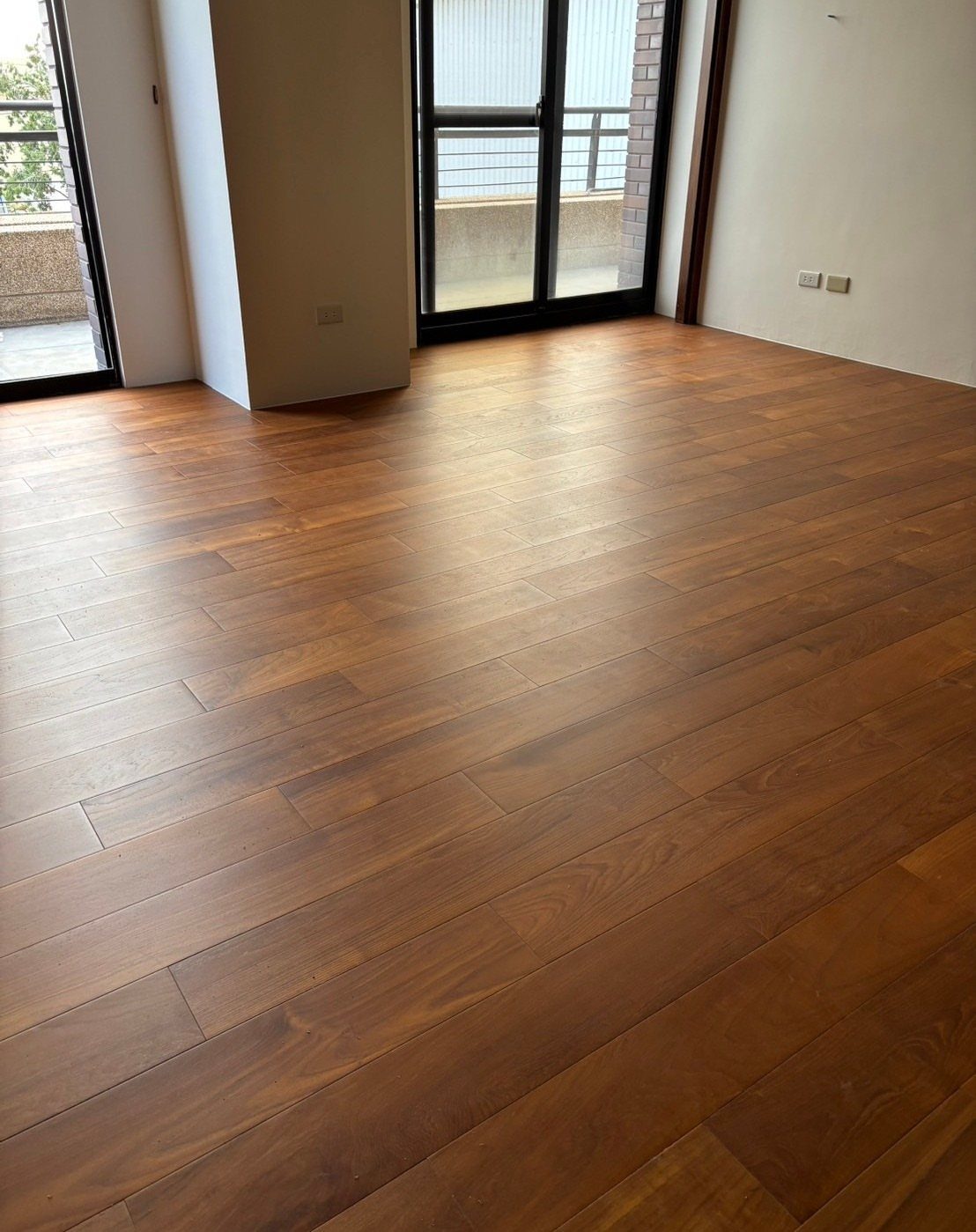
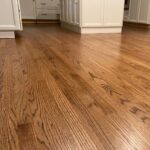
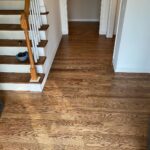
Polished medium wood is the safe choice that doesn’t have to be boring. Honey-brown oak or maple with a satin lacquer reflects window light and makes rooms feel larger without the maintenance anxiety of very dark or very pale floors.
The polish here is in the finish, not high-gloss mirror. A well-buffed satin on flat-grain oak gives you that glow without the skating-rink look.
I’ve seen it work in rentals and forever homes alike because it plays with any wall color.
Refinishing down the line is straightforward; you’re not locked into a statement. If you want one floor through every room and can’t decide, this is where I’d land.
7. Wood and Marble Inlay Flooring
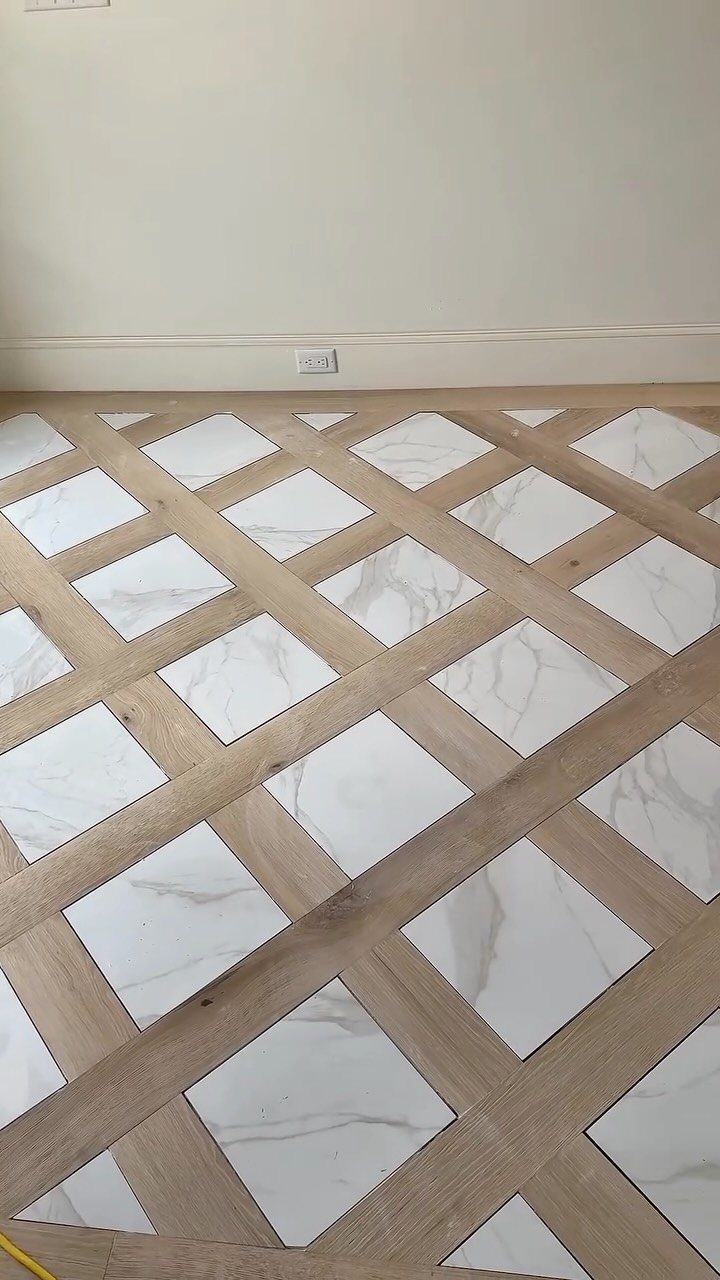
This floor pairs light wood planks with white marble tiles in a diagonal crisscross lattice, a combination that reads as custom without the full custom price tag.
The marble catches light differently than wood alone, so the pattern shifts as you move through the room.
Installation runs higher than standard plank because each marble piece needs exact cuts and leveling with the surrounding wood. I’d budget for a pro installer; the tolerances are tight and a dip or rise between materials telegraphs as a mistake.
For a 200-square-foot space, expect to roughly double your material costs against plain hardwood, plus the labor premium.
The look suits a formal entry, a powder room, or any room where the floor acts as the main event. In open-plan homes it risks fighting with other bold choices, so I’d keep the walls quiet and the furniture simple.
If the full lattice feels too much, a marble border inset into plank flooring gives the same luxe note on a smaller scale.
Durability and Longevity
A solid wood floor that gets refinished every decade or two can outlast the house it sits in. Engineered wood handles humidity swings better, though the wear layer determines whether you’re buying furniture or something closer to carpet.
A 1 mm wear layer can’t be refinished; plan on replacement in 7 to 10 years. A 4 or 5 mm layer sands and refinishes on the same schedule as solid wood, so the lifetime cost shifts.
Price doesn’t always signal quality either way: some engineered products run $20 per square foot and up, matching solid wood of the same width and length. I’d check the wear layer thickness before anything else.
In basements or over radiant heat, engineered wins on stability. For a forever home with dry air and a plywood subfloor, solid still makes sense.
In contrast, Tommy’s company Olde Wood crafts engineered floors that offer a four- or five-millimeter wear layer that can be sanded and refinished every five to 10 years—just like solid wood—so it can last a lifetime.
Environmental Impact
Wood is the only renewable flooring material that lasts generations. Most alternatives are built to be torn out.
That longevity matters more than the harvest: a floor that survives a century spreads its environmental cost across decades, while vinyl or laminate heads to landfill in a fraction of that time.
Reclaimed wood skips new harvesting entirely, though the energy in de-nailing and milling still counts. I’d weight transport more heavily than origin; local oak beats shipped bamboo on footprint.
FSC certification helps if you want traceability. The finish is where toxins hide: water-based poly or hardwax oil cuts VOCs against solvent-based options.
No flooring is perfect, but wood’s repairability, refinishing, and eventual biodegradability put it ahead of anything petroleum-based for a home you plan to keep.
Style Versatility
Wood flooring shifts with the room around it, which is why I’d risk a stronger plank than I would with tile or carpet.
Honey oak against wainscoting reads one way; the same boards with white walls and black metal frames read another entirely. Dark walnut goes formal with antiques, moody with leather, industrial with concrete.
The floor doesn’t change; everything above it does. Mixing helps: a herringbone entry in light oak sets up a modern living room, or wide reclaimed planks ground a kitchen full of new cabinetry.
I’d use decorative accents to bridge, not match. A single consistent floor through an open plan unifies, but varying the plank width or stain between rooms marks transitions without fighting.
The only wrong move is choosing a floor so specific it locks every future decision.
Installation Methods
Nail-down needs a wood subfloor and suits solid planks in dry, above-grade rooms. The nails grip through the tongue, hidden once the next plank drops in.
Glue-down works over concrete or plywood, necessary for thinner engineered boards that can’t take fasteners. Moisture testing matters here; a slab with vapor issues will bubble the adhesive.
Floating floors click together and rest on underlayment, the only option for most basements and the fastest for a weekend project. I’d float engineered over a moisture barrier if the concrete’s history is unknown.
Radiant heat limits you: nail-down risks tube puncture, glue-down needs temperature-rated adhesive, floating moves enough to stress joints. Each method has a right place.
Match the install to the subfloor, the climate, and how long you plan to stay.
Frequently Asked Questions
What is the rule of 3 in flooring?
The rule of 3 suggests using three different materials or colors for a cohesive look. I see it play out in the wood and marble inlay section above, where two materials create contrast but the pattern keeps them from fighting.
Adding a third element, like a quiet wall color, finishes the balance without crowding the eye.
How much does 1000 sq ft of wood flooring cost?
Costs run from about $3 to $12 per square foot depending on material and finish, so your total for materials alone depends heavily on which wood and finish you choose.
Wide planks and reclaimed wood sit at the higher end, while polished medium oak tends toward the middle. Labor, subfloor prep, and finish would add to that figure.
What is the latest trend in wood flooring?
Wide planks, matte finishes, and natural tones are what’s showing up now. European oak in wide widths with matte lacquer is showing up everywhere, plus light white oak or ash with wire-brushed texture.
Herringbone is holding steady for formal spaces, though I’d still limit it to one room.
Which is the healthiest flooring for homes?
Wood flooring is often considered healthier because it uses natural materials and emits low VOCs compared to synthetic options. Real wood species, water-based finishes, and skipping harsh gloss coatings all point toward better air quality indoors.
If health is the priority, I’d ask about the specific finish product before installation.