These ideas run from a single day’s pour to a weekend of careful grout work, with costs that shift depending on whether you pick epoxy flake, microcement, or classic tile.
The deciding factor is what your bathroom actually does: powder room, kids’ bath, or daily wet room.
Polished beige tile doubles the light in a small bathroom, though I’d think twice about putting it in a shower a child uses since that gloss finish turns slick the second water hits it.
[link-whisper-related-posts]1. Large Format Tiles
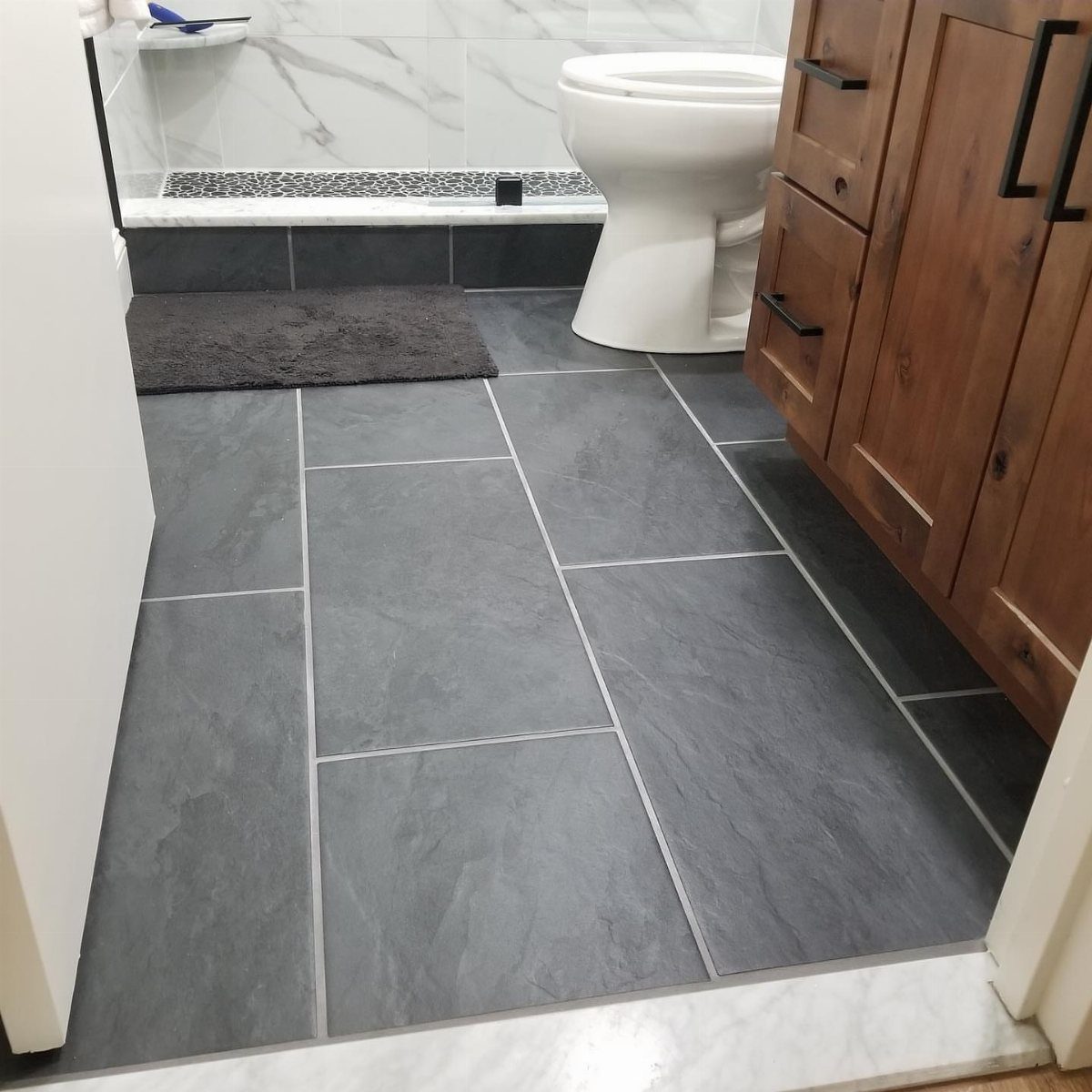
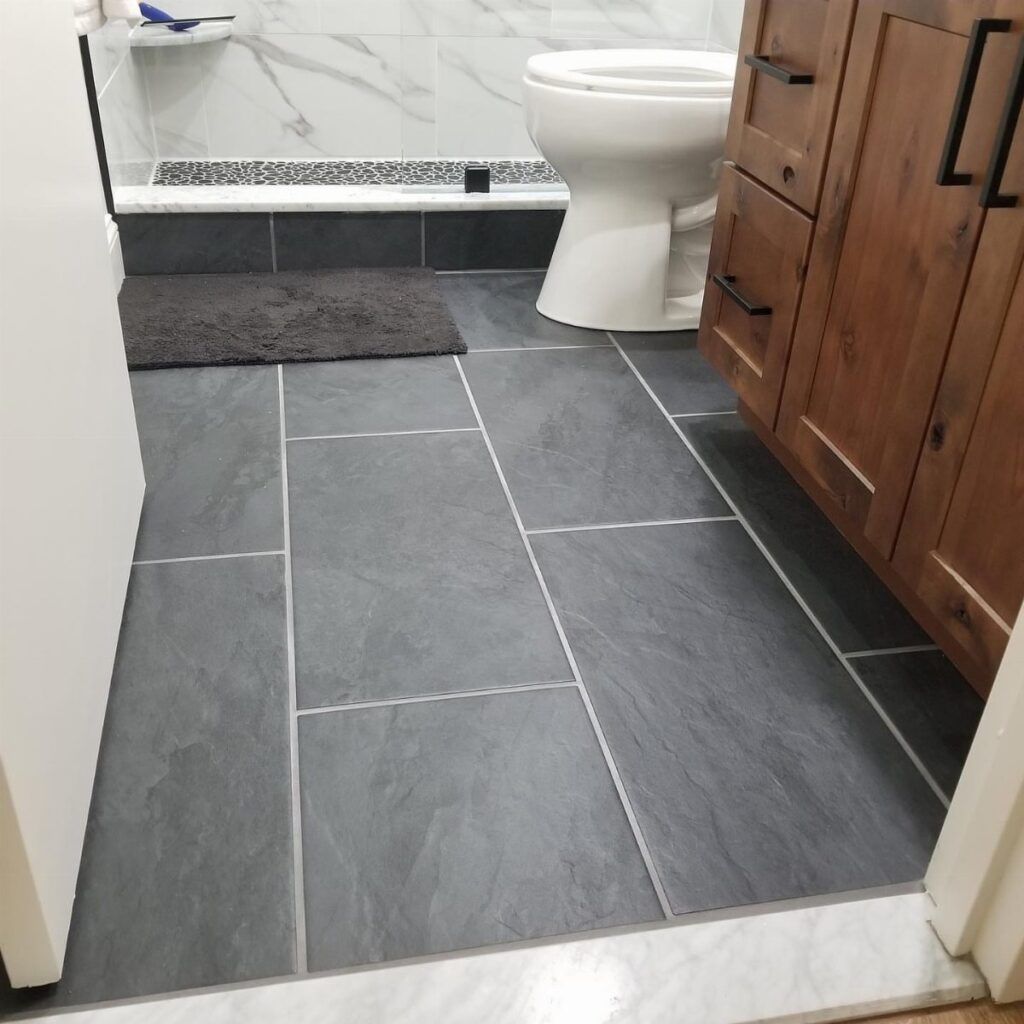
Large-format tiles start at 12×24 inches and go bigger from there. Fewer grout lines let the eye travel across one continuous surface instead of a chopped-up grid, which reads as more floor and less bathroom.
I would pick porcelain with a stone texture in a dark tone; it hides water spots and grounds a small room without closing it in.
Running large format tiles straight to the shower curb lets the same plane carry through wet and dry zones.
Cost lands mid-range for tile, but installation needs a flat subfloor; lippage shows on big pieces. A leveling system is worth the rental.
Best for: renters who can tile over existing flooring or owners doing a gut job who want the space to feel intentional, not squeezed.
2. Mosaic Tile
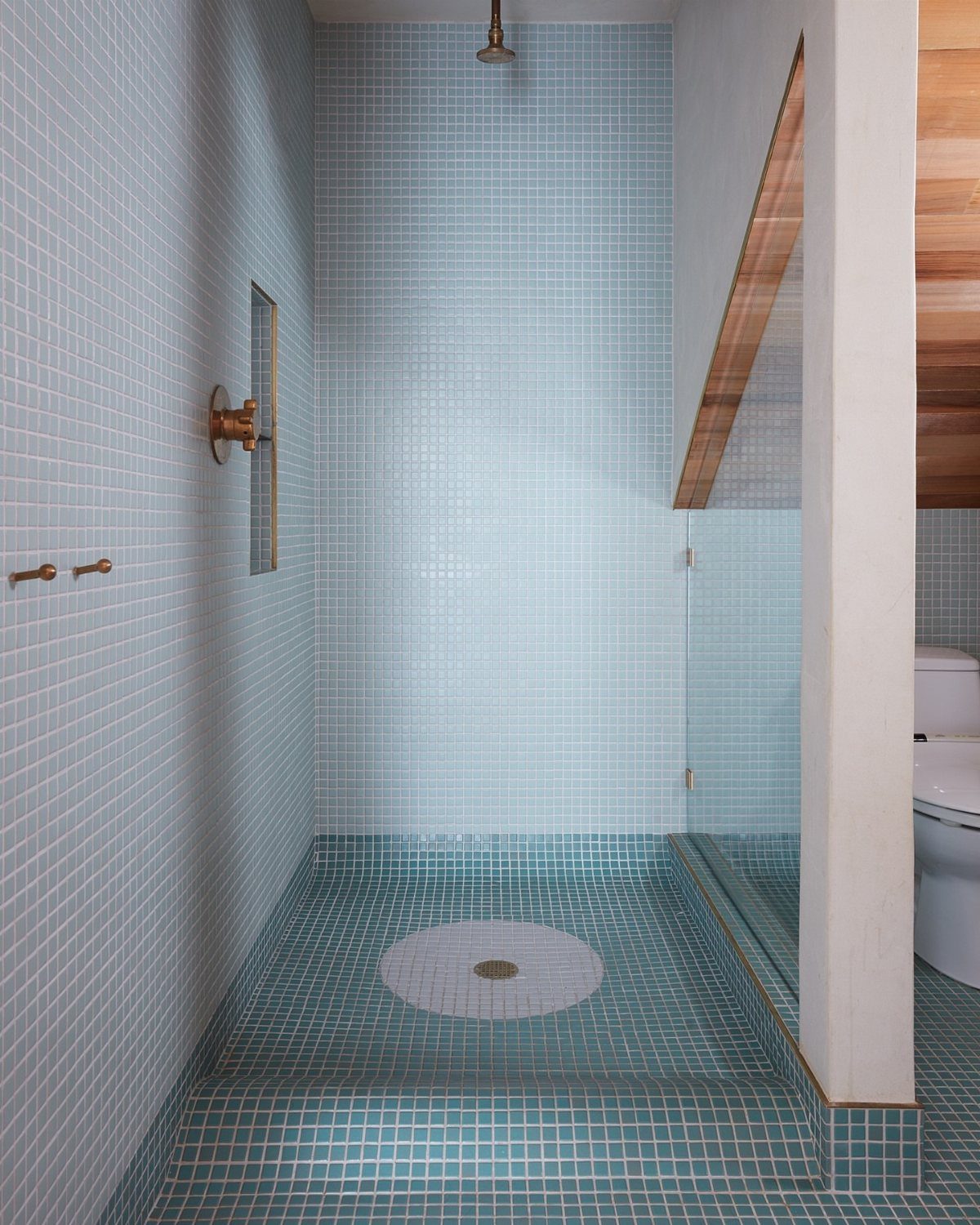
Mosaic tile breaks a small bathroom into hundreds of tiny gripping points. All those grout lines add texture underfoot and keep the floor from getting slick when wet, which matters more in a shower than anywhere else.
Penny rounds or small hexagons fit curved shower pans where a large piece would need too many cuts.
Carrying a small mosaic pattern onto the wall from the floor would stop at the curb for me; too much small pattern and the room starts to buzz.
Installation runs $15–$25 per sq ft, higher than standard tile because laying sheets still means sealing every joint. You get the safety of small tiles and the detail of a pattern in one move.
Best for: shower floors specifically, or a powder room where you want one material to do all the work.
3. Matching Wall and Floor Tiles
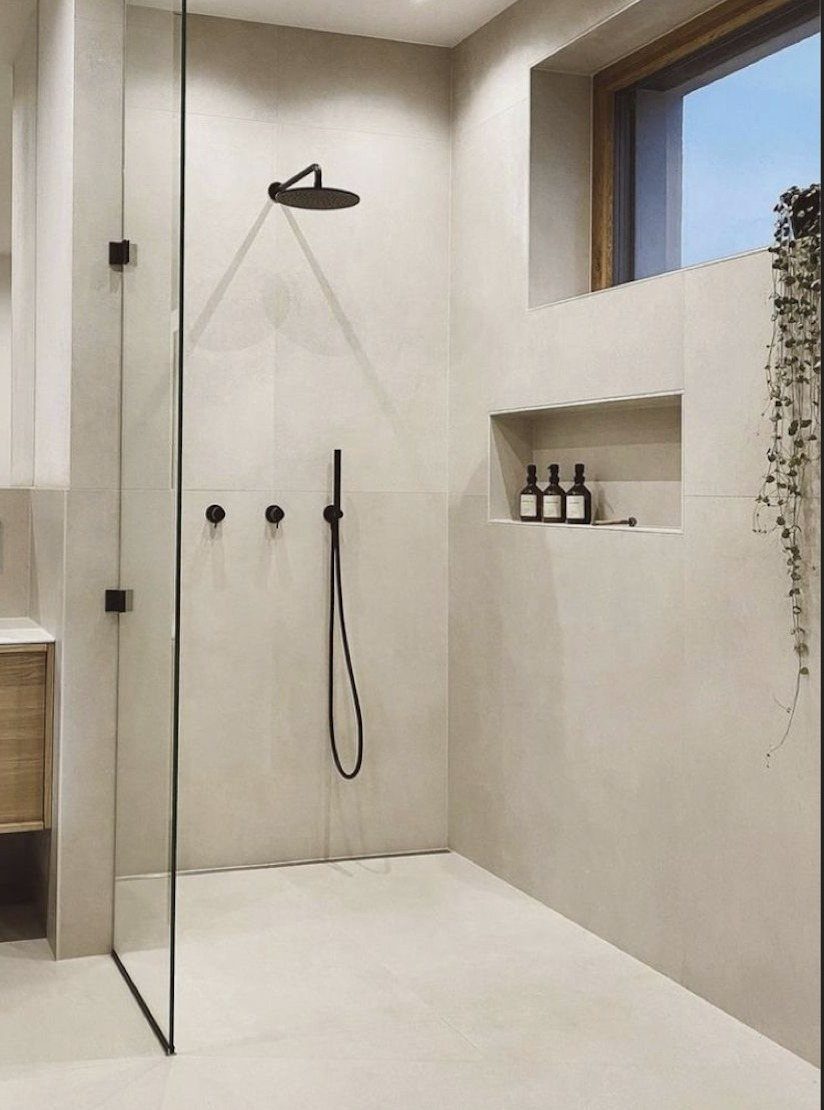
Running the same tile up the wall and across the floor dissolves the corner where they meet.
The eye stops registering where horizontal ends and vertical begins, so the room reads as one wrapped shape rather than a box with a lid.
Large off-white format tiles work this way in a curbless shower.
I would check two things before ordering: whether your wall framing can handle the weight of floor-grade porcelain, and if the tile’s finish is rated for wet floors; not all are.
A floating vanity helps, since you see tile where legs should be. Concealing the drain helps more.
Best for: modern bathrooms where you want the architecture, not the decor, to do the enlarging.
4. Basketweave Pattern Tiles
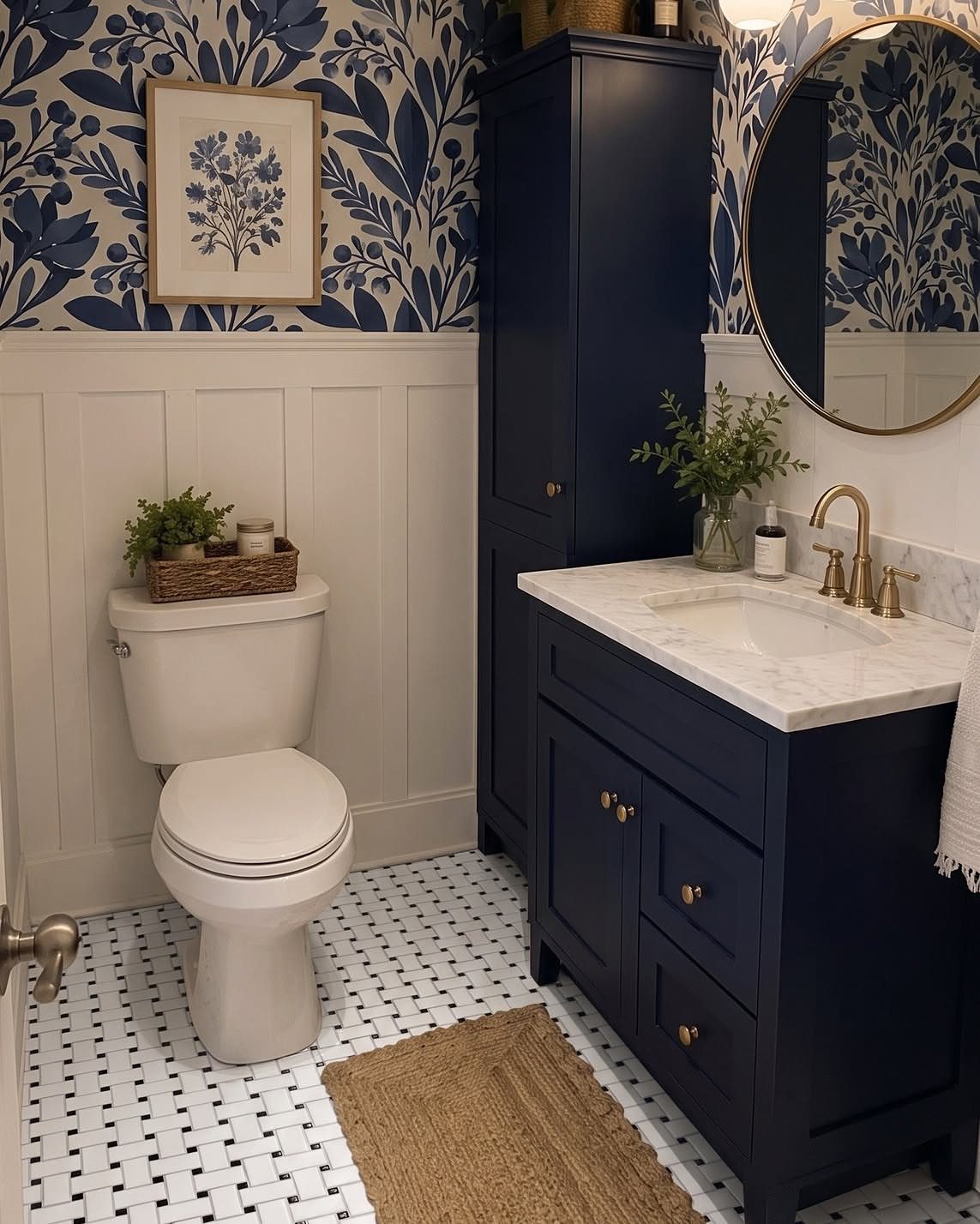
Basketweave reads as a small pattern from up close and a soft texture from across the room, which keeps a compact floor from going flat without shrinking it visually.
The interlock of white and black gives the eye something to follow that is not a grid.
I would pair it with simple walls; the floor already sits against floral wallpaper and a navy vanity, and that only works because the tile stays in two colors.
Add a third and the room would start to compete with itself.
Porcelain versions carry the look without the upkeep of marble.
Best for: transitional or traditional bathrooms where you want reference to older detail without full period commitment.
5. Epoxy Flake Flooring
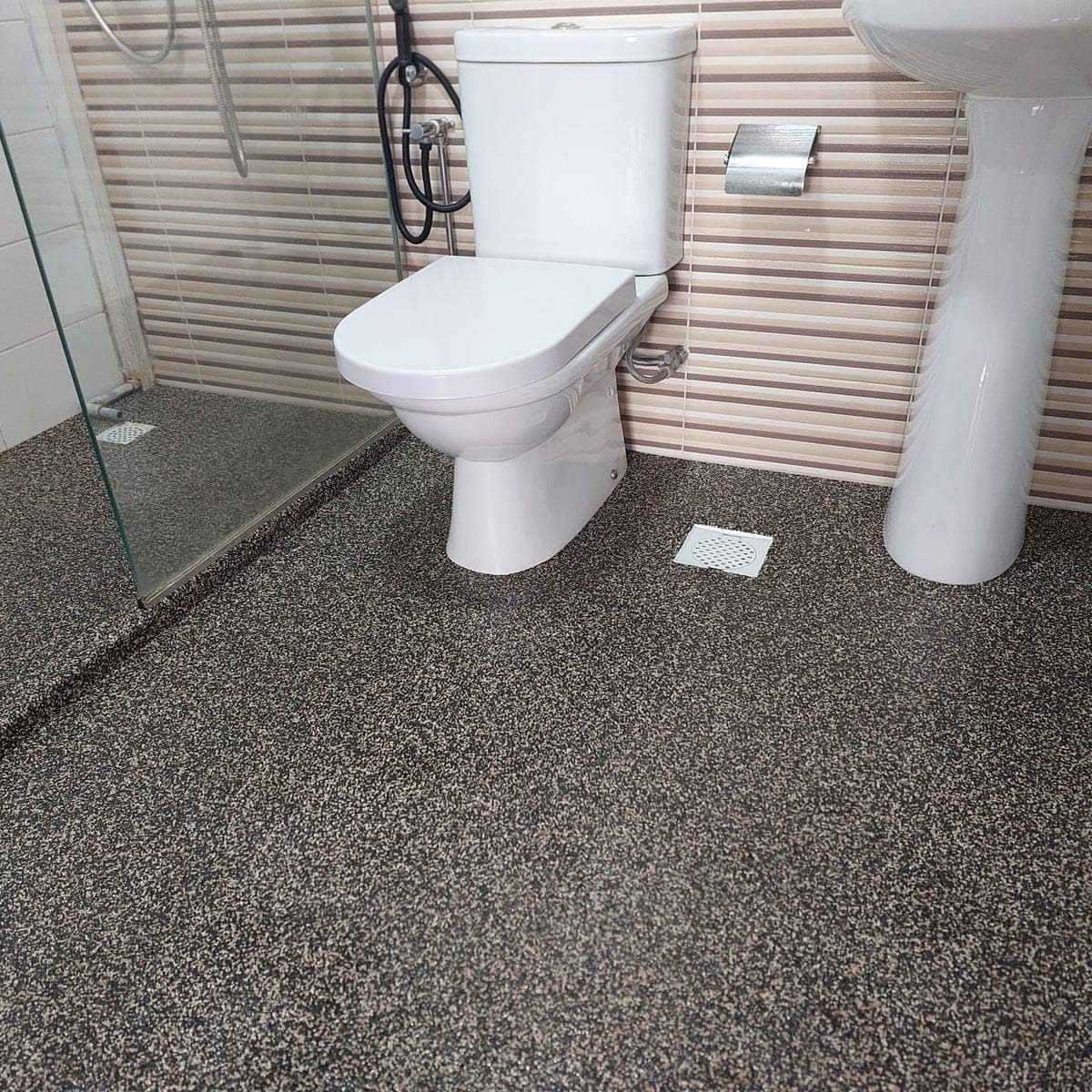
Epoxy flake flooring is poured as a liquid and hardens into a single skin with no seams, which means no grout to stain and nowhere for water to settle.
The speckled finish comes from colored flakes broadcast into wet resin; you choose density and color mix, so the result is specific to your batch.
Slip resistance is built in, and the surface resists bacteria and chemicals. Installation costs $8–$15 per sq ft, which puts it below tile in labor because one trade does it in a day.
The industrial look is the tradeoff. I would not try to soften it; lean into the speckle and pair with clean fixtures.
Best for: bathrooms that take heavy use, kids, or rentals where you want durability over warmth.
6. Microcement
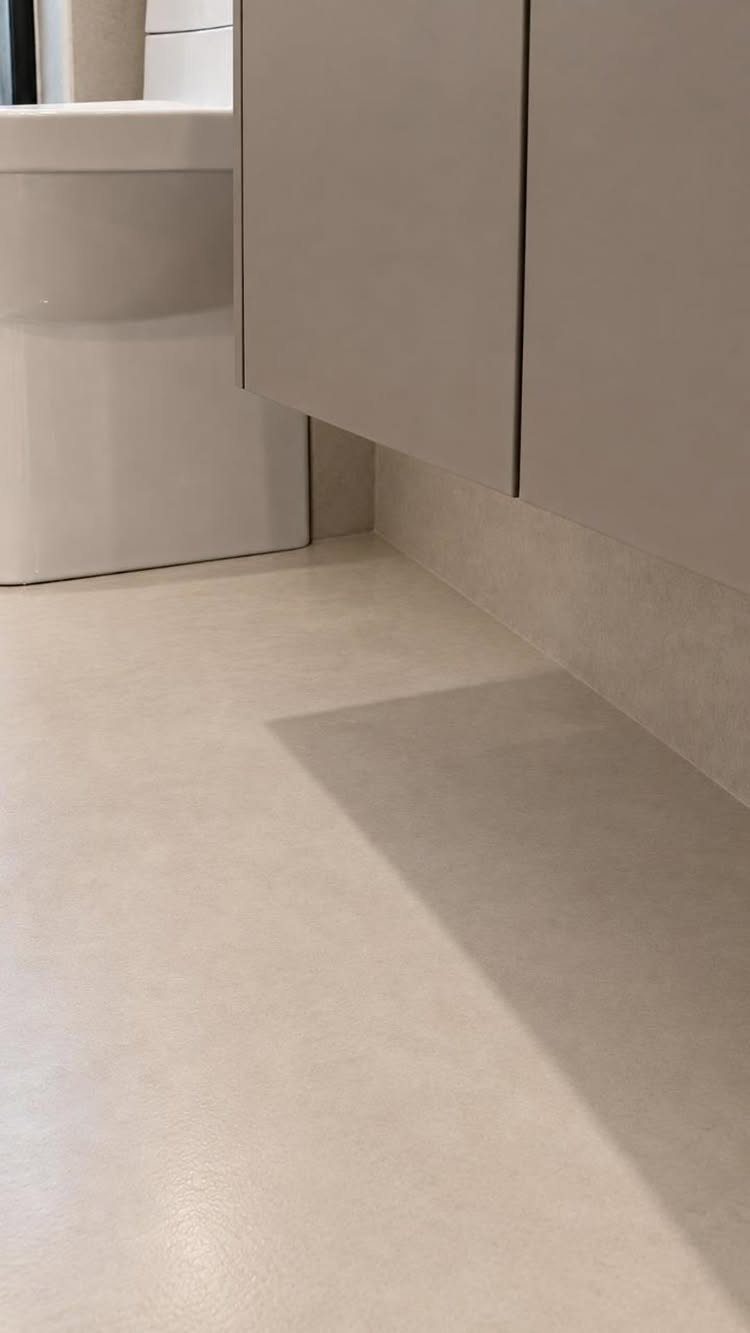
Microcement is troweled on in thin layers over a stable subfloor or existing tile, so you can get the poured-concrete look without tearing out what is already there.
A microcement floor can carry right up the wall and under a floating vanity with no baseboard, no threshold, no break.
It needs professional application and a waterproof membrane underneath, which pushes cost to $15–$30 per sq ft.
The finish is matte and shows every trowel mark, so imperfections read as texture rather than flaw; that is either the appeal or the problem, depending on your tolerance.
I would budget for resealing every few years in a wet room.
Best for: homeowners who want one continuous material and have the budget to get the substructure right.
7. Polished Beige Tiles
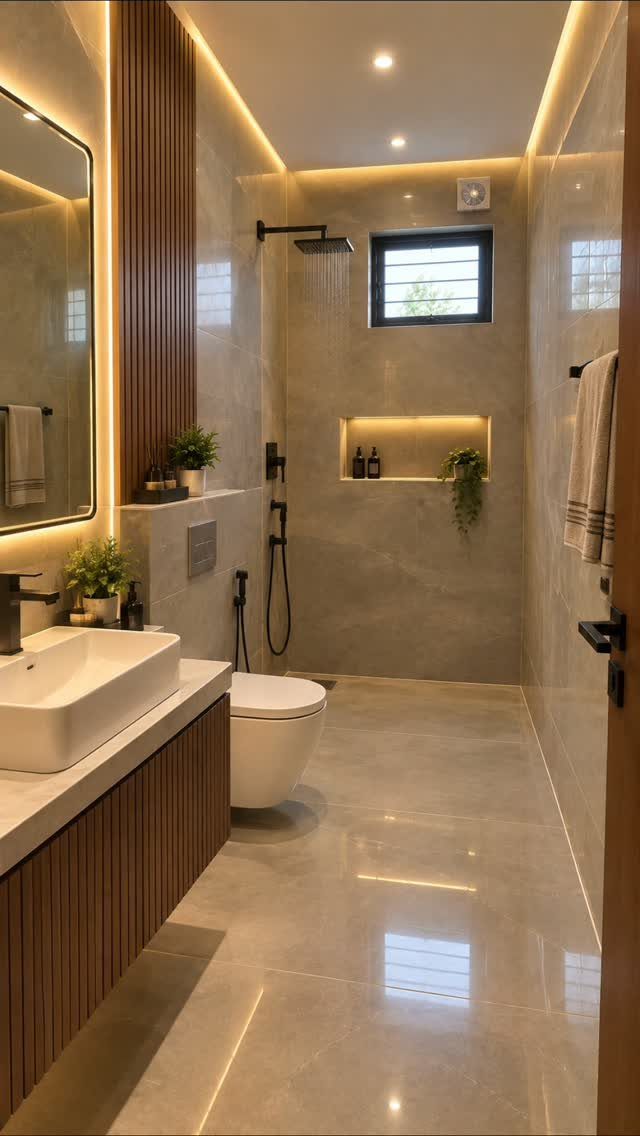
Polished beige tiles bounce light around a narrow bathroom better than almost any other surface I have seen.
The gloss finish doubles the work of any window or fixture, which matters when the square footage is tight and the ceiling sits low.
The trade is underfoot: wet polished tile is slick. I would keep this choice for a powder room or a master bath with good mats, not a kids’ bath or a primary shower floor.
Matte beige porcelain from the same color family hides water spots and gives better grip if safety comes first.
For the full polished look, run the same tile up one wall behind the vanity. The reflection then comes from two planes, not one, and the room reads larger than its measurements.
8. Wood-Look Flooring
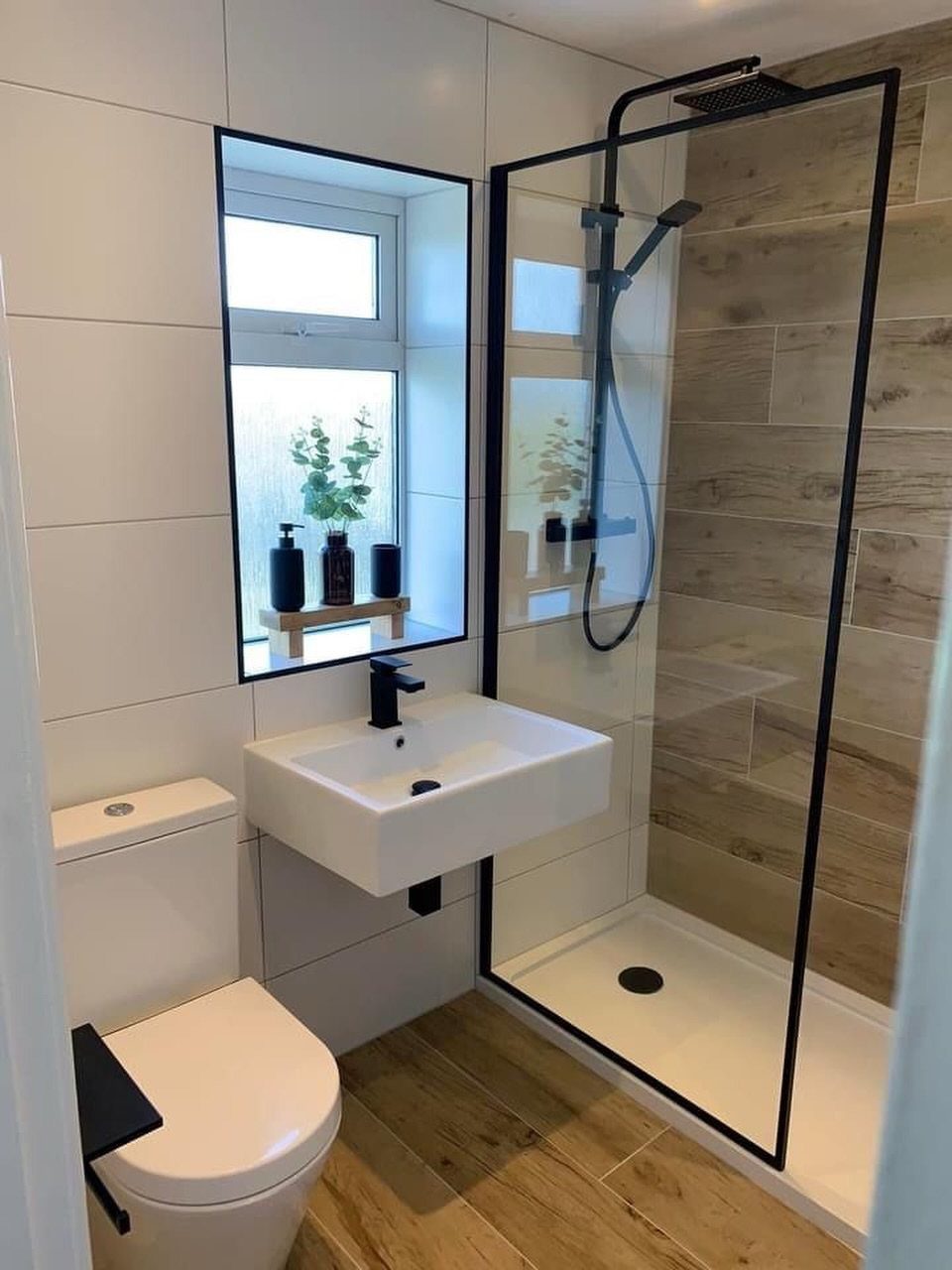
Wood-look planks warm up a bathroom that can otherwise turn clinical fast. Porcelain versions give the grain and variation without the swelling, staining, or bacteria trapping that real wood invites in wet rooms.
I like the plank format best when it runs the long direction of the room. The eye travels with the lines, and a 5-foot-wide bath suddenly reads longer.
Pair it with white or stone-look walls; the contrast keeps the wood from feeling like a sauna.
Carrying the same wood-look tile onto the shower wall keeps the visual flow going in a tight space. That takes confidence and a good grout match.
For a first project, I would stop at the floor and see how the tone lives with the light before committing to more.
9. Terrazzo Tile Flooring
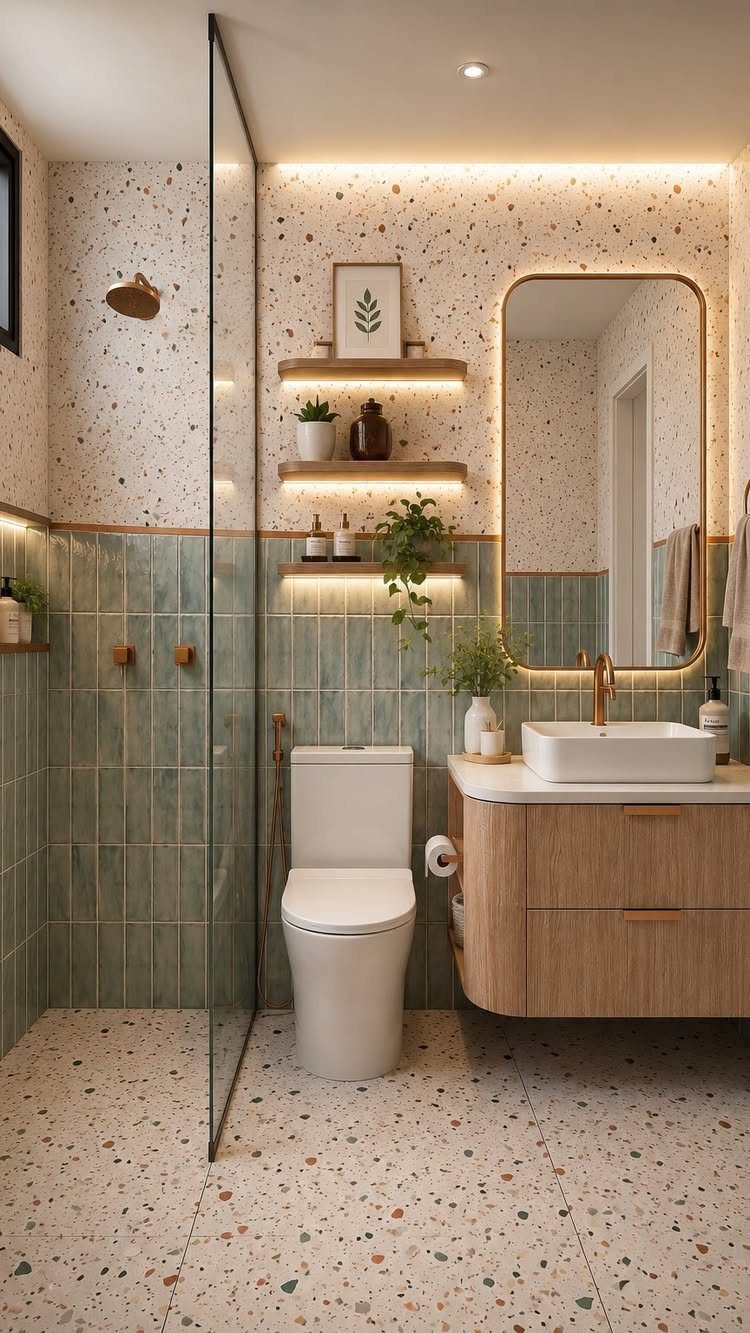
Terrazzo brings in color without a single painted wall. The flecks do the work: green chips pick up a sage vanity, warm chips echo brass fixtures, and the whole floor becomes the accent the room was missing.
Small bathrooms suit smaller chip sizes. Large aggregate in a tight space reads busy, like a pattern shouting in a closet.
Balancing multicolor terrazzo flecks against plain green vertical tile and raw wood keeps the floor from overwhelming the room.
Grout color changes everything here. Match it close to the base tone and the surface reads almost solid.
Go darker and each chip pops separately. I would order samples of both and lay them on the actual subfloor before deciding.
10. Penny Tile Patterns
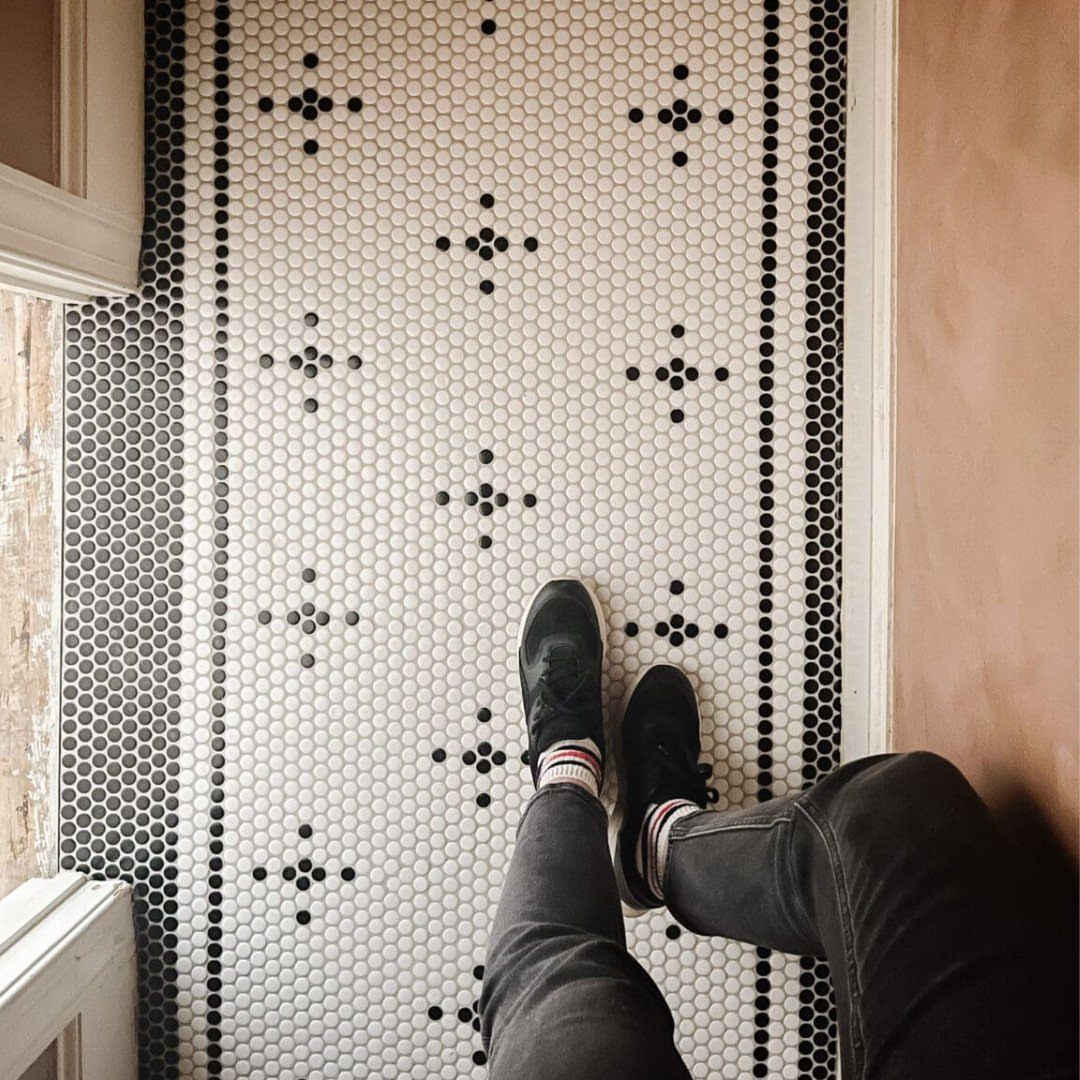
Penny tiles reward patience. Each small circle needs its own grout line, and a geometric pattern like a black-and-white border multiplies the work again.
The result is worth it for a half-bath or a showpiece floor, but I would not start this on a Sunday with Monday looming.
The small scale grips well underfoot, which makes penny tile one of my picks for shower floors in compact stalls. On the main floor, the pattern does the decorating; keep walls simple and let the geometry be the room’s personality.
Sheet-mounted pennies save some layout time over individual dots, though the sheets still need careful alignment. Black grout with white tile, or the reverse, gives the boldest read.
Same-color grout softens the effect to a texture rather than a statement.
Water and Humidity Resistance
Porcelain tile, LVP, and sheet vinyl handle daily shower use because water stays on the surface instead of soaking in. Waterproof laminate sits in a different category.
The fiberboard core resists moisture better than standard laminate, but it is not fully waterproof. Water that finds the seams and lingers can swell the core over time.
For that reason, I would keep waterproof laminate to powder rooms or half-baths, not full bathrooms with daily showers.
At $6–$10 per sq ft installed, it costs less than tile or LVP, but the savings only hold if the room stays low-splash.
Easy Maintenance
Grout choice changes how much time a floor costs you long-term. Epoxy grout resists water absorption and staining in wet bathrooms, and its color stays consistent so joints do not turn into dark stripes that demand scrubbing.
Standard cement grout works, but it needs sealing and still drinks up some moisture.
For the tile itself, matte or textured finishes hide water spots and soap residue better than polished surfaces. Light grout shows less discoloration over time than white, which turns gray in corners no matter how often you hit it.
Stain-resistant grout formulas cut the maintenance further. I would check the slip-resistance rating on any tile before buying; the same texture that grips underfoot also catches less grime than a glossy surface.
Space and Light
Light flooring colors open up a small bathroom by reflecting what light the room gets. The effect depends on the material: porcelain, natural stone, LVT, and LVP all come in these paler shades.
Running the same light tile up a vanity wall doubles the bounce. Pale hues alone do not do the work; the finish matters too.
A matte surface reflects diffusely, which softens shadows in a tight space. Gloss gives a harder bounce but shows every water spot.
I would grab samples and view them at floor level under the bathroom’s actual light before deciding, since overhead store lighting flatters everything.
Budget Considerations
LVP and LVT run $6–$12 per sq ft installed, which puts them below tile and well below natural stone. They also install faster, often in a day, which saves labor cost if you are hiring out.
Waterproof laminate costs less up front, though the fiberboard core in a full bathroom means that savings comes with a condition.
Tile and stone demand more upfront: material plus labor for prep, leveling, and grout work. The return is lifespan; a porcelain floor outlasts two vinyl cycles.
For a first project on a tight budget, I would put the money into the room that gets daily shower use and save the laminate experiment for a powder room where the floor stays dry.
Frequently Asked Questions
What type of flooring is best for a small bathroom?
Porcelain tile wins for most small bathrooms because it handles water, wears hard, and comes in sizes that visually stretch the floor.
Luxury vinyl tile or plank works too if you want something softer underfoot and easier on the wallet, though porcelain still wins for wet rooms.
What are the bathroom floor trends for 2026?
Large-format tiles running straight to the shower curb are the clearest direction, since fewer grout lines let the eye read one continuous surface instead of a chopped grid.
Curbless transitions that erase the step between dry and wet zones keep gaining ground too, with linear drains tucked underneath to handle the slope.
Light colors and subtle patterns, not busy ones, are what people are actually installing in compact baths.