These shiplap accent wall ideas run from a painted ceiling overhead to a full shower surround in waterproof composite, and the right one depends on whether you are covering a whole room or just the recessed back of a single nook.
A 12-foot plank in a 5-foot truck bed needs flags, straps, and a route off the highways; that kind of transport planning only matters for the natural wood look, not the PVC you will want behind any shower fixture.
[link-whisper-related-posts]1. Shiplap Ceiling
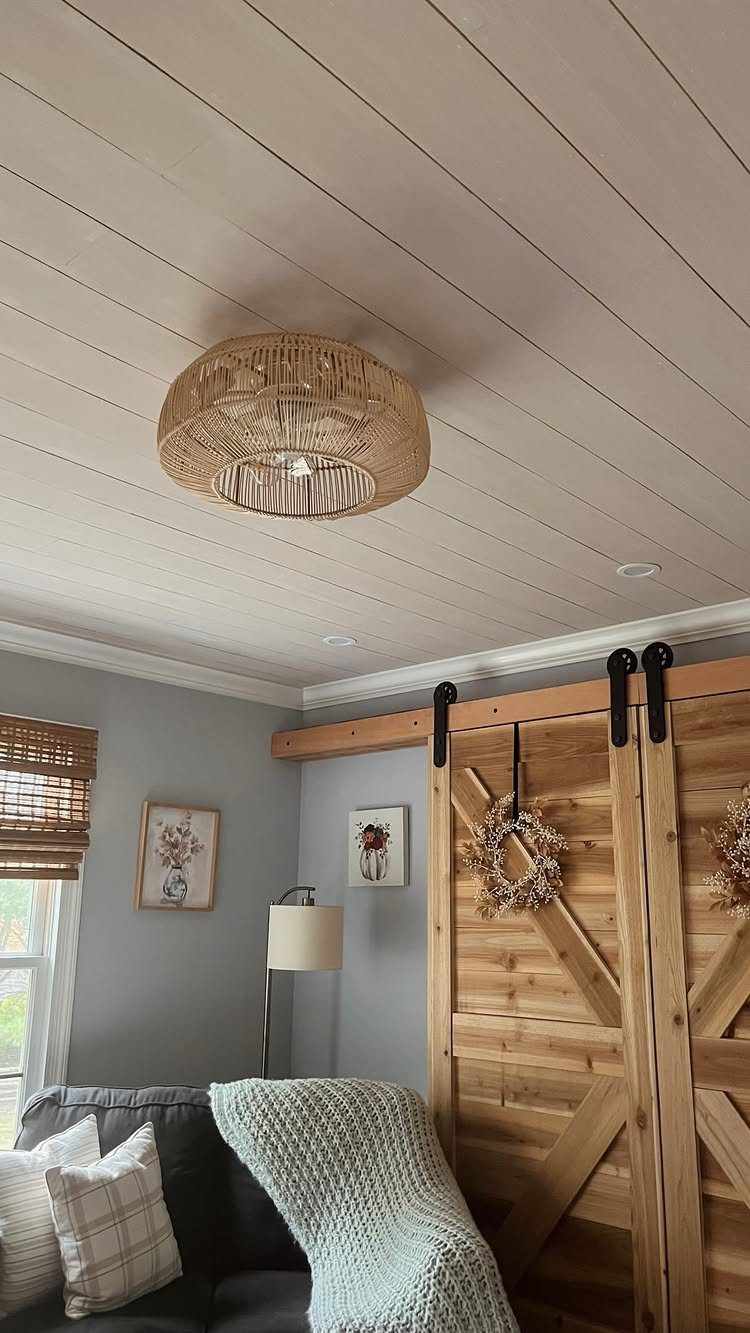
A shiplap ceiling turns the surface you ignore into the one everyone notices first.
I like this move for a room that already has good walls but feels flat, because the planks give your eye somewhere to land without adding clutter at standing height.
White paint keeps the room bright and lets a woven pendant or drum shade sit center stage; natural wood stain drops the same cabin warmth you’d get from log walls.
The boards run the same way as floor joists usually sit, so nailing into structure is straightforward.
Recessed cans around the perimeter handle task light if the pendant leaves corners dim. Two years in, the maker says hers stayed perfectly flat, which tells me proper acclimation before install matters more than the wood grade.
2. Distressed Wood Shiplap Accent Wall
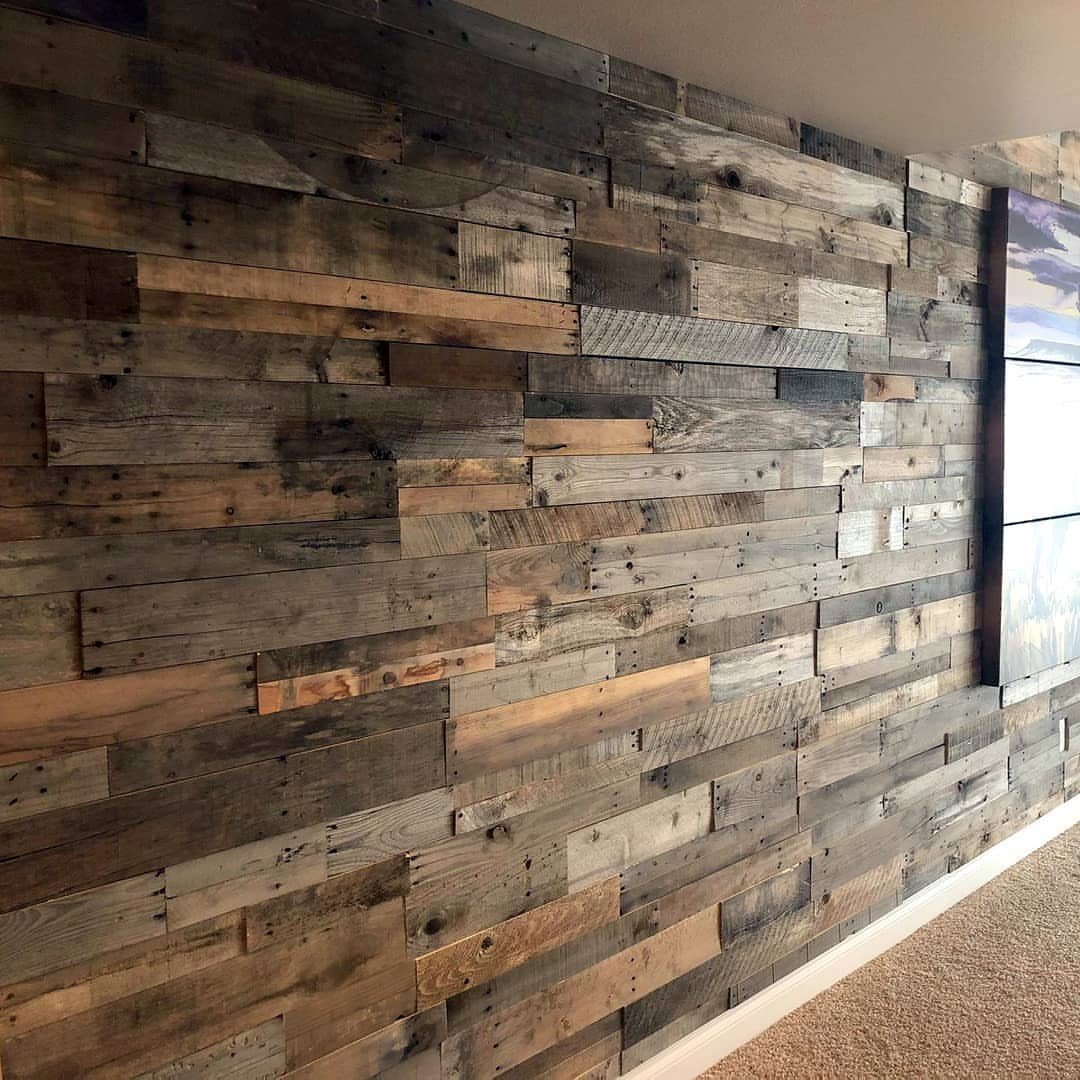
Distressed wood shiplap lives somewhere between reclaimed barn and weathered beach shack, and the variation in tone hides the fact that no two planks match.
That unevenness forgives a wall that isn’t perfectly flat and a paint job that isn’t perfectly even.
You can buy panels with the aging factory-applied or beat up new boards yourself with chains, screws dragged across grain, and a layered stain job.
The factory route costs more upfront but saves a weekend; the hand-distressed route burns time and sawdust but gives you control over how heavy the wear reads.
This warmth works best in rooms that already have some rustic element to anchor it: a leather sofa, iron hardware, wide plank floors. In a space full of chrome and glass it reads costume rather than character.
3. Half Shiplap Accent Wall
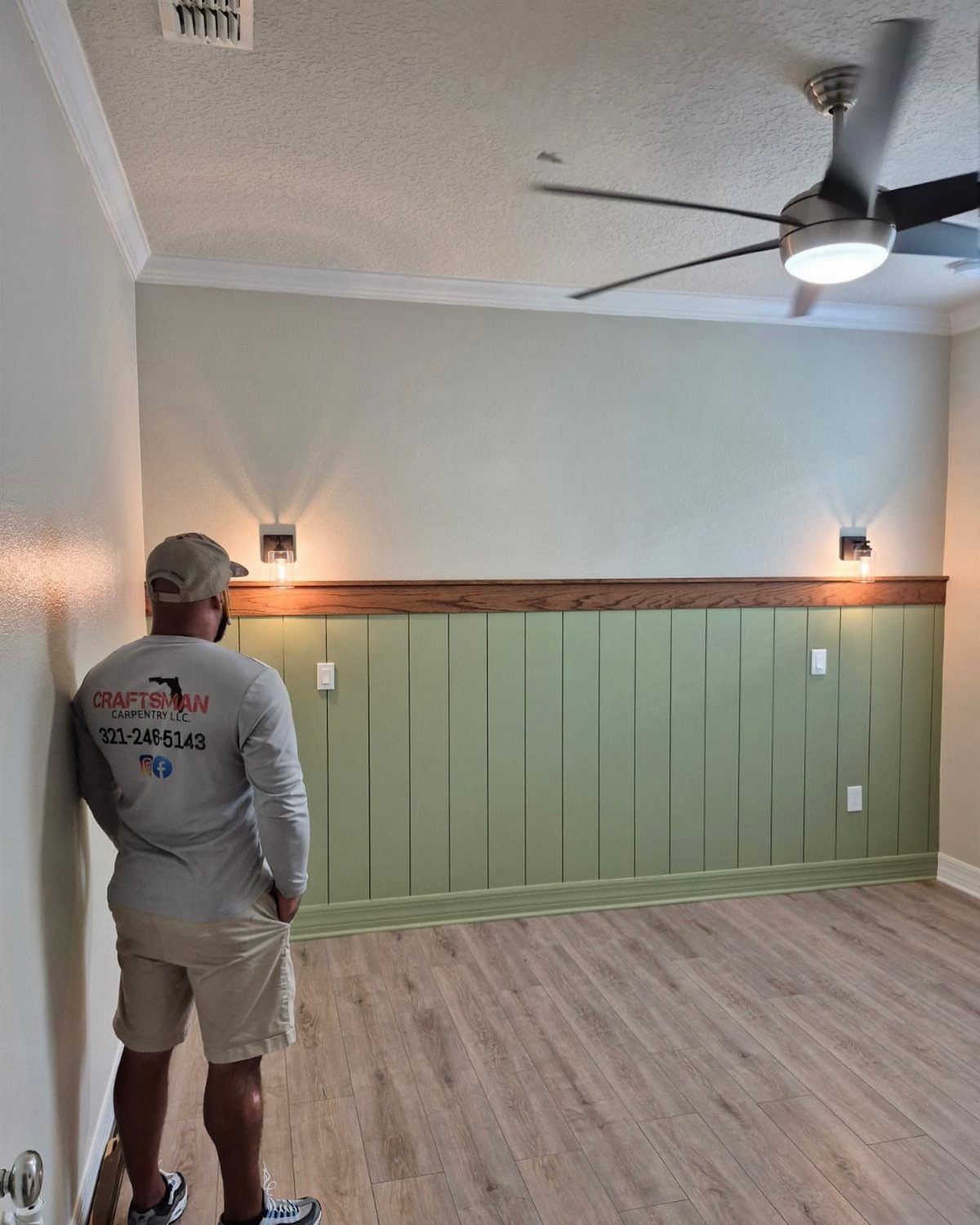
A half wall of shiplap stops at chair-rail height or a little above and caps with a shelf or trim piece, giving you texture where you look and plain paint where you don’t.
Tongue-and-groove boards lock together without visible seams, and pulling the baseboard before install lets the shiplap sit flush to the floor. You can paint the upper wall to match for quiet texture or contrast it for definition.
I would keep the cap depth shallow in a hallway you brush past, deeper in a dining nook where you might set down a drink. The shelf adds function but also collects dust; skip it if you already fight clutter.
4. Shiplap with Trim
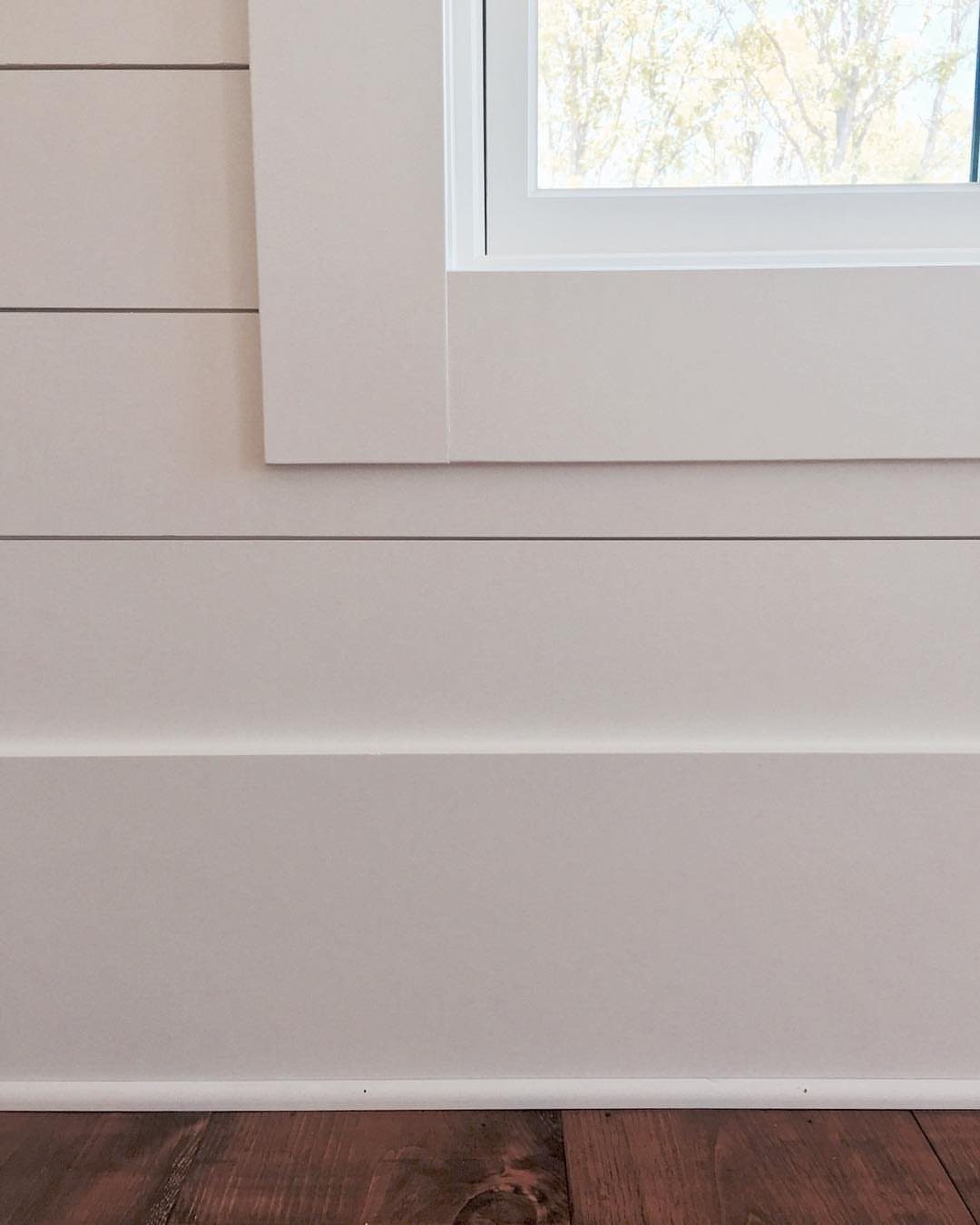
Shiplap meets trim at every edge where the plank field stops and something else begins: window casing, baseboard, crown, or a simple quarter-round that bridges the gap to the floor.
Thick white casing against pale boards gives the installation weight, and that weight is what makes it read finished rather than temporary.
What trim you need depends on what your room already has. Matching existing baseboard profile keeps the shiplap from looking like a later thought; adding a wider cap at the top creates a ledge for frames or small plants.
Quarter-round at the floor covers the expansion gap that wood requires and saves you cutting planks to a line that isn’t perfectly straight.
I would spend the trim budget before upgrading the shiplap itself; clean edges do more for the look than premium pine.
5. Natural Wood Shiplap
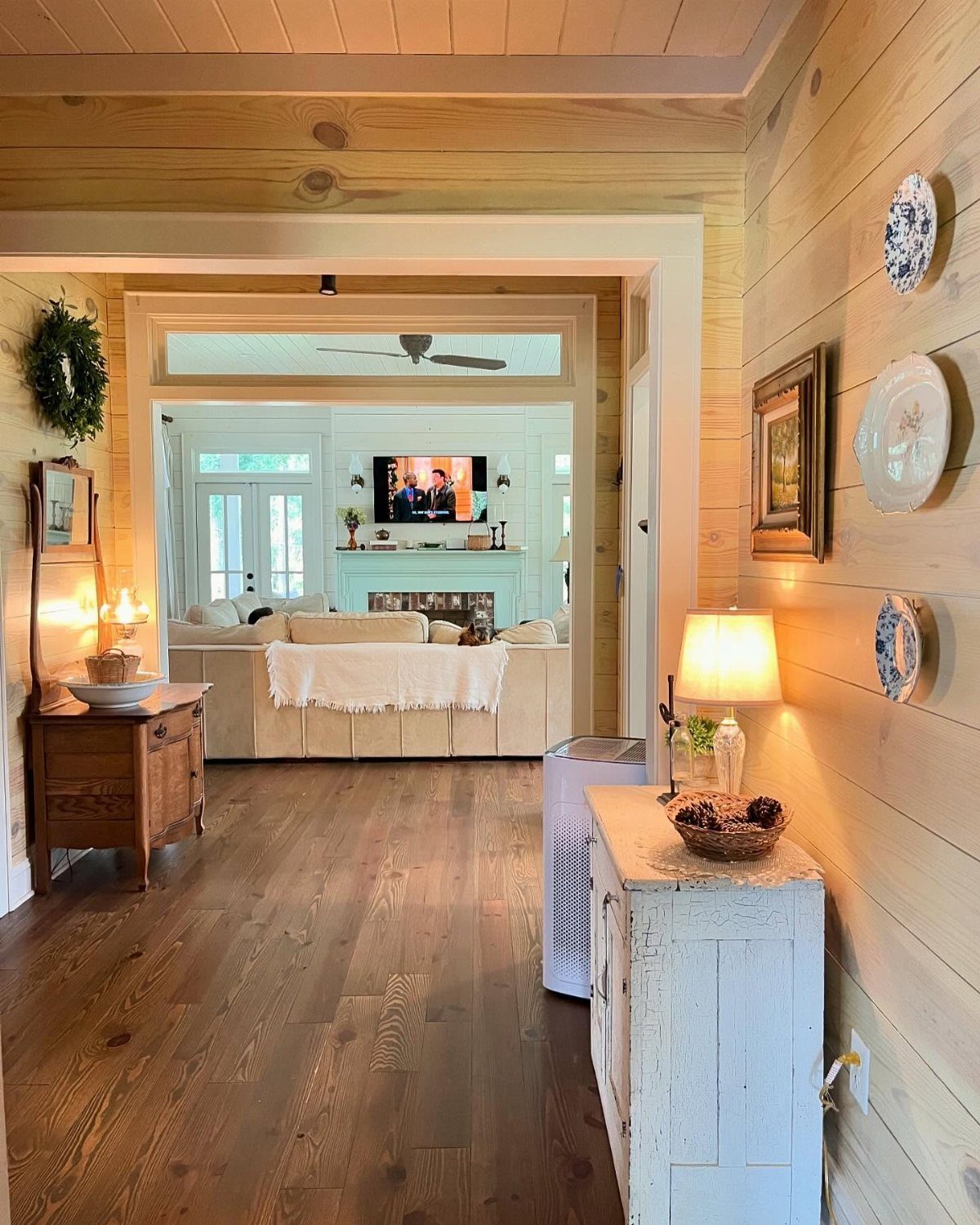
Natural wood shiplap skips the paint entirely and lets the grain do the work, which reads Scandinavian when the tone is pale oak and mountain cabin when it is walnut or cedar.
Boards on both walls and ceiling turn a transitional space into an experience; that much wood can feel heavy in a small room but opens up beautifully when the far end leads to light.
The maker found her tongue-and-groove stock for $50 on Facebook Marketplace, which is the kind of score that makes a project possible when retail lumber prices sting.
Long boards need real transport planning; 12-foot planks in a 5-foot bed mean flags, straps, and a route that avoids highways if your state patrol cares.
I would seal with matte poly rather than high-gloss varnish; the point is touchable warmth, not plastic shine.
6. Shiplap Nook Accent Wall
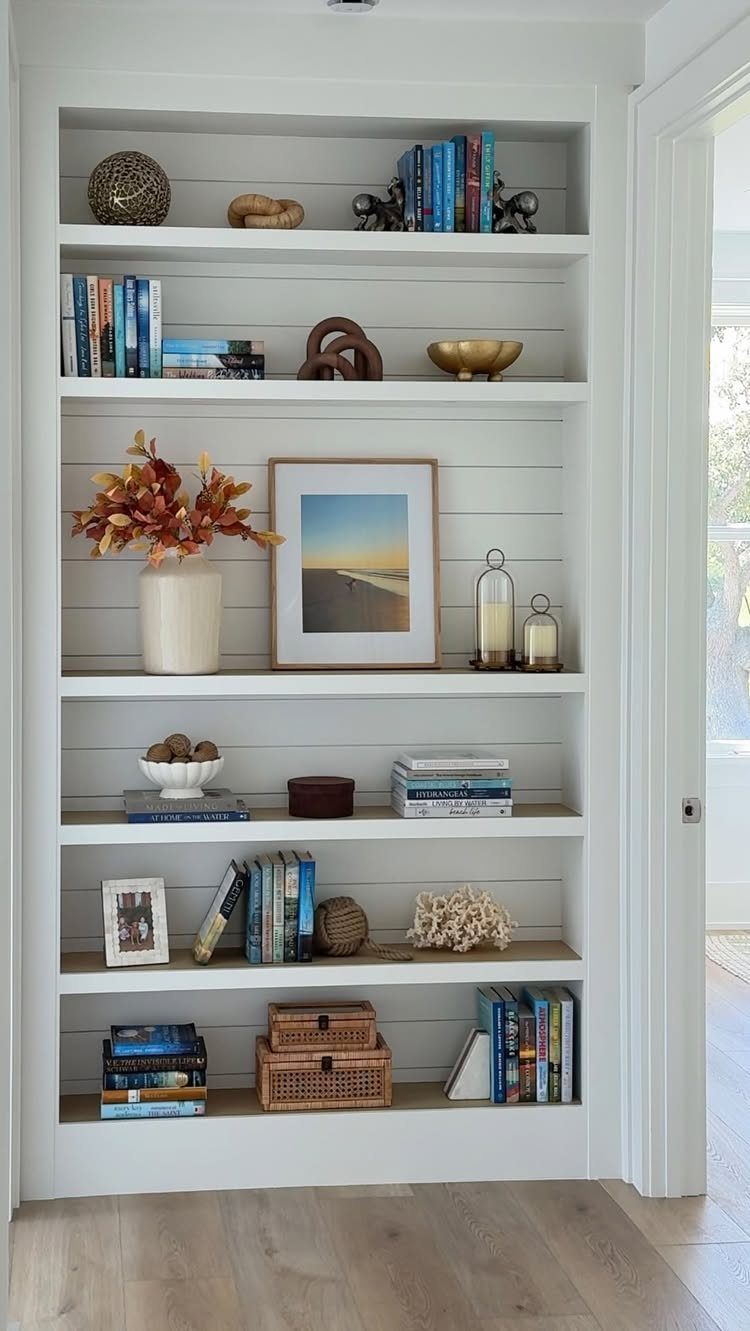
A shiplap-backed nook turns a recessed shelf unit into something that reads built-in and intentional rather than afterthought storage.
The horizontal boards behind the objects give your eye a grid to rest on, which helps a busy arrangement of books and vases feel composed rather than cluttered.
You don’t need a full wall to get the effect.
An alcove off a bedroom, the back panel of a desk niche, or the return wall beside a fireplace can all carry the treatment without the commitment of a whole room.
The maker here kept everything white, which lets the objects pop; staining the shiplap would push the background forward and compete.
I would check the shelf depth before ordering boards. Shiplap sits proud of the framing behind it, and a shallow nook can start feeling like a display case rather than usable space.
7. Horizontal Shiplap
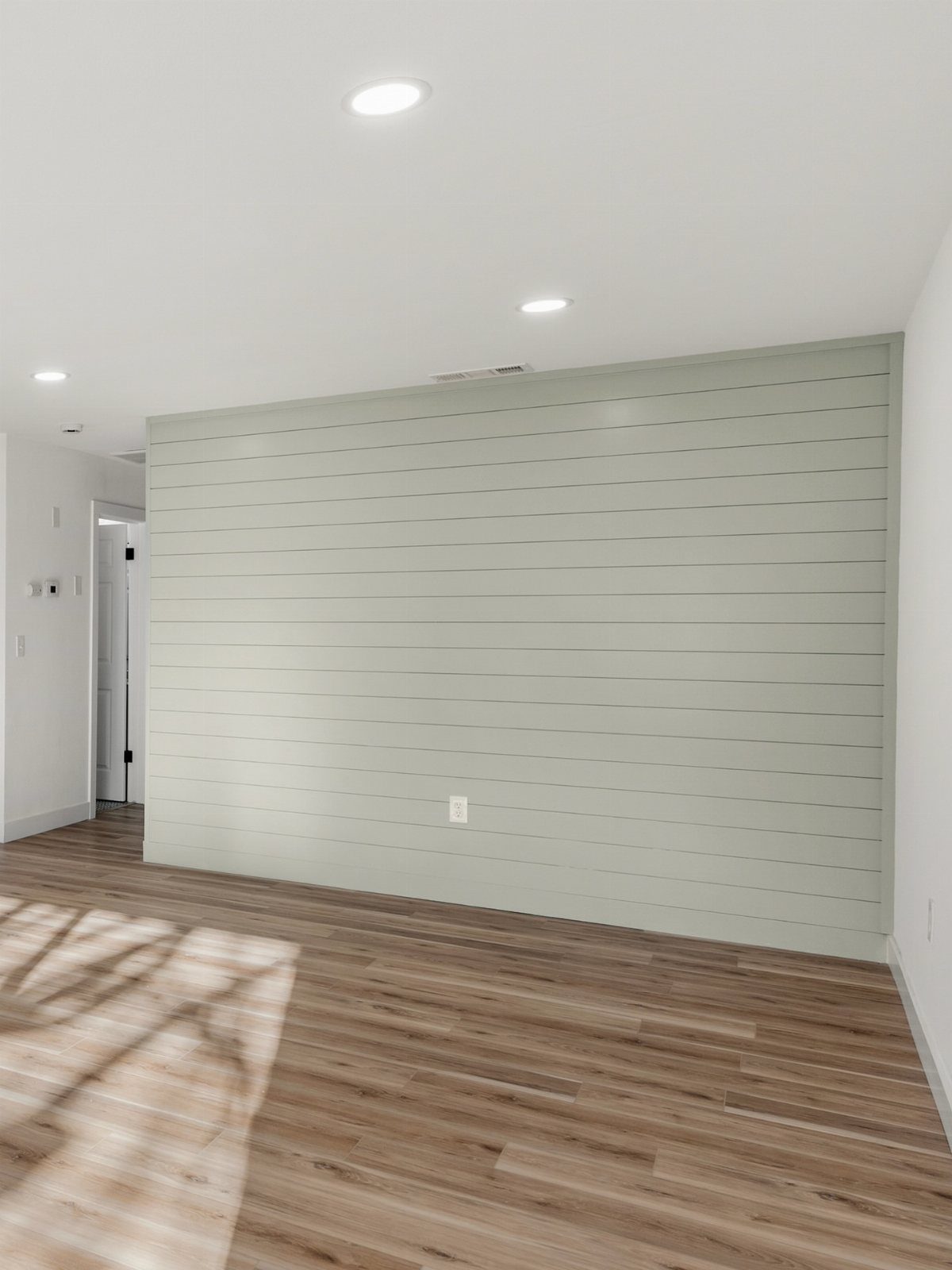
Running boards sideways stretches a room out, which is why I like this move behind a bed or a long sofa where you want the eye to travel.
Sage green keeps shiplap from reading too farmhouse; paint it white if you want the cleaner, brighter version that pairs with matte black fixtures and wood furniture.
A full wall of horizontal boards takes a weekend in pine or MDF, with the biggest variable being whether you rent a nail gun or already own one.
I would not do this in a narrow hallway; the widening effect needs space to breathe.
8. Vertical Shiplap
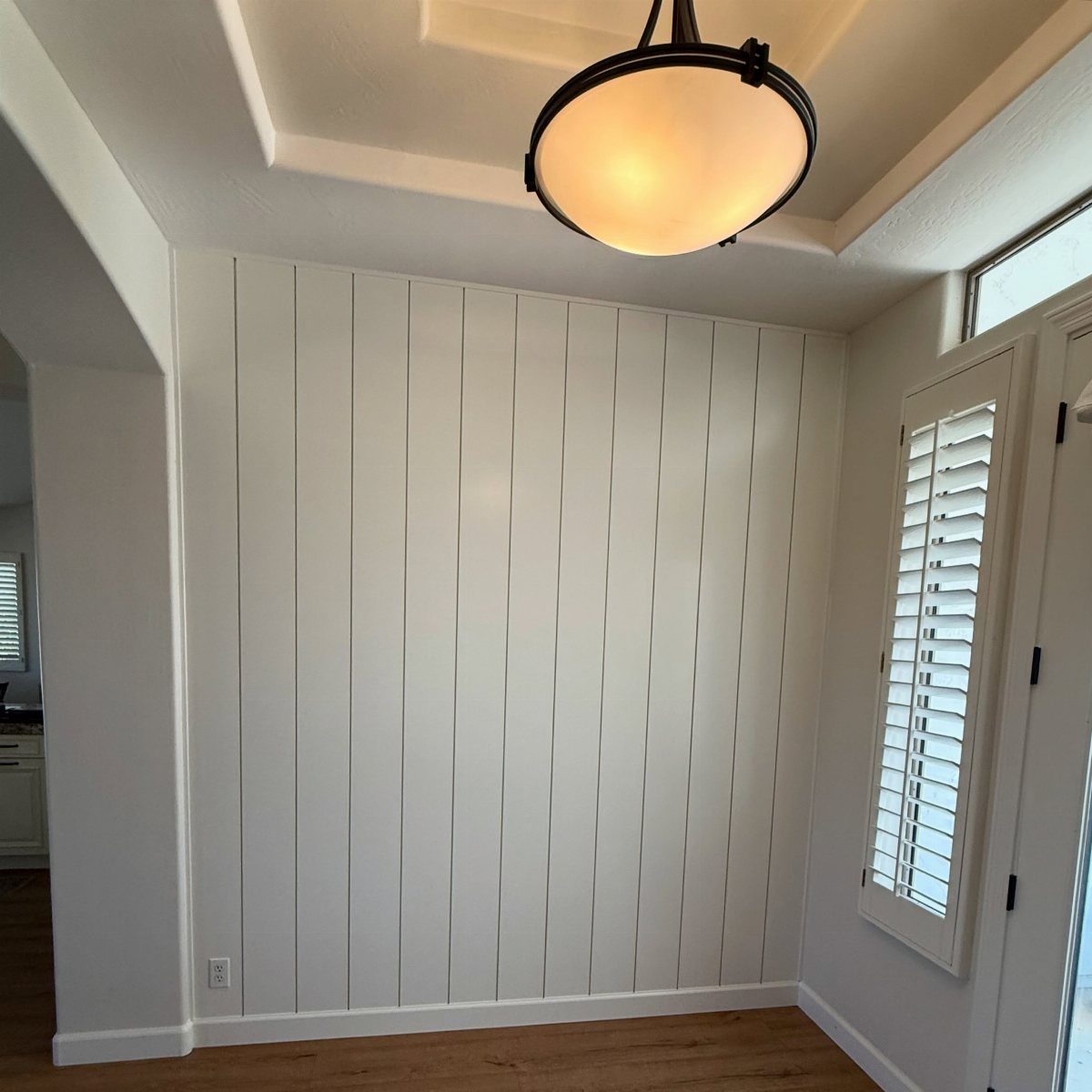
Low ceilings are the reason to turn the boards upright. White keeps it airy, though I have seen black shiplap run this way in a modern bedroom and the tall, dark lines read sophisticated rather than heavy.
A half-wall of vertical shiplap works in a living room with a standard ceiling height; it elongates the wall without the cost of floor-to-ceiling boards.
I would check the stud spacing before buying material, since vertical boards need solid anchoring at each stud.
9. Bathroom Shiplap Accent Wall
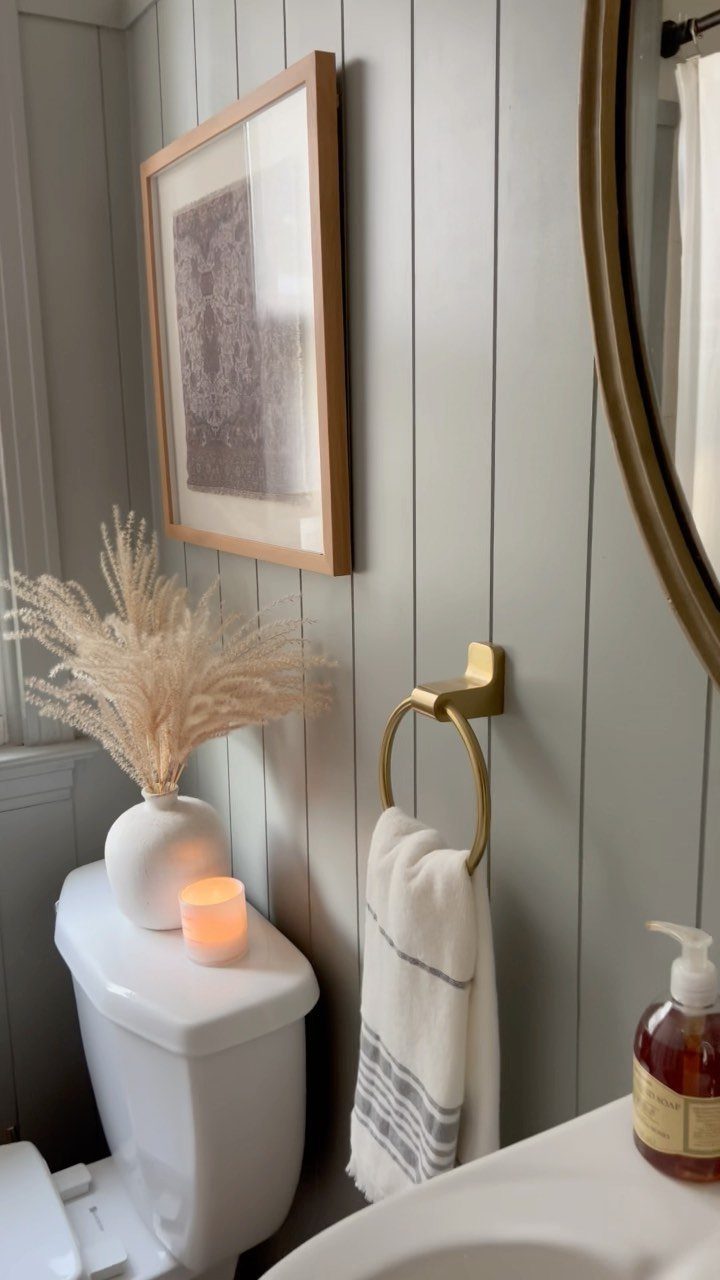
Bathrooms collect moisture and visual clutter, so a shiplap wall here needs both purpose and protection. Light gray vertical boards behind the vanity and toilet stay outside the direct splash zone.
I would use MDF only if the bathroom fan runs strong and long; otherwise spend the extra on primed pine or PVC shiplap that will not swell at the tongue-and-groove joints.
A full wall of shiplap behind a pedestal sink replaces a backsplash and gives the room a backbone. Keep the color light to bounce what natural light you have.
10. Shiplap Shower Accent Wall
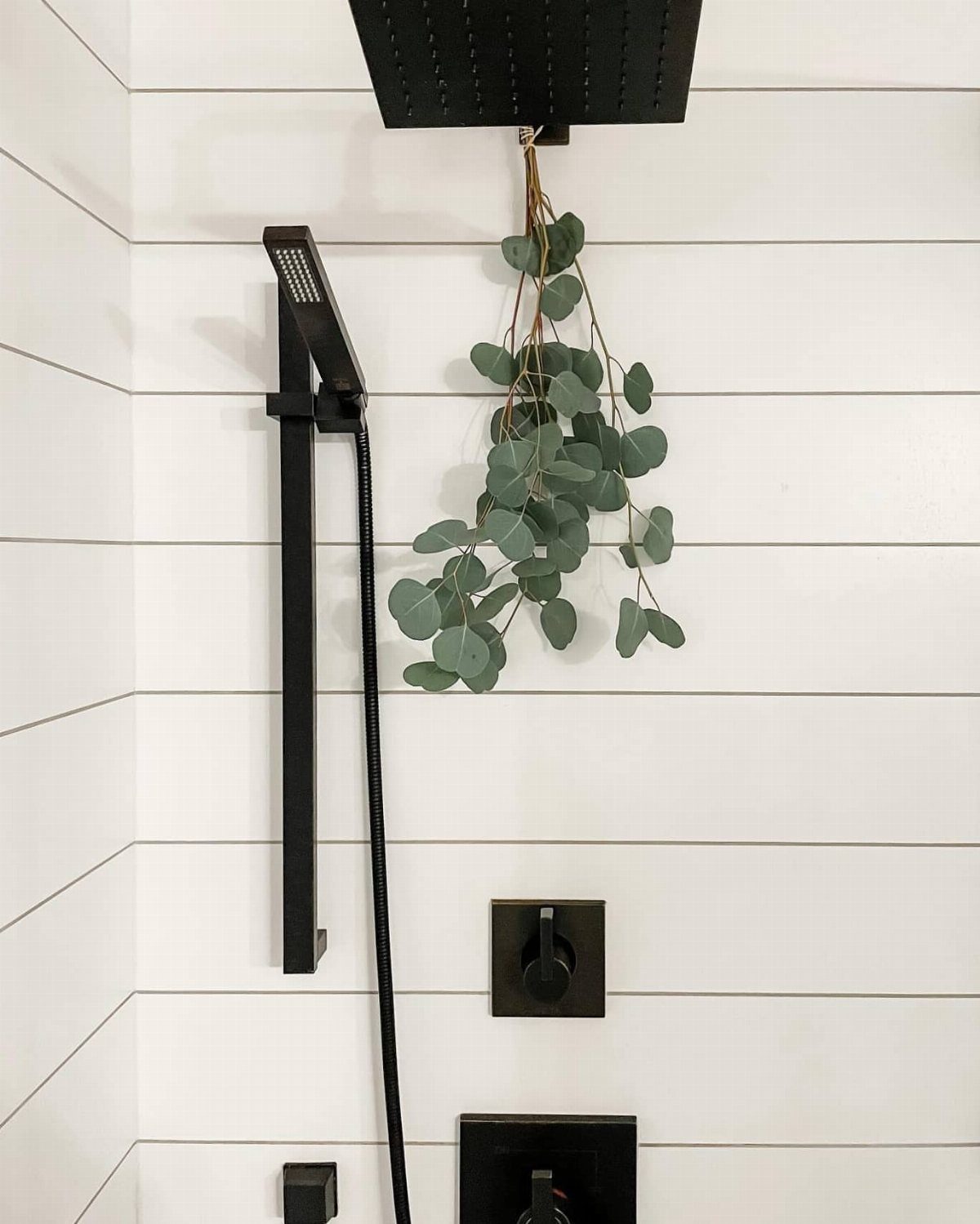
A shower is the riskiest place for wood boards, which is why the white shiplap here is almost certainly PVC or a waterproof composite dressed to look like painted pine.
The matte black fixtures give it a modern edge that keeps the farmhouse feel from tipping too cute. I would not attempt this with standard MDF or even sealed pine unless I was ready to replace it before long.
Check your local code: some inspectors treat shiplap in a wet area as a finish over backer board, others want full waterproofing behind every seam. Real wood costs more than the synthetic version, but the synthetic version wins here.
11. Shiplap Fireplace Accent Wall
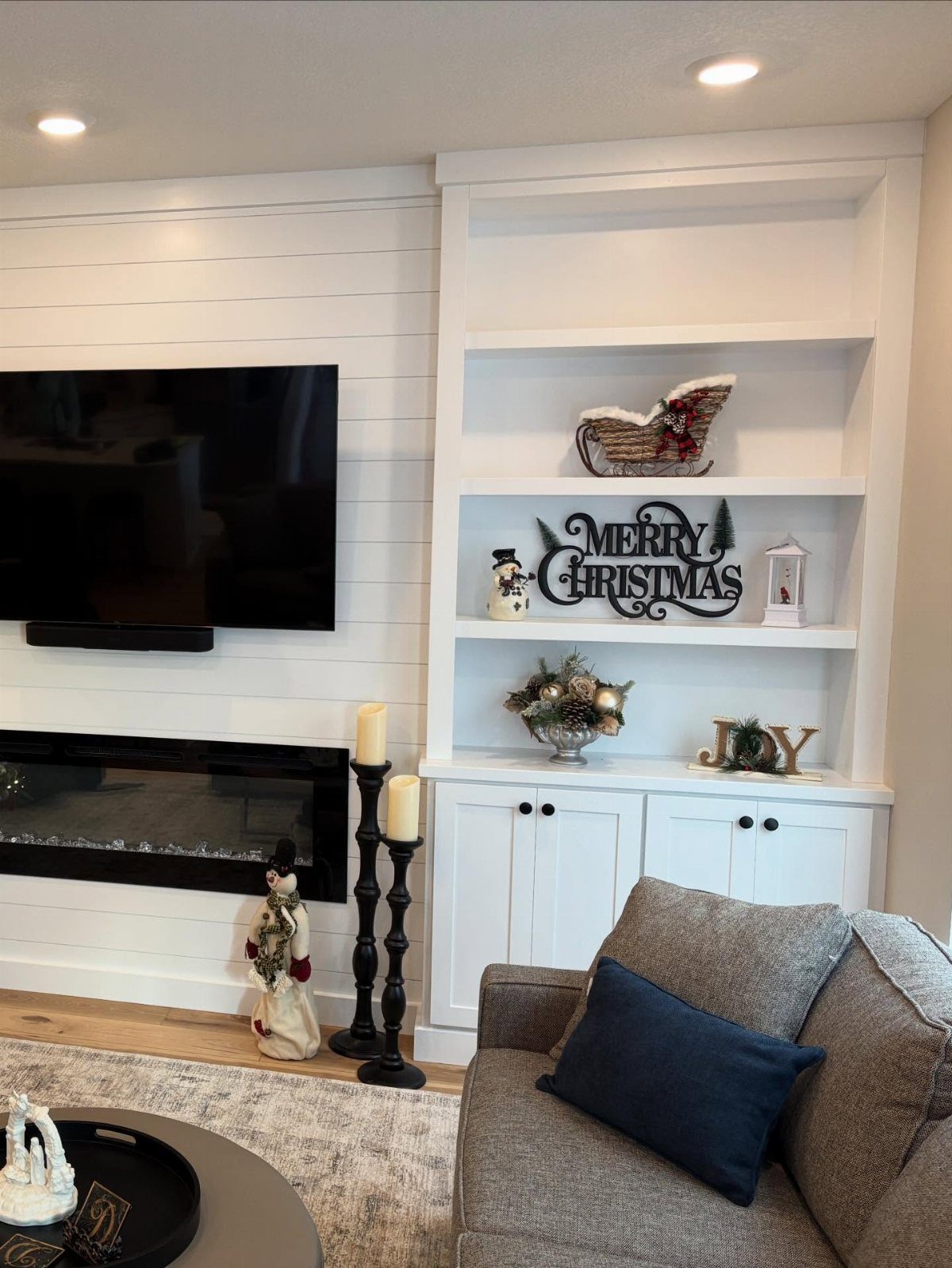
A fireplace wall is where shiplap earns its keep as a frame rather than a feature. White boards wrapping the electric fireplace and continuing behind the TV turn three separate elements into one intentional plane.
I like this because the built-ins on either side already carry the visual weight; the shiplap unifies them without competing.
Electric matters: with no real flame, you can run boards right to the insert. Gas or wood would need noncombustible clearance that changes the whole project.
I would measure the TV mount depth before installing boards, since shiplap adds thickness that can throw off a slim bracket.
12. Dark Green Shiplap Wall
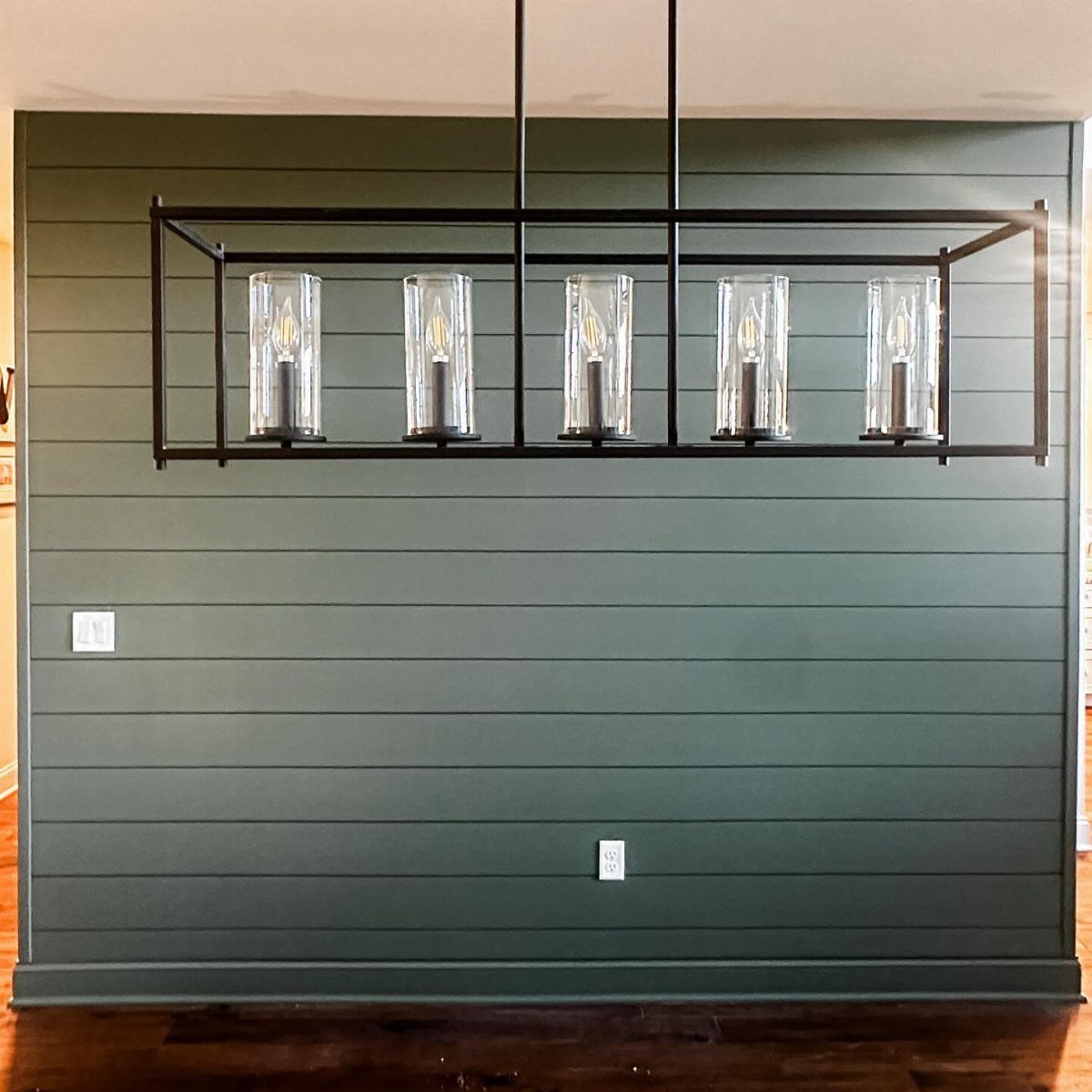
Dark green shiplap reads moody and intentional, not like a color you settled for. Horizontal boards in a dark color work when the room has enough ceiling height and light from other walls to balance the depth.
I would not do this in a room with one window or a low ceiling; the color will swallow it.
A satin or eggshell finish catches light across the ridges and keeps the planks from looking flat.
A black chandelier is the right weight against dark green, but brass or aged gold would warm it up if your floors run cooler than these hardwoods.
13. Blue-Grey Shiplap Wall
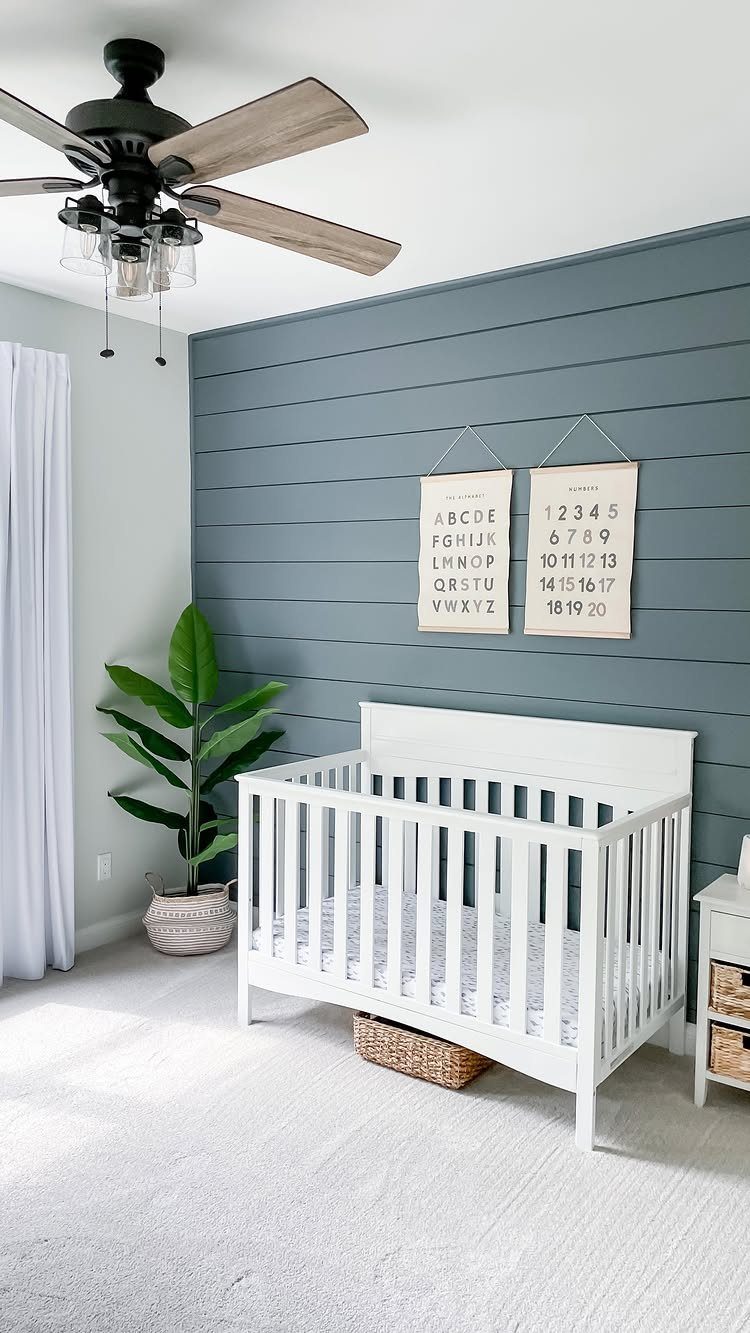
Blue-grey shiplap reads as neutral in most light, which makes it safer than a true color for a room you’ll repaint when the crib becomes a bed.
The tone works with white trim and natural wood both, so the furniture can shift without clashing.
A nursery wall is a small, low-stakes place to test a color you might carry into a hallway or guest room later.
Two coats of paint over primed shiplap is standard; the boards’ grooves catch light and keep the color from going flat.
I’d skip this in a north-facing room where it turns chilly. Warm light brings out the grey; cool light drags it toward institutional.
14. Entryway Shiplap Accent Wall
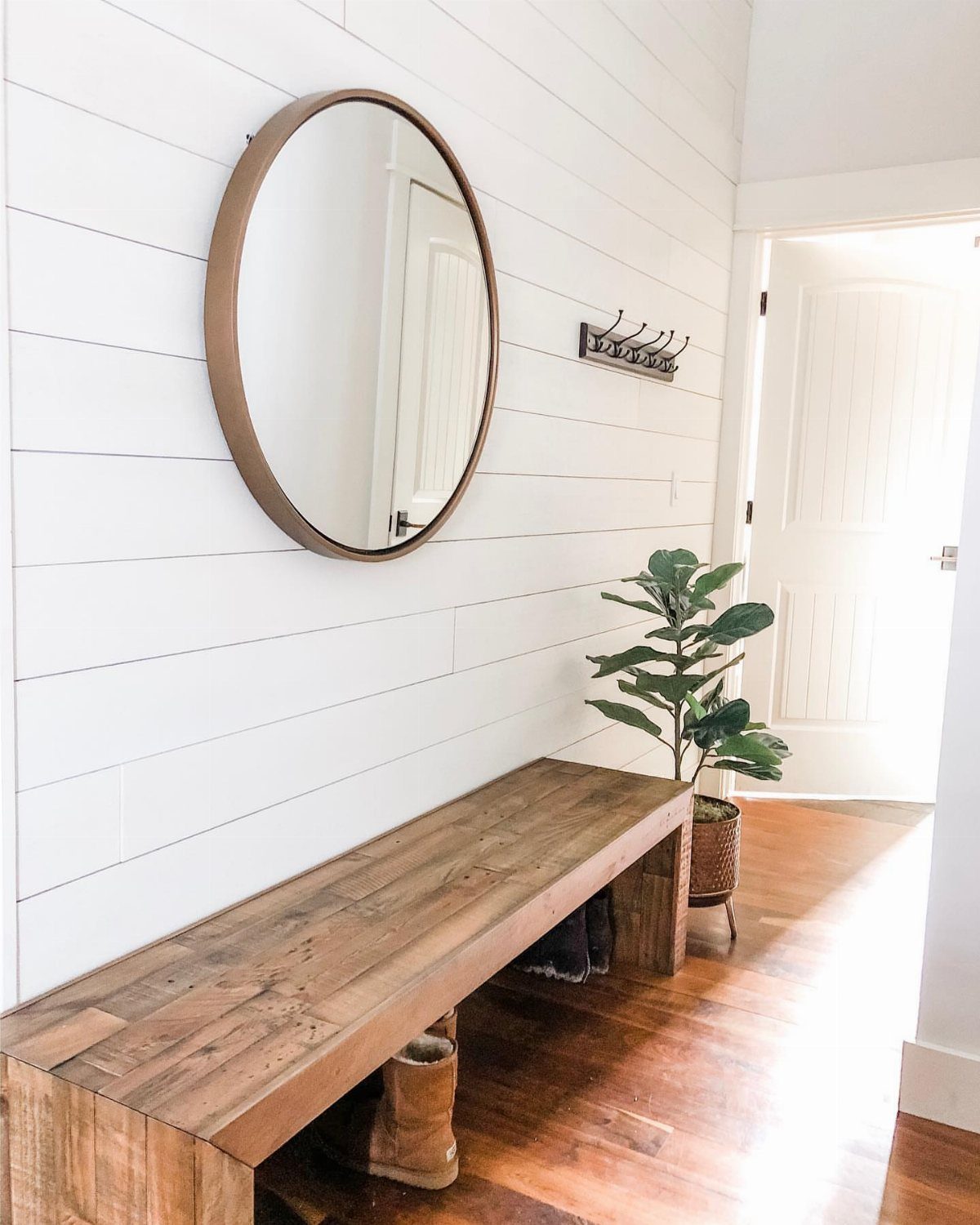
An entryway shiplap wall gives you something to look at while you tie your shoes and a surface that forgives scuffs better than flat drywall.
White keeps the space open in a spot that usually lacks windows, and the horizontal lines draw the eye toward whatever hangs at eye level: mirror, hooks, a small shelf.
A bench that sits far enough out to stash boots underneath matters more than it looks. I leave a foot or so between bench back and wall; less traps heels, more wastes floor space in a narrow hall.
Coat hooks through shiplap need backing behind the boards or they wobble. I mark stud locations before installing and place hooks there, or I add a horizontal 2×4 between studs at hook height.
The clean look is worth the extra time.
Maintenance of Shiplap Walls
Dust settles in the shadow gap between boards, so a microfiber cloth or vacuum brush attachment gets there before it builds up.
Painted shiplap handles a damp cloth with mild soap for scuffs; natural wood or reclaimed finishes stay cleaner with dry dusting only, since moisture can spot the stain.
That shadow line from the rabbet joint looks sharp until you are scrubbing cooking grease out of it above a stove. I would wipe kitchen shiplap monthly rather than wait for a film to form.
In a bathroom, the fan matters as much as the wipe-down; damp boards in still air grow mildew at the tongue-and-groove seam.
Choosing Shiplap Colors
White shiplap reads farmhouse because it has been painted that way so often, but the boards themselves start raw.
A coat of paint changes the appearance more than most people expect; the same boards that looked dull unfinished turn crisp once covered.
Behr’s Polar Bear White is the color that keeps coming up for this look. Bright whites bounce light in a dark room, while natural pine or oak keeps a Scandinavian airiness without the cottage reference.
Walnut runs deeper and richer, better for a study or bedroom where you want the wall to feel grounded.
I would paint shiplap in a nursery or high-traffic hall; the finish takes scuffs and wipe-downs better than bare wood. Satin or eggshell handles wear without the plastic look of high-gloss.
Cost Considerations
Peel-and-stick planks run $8–$12 per square foot, which looks higher until you count the zero labor and the fact that you will not need a nail gun, saw, or paint.
Primed and painted boards at Home Depot save a step if the white matches your plan. Buying finish in the same trip lets you test sheen against the actual boards; matte scuffs faster, gloss wipes easier.
I would not buy paint online for this project, since the color shifts against wood grain in a way swatches do not predict.
Board width and the gap you leave for expansion change the final board count enough that I would rather measure my own wall and do the math at the store than trust an online estimate.
Add nails, caulk, and trim, and even a DIY install runs past the sticker price of the wood itself.
Frequently Asked Questions
Is shiplap outdated in 2026?
The all-white farmhouse wave has faded, but shiplap itself keeps showing up in 2026 with natural stains, vertical runs, and finishes that mix paint with bare wood.
A real board still catches light and shadow in a way drywall never will, which is probably why builders and DIYers keep reinventing the look instead of shelving it.
How to shiplap an accent wall?
Measure the wall, buy boards to fit, and cut each piece to length with the clean face up for the best edge.
A stud finder maps what is behind the drywall before you nail, and checking for pipes or wires first saves a mid-project surprise. Start at the bottom and work up, locking tongue-and-groove joints as you go.
Is it cheaper to do drywall or shiplap?
Traditional pine shiplap runs $0.75–$2.50 per square foot at lumber yards and big box stores, which can beat drywall plus mud, tape, and paint if you install it yourself.