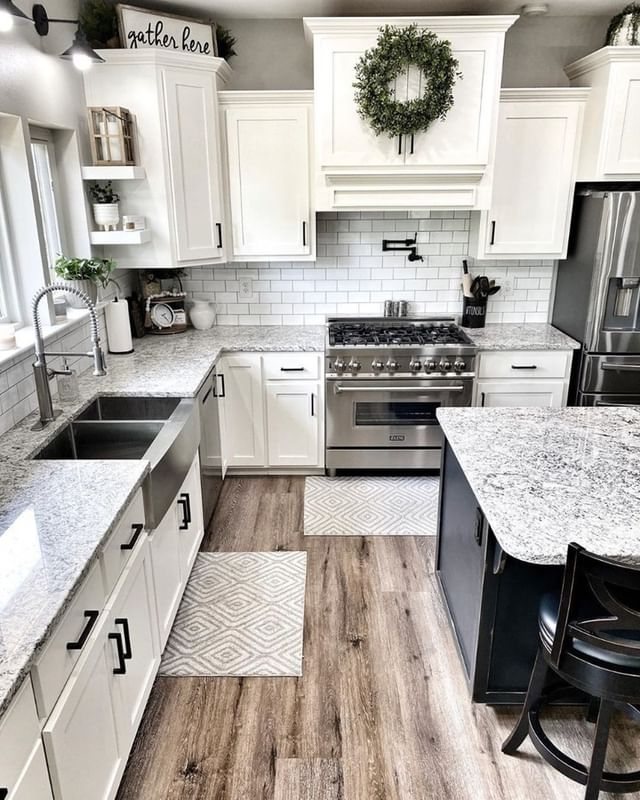
The right kitchen flooring for white cabinets depends less on the cabinets themselves than on the undertone hiding in that white and the light your kitchen gets at the hour you use it most.
What reads as clean in a north-facing room can turn sterile in southern exposure, and a warm oak plank that anchors cream cabinets will fight a true gray.
Porcelain planks that read like stone, natural stone that needs yearly sealing, and checkerboard laid on the diagonal to stretch a small space all make the list, along with plank widths wide enough to hide daily grit better than narrow boards.
[link-whisper-related-posts]1. Gray-toned Natural Stone Flooring
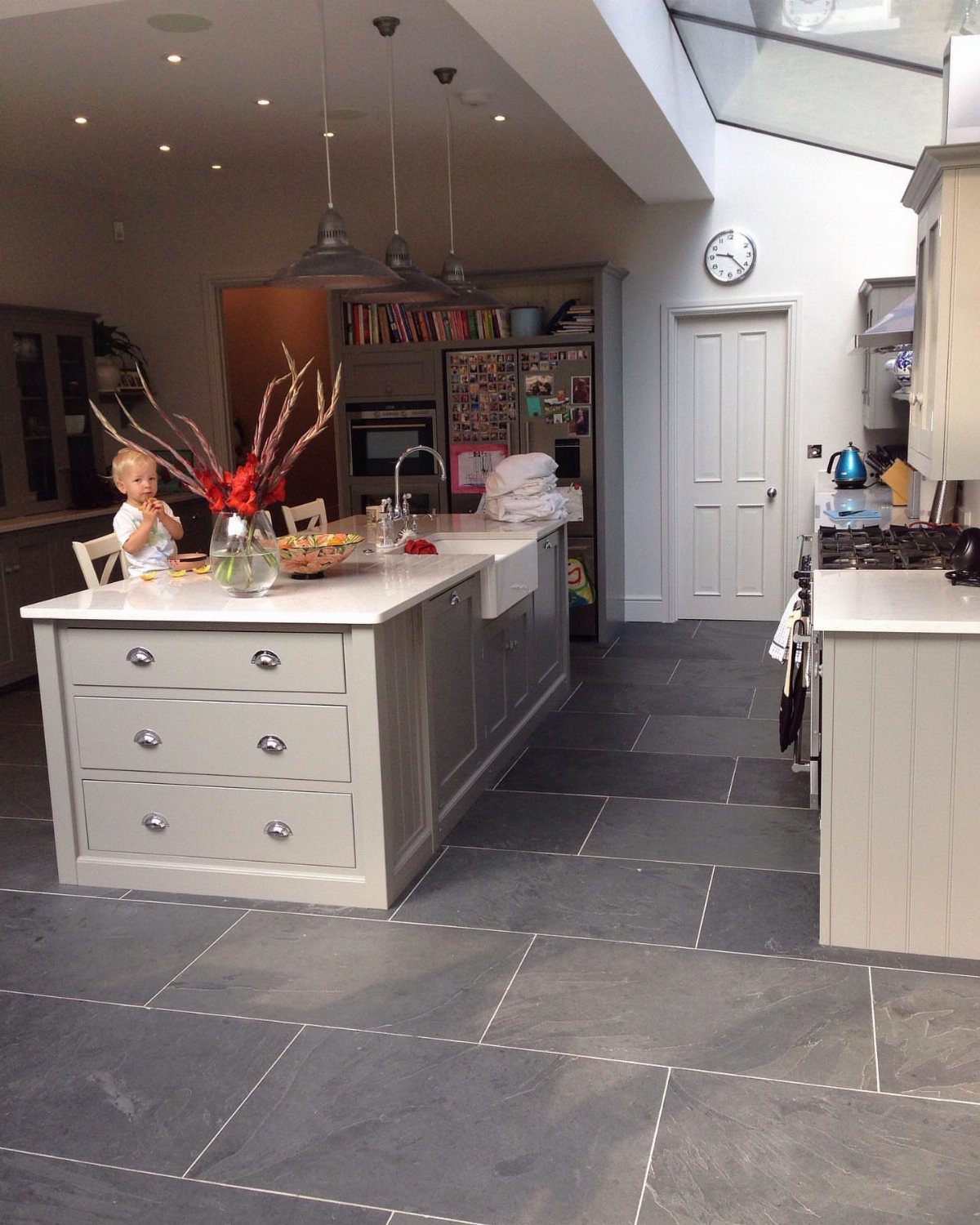
Gray-toned natural stone or porcelain tile works when your white cabinets carry a true gray undertone, not ivory or cream.
Bluestone and cooler gray marbles will turn an off-white cabinet yellow and dated, so hold your paint chip against the stone sample in daylight before you buy. Porcelain gives the same look with less upkeep than real stone.
I’d pick this for north-facing kitchens where the light stays flat; the gray adds depth without darkening the room.
2. Dark Hardwood Floor
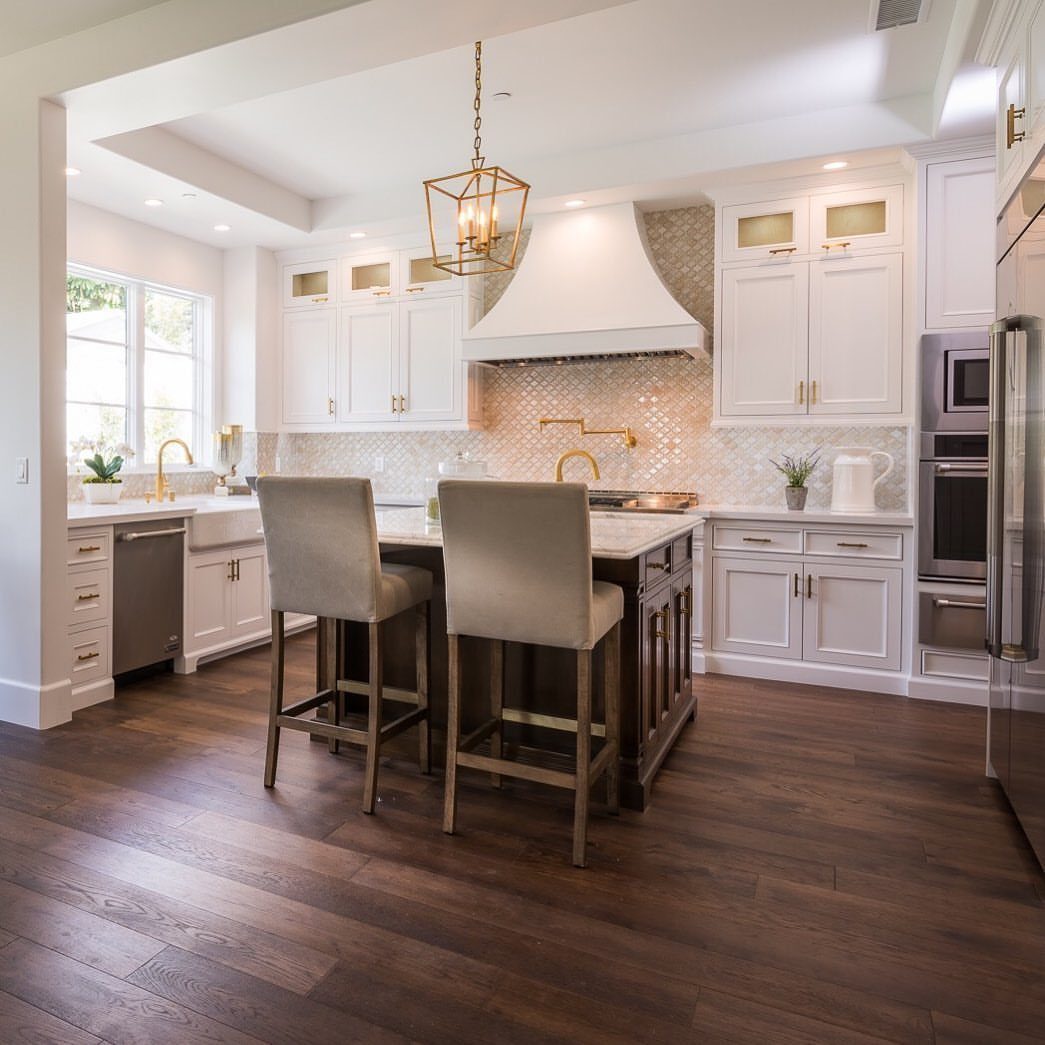
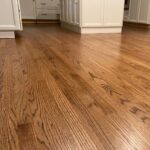
Medium or dark hardwood planks against white cabinets build the kind of contrast that reads expensive without the actual expense of marble.
A warm white with yellow or pink undertones settles right into this pairing; the wood picks up those notes and keeps the kitchen from feeling sterile. Brass or black hardware on the cabinets sharpens the effect.
Wide planks show fewer seams and hide the grit of daily traffic better than narrow boards. If your kitchen opens to a living area, this floor bridges both spaces without shouting "kitchen."
3. Black and White Checkerboard Floor
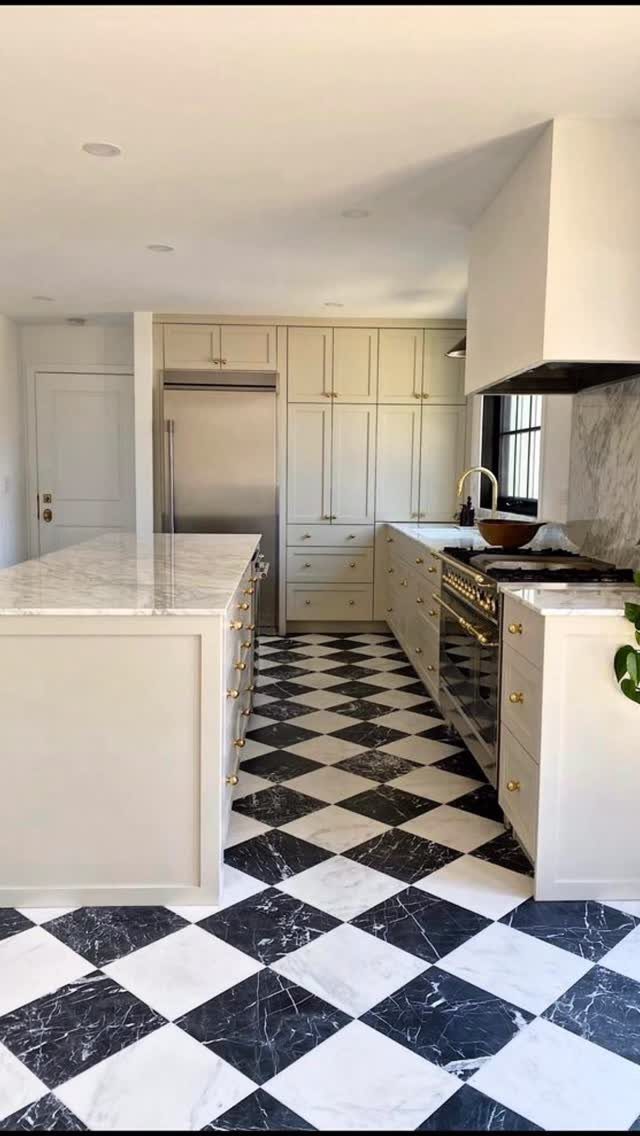
A black and white checkerboard floor in marble tile gives white cabinets a graphic backbone that reads vintage and current at once. Running the pattern on the diagonal stretches the room visually and softens the grid’s rigidity.
Honed marble finish matters here: polished tile in a kitchen turns slick with a single splash.
This pattern hides daily dust better than solid white, which is worth the extra layout time if you cook most nights.
4. Limestone Flooring
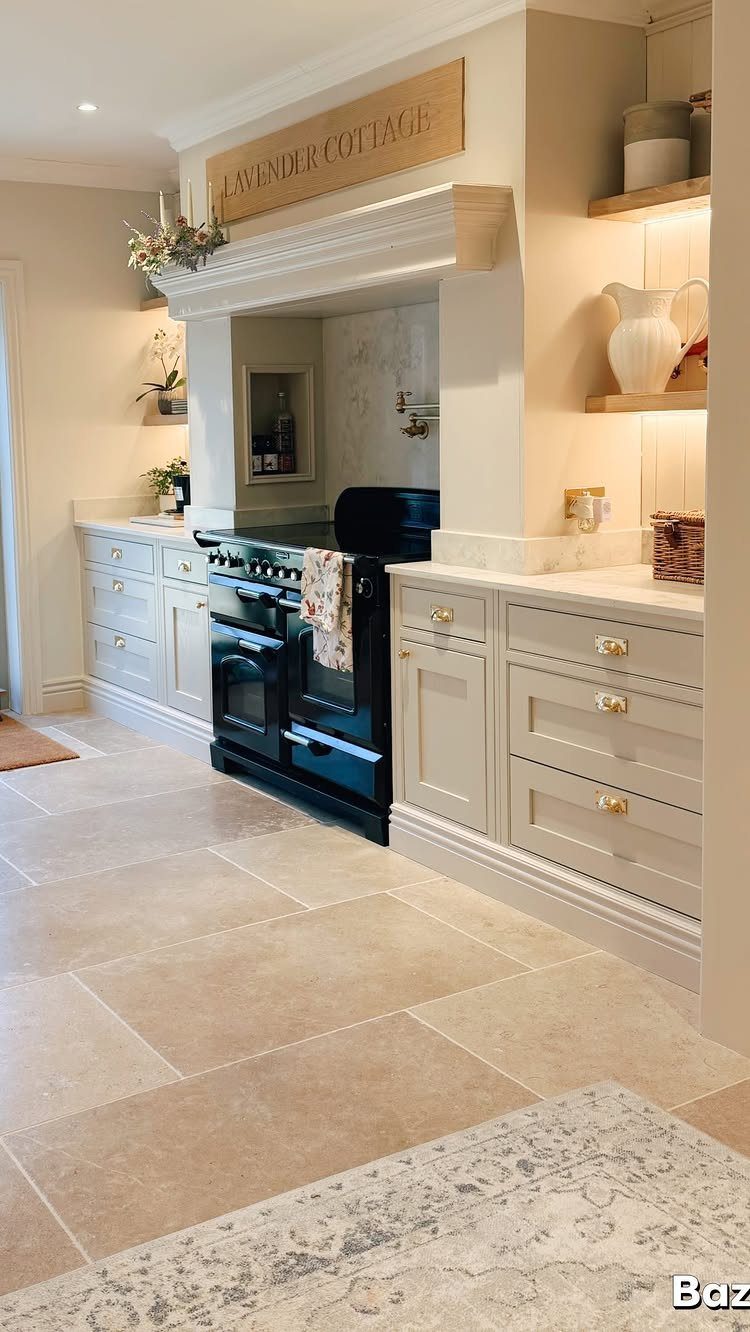
Limestone takes a beating and still looks like it belongs in a house older than yours, which is why it outlasts trend cycles.
The range of tones runs from oatmeal to mushroom to near-gray, so bring your cabinet sample to the stone yard and check it at the time of day your kitchen gets its steadiest light.
A warm limestone against a stark white cabinet goes flat; a creamy white against gray-veined limestone turns muddy.
I’d use this for a kitchen that sees boots, dogs, and dropped pots. Seal it, and the patter only gets better.
5. Light-colored Flooring
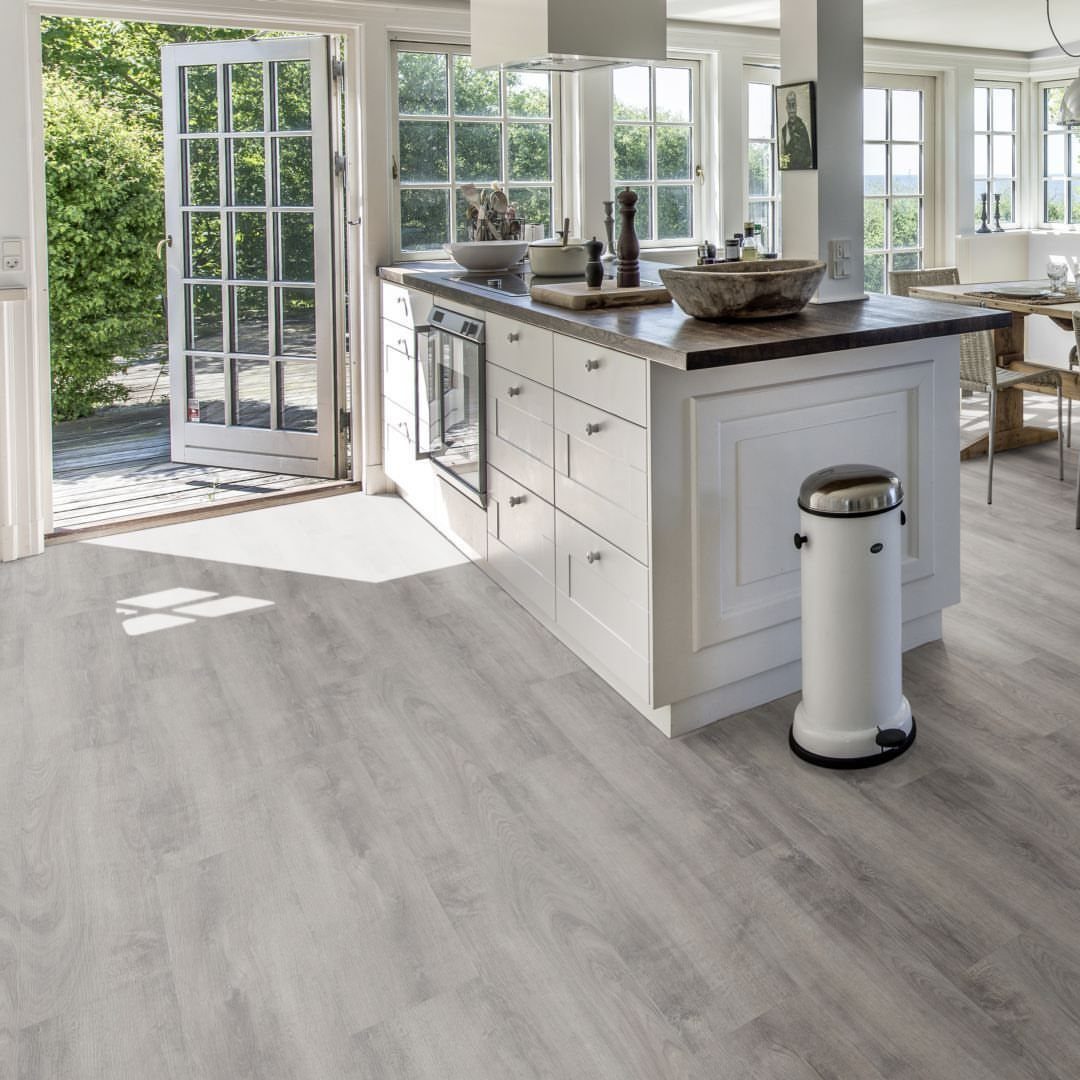
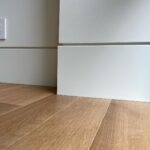
Light ash, white oak, or a pale wood-look tile keeps a small kitchen from feeling like a galley and makes a big one feel like a loft.
The trade is contrast: very light floors with white cabinets can wash together and leave the room floating, untethered.
A medium floor anchors the cabinets; a light one needs something else to do that work, a dark island or a strong hardware finish.
If your kitchen opens to a deck or patio, this flooring extends the sightline outside and buys you visual square footage you didn’t build.
White cabinets offer great latitude when it comes to kitchen flooring ideas. ‘The beauty of white cabinets is the flexibility they provide for other details,’ says Erika Jayne, a DC designer, general contractor and owner of Erika Jayne Design.
6. White Marble Floor Tiles
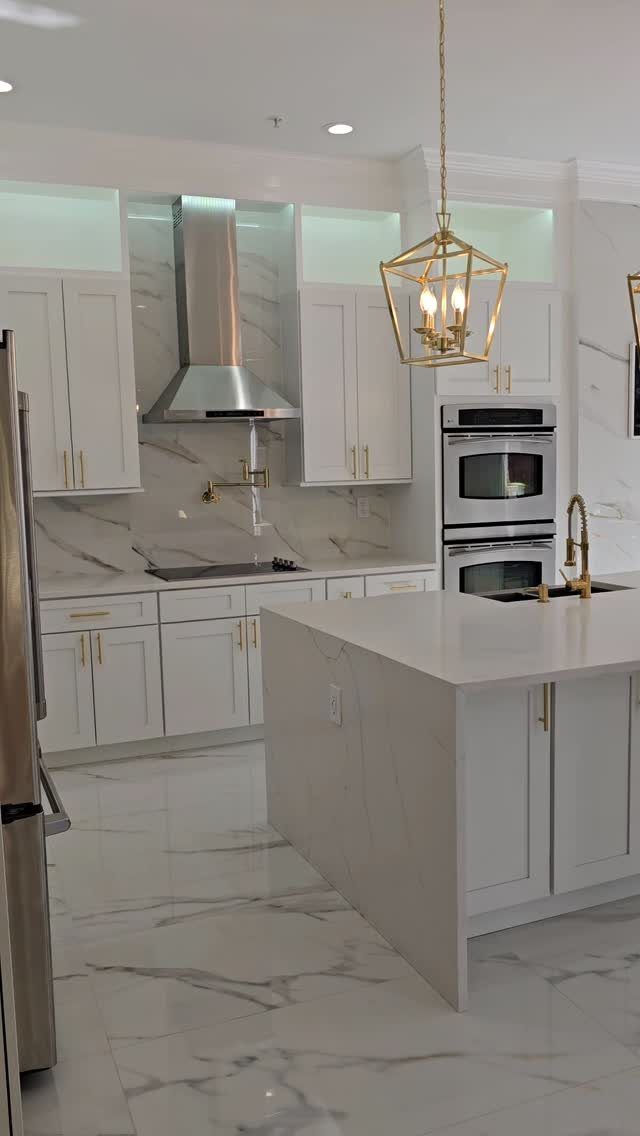
White marble-look floor tiles with soft gray veining let white cabinets read as intentional rather than default.
The veining does the work of adding pattern, so you can keep the rest plain; gold or brass hardware warms the coolness of the stone-look porcelain.
Glossy finish reflects light upward in a room with limited windows, though it will show grit faster than matte.
Porcelain handles the water and dropped knives that would etch real marble in a month. I’d use this in a kitchen where the floor needs to feel special but the budget needs to stay sane.
7. Grey Wood-look Plank Flooring
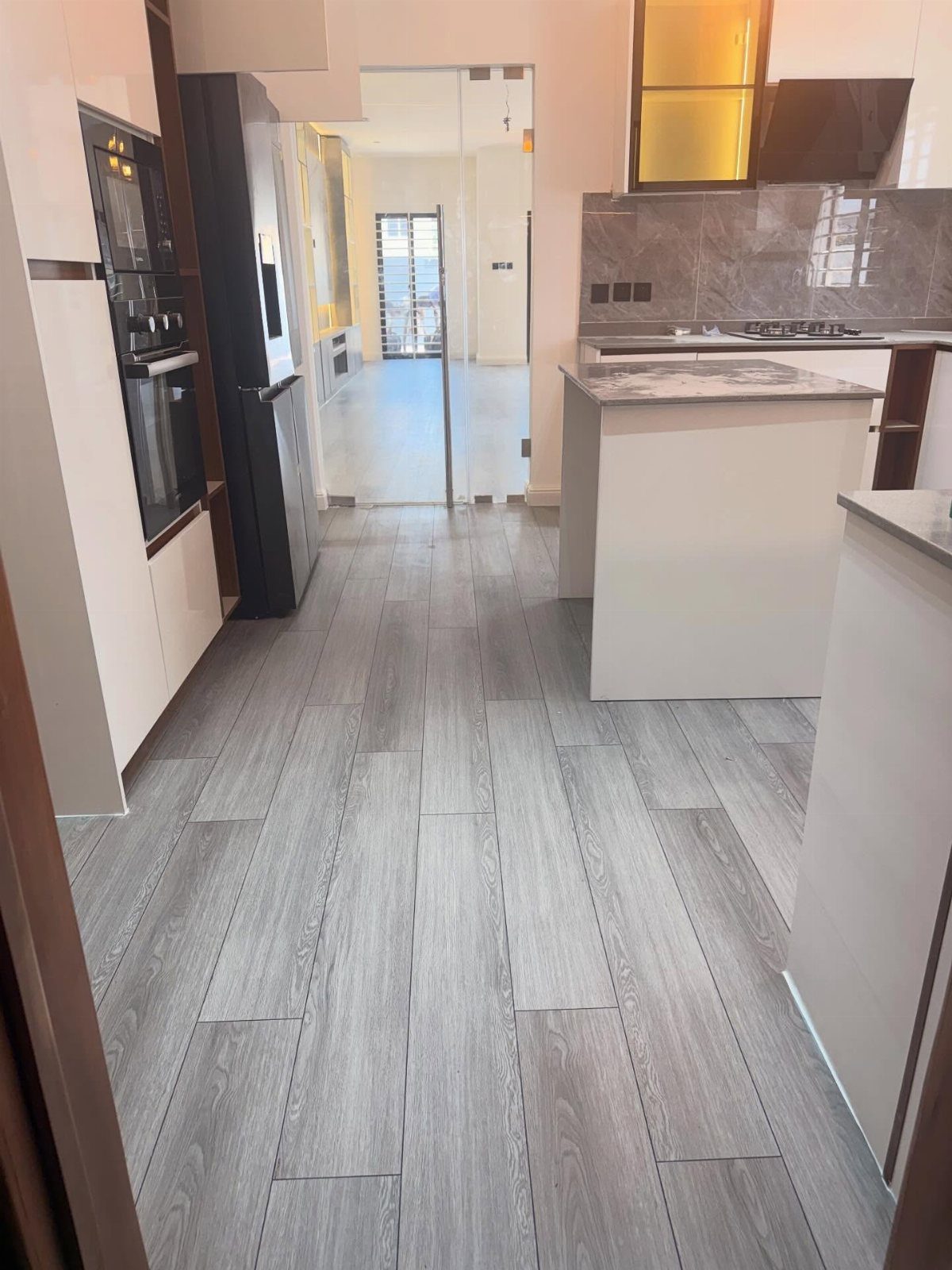
Grey wood-look plank flooring gives you the warmth of oak without the Sunday-morning panic over a spilled coffee. Porcelain planks in light grey tones read as contemporary against white cabinets, and they handle water far better than actual hardwood.
Unglazed porcelain needs sealing before kitchen use; glazed does not. I would pick this for anyone in a busy household who wants the wood aesthetic but not the maintenance calendar.
The cool tone also softens the brightness of an all-white kitchen without darkening the room.
8. Terracotta Tile Flooring
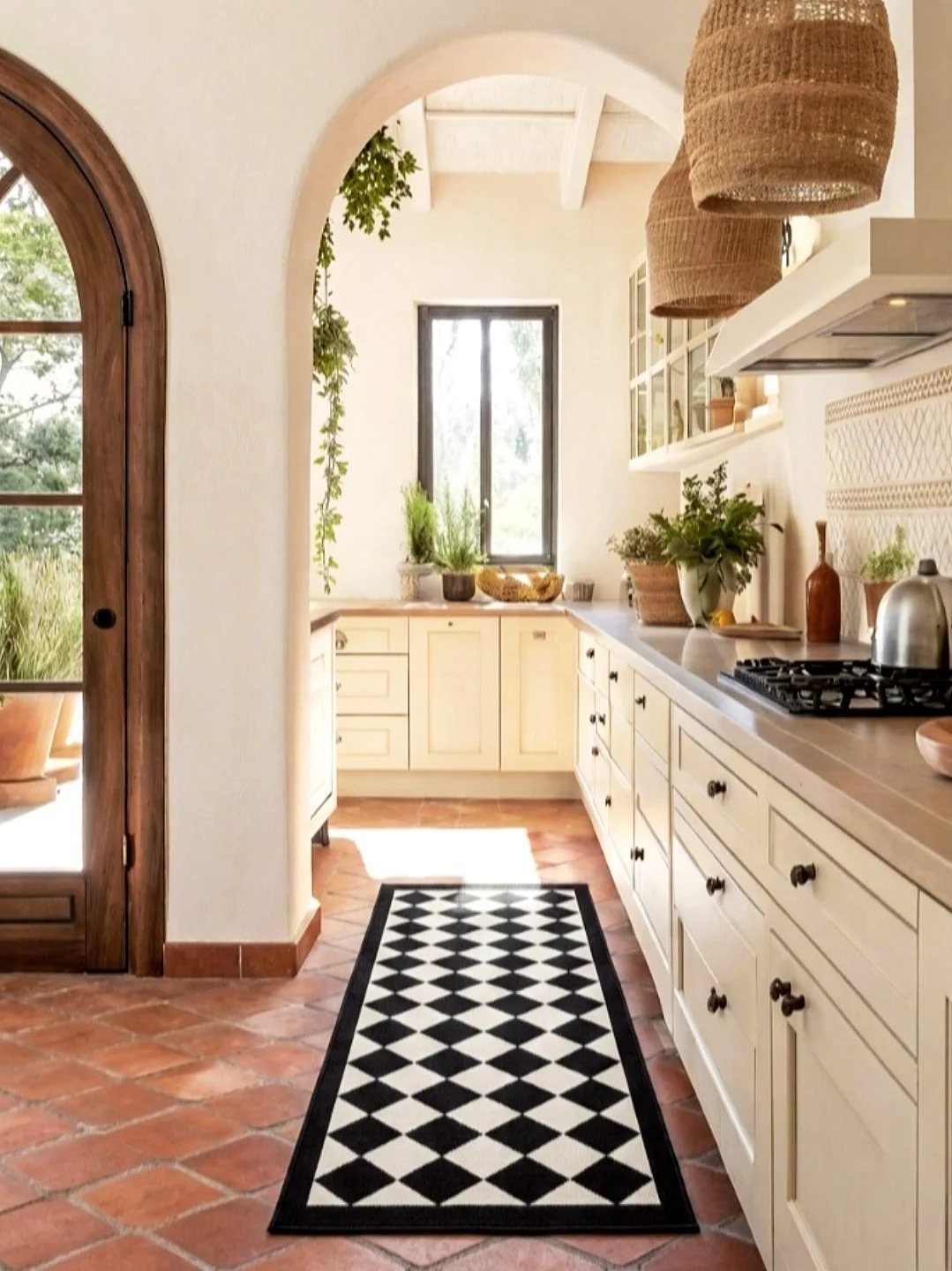
Terracotta underfoot turns a white kitchen from sterile to somewhere you actually want to linger with a cup of coffee.
The porous nature of real terracotta means regular sealing to prevent stains; porcelain versions give the same earthy warmth with less upkeep.
I would use the real thing only if you are prepared for that maintenance rhythm.
The Mediterranean feel pairs naturally with cream or off-white cabinets, and a runner rug over the tile, like the black-and-white diamond pattern visible here, breaks up the expanse without hiding the character.
9. Light Wood Plank Flooring
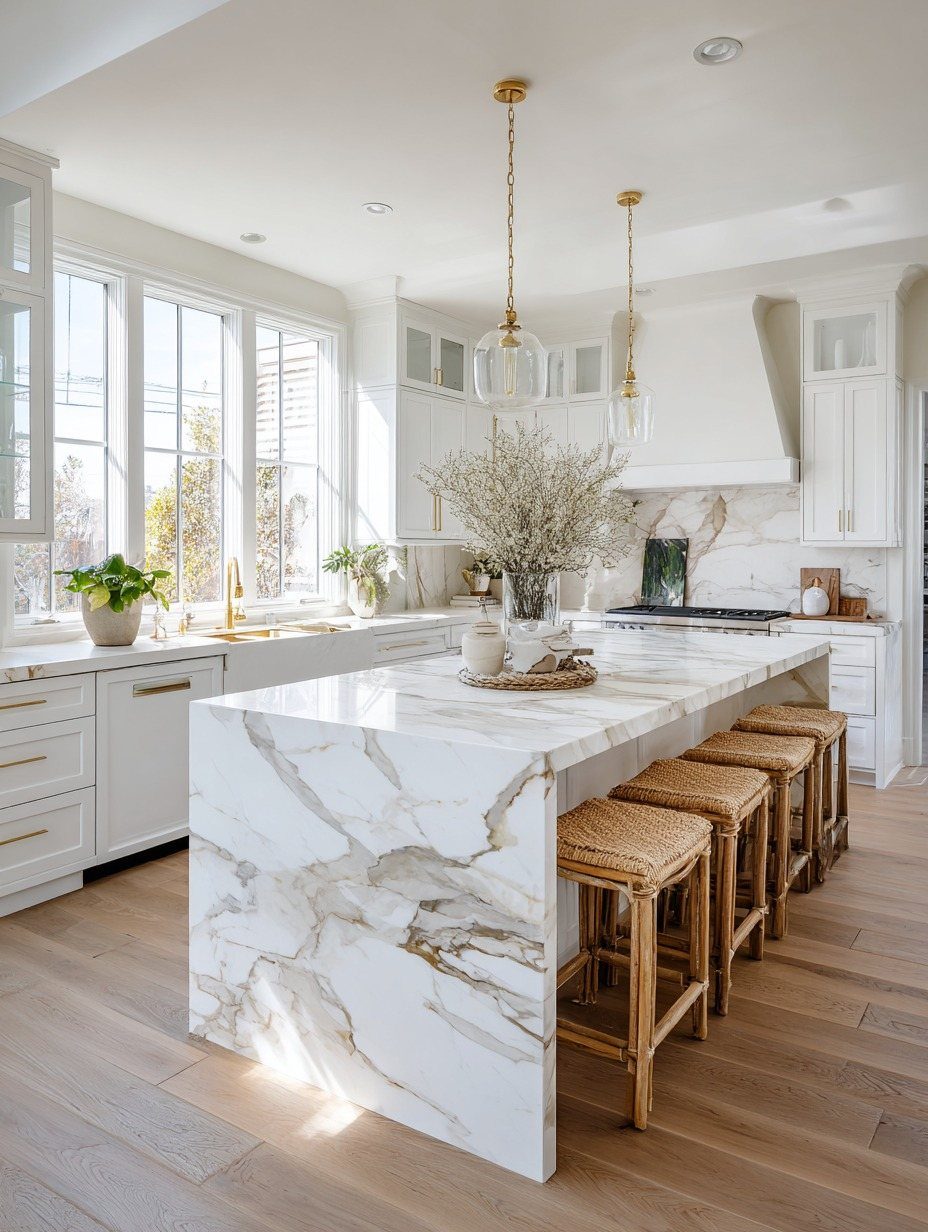
Light wood plank flooring, especially ash or white oak, pushes a white kitchen toward airy and open rather than stark. The natural grain adds texture without competing, and the pale tone reflects light around the room.
For a hardwood alternative, wood-look porcelain in light oak shades carries the same warmth with spill protection. I would seal unglazed porcelain before installation.
This combination suits smaller kitchens or any space where you want the cabinets to read as calm rather than clinical. The gold accents in the visible setup, pendant lights and hardware, warm the pairing further.
10. Dark Grey Floor Tiles
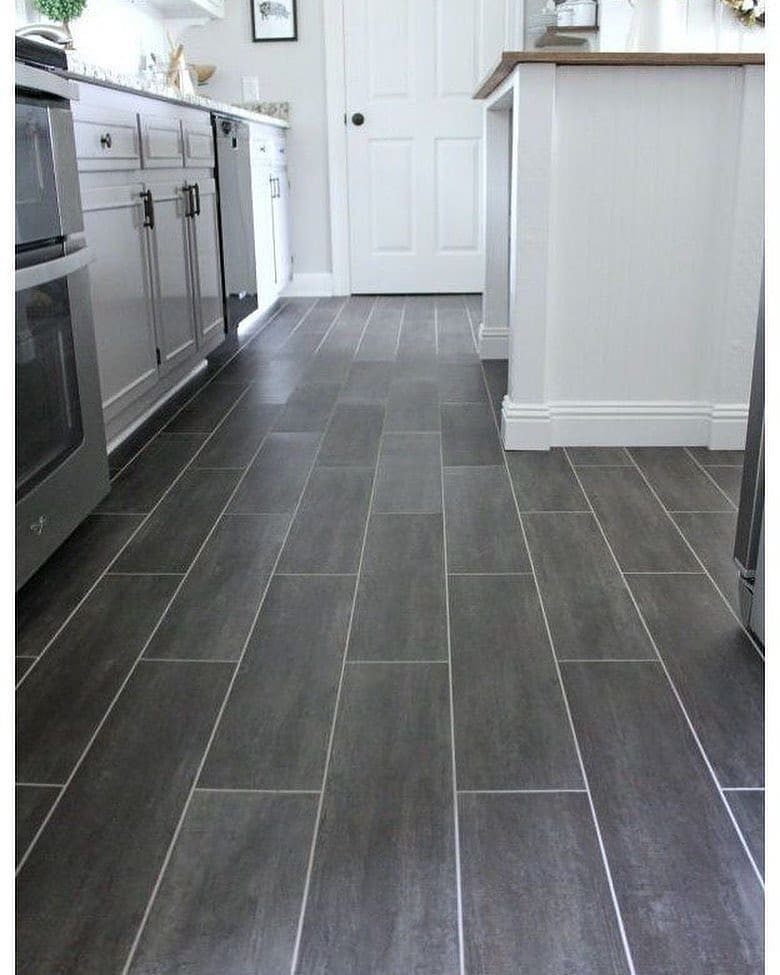
Long rectangular dark grey tiles with light grout lines create deliberate contrast against white cabinets without the heaviness of true black.
The visible kitchen keeps the palette restrained: white lowers, stainless steel, a wooden island top for the single warm note.
Large-format tiles mean fewer grout lines to clean. I would watch the grout color choice; light grout against dark tile defines the grid and needs more frequent attention.
This suits readers who want definition in their kitchen but find black-and-white too graphic. The grey reads as grounded rather than dramatic.
11. Grey and White Diamond Pattern
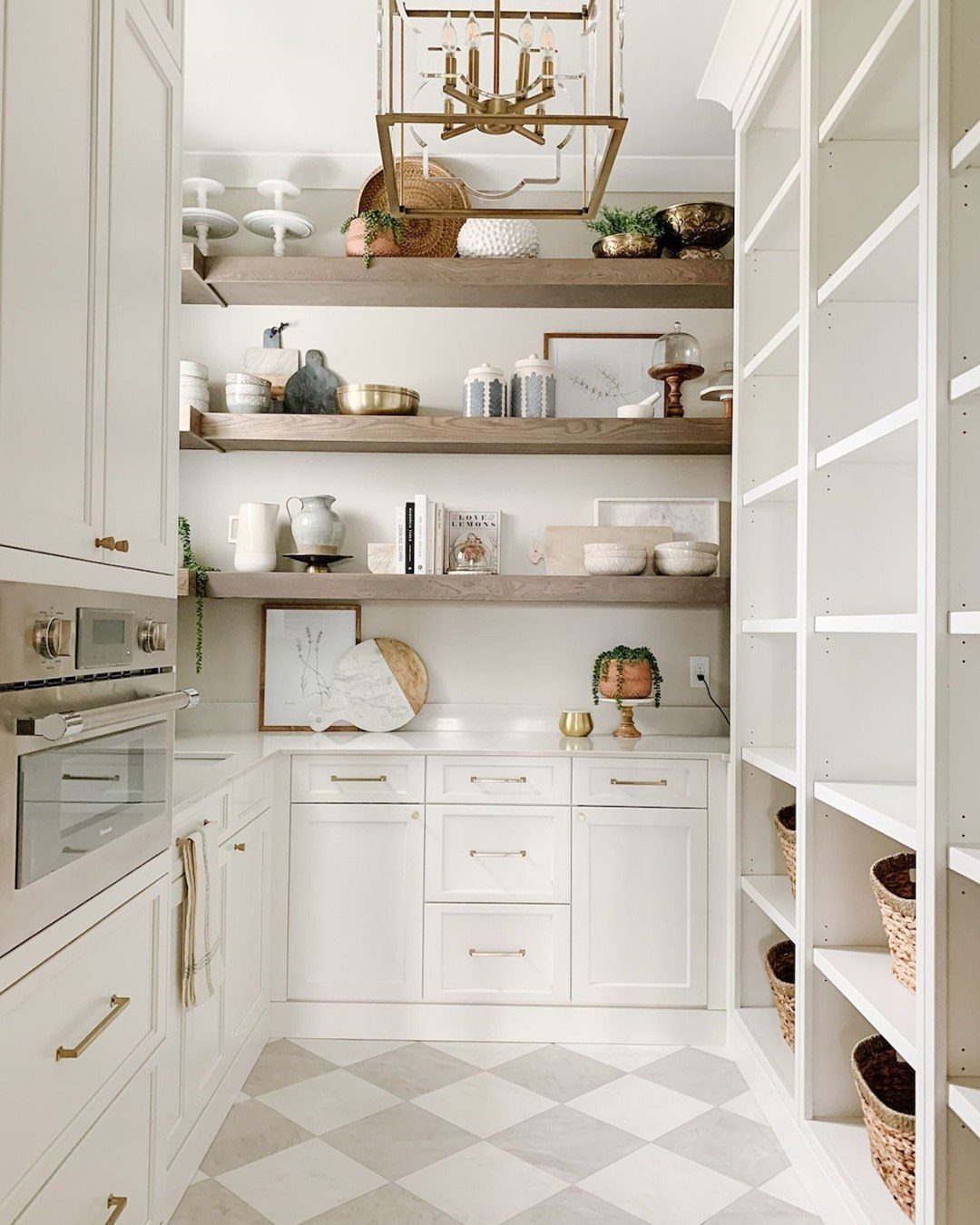
A grey and white diamond checkerboard under white shaker cabinets gives movement without the boldness of black. The diamond orientation, rather than classic squares, leans more formal and draws the eye through the space.
Porcelain or ceramic tile works here; the pattern itself does the visual work so the material can be practical.
I would lay this in a pantry or smaller kitchen where the scale does not overwhelm, as in the visible space with its floating shelves and built-in storage.
The pattern is a long-term choice; it will not look dated quickly, but it also commits you to a specific character.
Consider Undertones
White cabinets rarely read as pure white once they sit in your actual kitchen. The sample that looked neutral in the store may carry cream, ivory, gray, or even a faint blue cast under your lights.
That undertone decides which flooring will look intentional and which will make the cabinets seem dirty or dated.
Cool whites with a gray cast settle best against stone or tile in the same cool family. Warm whites, the ones with honey or beige beneath them, need flooring that picks up those same notes.
The mistake is choosing by the flooring sample alone. Hold your cabinet door or a paint chip against the stone or tile in daylight, not under showroom spots, and check it at the time your kitchen gets its steadiest light.
A bluestone that looked crisp at 10 a.m. can turn your ivory cabinets yellow by four in the afternoon.
Lighting Considerations
The same floor color shifts dramatically between a north-facing room and one with south light pouring in. Morning sun flattens warm tones; afternoon light deepens cool ones.
A gray floor that looked balanced in a bright store can read as cold slate in a kitchen that relies on a single window above the sink.
Light floors push walls outward visually, which helps a small galley feel less boxed. Dark floors do the opposite; they absorb light and can turn a large, bright kitchen cozy or cave-like depending on the exposure.
Before you settle on a color, tape down a large sample and live with it across a full day. Watch how it reads at 7 a.m., at noon, and under your ceiling fixtures after dark.
The floor you choose needs to work in all three versions of the room, not just the one you saw in a magazine.
Maintenance and Durability
Kitchen floors live harder than floors in any other room. Water, grit, dropped knives, and chair scrapes arrive daily, and the material you choose decides whether that wear shows or hides.
Porcelain tile and LVT handle traffic and moisture without the maintenance calendar of real stone or hardwood. Mid-toned floors, not the palest or the darkest, tend to hide the debris of actual life best.
Light floors amplify dark specks; dark ones show every dust trace. If you have pets or kids, scratch resistance matters more than the exact shade.
A honed marble that looks beautiful in a photo will etch with a single splash of lemon juice.
Avoid Certain Colors
Some pairings with white cabinets fight rather than complement. Cream floors pressed right up against cream cabinets flatten the whole room into one pale blur with no edge to anything.
The floor disappears and the kitchen reads unfinished, as if the flooring choice got skipped entirely.
Orange-toned floors, heavily orange laminate or warm hardwood with that 1980s cast, turn pure white cabinets sterile by comparison. The combination reads dated in a way most homeowners are specifically trying to leave behind.
If you want warmth, honey or walnut ranges carry it without that clash.
Heavily patterned, multicolor tile introduces noise that competes with the simplicity of white cabinets. Bold pattern works better at backsplash height than underfoot, where it has to coordinate with counters, island, and everything else in the sightline.
Frequently Asked Questions
What makes a kitchen look cheap?
Poor material choices and mismatched undertones are the usual culprits. A warm white cabinet against a cool gray stone, or vice versa, turns both elements flat and dated.
Paint chips look different under showroom bulbs than they do in your actual kitchen light, so I hold them against flooring samples right in the room before deciding.
Should flooring be lighter or darker than cabinets?
Either works, but the effect differs. Darker floors ground white cabinets and build contrast that reads expensive; medium to dark hardwood or tile makes the cabinets pop.
What is the most popular kitchen flooring right now?
Luxury vinyl, tile, hardwood, and laminate lead the choices that pair with white cabinets. Luxury vinyl mimics wood or stone convincingly and handles water well.
Hardwood adds warmth and value but needs more care. Laminate offers a budget-friendly wood look with easier installation.
What color vinyl flooring goes with white cabinets?
Honey, oak, and warm beige tones show up most often in kitchens with white cabinets because they add what the cabinets lack.
What color floor tiles go with a white kitchen?
Light, medium, and dark tones all work depending on the effect you want. Stone, porcelain, and ceramic all work; the difference is in how much sealing and scrubbing you want to do.