The ideas below range from peel-and-stick LED strips to full built-in millwork, and the right choice depends on whether you rent, own, or plan to stay put long enough to justify permanence.
A slat wall of 1×2 boards spaced on furring strips takes a weekend and leaves only nail holes to patch, while the IKEA-hacked built-ins with marble-look laminate backing ask for a wall that is already the room’s natural focal point.
[link-whisper-related-posts]1. Wood Paneling
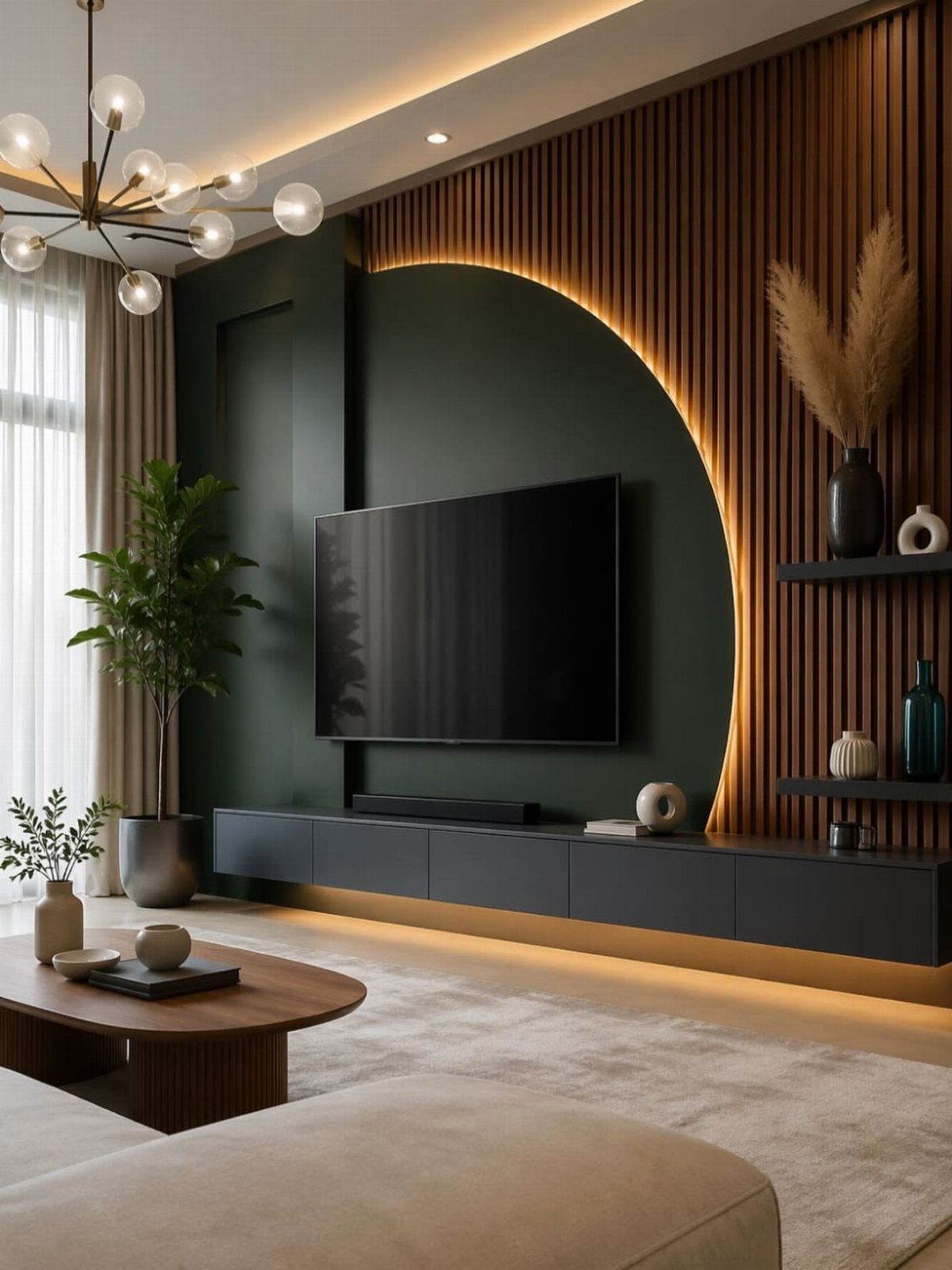
Vertical slats behind a mounted TV catch light at their edges and turn a flat wall into something that moves as the day shifts.
I like them in oak or walnut for warmth, though the darker stains read more modern and hide the television better when it is off.
Arched cutouts take planning, but the slats themselves are just 1×2 boards spaced on furring strips; the gap between them is what gives the wall its texture.
A weekend project in materials for a standard wall, with most of the budget going to lumber and the rest to paint or stain. You will need a miter saw and a level you trust.
This one suits renters who can patch nail holes, not drill anchors, since the slats distribute weight across many points. Skip it if your TV wall already has a window or door breaking the plane; the rhythm needs room.
2. Built-in Cabinetry
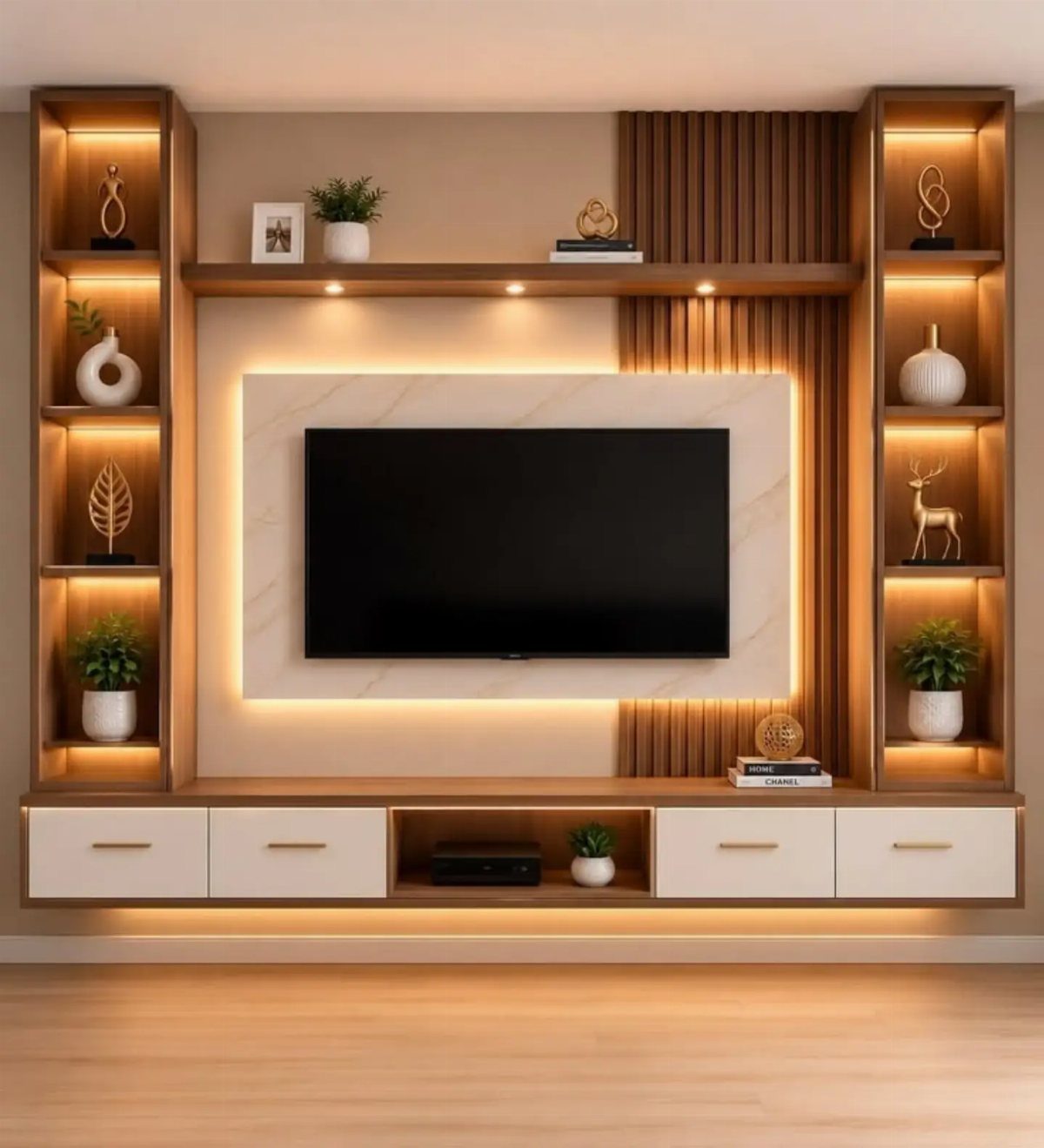
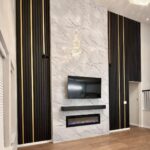
Built-ins swallow cables, game consoles, and the thousand small objects that otherwise colonize a living room. Flanking towers with integrated lighting, a recessed niche for the screen, and drawers below for the ugly necessities.
What I would steal from this version is the backlighting behind the TV panel itself. LED strips and a dimmer are the cheap part, and they keep the screen from feeling like a black hole when the room is dim.
The marble-look backing is laminate, not stone, which keeps weight down and installation possible without reinforcing the wall.
This is the most expensive idea here. IKEA hacked into built-ins is the entry point, and custom millwork is the next step up; either way, you are paying for permanence.
I would only commit if the wall is already the room’s natural focal point and you plan to stay put for a while.
3. Bold Accent Wall
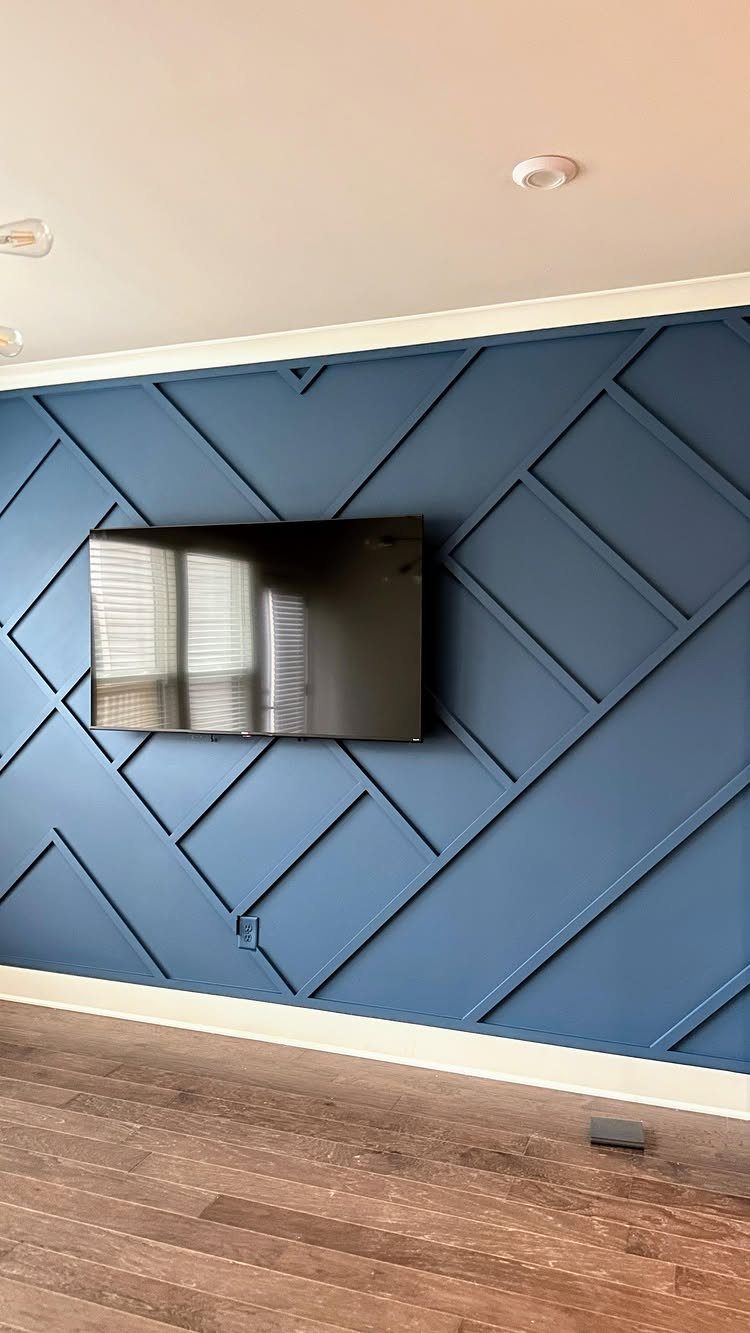
Paint and trim boards do what wallpaper tries to without the terror of misaligned seams.
Matte paint in a deep tone reads as intentional, not like you gave up on neutral. The board-and-batten adds shadow lines that break up the television’s rectangle without competing for attention.
I would go one shade darker than your first instinct; cameras and daylight lie, and the color will settle lighter.
Paint and boards for a standard accent wall, with the size of the room driving how much lumber you need. One day to cut and nail, one to caulk, sand, and paint.
This is the choice for someone who wants maximum change from minimum new objects.
4. LED Strip Lights Behind the TV
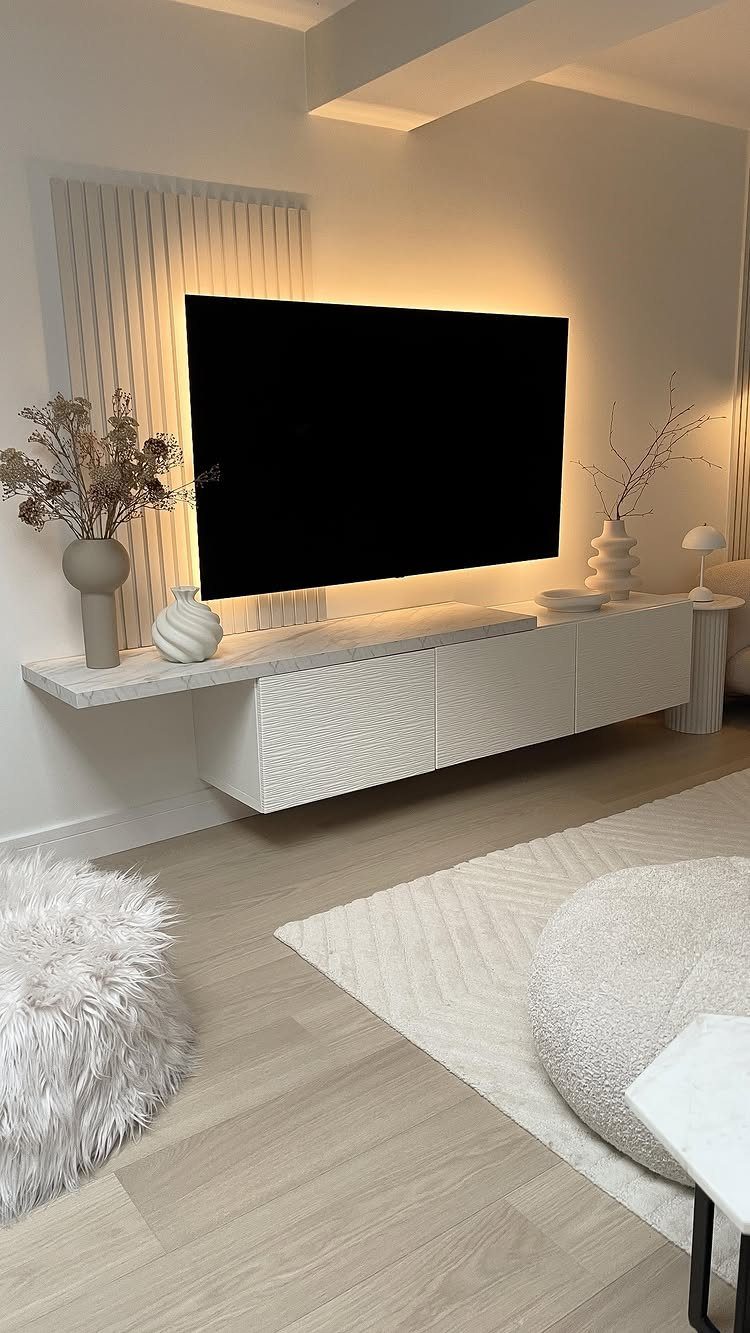
LED strips behind the TV cost almost nothing and solve a problem most people have stopped noticing: the strain of a bright screen against a dark wall.
USB-powered strips plug into the TV itself and turn on with it, which I prefer to remote-controlled versions that need another app.
The effect works best when the wall is light and the TV sits relatively close to it; on dark paint or with too much distance, the light scatters and goes muddy.
Cheap enough to try twice if the first color temperature is wrong, and fast enough to install before dinner. This is my first add for anyone who watches after dark and has not yet tried it.
The only catch: cheap strips fail at the solder joints after a year or two, so read recent reviews before buying.
5. Gallery Wall
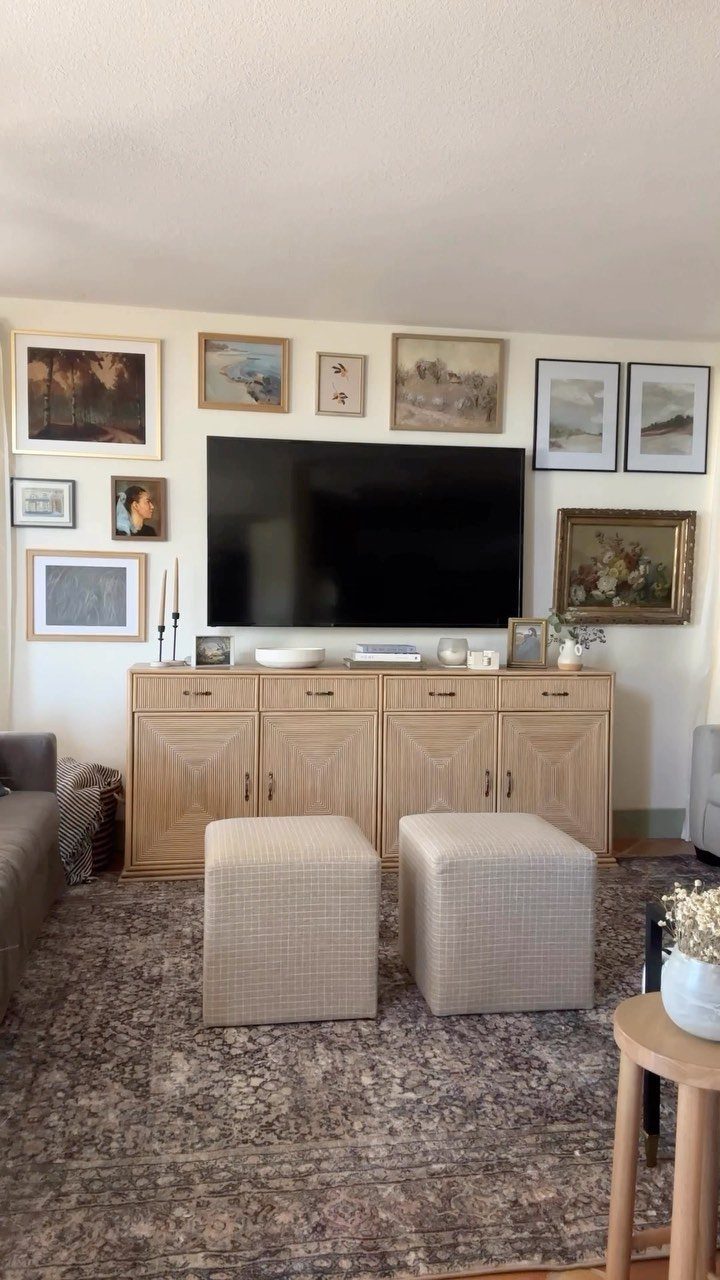
A gallery wall around a TV lives or dies on spacing. Frames of varying sizes, but all with similar visual weight, held close together and never crowding the screen itself.
I would start with one large piece at the upper left, anchor the lower right with another, and fill in between rather than planning the whole grid first. The asymmetry keeps it from reading as a store display.
All frames should share one element: wood tone, mat width, or frame depth. Two shared elements is better; three starts to look like a rule.
Cable management matters more here than with other ideas. A cord dropping from the TV through your carefully arranged art ruins the effect, so plan for a paintable channel or commit to an outlet behind the mount.
6. Minimalist Console
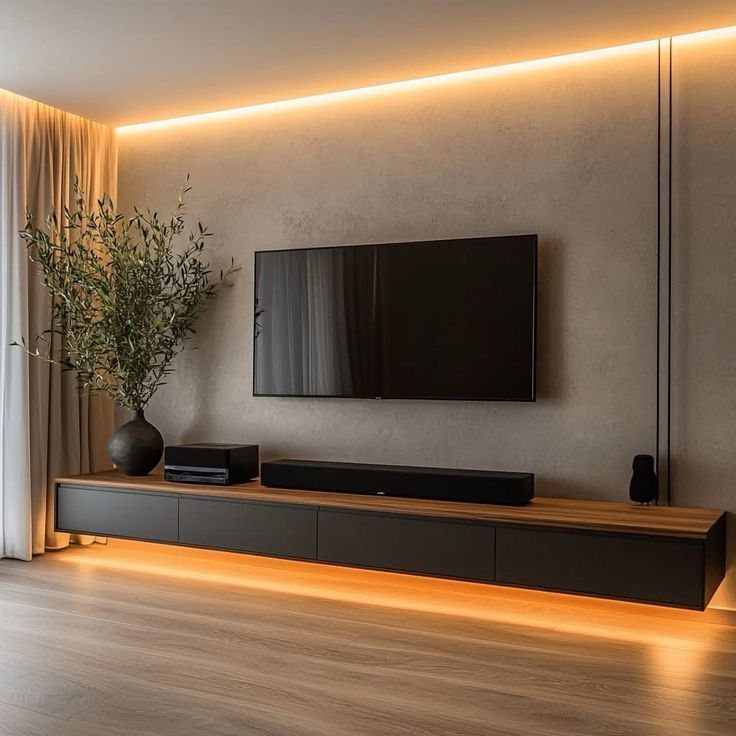
The floating installation keeps floor space clear, which matters in small rooms where every square foot counts.
I look for consoles that are shallow and have a cutout or channel in the back panel for cords.
IKEA’s BESTA system is the usual starting point and can be trimmed with aftermarket legs or fronts to lose the rental-unit look.
For a single piece, Article and CB2 both run higher for solid wood options that will survive a move.
Wall mounting requires finding studs or using toggle bolts rated for the weight; a full console with media components gets heavy fast.
7. Vases, Books, or Sculptures on Shelves
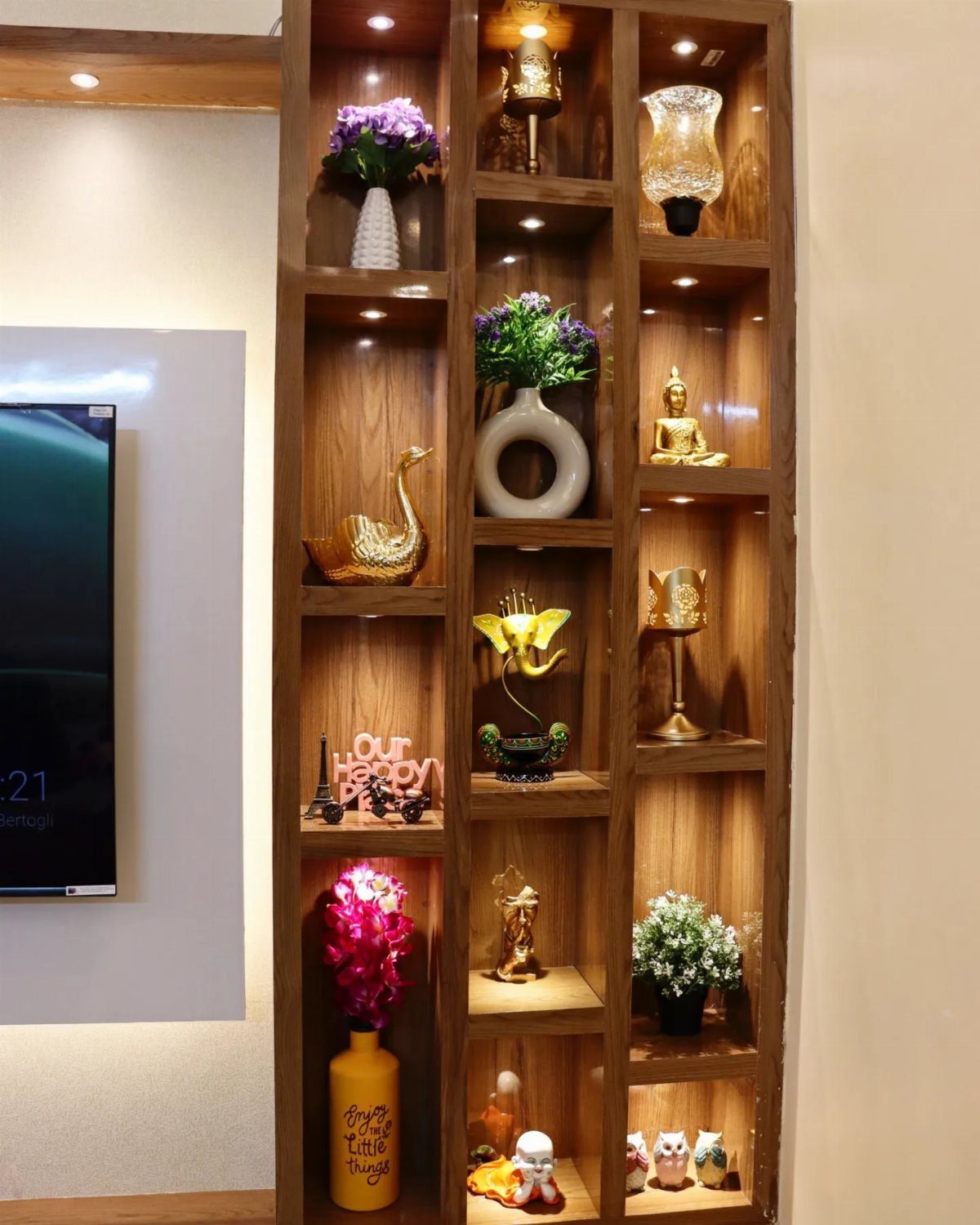
Shelves flanking the TV turn dead wall space into a place for actual personality. The reader who rents or moves often can take this with them, unlike built-ins.
Warm LED strips recessed into the shelving make the display readable after dark without adding glare to the screen. I would keep the items low in front and taller toward the back so nothing blocks the view from the sofa.
Books laid flat work as risers for smaller pieces.
A matching wood tone to the console below ties the two zones together. White shelves against white slats read as one calm plane, which suits smaller rooms where too many materials compete.
8. Floating Shelves
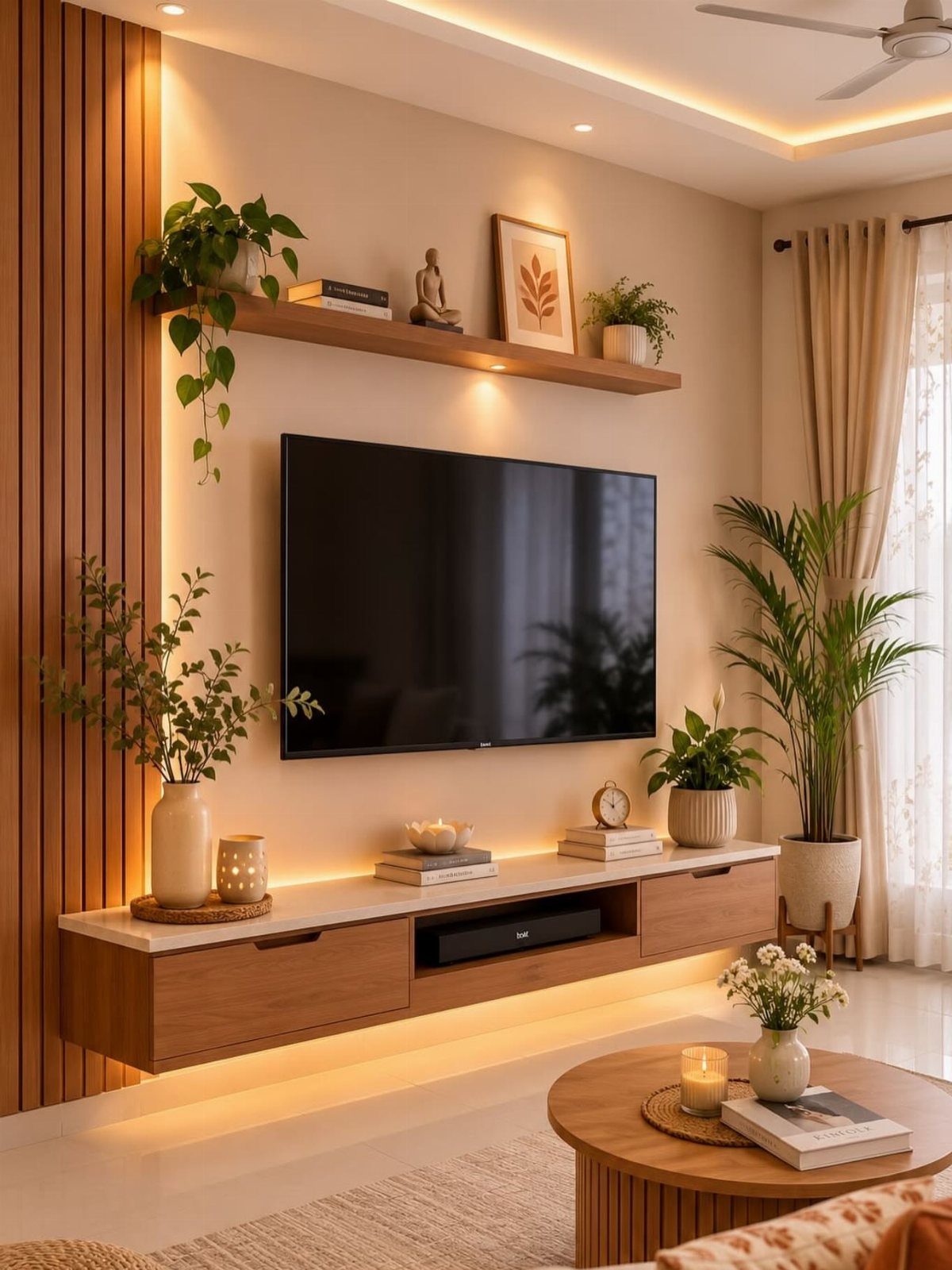
Floating shelves above the TV carry weight without the bulk of a full unit. One long shelf in wood that matches the console below, or white against white paneling, keeps the wall from feeling chopped up.
A single shelf above the TV reads as intentional when you leave it to a plant, a few books, and one small object; restraint keeps it from looking empty.
Leave enough clearance above the TV frame so the shelf does not crowd the screen; eyeball it from the sofa before you drill.
Lower consoles with under-lighting need that gap to breathe, so this pairs best with a wall-mounted set that already floats. Renters can install a shelf on a French cleat and patch 2 holes later.
9. TV and a Fireplace Setup
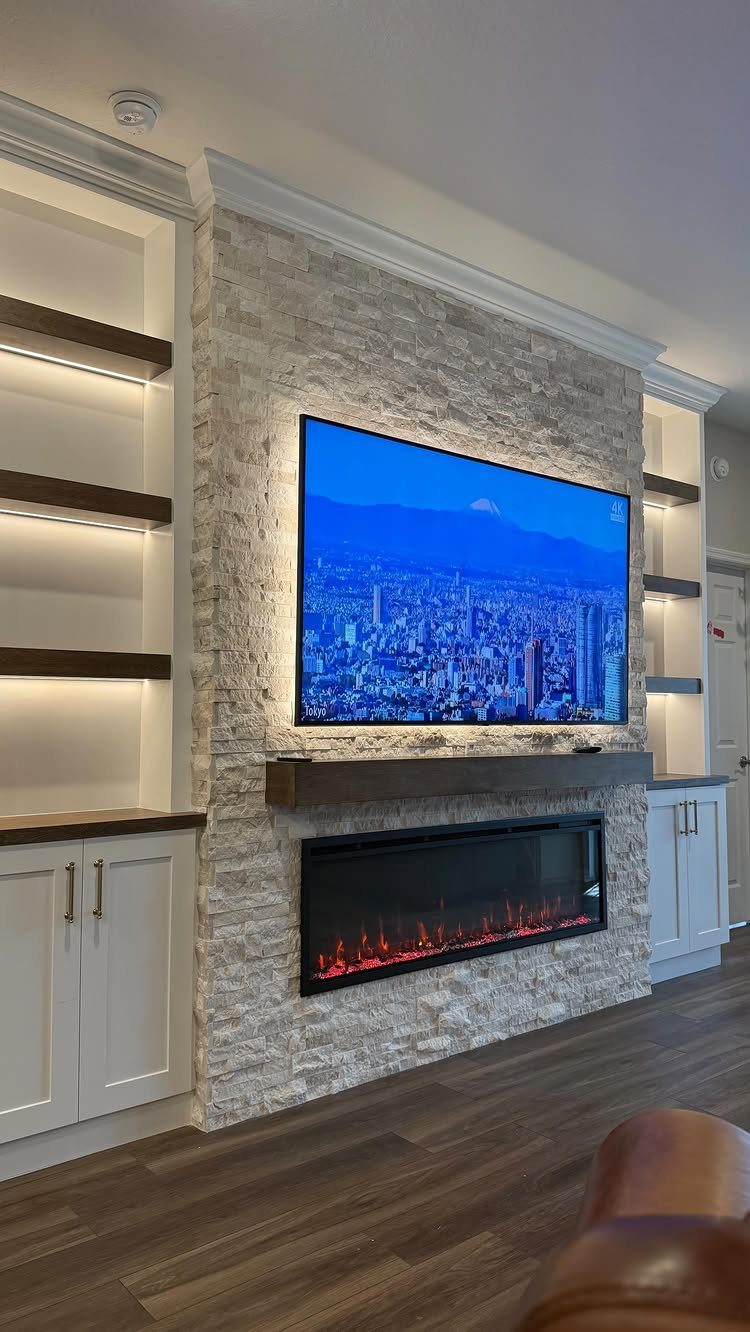
A fireplace beneath the TV solves the problem of two focal points fighting for the same wall. Stacked stone or fluted paneling behind both ties them into one vertical statement.
An electric fireplace needs no venting, which keeps the install to a weekend and the cost far below a gas unit with a chase.
I would size the fireplace width to at least half the TV width so the TV does not feel top-heavy.
White built-ins flanking the stone add storage but eat serious depth per side; this idea needs a wide wall to avoid a squeezed look.
The reader with a narrow room should skip the side cabinets and run the stone or slats full width instead.
Decorating Tips
Layered decor works best when the objects vary in height and finish without competing for attention.
A trailing pothos or philodendron softens the hard edges of a screen and console; I would set it on a stack of 2 or 3 books rather than buy a plant stand that adds another piece of furniture.
The books themselves should be ones you have already read, spines turned in if the colors clash, or grouped by size with a small ceramic or brass object on top.
A single large piece of greenery reads as intentional where 3 small pots look like you are waiting for a better idea. I would rather see one substantial plant and a bare surface than a crowded shelf that needs dusting.
Lighting Considerations
Ambient lighting around a TV wall should never come from a single overhead source; the contrast against the screen tires your eyes and flattens the room.
Wall sconces flanking the television, aimed upward or with shades that block direct glare, cast a wash that lets you find your way around the room without reaching for a bright switch during a movie.
I would put sconces on a dimmer and set them warm, around 2700K, which is the temperature that reads as firelight rather than office.
The LED strips behind the TV mentioned earlier handle the immediate contrast problem; sconces solve the rest of the room.
Battery-operated puck lights inside open shelving are the renter’s workaround, stuck to the underside of each shelf and set on a timer.
Space Optimization
A TV wall in a small room gains more from subtraction than addition. The floating console and wall-mounted screen keep floor area clear for traffic; every inch below the television is usable space that a cabinet would claim.
Vertical storage beats horizontal when width is tight. Tall narrow shelves flanking the screen hold as much as a low wide unit without spreading into the room.
I would rather run one long floating shelf high above the TV than fill the wall with small ones; the single line draws the eye up and leaves the middle of the room open.
Material Choices
Wood brings warmth that paint alone cannot, but the grain and finish matter more than the species.
Oak and walnut carry enough variation to read as natural; painted MDF boards in a wood tone look flat under the light that catches real grain.
I would use actual veneer plywood for large panels rather than solid boards, which warp across a wide wall.
Stone texture adds weight; the stacked stone behind a fireplace unit works because the mass belongs at the base of a vertical composition.
On a wall without a fireplace, thin stone veneer is the practical choice, applied in sheets rather than full dimension pieces that need structural support.
Textured plaster or lime wash is the middle ground, giving depth without the install weight of stone or the craft demands of wood slats.
Frequently Asked Questions
How should I decorate my TV wall?
Shelves, art, and lighting are the three tools that work. LED strips behind the set run about $15 and stop the screen from going flat black once the lamps are off.
Add floating shelves or a console for objects with actual personality, and frame the screen with a gallery wall or wood slats if you want the wall itself to do more.
The mistake is treating the television as the only thing on the wall; it needs context to read as intentional.
What are the TV stand design trends for 2026?
Minimalist floating consoles, built-in cabinetry with integrated lighting, and textured finishes like vertical wood slats or fluted paneling are where the look is heading.
I see more backs behind the TV panel itself, not just the wall, using marble-look laminate or slats to give the screen a frame.
Storage is getting smarter, with drawers for the ugly necessities and LED strips that turn on with the set. The rental-friendly version is a shallow wall-mounted console with a cord channel in back.
How to make a TV look flush with a wall?
A recessed niche in built-in cabinetry is the cleanest method, with the screen set back into the wall so the face sits level with the surround.
LED strips behind the panel help, washing the backing with light so the television does not read as a dark hole.
For a simpler version, vertical wood slats spaced on furring strips break up the wall plane and draw the eye to texture instead of the screen’s edge.
Weight spreads across enough points that a few nail holes are all a landlord ever sees.