These accent wall ideas run from an LED strip behind the TV to built-in millwork that takes a full weekend and then some.
The right choice comes down to whether you can cut into the wall or need to walk away with your security deposit intact.
Peel-and-stick concrete wallpaper and removable prints both hide the black rectangle without a single nail in a stud, while recessed niches and stone veneer demand permanent commitment to that exact screen size and that spot on the wall.
[link-whisper-related-posts]1. Shiplap Accent Wall
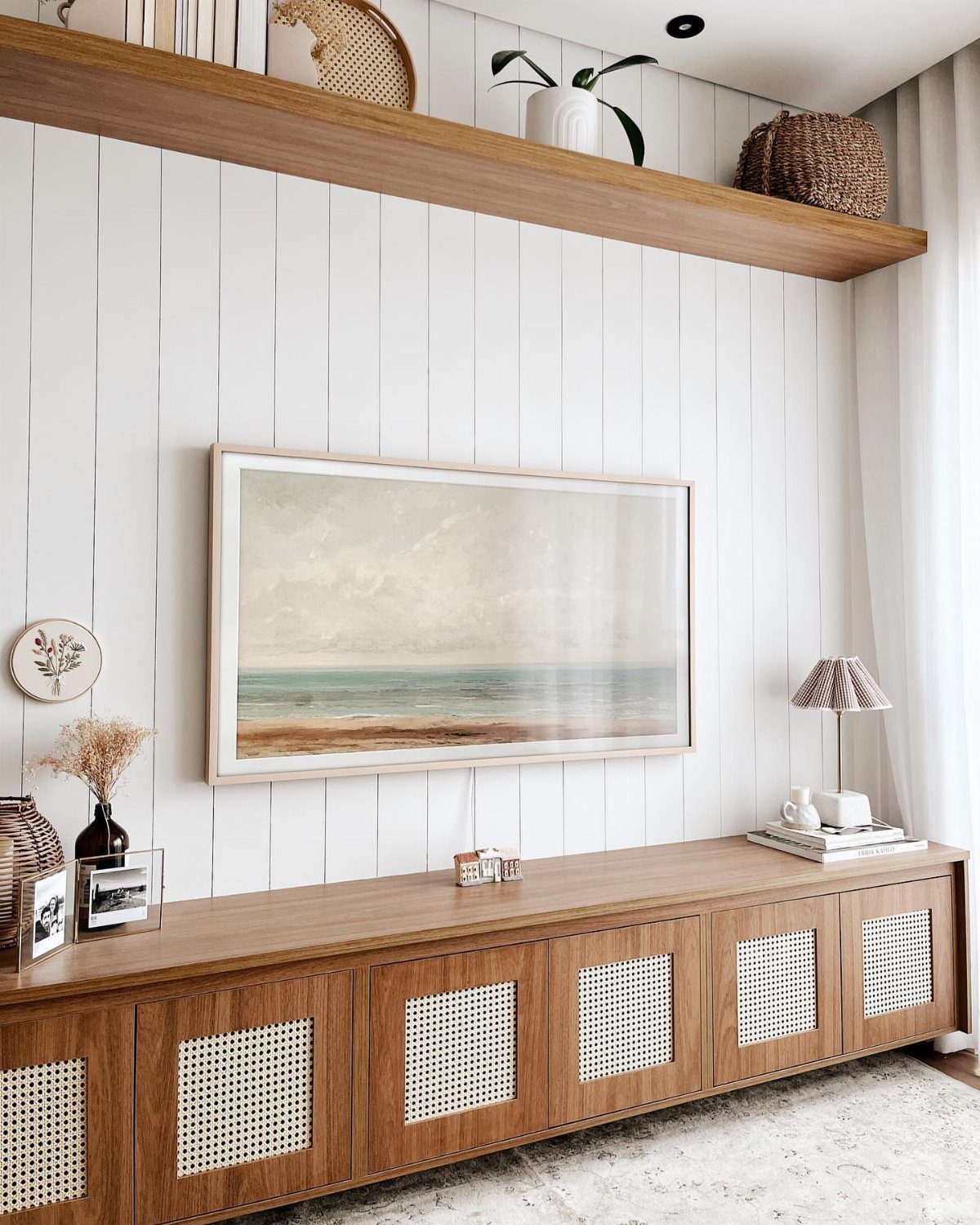
Vertical boards give a plain wall the feel of something built on purpose, not an afterthought. Paint them white for a farmhouse look that matches most consoles already in stores, or leave the wood bare if your room runs warm.
I like this for renters who can nail into studs: thin shiplap over existing drywall comes down later with patching that costs less than a security deposit fight.
Run the boards vertical to draw the eye up in a small room, or keep them horizontal for the full wall behind a long sofa.
Dust settles in the grooves, so plan on vacuuming with a brush attachment. A vacuum brush attachment fixes it, but skip this if you hate adding to your weekend list.
2. Marble & Wood Slat TV Accent Wall
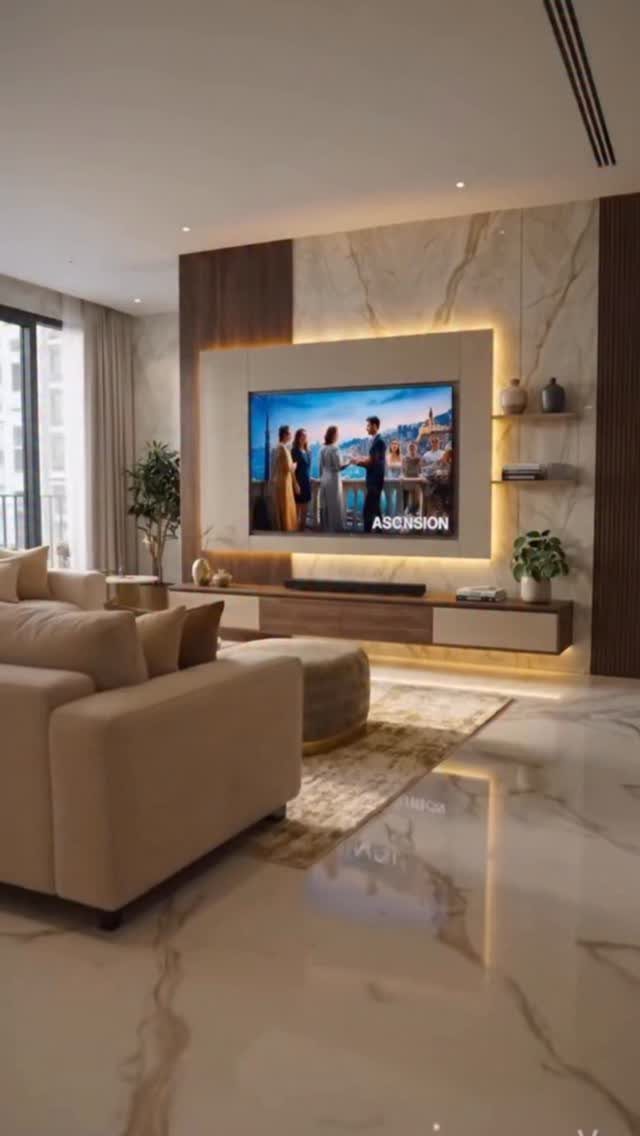
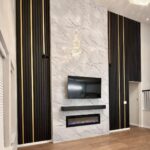
White marble panels with dark wood slats split the difference between showpiece and somewhere you actually want to sit. The marble catches light; the wood keeps the room from feeling like a hotel lobby.
This one reads expensive because it often is. Real marble plus installation can run past what most of us spend on a whole room.
I’d look at large-format porcelain that mimics Calcutta or Portoro; it hangs lighter, costs less, and the slats still do the warm work.
LED backlighting behind the TV helps here, since the marble throws light around and the slats create shadow. Budget 2 days if you’re handy, or hire out the stone cutting and handle the wood yourself.
3. Gallery Wall Around TV
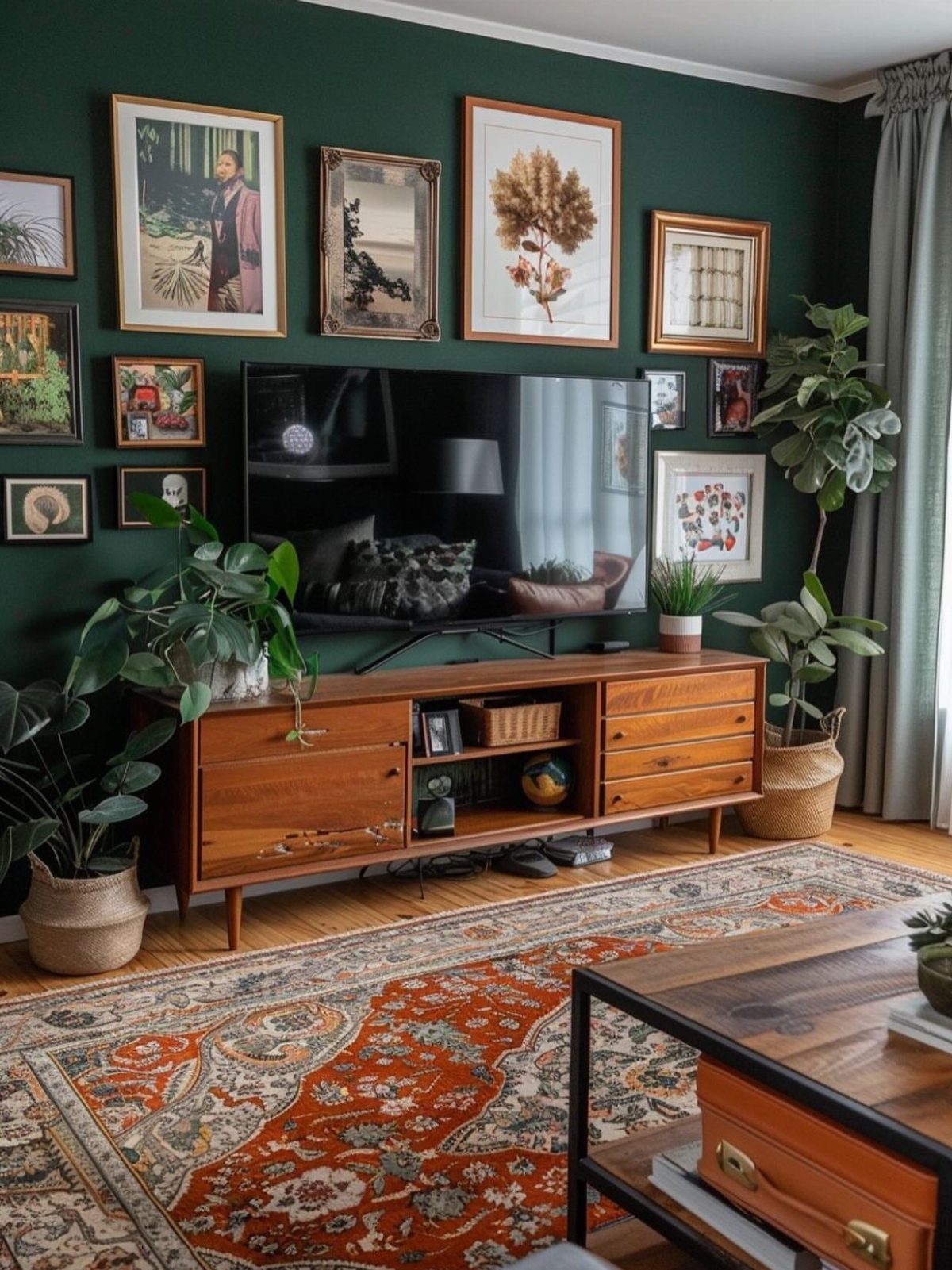
A black rectangle disappears when it sits inside a crowd of frames you already own. Treat the TV as one more rectangle, not the center of a target.
Start with the TV mounted at eye level from your usual seat, then build outward with frames that share one thing: all wood tones, all black and white photos, all thin metal edges.
Mismatched sizes work fine; mismatched moods do not. Leave a narrow gap between pieces, closer than most people guess, so the group reads as one surface.
I’d pick this for anyone with art in storage and a screen that doesn’t dominate the wall. A massive TV fights for dominance no matter how good the frames are.
4. Concrete Wallpaper TV Accent Wall
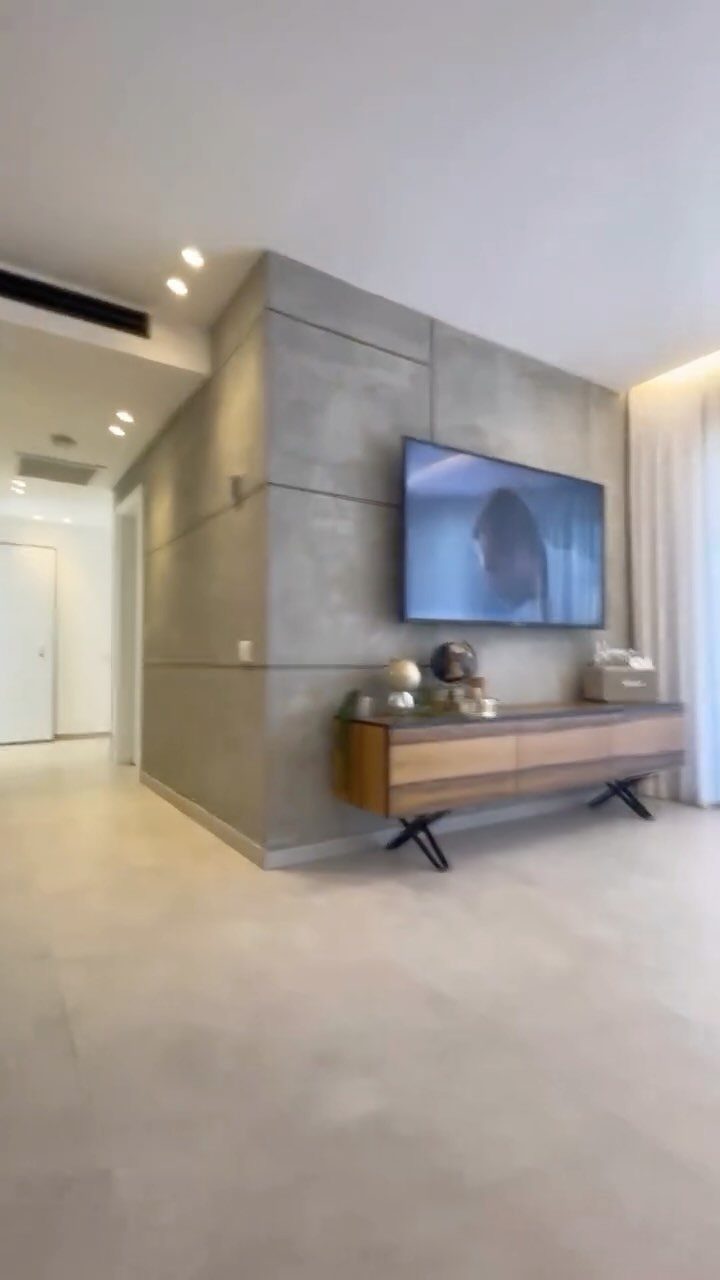
A roll of concrete-look paper gives a rental the loft feel of exposed cinderblock without the landlord call. Horizontal grooves read as texture, not flat paint, and hide seams better than most prints.
Peel-and-stick goes up in an afternoon with a helper, a level, and a sharp utility blade for outlet cuts. Real concrete wallpaper from PhotoWall or similar runs heavier; you’ll need paste and patience, but it lasts longer in high-touch spots.
This suits modern spaces with clean-lined furniture already in place. Add a warm wood console underneath or the room goes cold fast.
Not my pick for rooms with a lot of brown or traditional detail; the contrast fights instead of complements.
5. Backlit TV Wall
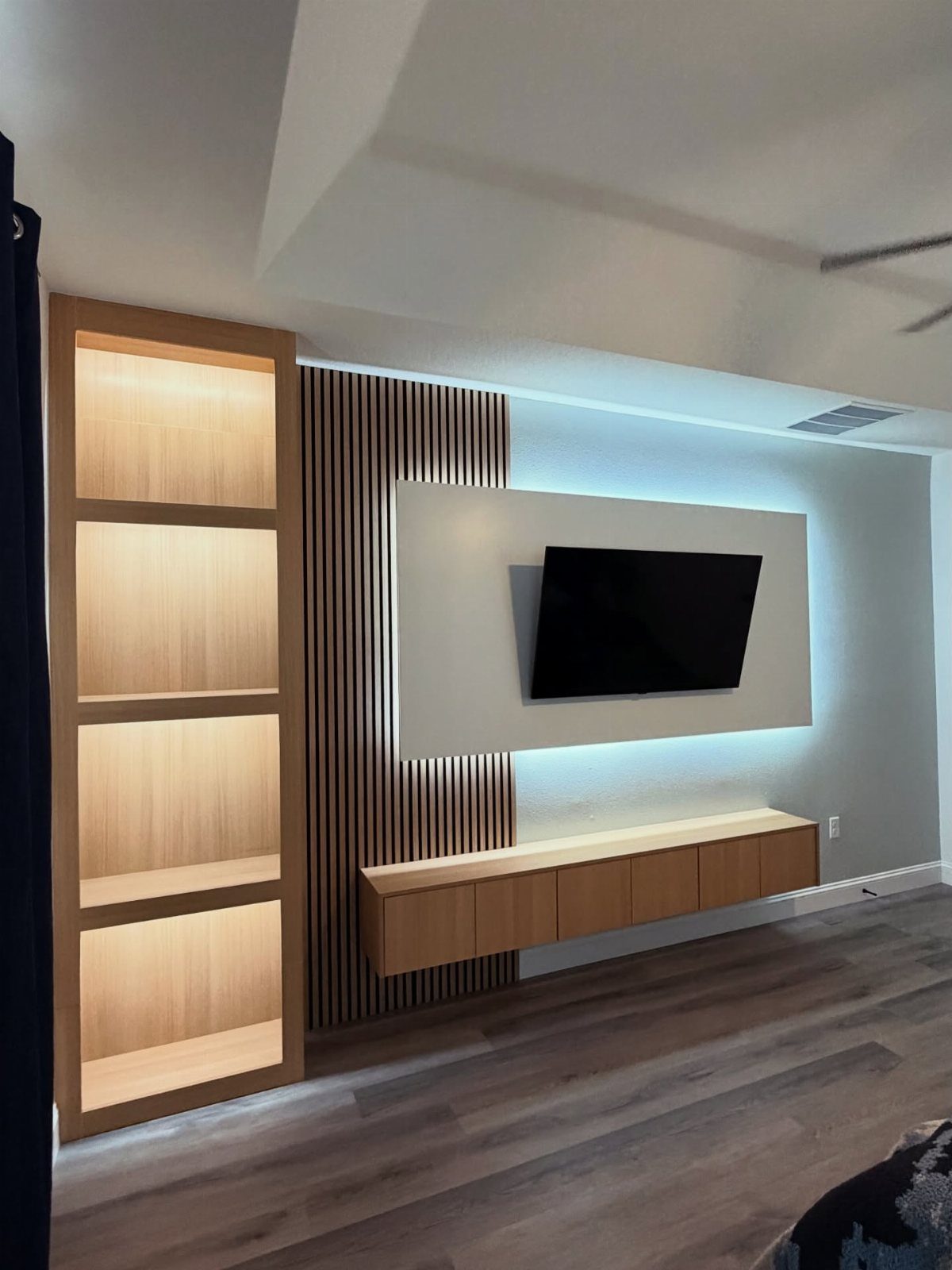
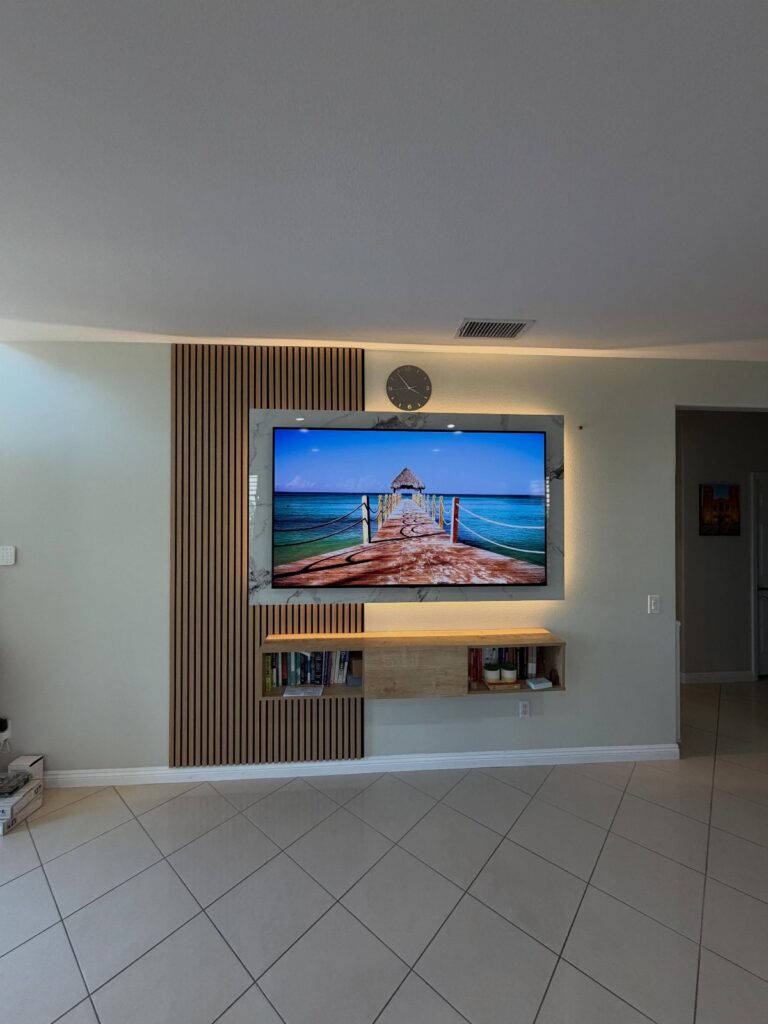
LED strips behind the panel cost little and change how the room feels after dark. The glow spreads past the screen edges, so the whole wall gains presence, and your eyes work less hard in a dark room.
Stick the strip to the back of the TV or the wall behind it, plugged into the same outlet so it fires with the screen.
Warm white matches wood furniture; RGB lets you shift with mood, though I find the color-cycle setting distracting for actual watching.
Start with the backlight alone. It takes little time, and if you hate it, you’re out the cost of a dinner out.
6. Wallpaper Accent Wall Behind TV
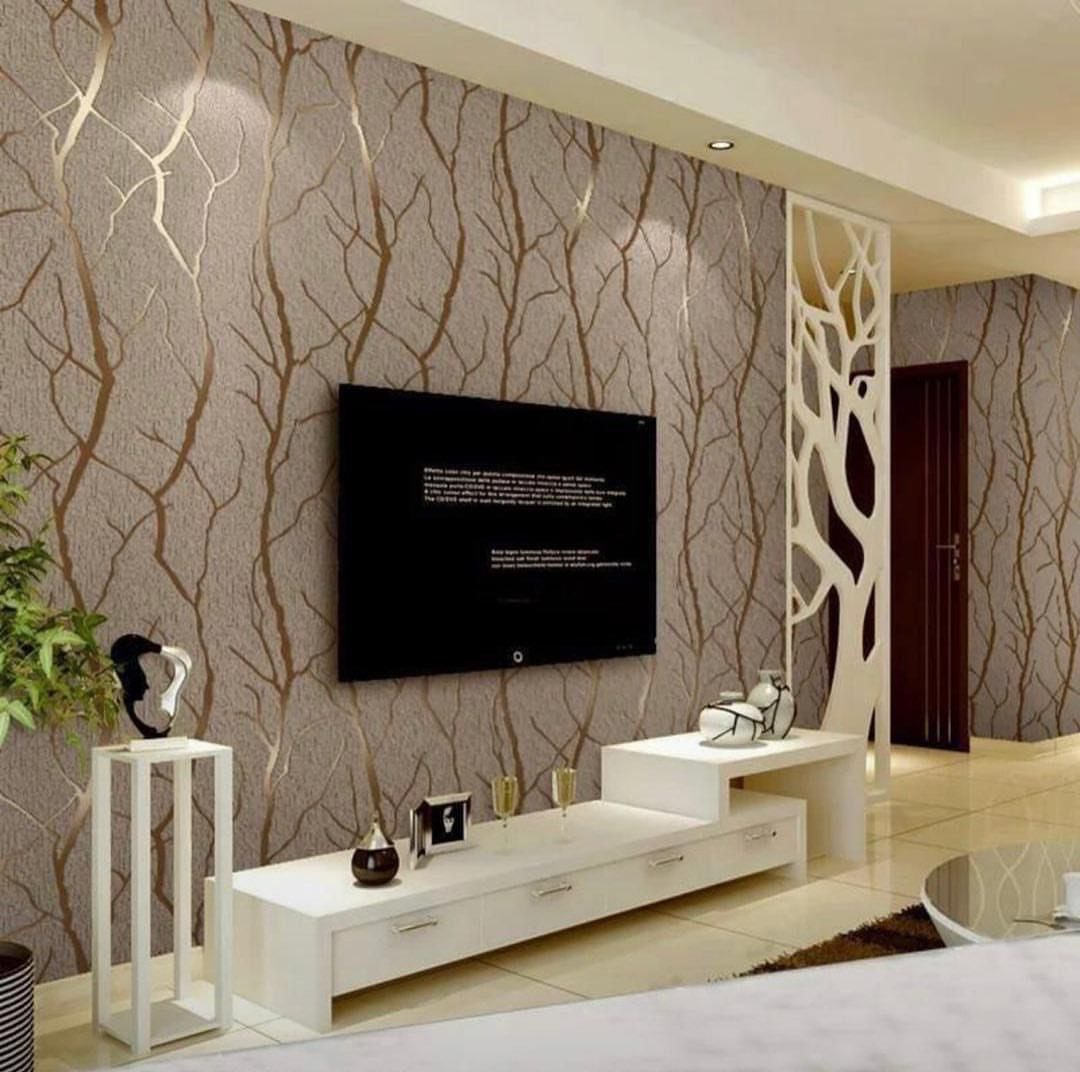
Removable wallpaper behind the TV lets you commit to pattern in a small zone instead of a whole room. Metallic branch prints read subtle until light hits them, then they move.
Peel-and-stick quality varies: cheap rolls bubble at seams and show every wall imperfection. Check prices per roll, make sure the pattern repeats line up, and buy one extra for mistakes.
A low-profile console keeps the focus up; bulky furniture fights busy paper.
I’d use this in a room that needs personality fast, with no time for construction. Dark self-patterned paper hides the TV better when it’s off; light prints like this one frame it.
Swap it out in an hour when you tire of it, which I usually do in year 3.
Since the TV wall is a living room interior design staple and garners many eyes, it should add an element of interest to the overall design. A straightforward yet fun way to do it is by incorporating an accent wall behind the TV.
7. Recessed TV Niche Wall
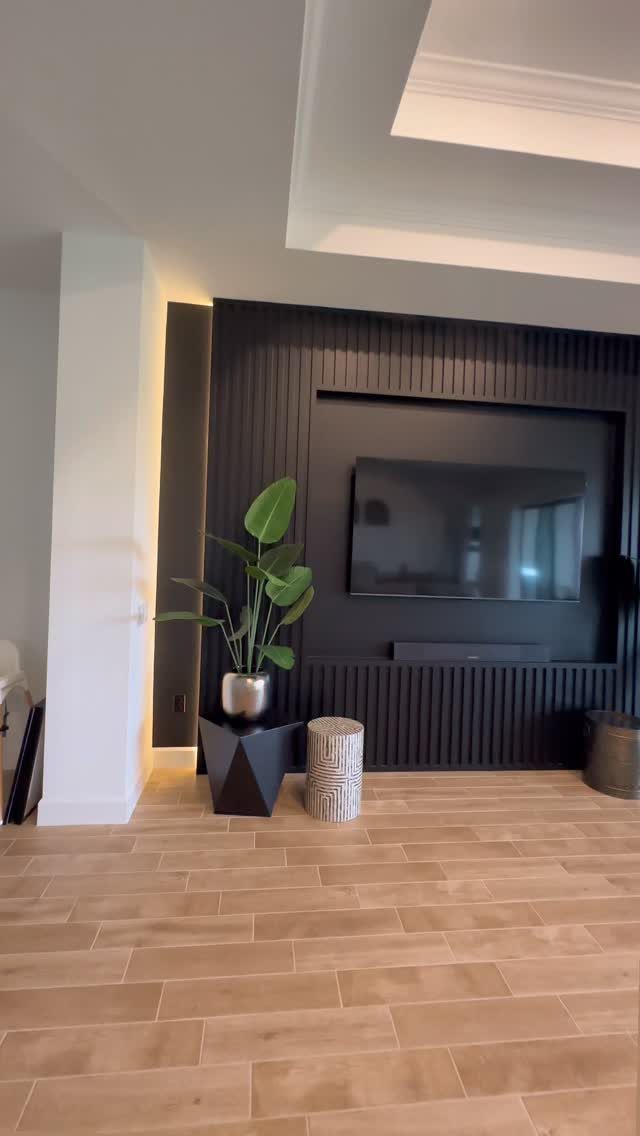
A recessed niche keeps the television flush with the wall surface, which removes the visual bump of a mounted screen and protects the edges from getting knocked.
The depth has to match your specific TV model; too shallow and the screen sits proud, too deep and the gap turns into a dust trap. I would check the TV’s depth with its bracket before cutting any framing.
This works best when the surrounding wall has enough visual weight to frame the opening. Inside the niche, a soundbar slot below the screen keeps everything contained.
A recessed niche is permanent; you are committing to that TV size and that spot on the wall. Your next TV needs to fit this exact opening, or you patch and re-cut.
Measure twice, buy the TV first, and build the box around it.
8. Stone Accent Wall Behind TV
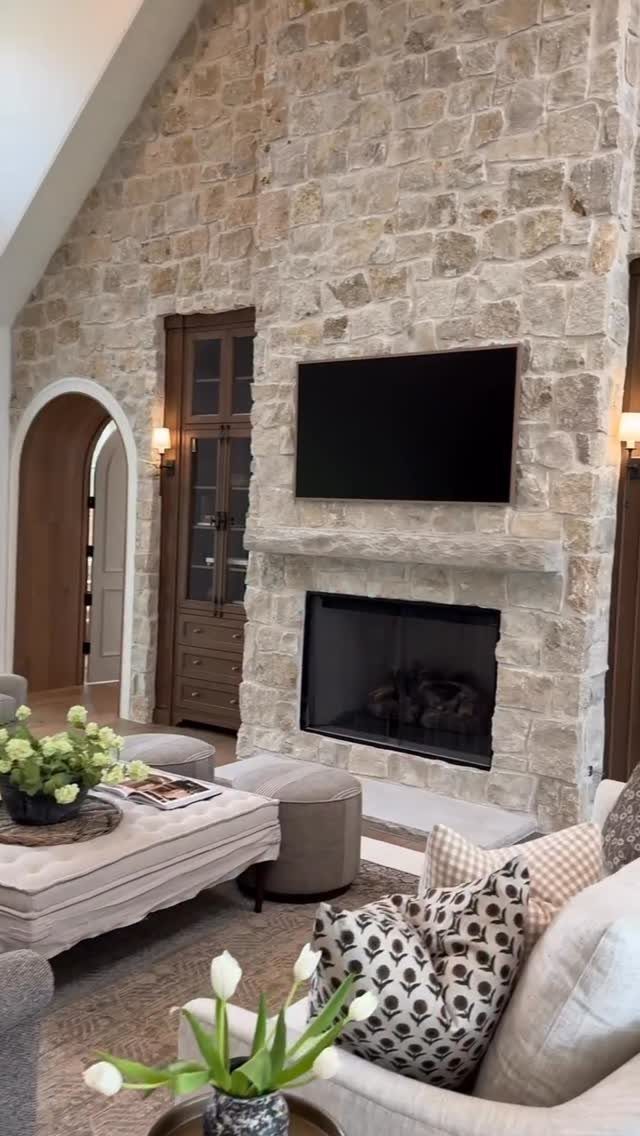
Stone behind a television sounds like a contradiction, and that tension is what makes it work. The rough surface catches light differently across the day, so the wall shifts while the screen stays flat and black.
Real stone veneer needs structural backing and professional labor; faux panels screw to studs like tile backer board and cut with a circular saw. I would go faux unless the house already has masonry walls.
Either way, the weight demands finding studs, not relying on drywall anchors.
The rustic effect pairs naturally with wood furniture and leather seating. In a room full of clean lines and metal, the same stone reads as a deliberate disruption.
Pick based on whether you want cohesion or contrast.
9. Built-In Unit Around TV
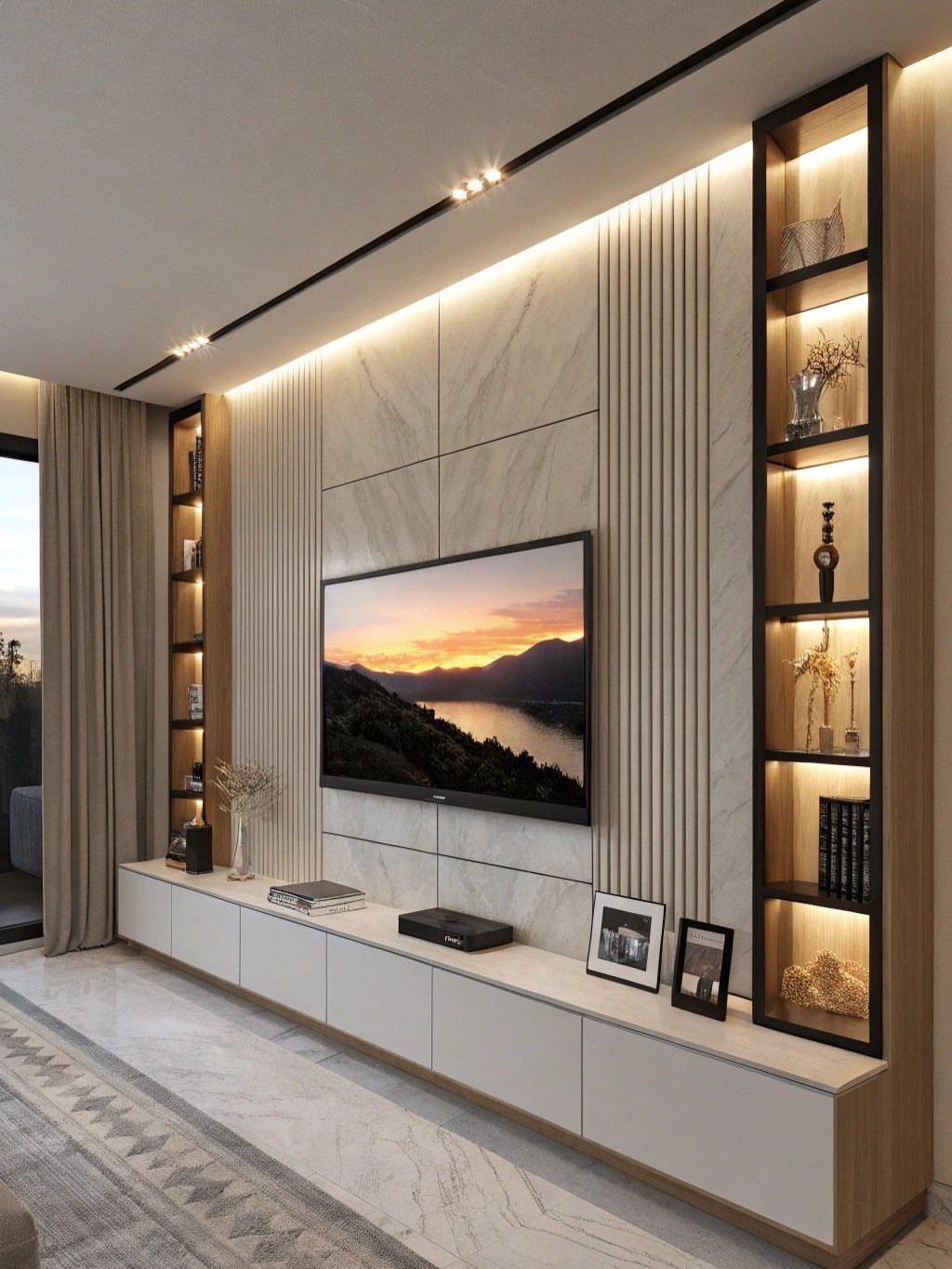
Built-ins turn the wall into furniture. The mix of closed storage below and open display above keeps everyday clutter hidden while leaving room for objects that carry color.
I would start with the cabinet depth. Most components need about a foot of depth; anything deeper wastes floor space and shadows the contents.
Lighting inside the shelves needs a switched outlet planned before drywall, not after.
Painted units in dark colors recede visually and let the screen dominate. Lighter wood tones keep the whole wall from feeling like a single heavy block.
The choice depends on whether your room needs the TV to shout or to settle in.
10. Integrated Fireplace TV Wall
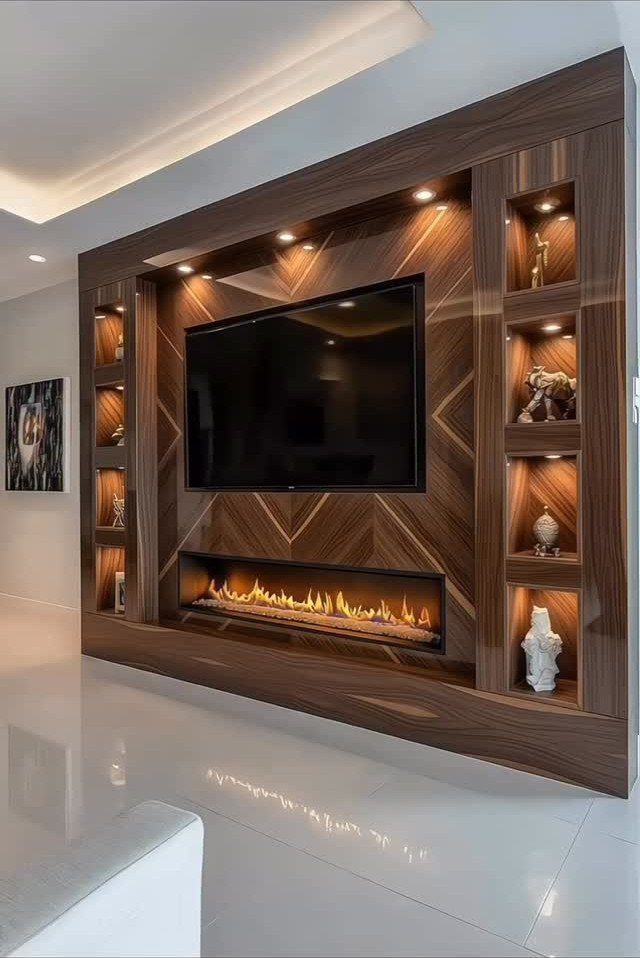
Stacking heat below light makes practical sense. The fireplace draws the eye first, the television second, and together they anchor a seating arrangement without fighting each other for dominance.
Electric units with linear flames need no venting, which means this wall can sit anywhere the wiring reaches.
I would leave a clear gap between the top of the firebox and the bottom of the TV; any closer risks heat damage and a cramped composition.
This suits rooms where one wall must do all the work. A built-in fireplace and TV wall commits that whole surface to one arrangement; you lose the flexibility to move things later.
Once the fireplace and TV are fixed, the sofa faces them and everything else follows.
Hiding TV Cords
Cord management should be mapped before the first board goes up or the first roll of paper hits the wall.
In-wall cable routing keeps everything invisible, but it needs planning: know where your studs sit, where power lives, and whether your wall is exterior or shared with a bathroom. Paintable plastic covers cost less and take an afternoon.
They screw flat to the surface and disappear under the same paint or primer as the wall around them. Match the cover color to the finished wall, not the bare drywall, or the line reads as a scar.
Choosing Colors for Accent Walls
A dark wall behind the screen swallows the black rectangle when it’s off. Black, brown, and jewel tones do the camouflage work; the TV quits demanding attention and lets the wall hold the room.
Light shades do the opposite: pale gray, off-white, taupe, or a soft pastel frame the screen and make it the clear center.
Painted black without paneling gives a clean, minimalist hit of contrast. In a narrow room, take the color wall to wall.
Where the space is wider, a crisp border line breaks the surface and keeps the black from eating the whole plane. Frog tape and a steady hand matter more than the paint brand.
Professional Installation Advice
Some of these walls call for a pro even if you handle most of your own work. Veneer has real weight, so the wall behind it has to take the load, and every piece has to lock in tight.
Marble and porcelain that look continuous need joints cut dead-on; there is no patching a bad one. Budget the labor into your total cost upfront, and hire out the parts where a mistake costs more than the call.
Creating Visual Balance
Balance on a TV wall comes from mixing heights and textures in whatever sits around the screen, not from symmetry. Group objects in 3s or 5s; odd numbers read as accidental and natural, even numbers as arranged and stiff.
Leave open space between pieces so each item gets room to register. A shelf crammed edge to edge looks like storage, not intention.
Pull colors or materials from those objects into the rest of the room: a leather tone repeated in a throw pillow, a wood grain echoed in a rug.
That thread ties the wall to the seating area without matching everything to death.
On a dual-toned wall, let a bold panel stretch the full width behind the TV while the surrounding wall stays neutral; the horizontal line widens the room and gives the screen a defined stage.
Frequently Asked Questions
Are accent walls out of style in 2026?
No. An accent wall behind a TV still solves a real problem: a black rectangle dominates any room it sits in. The ideas that last are the ones that treat the TV as part of the wall, not an afterthought.
Shiplap, stone veneer, removable wallpaper, and backlighting all cost less than a full room redo and read as intentional.
Should an accent wall be behind bed or TV?
The TV wall usually wins if you only have budget for one. A bed sits against a wall by default; a television is a black void you stare at.
Backlighting strips or a gallery wall of frames turn the screen into something designed, not parked there. I’d pick the TV wall in any room where people gather, the bedroom wall only if you spend more waking hours there.
Can you hang a TV on an accent wall?
Yes, and most of these ideas assume you will. Stone veneer and faux panels need studs found and used; drywall anchors will not hold the weight of both the wall material and the mount.
For shiplap or wallpaper, the TV mount goes through the thin layer into the stud behind it.
If you are building a recessed niche for the TV, the bracket depth has to be part of the measurement before any framing gets cut.
What color should a wall be behind a TV?
Dark tones hide the screen when it is off; light shades frame it as a deliberate focal point. Deep navy or charcoal makes the black rectangle disappear, which I would pick for a room where the TV feels too prominent.
Warm white, soft gray, or pale taupe keeps the wall alive without competing, better for spaces where the set is already sized right.