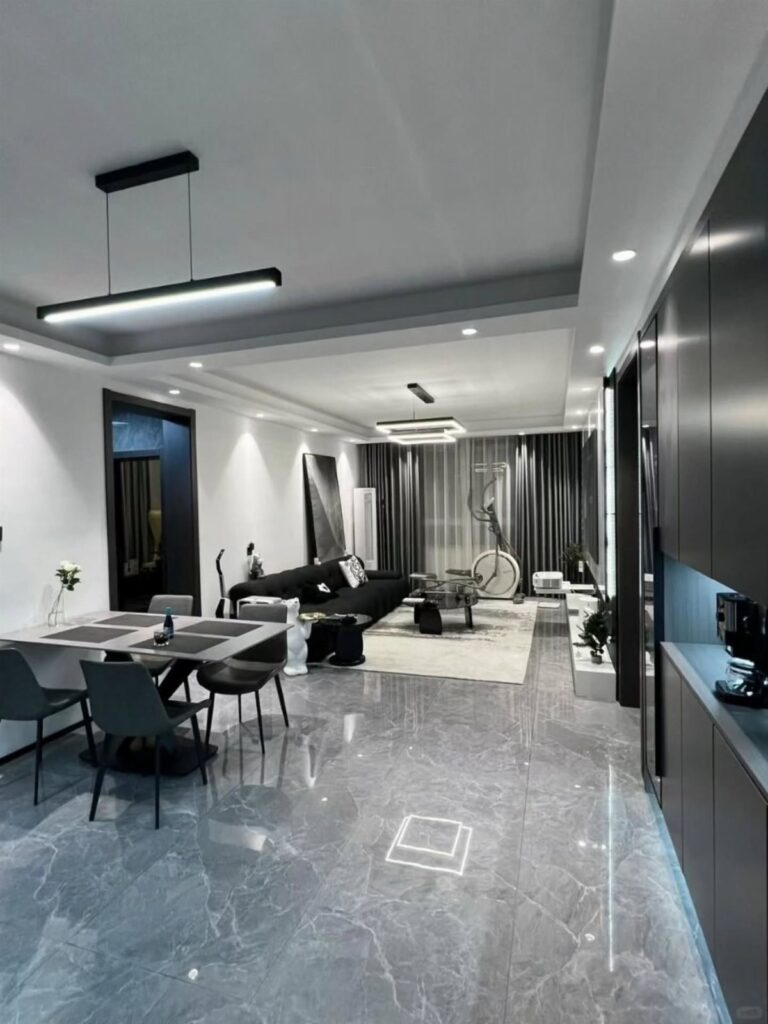
Grey flooring can run from a weekend rug swap you handle yourself to a full built-in fireplace wall that stays with the house.
The deciding factor is whether you rent or own, because some of these ideas roll out with you and others need a contractor.
A sectional that faces the door with its back to the room shows up more than once; the right fix for that exact problem changes completely depending on your budget and your lease.
[link-whisper-related-posts]1. Decor in Warm Colors
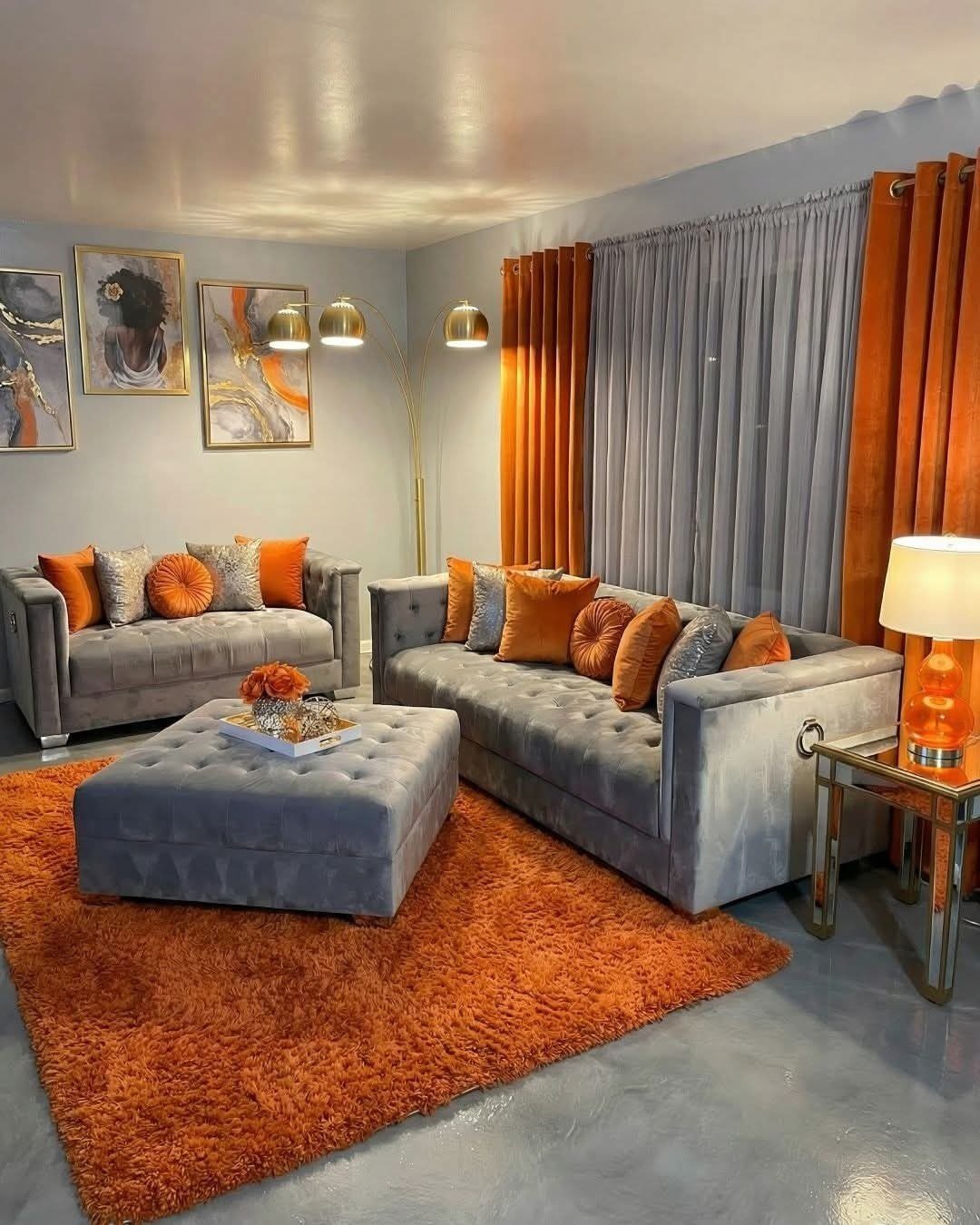
Orange against grey reads as warmth instead of noise because the undertones do the work. The grey floor and sofa set a cool baseline; the pillows, rug, and curtains add heat without fighting the architecture.
I would keep the walls quiet, maybe a soft white or very pale greige, so the orange stays the statement. Three pieces carrying the color is usually enough: rug, curtains, and one other.
More than that and the room starts to feel like a theme park.
This suits renters who cannot change the floor but can swap textiles in an afternoon. Cost stays low if you hunt clearance sections for curtains and grab a flatweave rug instead of shag.
2. Grey Floors with Warm Wood Accents
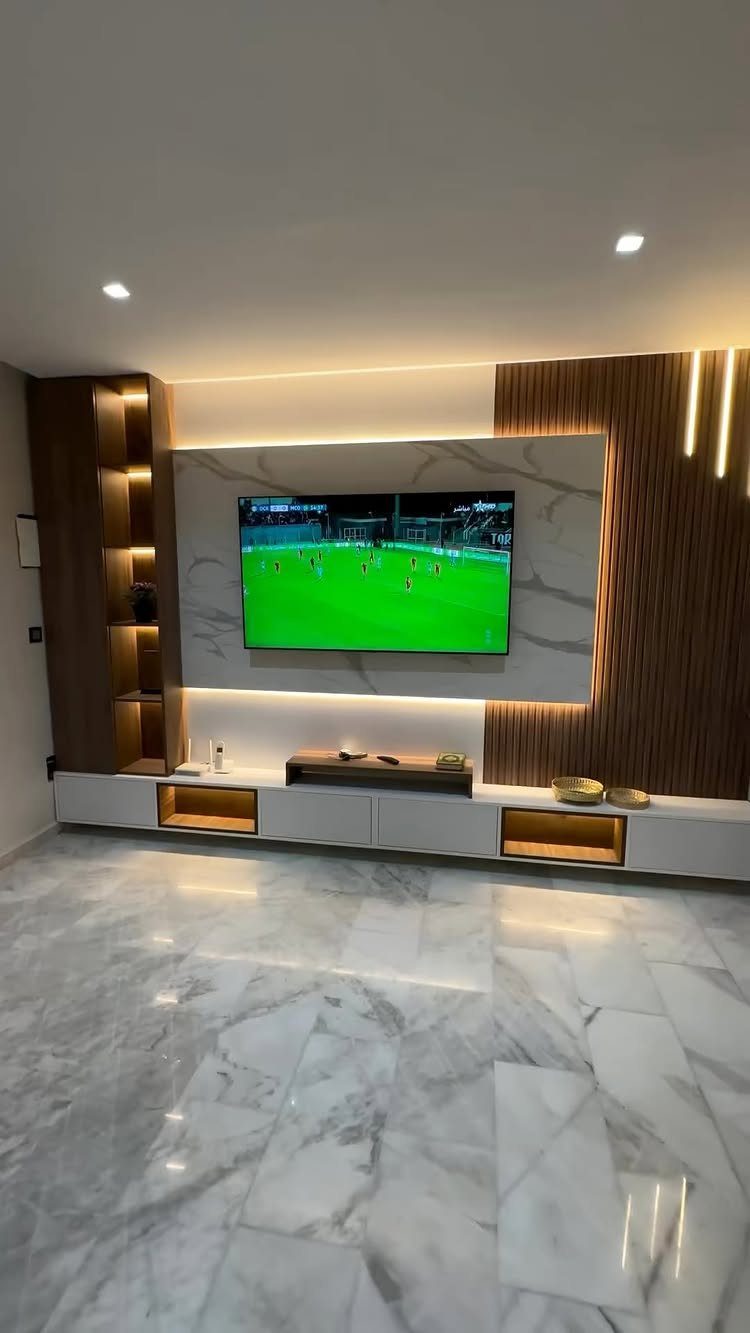
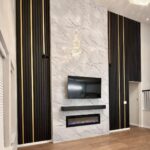
Warm wood against grey marble or tile does what paint cannot: it adds depth without covering anything. Slatted wood on the wall carries the eye upward so the floor does not dominate.
Walnut or pale oak both work, though I would avoid anything with yellow or red undertones that turns muddy against cool grey.
Two similar wood finishes, say a media console and a slat wall, look intentional; matching every wood piece to the same stain reads flat.
If your floor is grey-veined marble like this, the veining itself is busy, so simpler wood grain wins over heavy figuring.
3. Natural Fiber Rugs
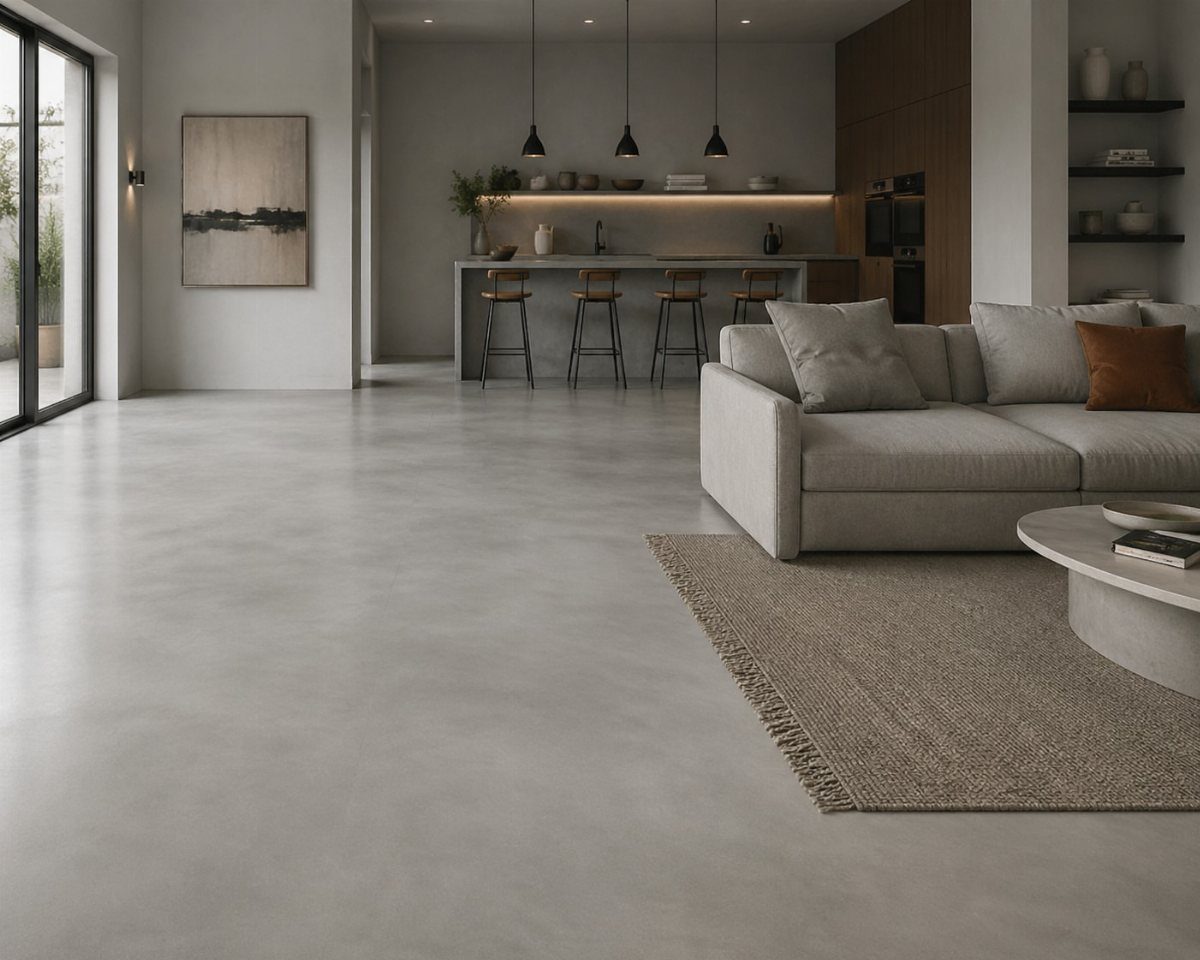
A jute or sisal rug on concrete breaks the chill without hiding the floor. The weave adds texture the eye reads as warmth even in neutral beige.
Size matters more than pattern here. The rug should extend under at least the front legs of your sofa and any adjacent chairs; anything smaller floats like an island and kills the flow.
I learned that the hard way with my first jute purchase, which looked fine online and wrong in the room.
Natural fiber can feel rough, so a plush pad underneath helps, especially if you sit on the floor. This is weekend work: roll out, position, done.
Best for open plans where the living area needs its own zone without walls.
4. Patterned Rugs
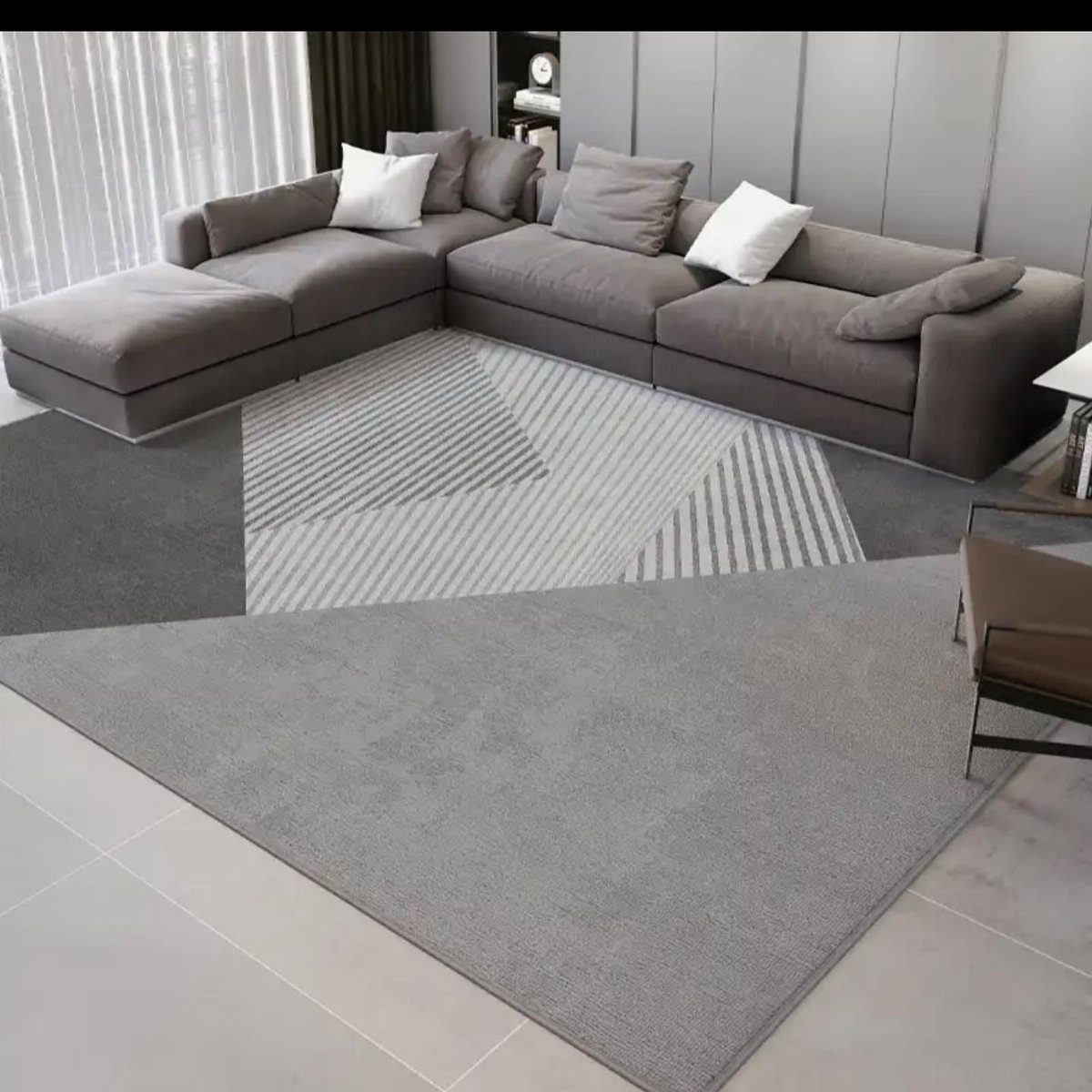
Geometric patterns on grey tile give the eye somewhere to land so the floor becomes backdrop instead of subject. Grey and white keeps it calm; grey with terracotta or mustard would push warmer.
A rug large enough for all sofa legs to rest on it anchors the seating area properly. That is the move: anchor the seating group so the pattern reads as intentional, not a patch.
Flatweave or low pile works better here than shag, which would fight the clean lines of the pattern.
This is the entry point for anyone intimidated by color. Start with a rug in two tones you already own, build outward.
Synthetic rugs in smaller sizes cost far less than wool, though wool wears better under a sectional.
5. Grey Marble Floor Living Room
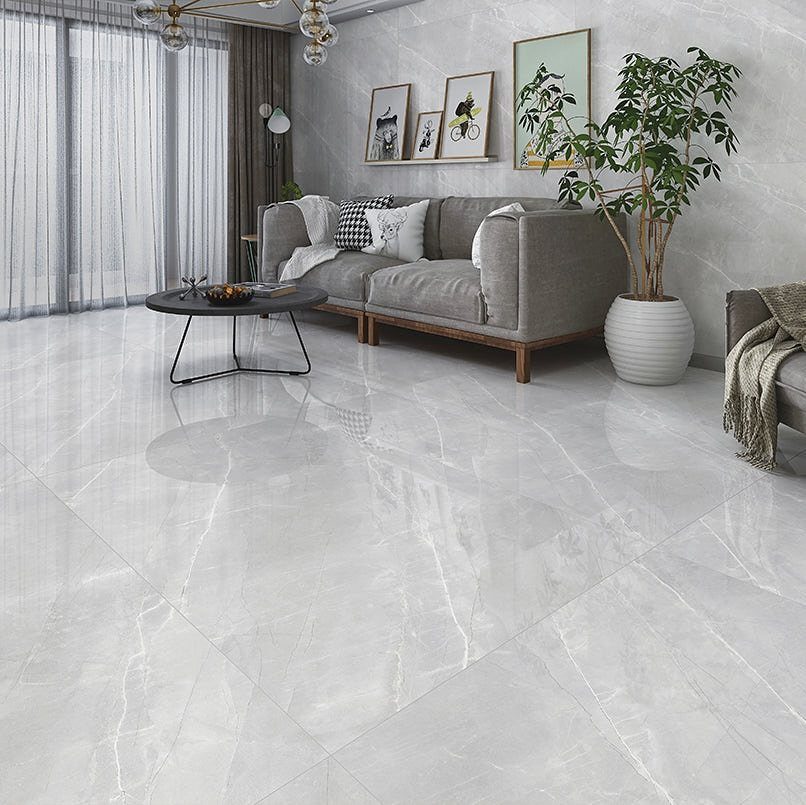
Polished grey marble demands restraint. The floor already carries movement in its veining; the room needs quiet furniture and sheer curtains that let light through without competing.
I would check the undertone before buying anything. Some grey marble leans blue-cool, others drift green or even warm grey.
A sofa that clashes with the floor’s particular cast will look wrong no matter how expensive. Bring a tile sample or photo to the furniture store.
Large format tiles like these need large windows or the gloss turns mirror-like and harsh. If your room faces north or lacks natural light, honed marble or a matte porcelain imitation softens better.
This is a higher-budget move, real or imitation, and it suits permanent spaces more than rentals.
6. Plush Shag Area Rug
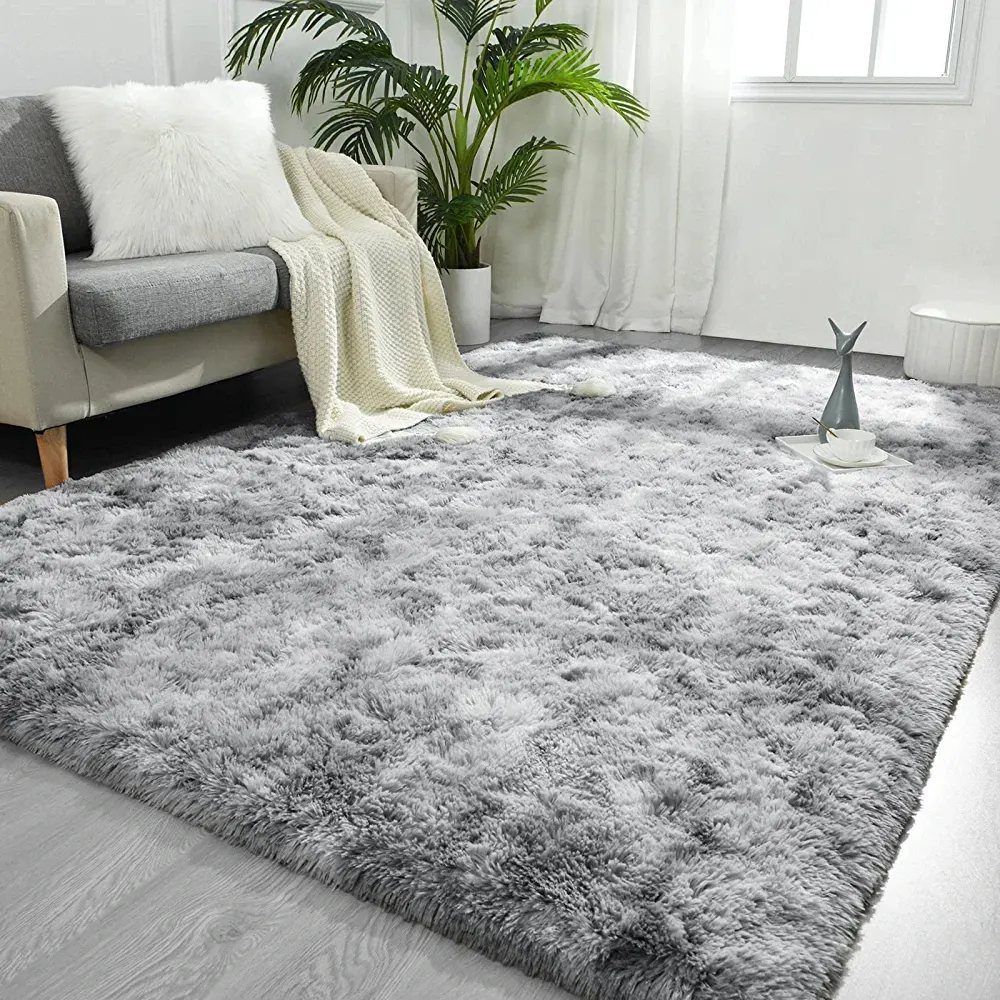
A shag rug on wood-look grey flooring adds what the laminate took away: softness, depth, and the suggestion of pile underfoot. The grey-on-grey here works because the textures differ enough to separate.
Plush pile traps more dust than flatweave, so this is not my first pick for high-traffic homes with pets. Vacuuming takes longer and deep cleaning every couple of years adds cost.
For a low-use living room or a bedroom sitting area, the trade is worth it.
Layering a smaller shag over a larger natural fiber rug is an option the photo does not show but the setup invites: jute base for coverage, shag on top for the sink-in feel.
End-of-season sales make the rug-and-pad combo more reachable than buying both at full price.
7. Minimalist Neutral Furniture
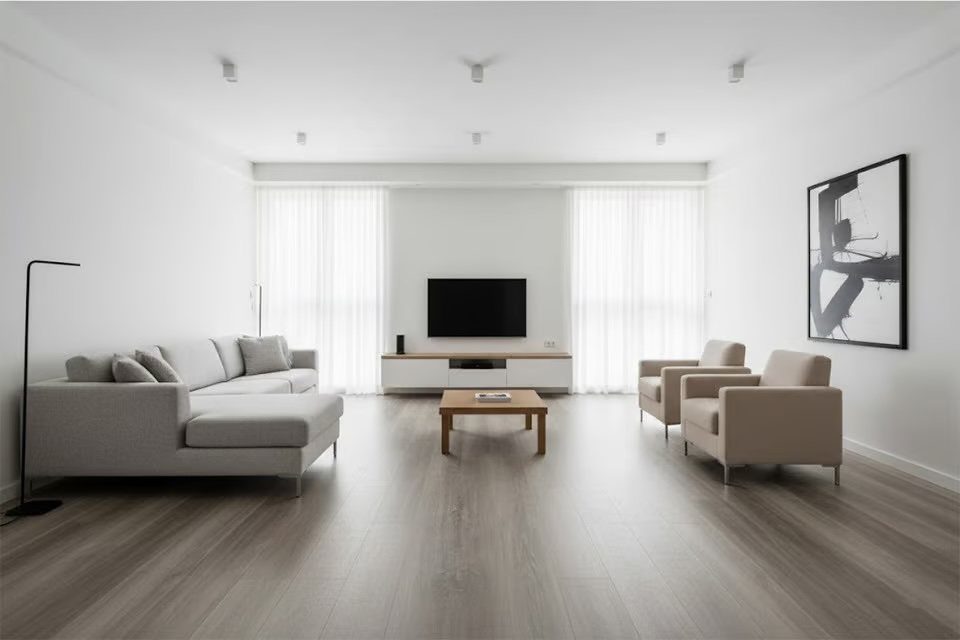
Light grey upholstery on grey flooring only works when the tones stay close enough to read as intentional, not accidental.
The photo keeps the sofa barely darker than the planks beneath it, with beige armchairs breaking up the field so the room does not flatten into one cool wash.
I would keep walls white or off-white; anything darker starts to feel like a showroom. A small wood coffee table, pale oak or walnut, adds the warmth that grey alone cannot supply.
The white console under the TV reads as architecture, not furniture, which keeps the wall from feeling cluttered.
Renters stuck with the existing floor can still get a pulled-together look by choosing neutral furniture they can roll out with when the lease ends. Light fabric takes more upkeep; every coffee drip and dog hair shows.
A washable slipcover or a bottle of Folex on hand saves the look.
8. Large Grey Floor Tiles
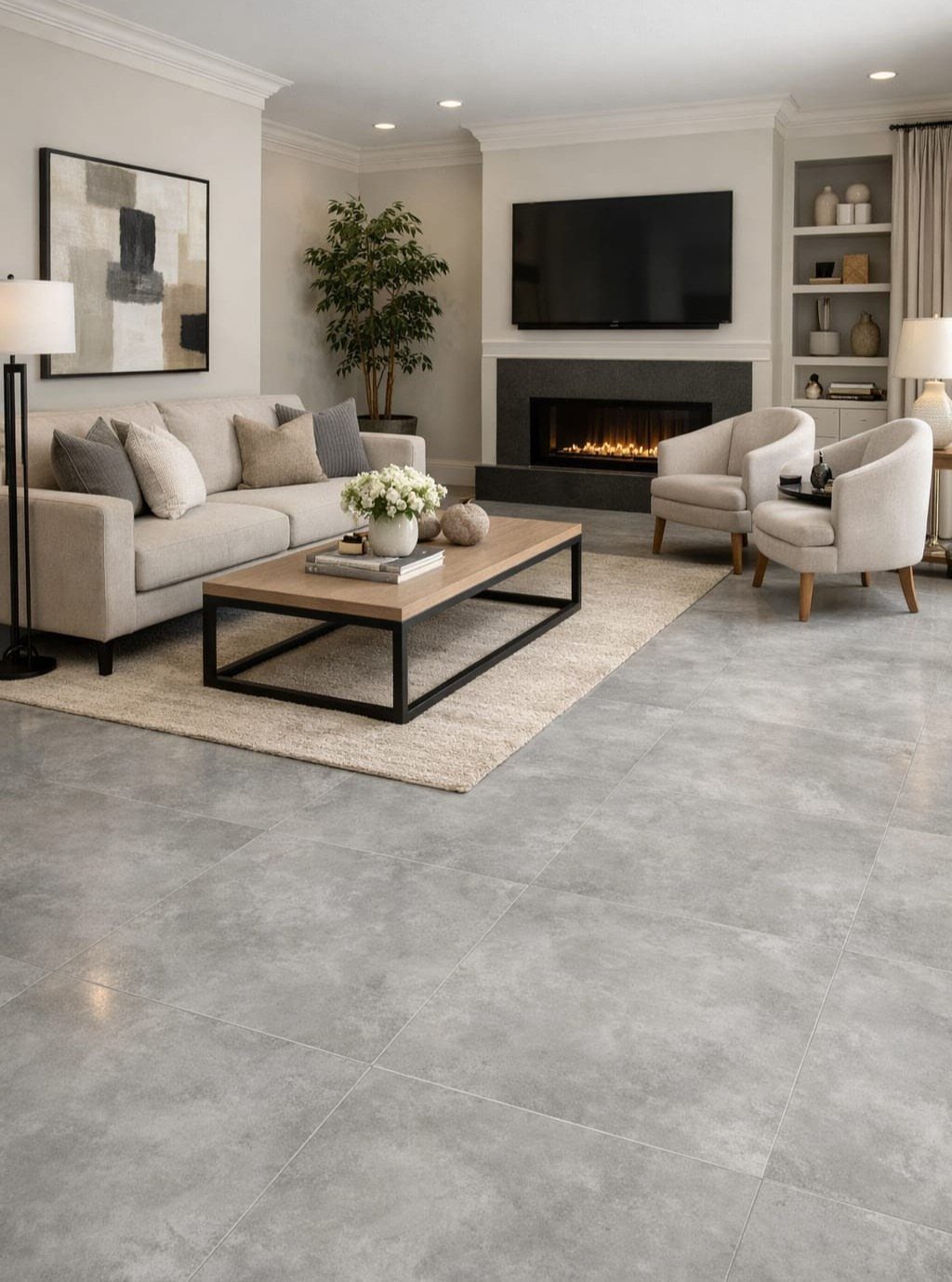
Large-format tile changes the whole rhythm of a room. The fewer grout lines read as calmer, more continuous, closer to poured concrete or stone slab than to kitchen backsplash energy.
Large-format tiles in warm grey, laid straight stack rather than staggered, keep the floor feeling like one continuous surface.
The grout matters almost as much as the tile.
I would go one shade lighter than the tile itself, never darker, and specify an epoxy grout if the budget allows; standard cement grout stains in a living room, especially near the fireplace or under a coffee table where mugs sit.
This is the most durable choice on the list. It handles wet boots, rolling chairs, heavy furniture without complaint.
The cold underfoot in winter is real; an area rug over the tile, not wall-to-wall, lets you keep the clean look while giving your feet a break where you actually sit.
Best for households with kids, dogs, or anyone who spills.
9. Cozy White Bouclé Seating
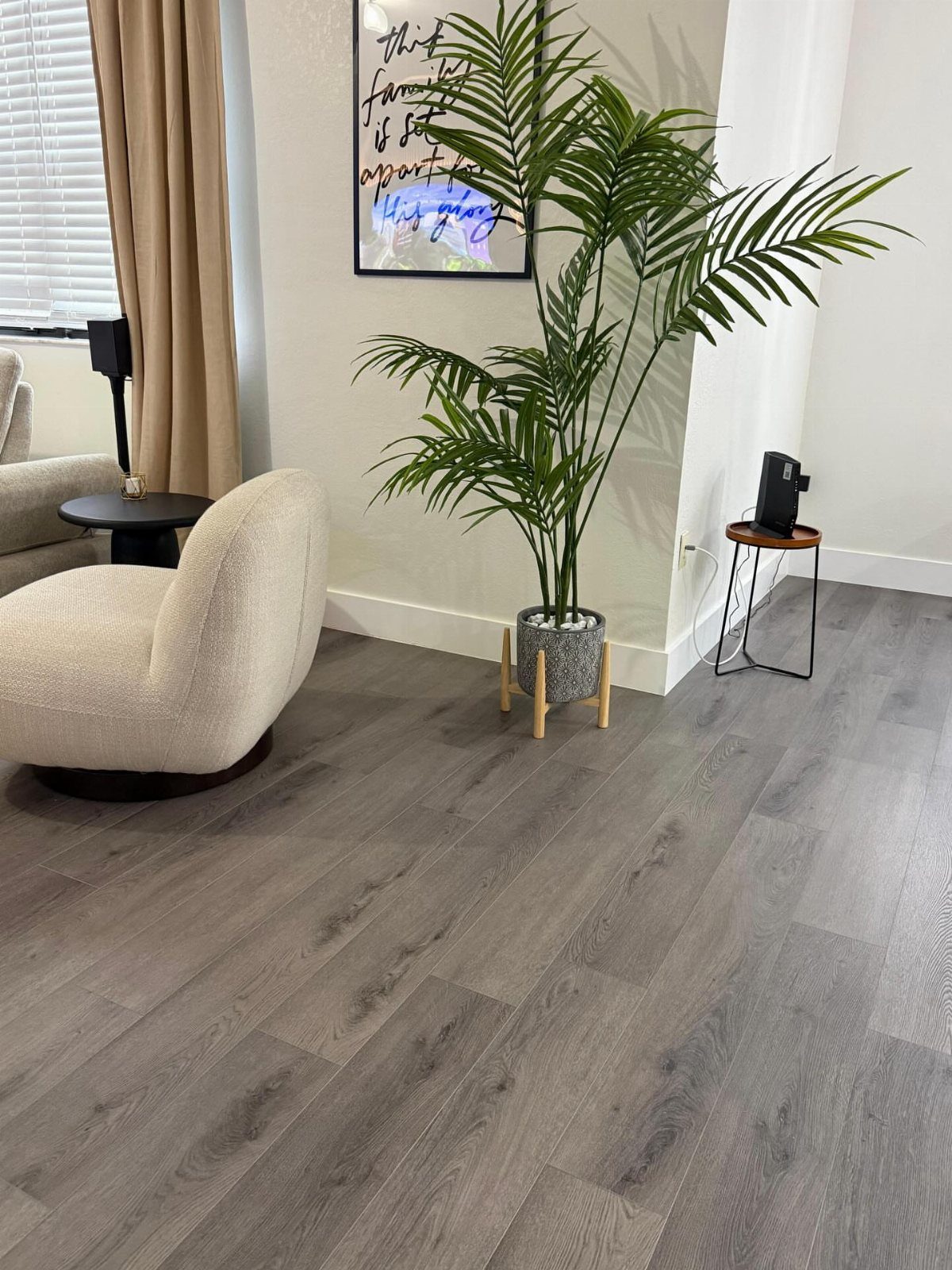
Bouclé reads as cozy because the texture catches light unevenly, the same way a favorite sweater does.
A white or off-white bouclé chair against grey flooring gives the eye one soft, warm shape to land on, especially in a corner that might otherwise feel like an afterthought.
The photo pairs the chair with a palm on a wood stand; the combination of nubby fabric, living green, and warm wood keeps the grey from going cold.
I would not add a second bouclé piece in the same room; the texture is too specific to repeat without looking themed. One chair, or a small loveseat at most, is the right dose.
The fabric collects lint and pet hair aggressively. A handheld fabric shaver and a vacuum with an upholstery attachment are non-negotiable tools.
For renters, bouclé slipcovers exist but never fit as cleanly as the original upholstery; this is a piece to buy for a space you plan to keep a while.
10. Built-In Bookshelves and Fireplace
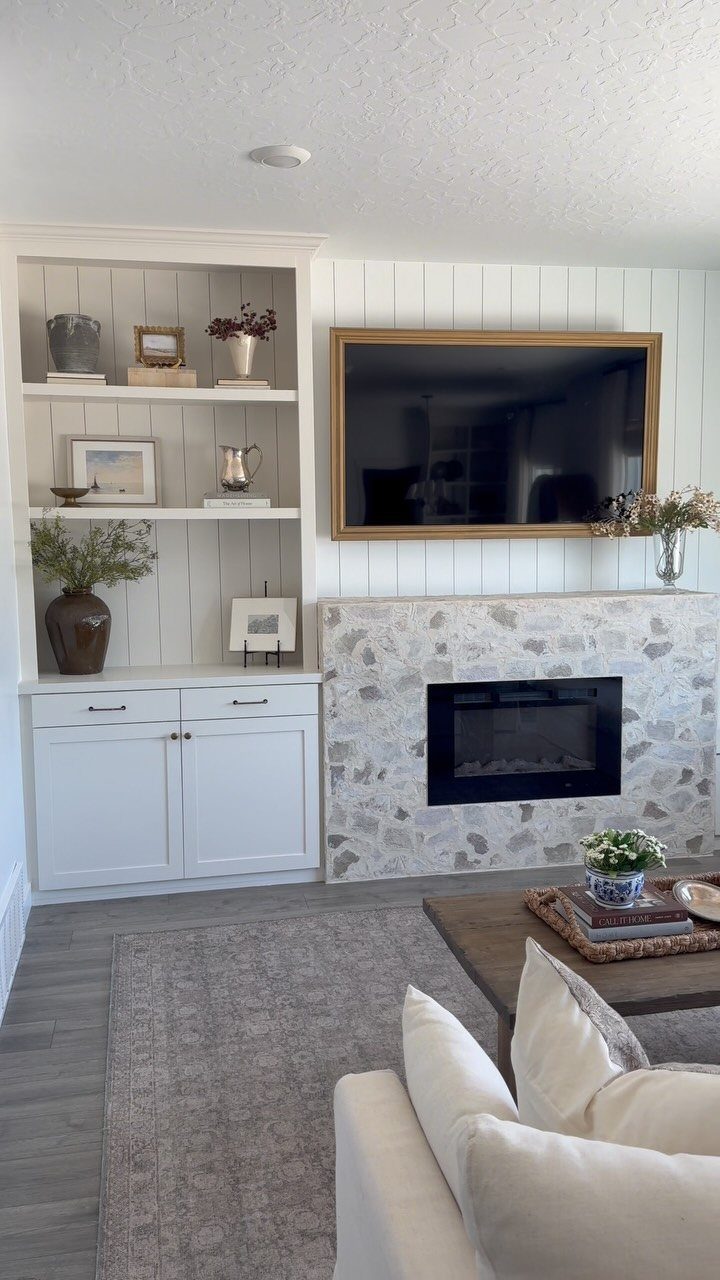
Built-ins turn a fireplace wall into the room’s backbone.
Stone choice changes the whole temperature. The visible surround runs warm grey and cream veining; a bluer stone would push the room colder than the grey floor already does.
I would hold a sample of the stone against the flooring before ordering, not judge from a screen.
The shelving needs editing. The photo keeps it styled but not crowded; in real life, built-ins become dumping grounds for anything without another home.
I would plan for closed lower cabinets to hide the router, board games, and the rest of what accumulates.
This is the most expensive idea here. Even DIY boxed units run into the thousands once you factor in stone, hardware, and installation.
You keep square footage that freestanding furniture would otherwise eat up.
11. Personal Items or Art
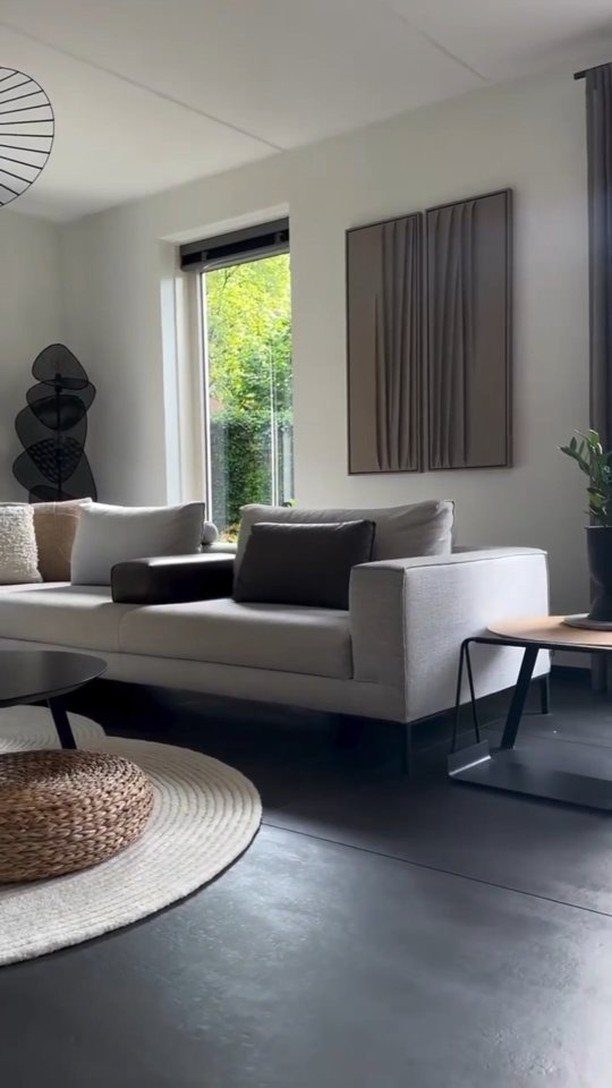
Grey flooring is a stage, not the performance. A single large textured piece on the wall, a round rug with some hand to it, and cushions that look lived-in rather than store-fresh keep the room from feeling staged.
Nothing matches too carefully.
I would start with one thing that is genuinely yours: a photograph you took, a textile from a trip, a ceramic piece with a story. Build outward from there rather than buying a "look" complete from one store.
The grey floor will accept almost any direction you take it; the risk is taking none and ending up with a room that feels like a rental staging.
The common mistake is scattering too many small items. One larger piece anchors a wall better than a grid of little frames.
The round rug breaks up the rectilinear room without competing; a second round shape would start to feel deliberate in a way that reads as design-magazine, not home.
This is the slowest idea to get right, and the most rewarding.
Avoiding a Sterile Look
Grey flooring can flatten into background noise or dominate as the only thing you see. The fix is giving the eye something else to do.
I would pull grey up into the room through small touches: a desk chair in charcoal, a throw blanket with a silver thread, or hardware in brushed nickel.
The floor stops feeling like a foreign object and starts reading as part of a deliberate range.
Textiles do the heavy lifting. Velvet, wool, linen, and chunky knits layered together build warmth that a single fabric cannot.
Start with an off-white or sand base, then add ochre, terracotta, or teal in pillows and throws. Smooth against rough keeps it tactile without tipping into clutter.
The risk is overmixing. One or two bold accents, not five.
The grey floor will recede if everything else has a job.
Creating a Cozy Atmosphere
Soft lighting matters more with grey flooring than with warm wood, which carries its own glow. A grey room under overhead LEDs alone reads as a waiting area.
I would add lamps at varied heights: a floor lamp with a linen shade, a table lamp on the sideboard, maybe a clip light on a shelf. The shadows do the warming; the grey floor just holds the light.
Layered textiles turn the seating area into a destination. A chunky knit throw over a velvet sofa, linen curtains pooling slightly at the floor, a wool rug underfoot.
The mix of smooth and rough invites sitting down and staying.
Ochre and terracotta read as firelight against grey; teal cools things further, so I would save it for rooms with south-facing windows. One or two bold colors, anchored by creams and greys, keep the palette tight enough to feel restful.
Balancing Cool Tones
Cool grey flooring paired with cool everything else turns a living room into a hallway: clean, but not somewhere you settle.
Warm wood furniture breaks the cycle. I would avoid pale birch or ash that echo the floor too closely; matching the grey just extends the cold into the furniture.
The grain itself adds heat. A media console with visible figuring, a coffee table with some knots, a wooden bowl on the shelf.
These small organic interruptions keep the room from reading as one flat tone.
Color accents help, but wood does something paint cannot. It carries weight, ages in place, and gains patina.
A grey room with warm timber starts to feel lived-in within weeks; a grey room with only grey and white stays staged indefinitely.
Just because your flooring mimics a cool-toned wood, that doesn’t mean you have to carry the same wood tone throughout the entire room. Emily notes that adding wood furniture in warmer, richer hues will effectively cancel out the gray.
Layering Textures
Texture adds depth where color cannot. A grey room with grey sofa and grey curtains is a photograph; the same room with nubby bouclé, slubbed linen, and a ribbed ceramic vase is a place to sit down.
I would start with a base fabric and build outward. A linen sofa in natural or off-white, then a velvet pillow in a deeper tone, then a chunky knit throw that someone actually knitted, not factory-looped.
Even when every color stays quiet, the eye still catches where velvet meets wool, or where smooth stone sits against something rougher.
Wool rugs, jute baskets, a leather ottoman with some scuff to it: each material catches light differently. The floor stays grey, but it stops being the story.
The danger is collecting textures that fight. Too many competing weaves turn busy.
I would aim for three distinct materials in the seating area, maybe four if one is very quiet. Smooth leather against rough linen works; bouclé against shag against fringe starts to feel like a textile shop exploded.
Frequently Asked Questions
Is gray flooring still a trend?
Gray floors still work because they act like a blank canvas; warm wood limits your wall color and furniture choices in ways a cool neutral never does.
I see it most often in rentals and first homes where the floor needs to outlast several decor changes.
How to bring warmth to a room with grey floors?
Warm wood accents, natural fiber rugs, and textiles in orange or terracotta do what paint cannot: they add heat without covering the floor.
Are grey floors dated?
Grey floors are not dated; the risk is leaving them without direction so the room reads as rental staging rather than lived-in.
Is grey flooring a good idea?
Grey flooring is a solid choice because it provides a neutral backdrop for diverse decor and accepts almost any direction you take it.
A room built entirely in one cool note, floor to ceiling, goes flat fast; the risk is monochrome, not the gray itself. Pale oak or walnut furniture, white or off-white walls, and one warm textile layer prevent that drift.
What color furniture works with grey flooring?
Light grey upholstery works when the tone stays close enough to the floor to read as intentional, not accidental, with beige or wood pieces breaking up the field.
What rug should I put on grey tile?
A geometric patterned rug in grey and white keeps the room calm; grey with terracotta or mustard pushes warmer.
How do you soften a grey marble floor?
Polished grey marble demands quiet furniture and sheer curtains that let light through without competing with the veining.
Honed marble or matte porcelain imitation softens better in north-facing rooms or spaces with limited natural light, since large format tiles without enough windows turn mirror-like and harsh.