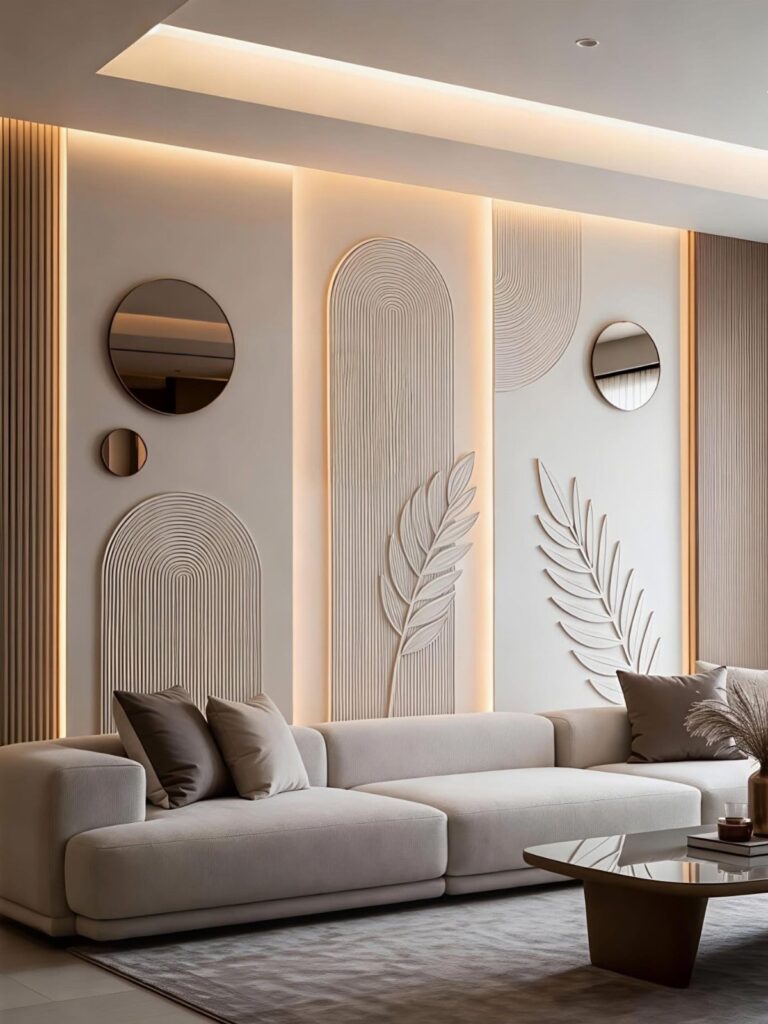
These wall treatments run from PVC panels you can carry home yourself to a fluted install that can swallow a whole project budget before the fireplace rough-in.
The deciding factor is whether you own the wall or just need the look to survive a lease, something the next six ideas handle differently.
A single 4×8 sheet of decorative PVC, trimmed in gold and clicked together like flooring, proves the bottom of that range is real.
[link-whisper-related-posts]1. Decorative PVC Wall Panels
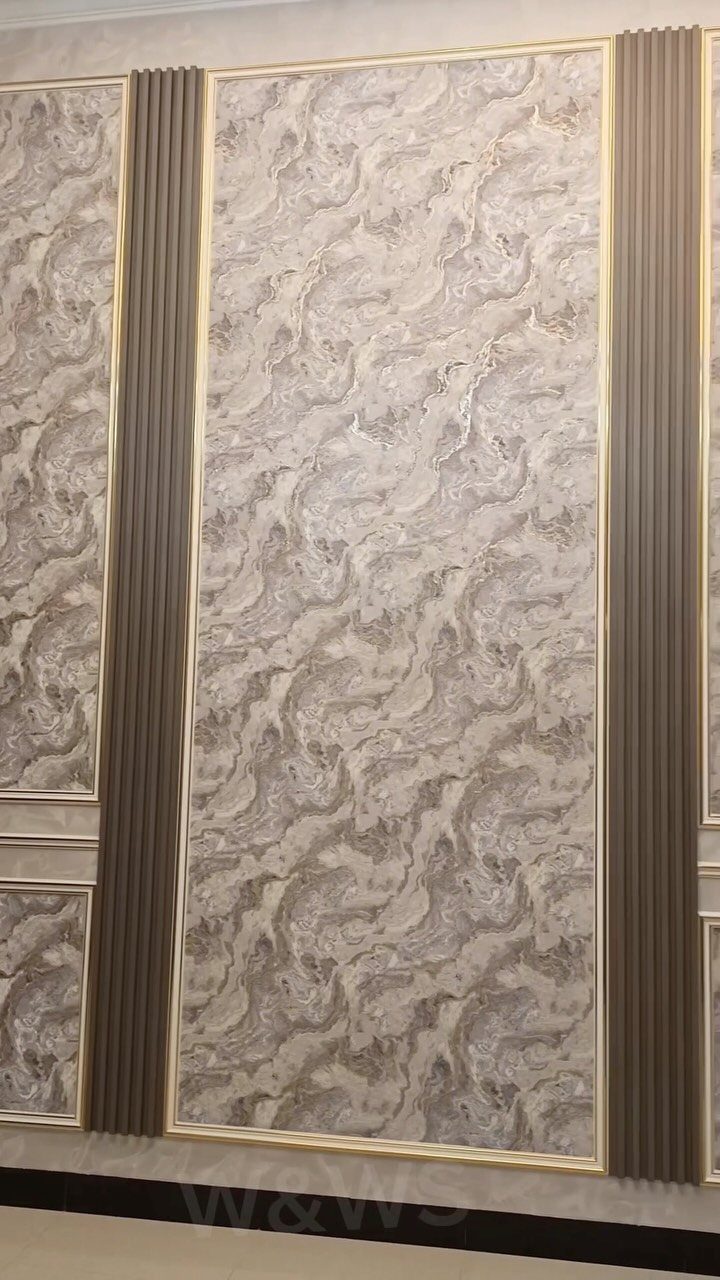
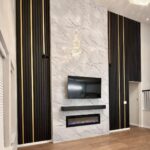
PVC panels let you fake marble, concrete, or wood grain without the weight or the sealing hassle. Thin gold trim and vertical fluted strips make the whole wall read expensive even though it is plastic.
I would check the fire rating before putting these near a kitchen or fireplace, and I would order samples to see how the pattern repeats at full scale. Some panels click together like flooring; others glue straight to drywall.
Either way, one person can handle a 4×8 sheet alone, and cleanup is a damp cloth.
Best for renters who want impact they can peel off later, or for anyone covering a wall that has taken damage and needs to disappear.
2. Wood Slat TV Walls
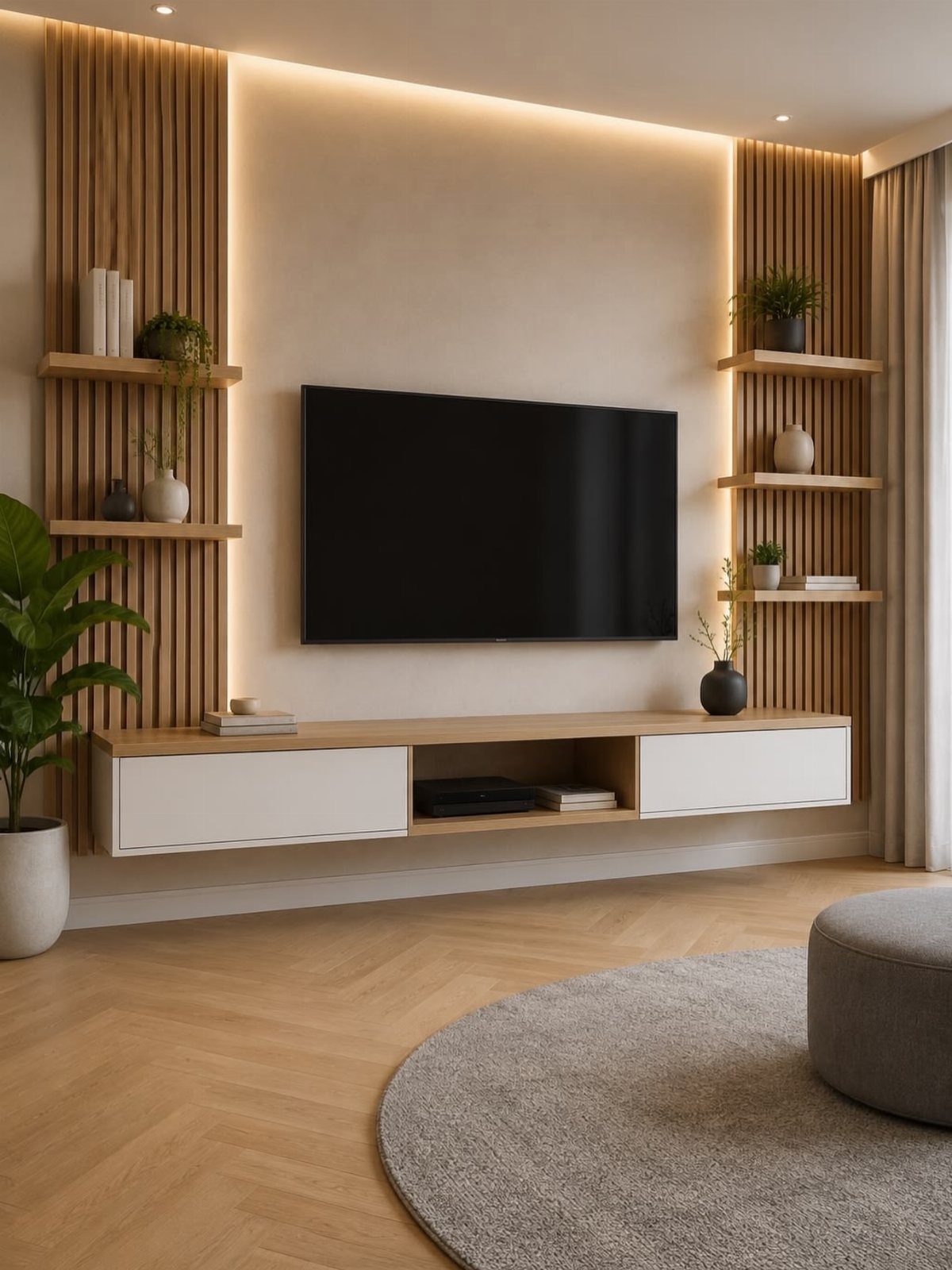
Vertical slats behind a television solve the blank-wall problem without demanding art you do not own yet.
Light wood strips with LED channels behind them give off a soft glow without visible fixtures; add floating shelves and a long low console to finish the setup.
That backlighting is the move that separates a slat wall from plain paneling; I would wire it during installation rather than trust plug-in strips.
MDF or oak veneer slats, cut in narrow widths with gaps between, keep the look clean and linear without solid-panel bulk. You can buy premade sheets or rip boards yourself if you have a table saw and patience.
I would add the optional electric fireplace only if the wall backs to the exterior; retrofitting venting through interior framing is rarely worth the trade.
This look suits new builds with open plans where the TV wall is the only vertical element that reads as architecture.
3. Limewash Accent Walls
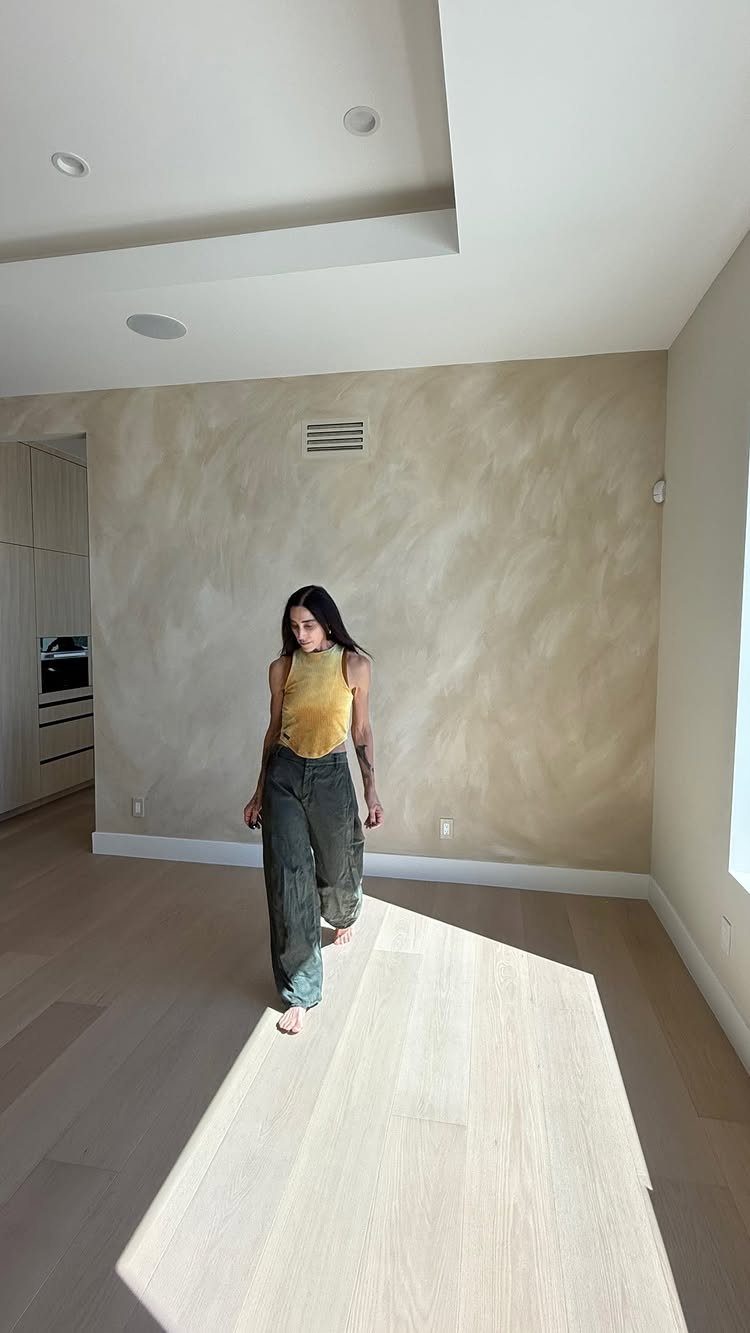
Limewash is chalk paint’s older cousin: lime putty and pigment that you trowel on in thin, irregular coats until the wall looks like weathered plaster.
Warm beige with visible brush marks and soft shadow is exactly what you want; perfection is the enemy here. It works over existing flat paint if you degloss first, though bare drywall sucks it in best.
I would budget a weekend and a helper, because the timing matters. Each coat needs to set before the next, and overlapping wet edges is how you get the cloudy depth.
The finish is matte to the point of forgiving fingerprints, and it improves rather than degrades with age. I would use it in a room with strong natural light, where the tonal shift across the day becomes the decoration.
Skip it if your furniture is already busy; limewash is the quiet member of the room.
4. Dark Gray Shiplap Fireplace Wall
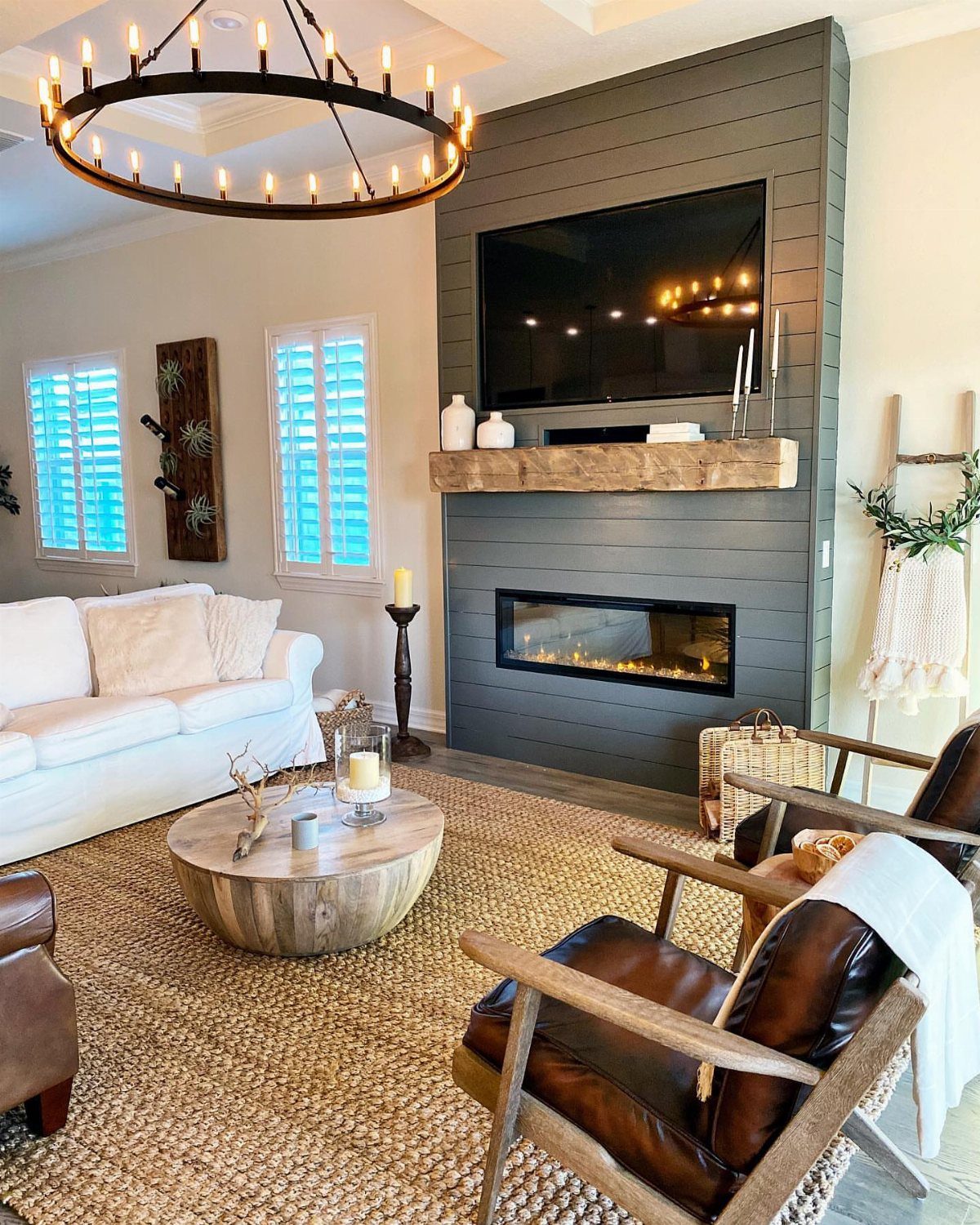
Horizontal shiplap in a dark gray reads cabin-modern rather than farmhouse, especially with a thick live-edge mantel and no visible gaps between boards.
Dark paint on shiplap demands a quality formula and a sprayer or a very patient brush hand; every drip shows on the grooves.
I would use a satin or eggshell sheen, not flat, because soot and dust settle in the channel shadows. The rustic mantel is doing heavy lifting here; without it, the wall goes generic.
I would source that first, build the shiplap around its length, and mount it with a French cleat so the weight sits on the framing.
This wall wants a room with generous ceiling height; in a standard box, the horizontal lines feel low and heavy.
5. White Fluted Fireplace Wall
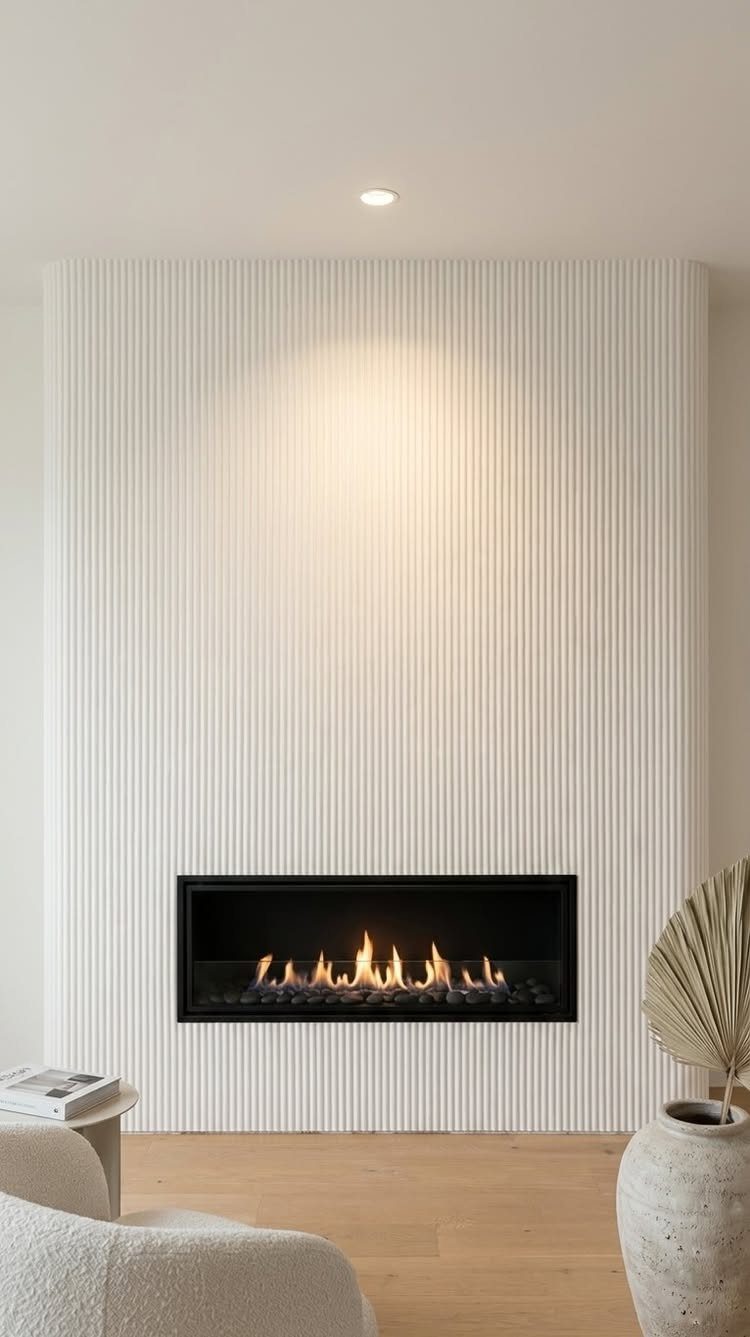
Fluted columns of white MDF or plaster wrap the fireplace here like a ribcage, and the linear gas insert sits flush to the face rather than recessed.
That flush mount is harder to execute than it looks; the surround has to stay perfectly flat while housing the venting and the gas line.
I would hire the fireplace rough-in and do the fluting myself, using half-round dowels or a router jig on 1x boards spaced tight enough to read as texture from across the room.
The white keeps it from feeling like a hotel lobby, but I would add one warm material nearby, as the photo does with the wood floor and the stone vase.
This wall wants a modern or Japandi room with low, clean-lined furniture; traditional pieces fight the vertical rhythm. Cost jumps fast if you order premade fluted panels, so I would price both routes before deciding.
Design Considerations
A wall treatment needs to earn its place against what is already in the room.
PVC panels in a fake marble read as cold and slick if the sofa is velvet and the rug is worn Persian; wood slats behind a television fight a room full of carved mahogany.
I would pull the dominant color from the largest piece of furniture and let the wall answer it, not match it.
Ceiling height is the other silent decision. Light matters too: limewash shifts across the day and needs sun to perform, while LED-backed slats create their own glow and work in a basement.
The last check is maintenance tolerance. Dark painted grooves collect dust; white fluting shows scuffs.
I would run a hand across the sample at shoulder height, the place bags and shoulders hit, before committing.
Frequently Asked Questions
What is the latest trend for wall decor?
Limewash finishes, wood slat TV walls, and bright white fireplace build-outs are showing up most right now.
Limewash gives walls a weathered plaster look with visible brush marks; slat walls add architecture behind a television with hidden LED backlighting; fluted white columns around a fireplace read modern without going cold.
Each one works on a real weekend budget if you handle parts yourself.
How to make a wall look luxury?
Texture and light do more than expensive materials.
PVC panels with gold trim fake marble or concrete at a fraction of the weight; vertical wood slats with LED channels behind them glow without visible fixtures; limewash catches daylight and shifts tone across the day.
The common thread is shadow and variation, not the actual cost of what is on the wall.
What are decorative PVC wall panels made from?
Polyvinyl chloride, a lightweight plastic that prints with marble, concrete, or wood grain patterns. The thin gold trim and those vertical ridges catch light the same way pricier materials do, which is half the trick.
Installation runs from tongue-and-groove clicks to basic adhesive, and the maintenance is wipe-and-go.
Are PVC wall panels suitable for bathrooms?
Yes, the water resistance is built in. The same plastic composition that makes them easy to wipe clean also handles moisture without warping or sealing hassle.