These ideas run from a cheap pothos to a full floor repaint, and the one that fits depends on whether you can change the floor itself or only what sits on it.
[link-whisper-related-posts]1. Painted Wood Floors
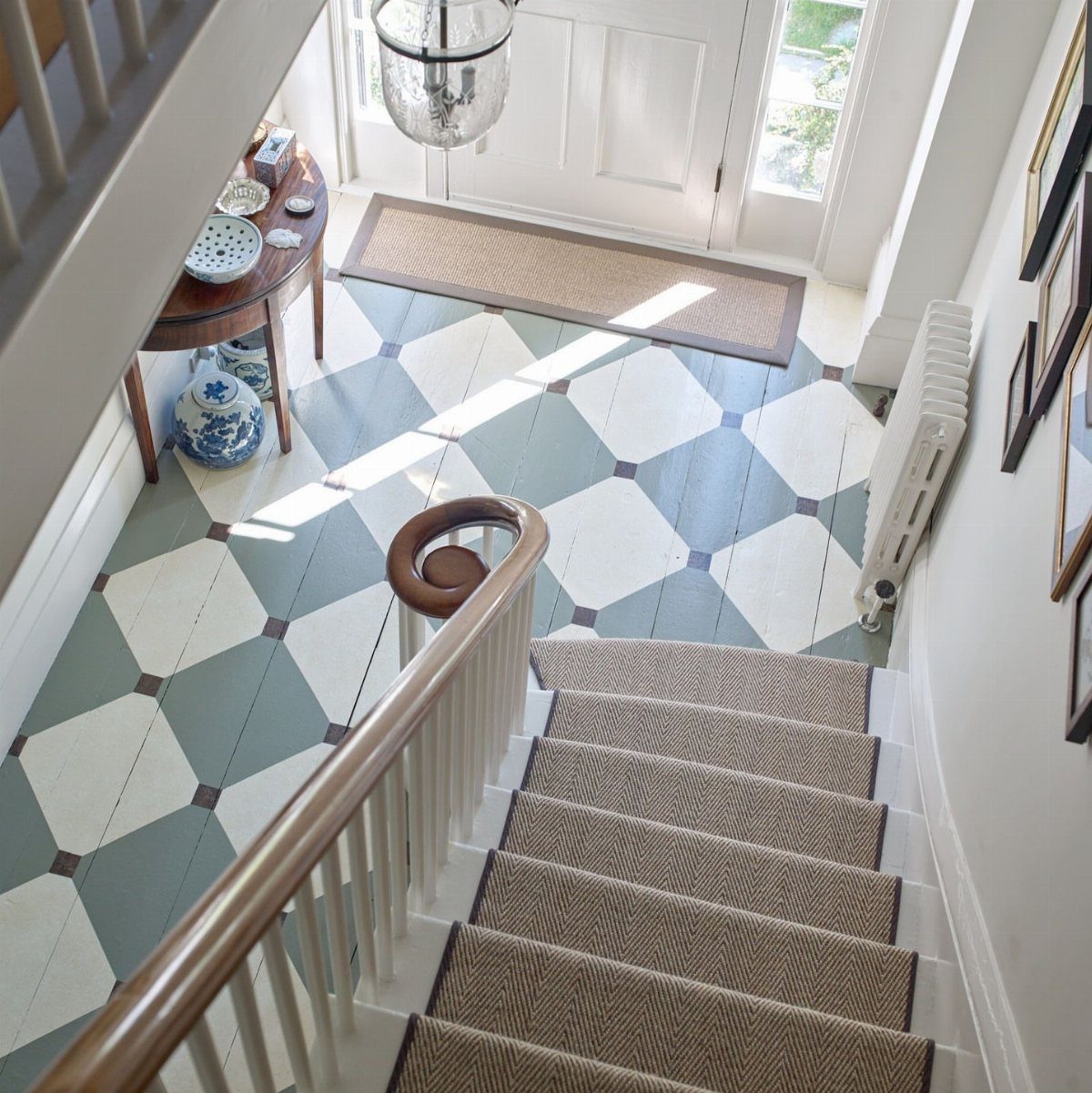
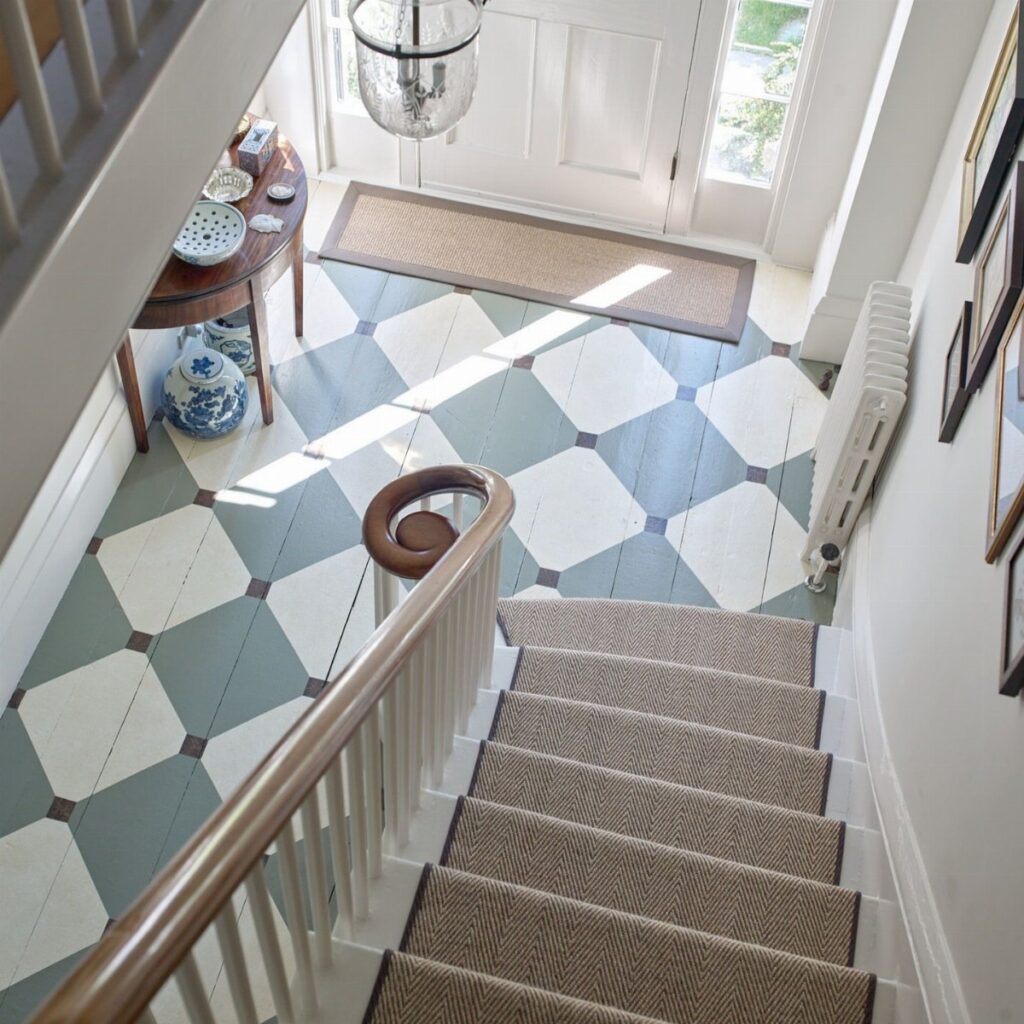
Painting the floor itself turns the problem into the solution. A checkerboard or geometric pattern in green and white, like the one above the stairs, reads as intentional rather than apologetic.
Clean and sand first, then use floor or deck paint from any major brand. Boutique lines like Annie Sloan or Amy Howard work too, though standard interior paint holds up fine for low-traffic rooms.
White alone freshens a space fast; I saw it used to stage a for-sale house where the orange planks suddenly looked like a choice. This suits renters who cannot refinish and homeowners who want weekend results.
Scraped paint looks worse than scraped stain, so this one takes more commitment than staining.
Natural wood floors can last 25 to over 100 years with proper care. Longevity depends on the wood species, thickness, finish, and installation quality.
2. Warm Neutrals with Orange Wood Floors
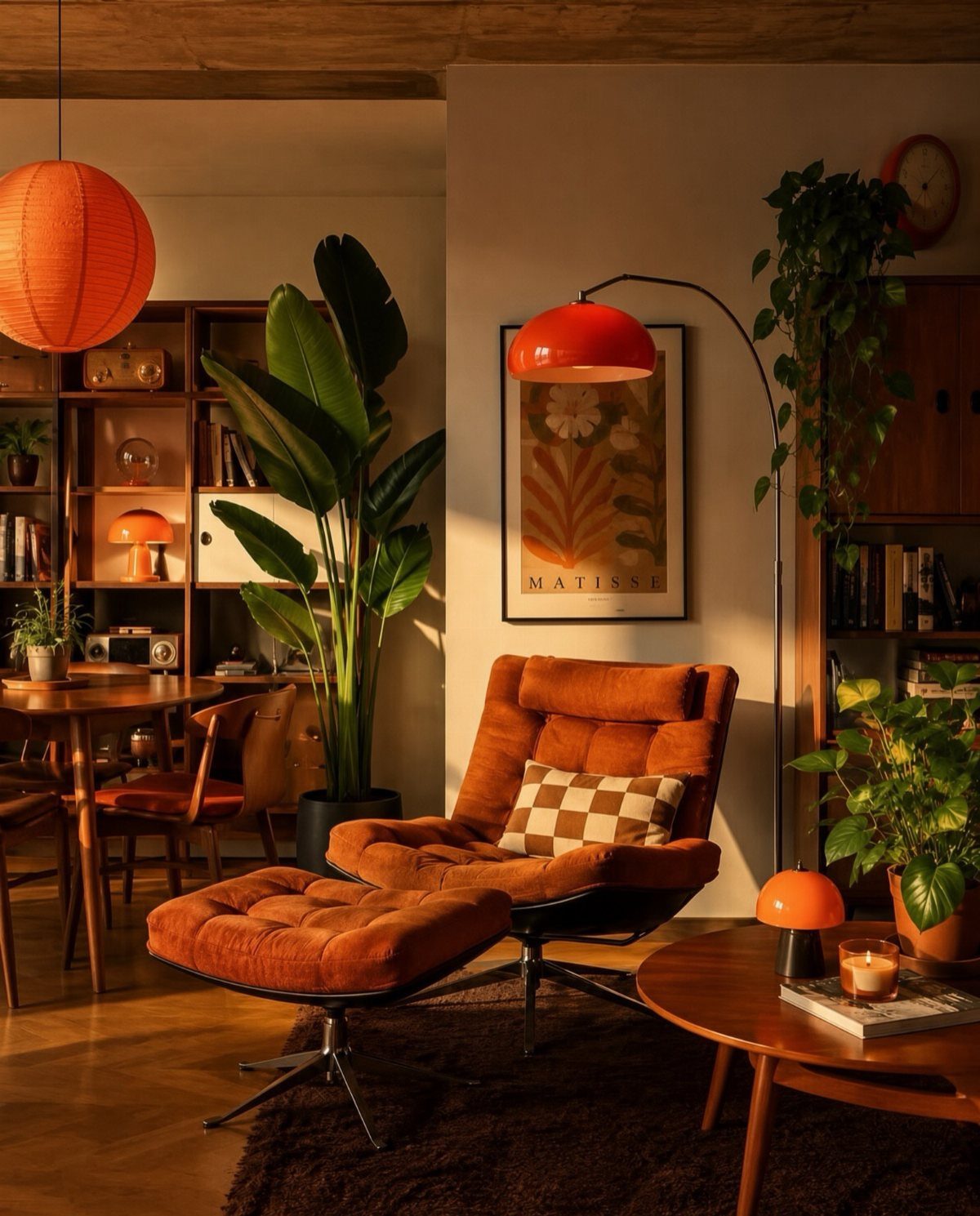
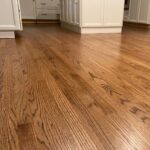
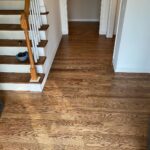
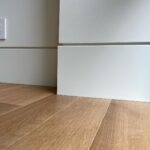
Leaning into the warmth works better than fighting it. Soft browns, taupes, and beiges do not cancel the orange; they wrap around it so the room feels settled rather than staged.
Sherwin-Williams "Accessible Beige" and Benjamin Moore "Shaker Beige" both sit in that middle ground where they pick up the floor without amplifying it.
Check your particular orange first: a floor with more red in it needs cooler taupes, while a yellow-orange plank likes something milkier. Hold the swatch against the boards themselves, not up on the wall.
This approach suits anyone who wants the room to feel like evening light all day. If the orange reads as dated to you, skip this and go cool instead.
3. Add Texture Through Rugs and Fabrics
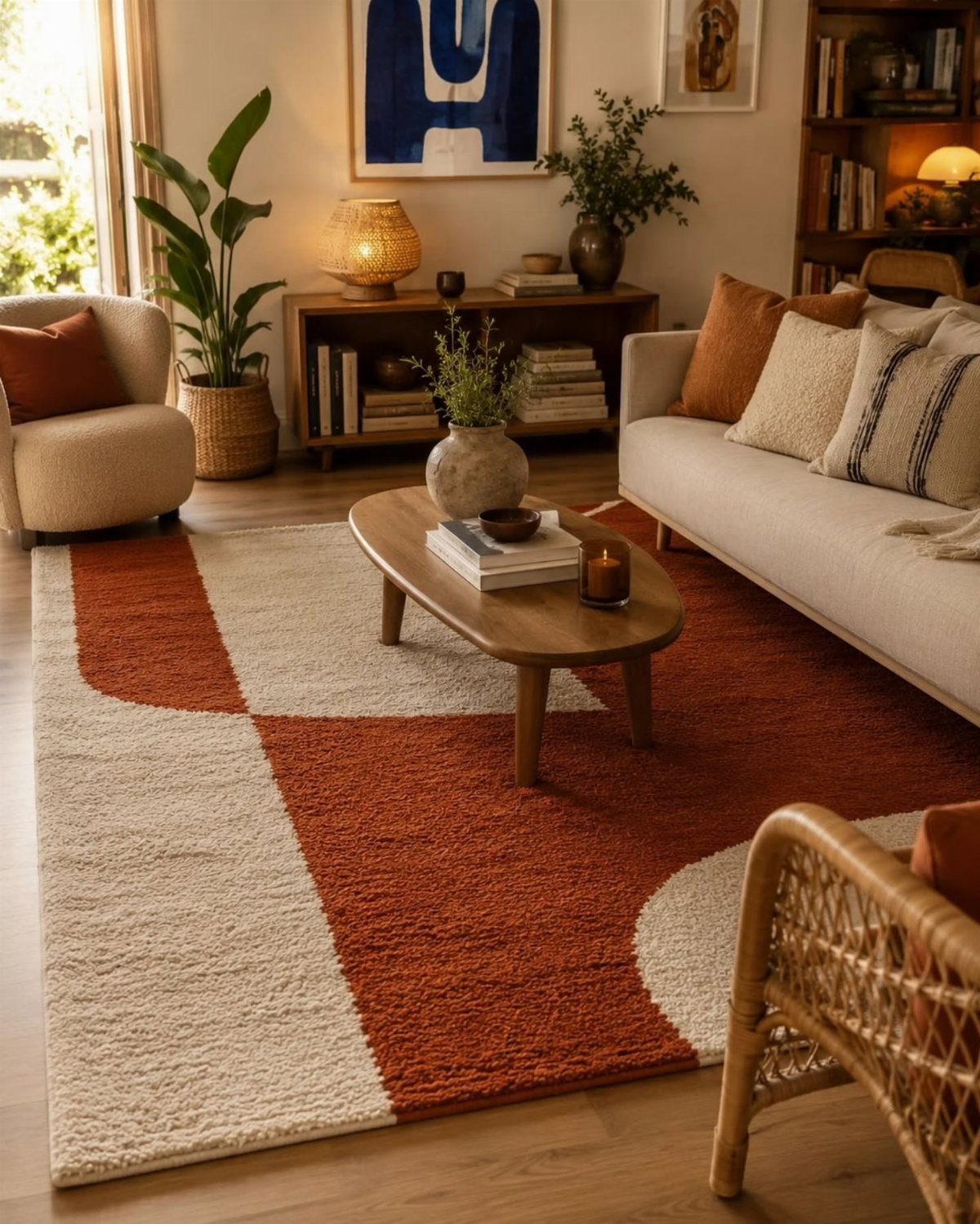
A rug breaks the floor into manageable pieces. A rust-and-cream geometric rug sits on orange wood without hiding it, letting texture do the work of softening the visual weight.
Jute or wool underneath adds warmth underfoot; linen curtains and boucle upholstery nearby layer in more distraction. The rug’s undertone matters more than its pattern.
Cream with subtle gray fibers bridges most orange tones; oatmeal works too. In open plans, rugs also mark zones so the floor color does not dominate one long stretch.
This is the lowest-skill fix on the list and the most reversible. Natural fiber rugs start low and climb fast; wool sits at the top of the range.
The limit is door clearance: thick piles can jam.
4. Use Greenery
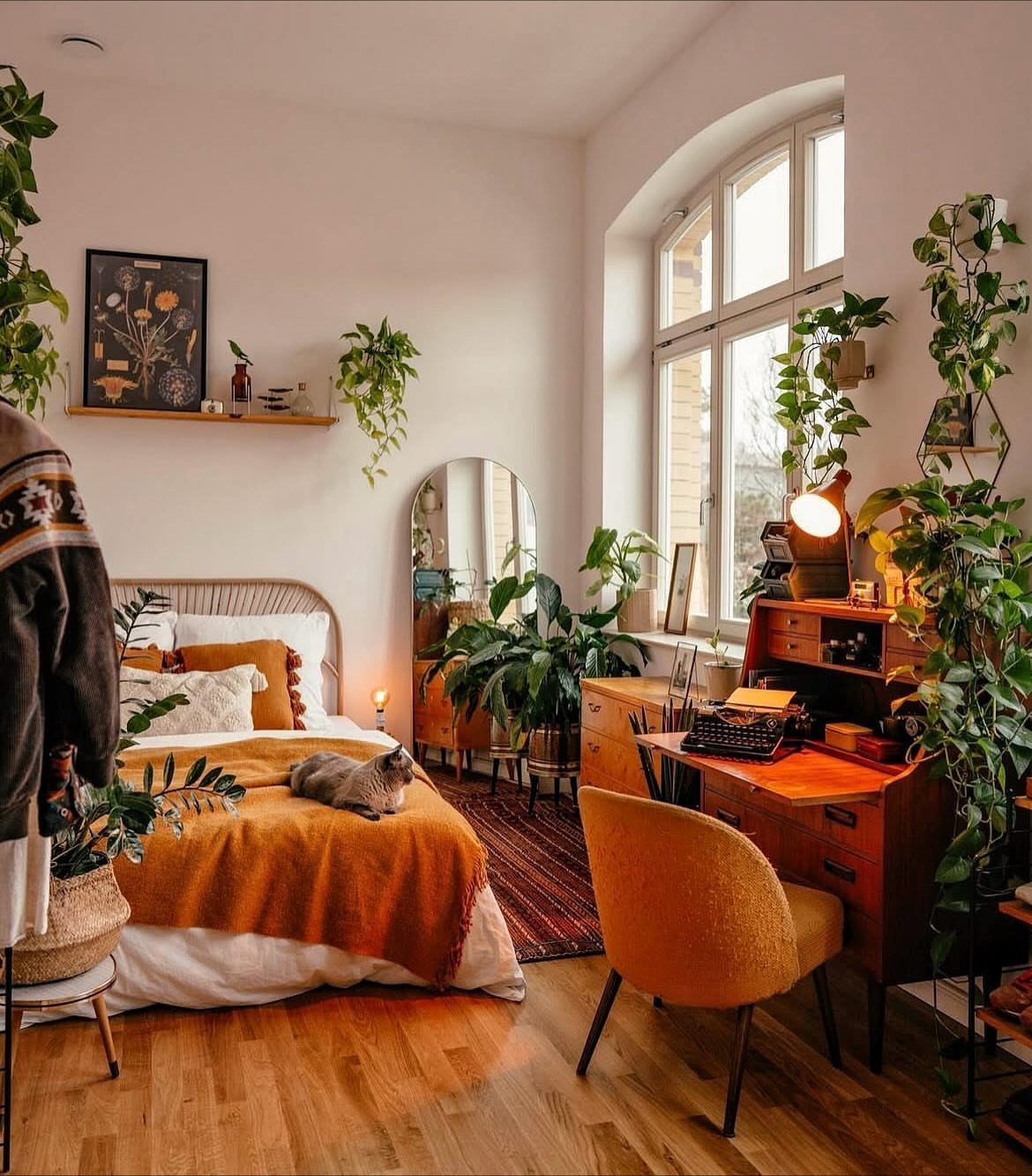
Green sits between warm and cool on the wheel, so plants bridge what the floor throws at you. Large-leafed ones, fiddle leaf figs or snake plants, do the most visual work in neutral ceramic pots.
Piling them on shelves, the floor, the desk sends the eye to leaves instead of planks. Group in threes or fives, varying height, and place near windows so they survive.
A trailing pothos or an upright snake plant costs less than most accessories and fills the same role. Plants only work if you keep them alive.
If you kill succulents, dried branches in a vase give some of the same color break without the responsibility.
Understanding Wood Undertones
A white sheet of paper held against the boards in daylight reveals what the floor really is. Photograph the boards morning and evening, since the color shifts with the light.
Test swatches on the floor itself, not up on the wall, and avoid judging anything under store fluorescents. The wrong undertone guess costs a gallon of paint and a Saturday.
Lighting Effects on Wood Color
Warm bulbs push the orange further toward red, like a diner booth at midnight. Switching to 3000K–4000K, bright white to neutral white, tones the floor down without touching the boards.
Window light matters too: north-facing rooms cool the wood naturally, while southern exposure doubles down on the warmth.
Walk through the room morning to evening before you commit to paint or fabric; the floor shifts enough to make a match at noon look off by five.
Practical DIY Solutions
Renters can ask; some landlords will accept improvements a tenant pays for. Blue-toned lighting shifts the look without sanding.
For owners, stains, toners, or dyes dial the orange back, and paint hides it completely when you are ready for that commitment. The usual culprit is red oak, or the polyurethane layer that yellows and oranges with age.
Embracing Vintage Styles
Mid-century modern design grew up alongside this wood, so the pairing reads as intentional. Walnut or teak furniture, geometric patterns, mustard or olive textiles, and tapered legs all share the floor’s warm family rather than fighting it.
Brass accents add period warmth but sparingly keeps it from costume. The result looks collected over time, not assembled to solve a problem.
Rust sofas or similar ’80s shades work too if you want to push the era further.
Frequently Asked Questions
What do you call orange wood?
Orange wood usually means red oak or similar species with warm, reddish undertones that read as honeyed or amber under certain finishes. The color comes from the wood itself, from aging varnish, or from a combination of both.
Not all orange floors started out that way; some yellowed over decades of sun and old polyurethane.
Is orange wood coming back?
Vintage wood tones are getting more attention now, and orange floors are part of that shift. What once read as dated now comes across as warm and grounded to buyers who are tired of gray everything.
The difference is in the pairing: orange planks with cool white walls looked stuck in a past era, but the same floor against deep green or tobacco brown feels current.
How to fix dated orange wood cabinets and floors?
You can stain, tone, or paint over orange wood if you want to change it rather than work with it.
Wood stains and gel toners dial the color back without full sanding; paint hides it completely but commits you to maintenance.