These run from a few hours with painter’s tape to a full weekend with a saw and stud finder, and the deciding factor is how much permanence your space can handle.
A chalkboard wall stays black until you paint it, while mustard yellow covers back up in a day when the lease ends.
The charcoal grey marble texture runs the highest price on the list, but a matte navy wall and white trim only ask for two coats and a Saturday.
[link-whisper-related-posts]1. Deep Navy Statement Wall
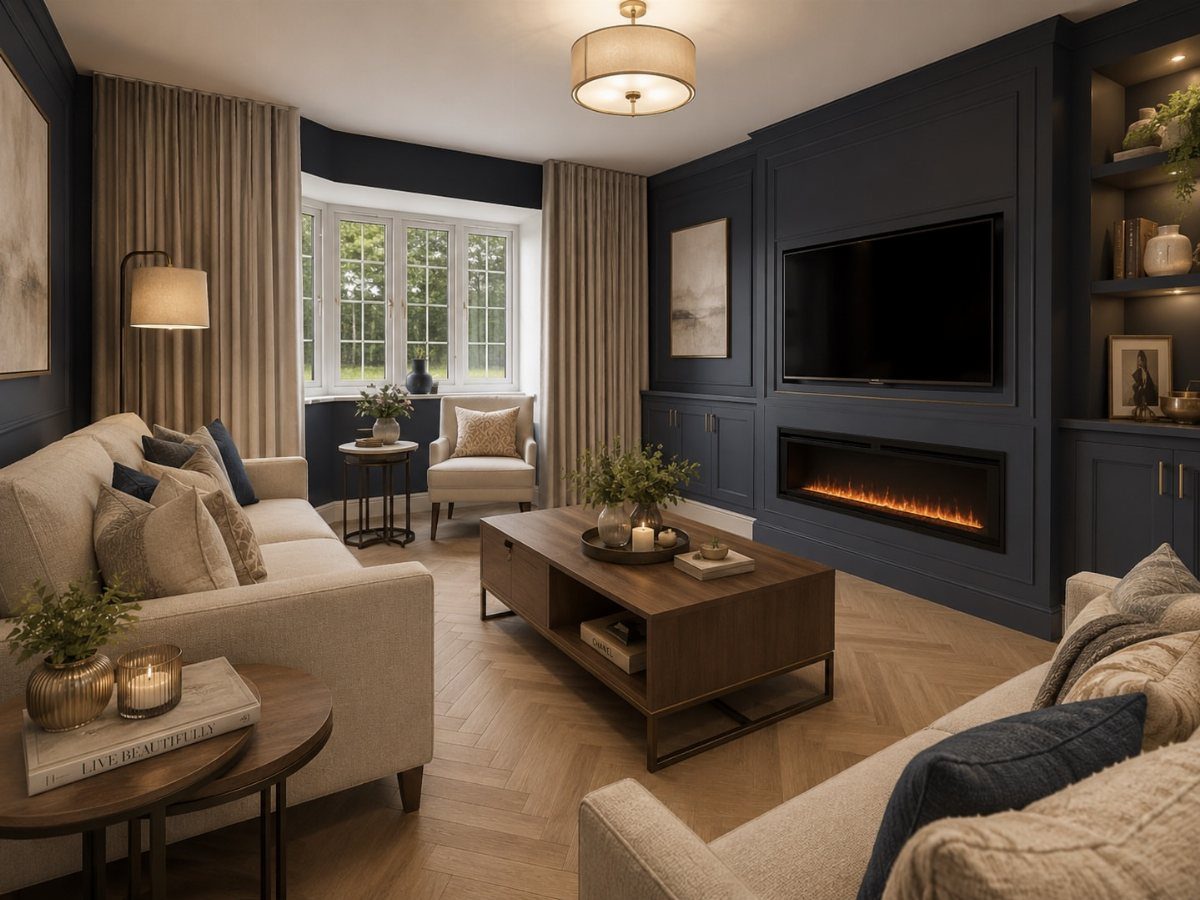
Deep navy reads richer than black in rooms that get some natural light, and the white trim keeps it from swallowing the space.
Matte finish hides the brush marks you’ll leave doing this yourself over a Saturday; satin catches more light if the room faces north.
Deep navy works with warm neutrals like a beige sofa or herringbone floor, so it slides into most rooms without a full reset.
One coat won’t cover over white; two will. I’d save this for a wall that holds something: the TV, a fireplace, shelves.
A blank navy wall can feel like a stage with no actor.
2. Soft Sage Green Wall
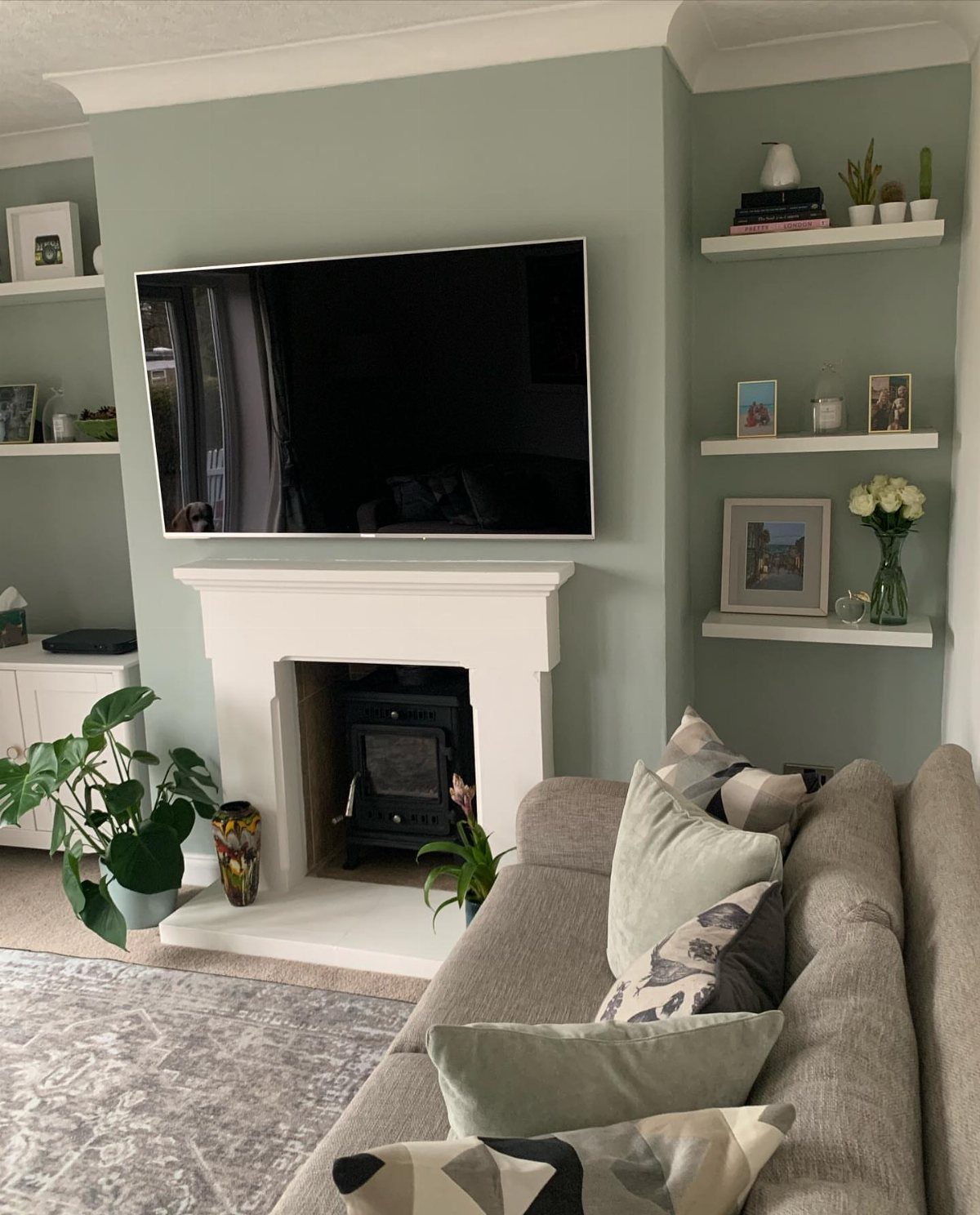
Sage green pairs with wood furniture the way grey never quite manages, and a grey sofa still keeps the room feeling modern rather than cottage-core. Warm bulbs matter here; cool LED turns sage toward institutional mint.
White floating shelves give the color the contrast it needs so the wall does not go flat.
Plants help, but the color does most of the work of bringing something living into the room. I’d point this at anyone whose living room feels restless and can’t figure out why.
3. Charcoal Grey Wall
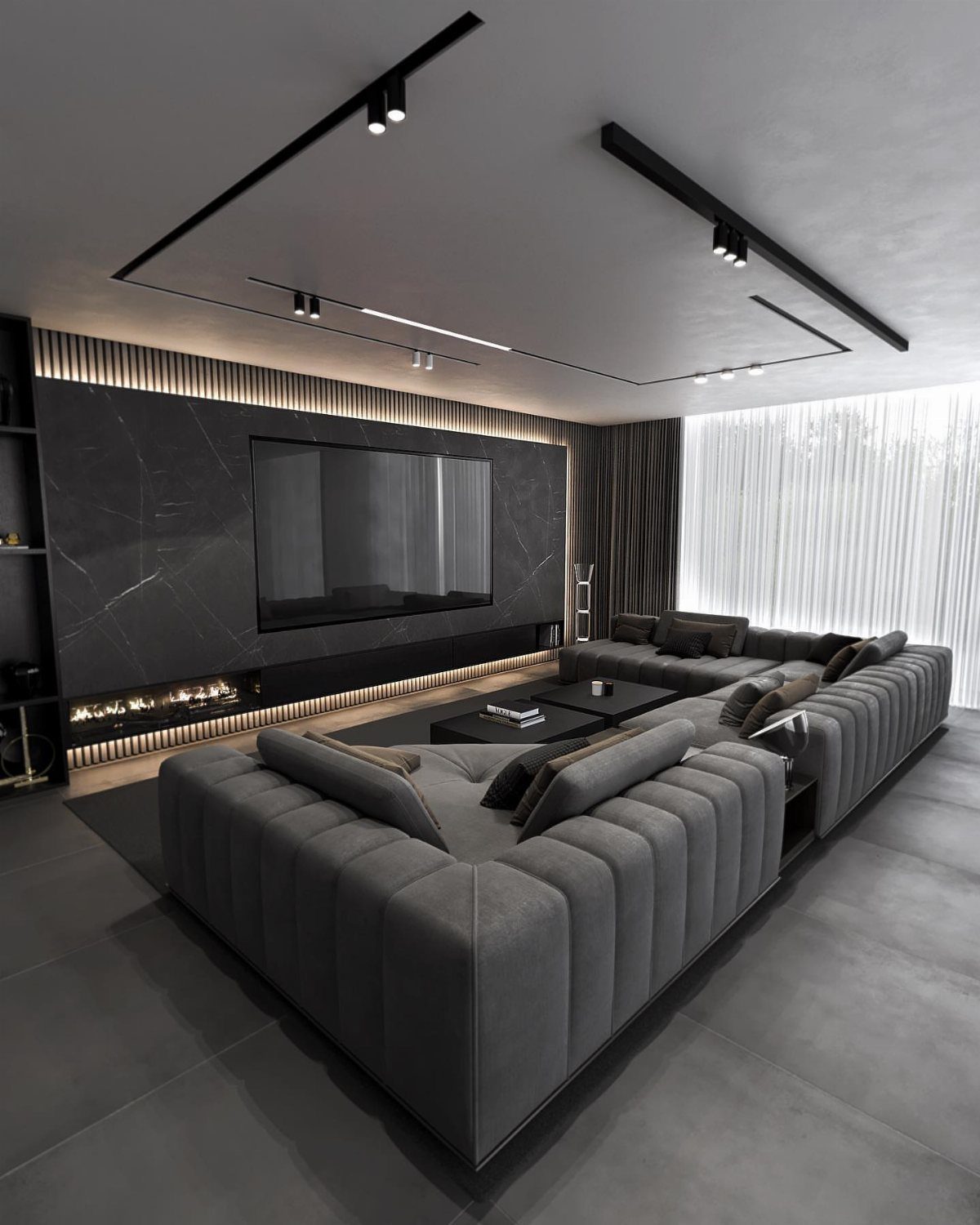
Charcoal grey marble texture, backlit, reads as stone rather than paint, which is the point: you get the gravity of a feature wall without the craft of installing actual stone.
Charcoal absorbs a linear fireplace and TV instead of fighting them, so the technology stops being the first thing your eye hits. Track lighting overhead is doing more work than you think; without it, the wall goes flat and heavy.
This is the most expensive entry on the list. Install is a weekend if you’re handy, a pro if you’re not.
Worth it for the condo dweller who wants one dramatic move rather than a roomful of small ones.
4. Bold Mustard Yellow Wall
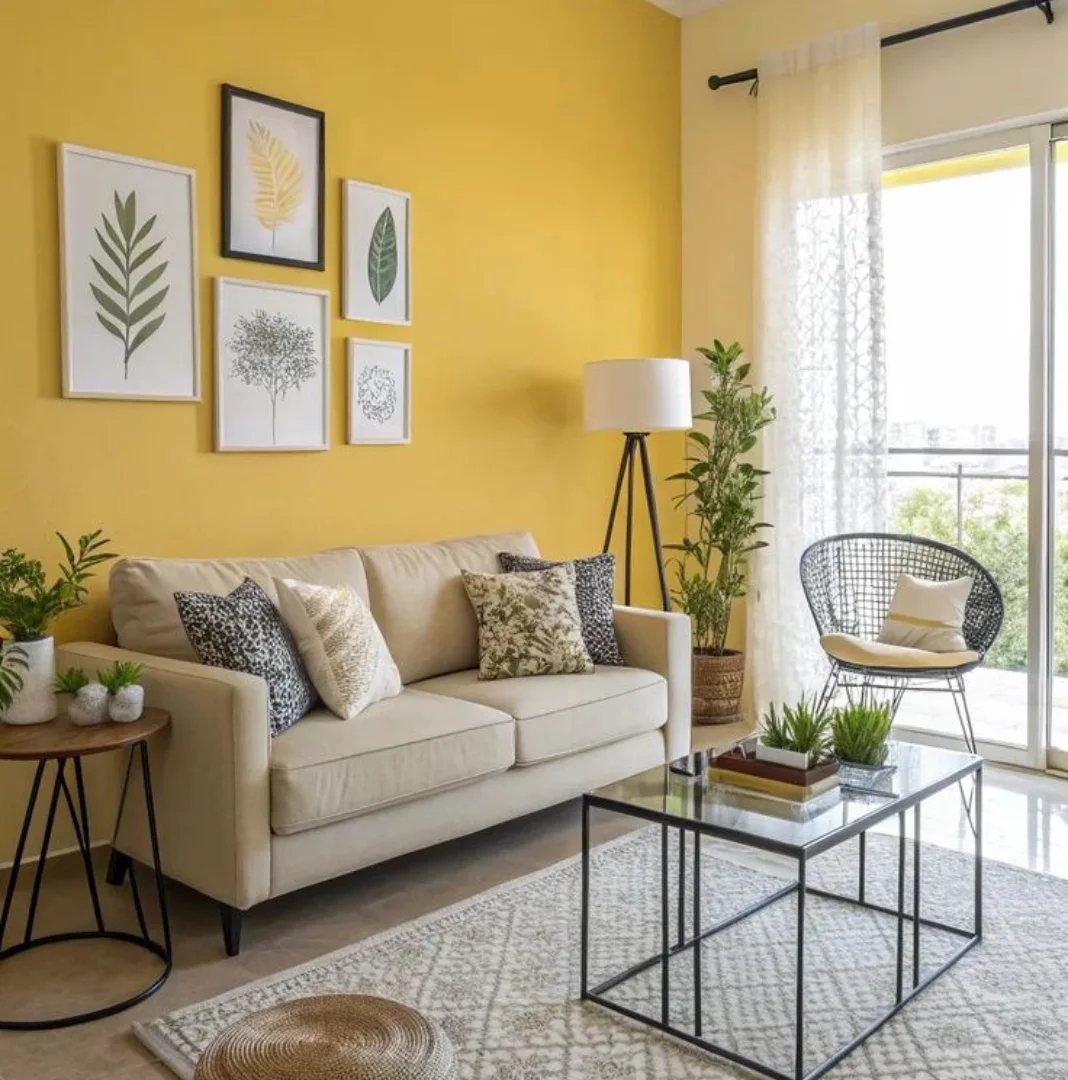
Mustard yellow wakes up a room that has good bones and no direction. Botanical prints do necessary work on top of this color; without something structured, it can feel like a scream.
Warm wood floors or furniture ground it, and a cream sofa is the right neutral, not grey, which would turn the whole thing cold.
One wall only. Two walls of this shade and you’re living inside a warning sign.
A few hours and the nerve to stop at one are what you actually need. I’d try this in a rental you can’t otherwise change; it paints back over in a day when you leave.
5. Black Accent Wall
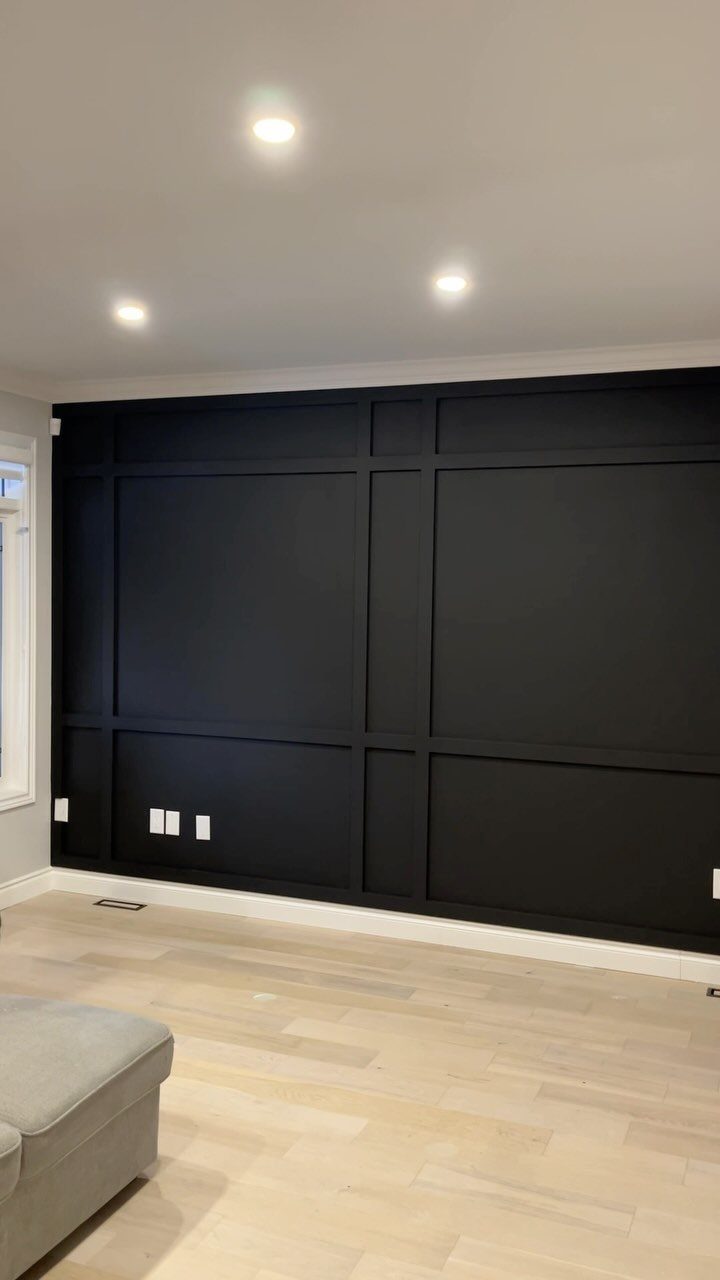
Black board-and-batten adds architecture where there isn’t any, and a geometric grid keeps the black from reading as a void.
Light hardwood floors and recessed cans are non-negotiable; this wall in a dim room with dark floors would feel like a cave opening.
Matte black shows dust by Wednesday. Eggshell or satin buys you a few more days.
I’d do this in a small living room that wants to feel intentional rather than cramped, and I’d clean the baseboards first so you notice them less later.
6. Muted Blush Pink Wall
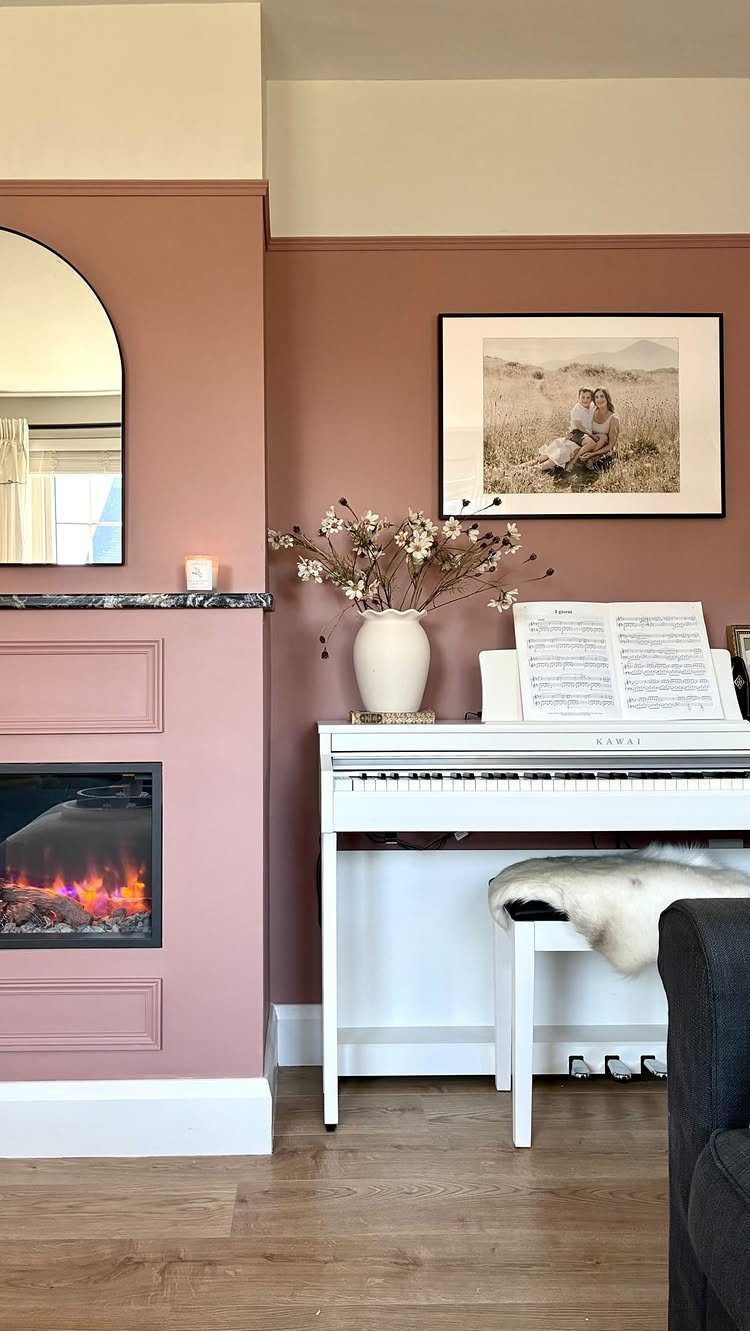
Blush pink behind a piano or fireplace reads as warm plaster, not nursery, especially with restrained styling like dried flowers and a single framed photo keeping it adult.
Grey, gold, and white all work with it; the white piano here is the safe choice, but a dark wood piece would ground the color harder.
The risk is sweetness. One black lamp, a dark frame, or the wood tone you probably already own fixes that.
I’d put this in a north-facing room that needs help feeling sunny, or anywhere the living room bleeds into a kitchen and you want a soft transition rather than a hard stop.
7. Chalkboard Accent Wall

A chalkboard wall turns the whole surface into something you can redraw whenever the mood shifts.
A black chalkboard wall with colored chalk gives a classroom energy that works for a kid’s space or a home office where you actually want to jot notes.
The paint goes on like any flat finish, though 2 coats minimum over a smooth wall gives the cleanest erase.
I would test a small patch first; some brands leave ghost lines after wiping, and you want to know that before covering a whole wall.
It suits renters less, since the wall wants to stay black, and the dust needs a damp cloth, not a duster. For a room that changes themes often, this trades permanence for play.
8. Wood Planked Accent Wall
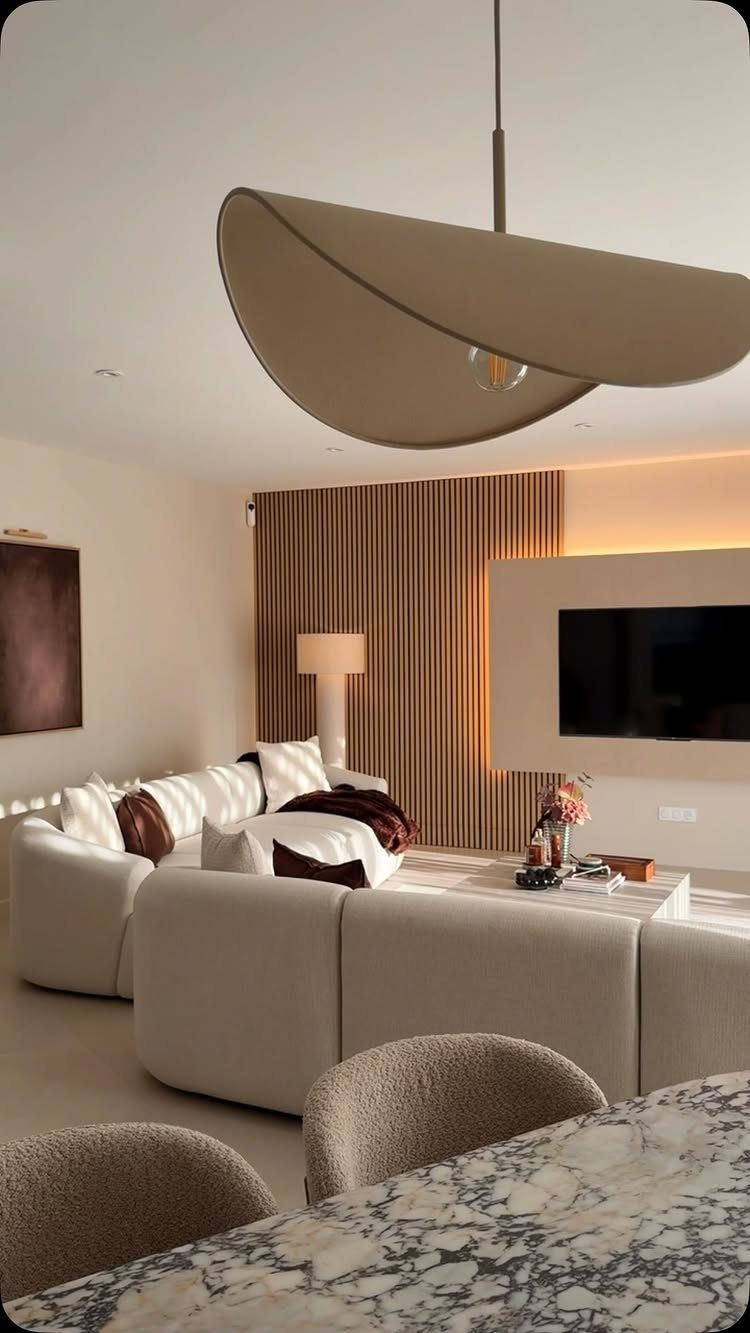
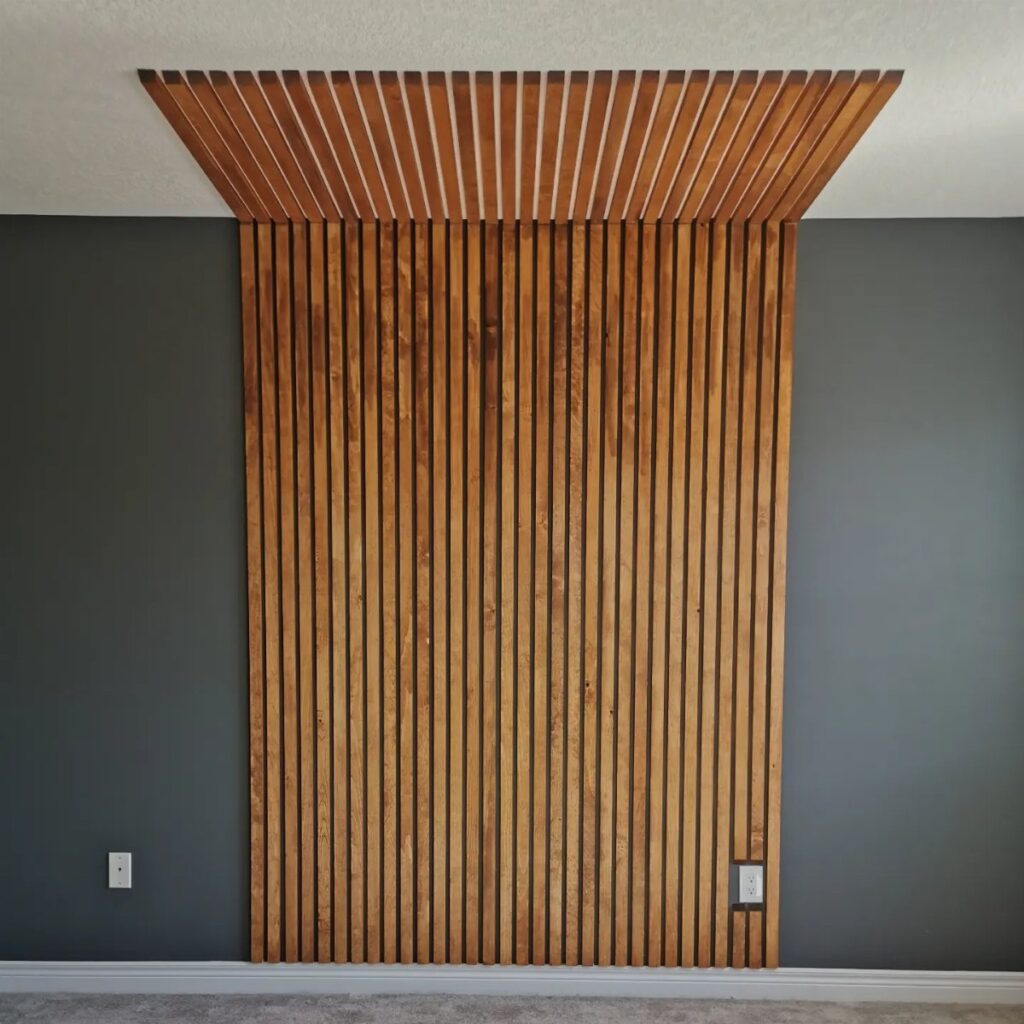
Vertical planks behind the TV warm up a wall that would otherwise read as a black rectangle on grey paint.
Light wood keeps it modern, not cabin; the grain runs top to bottom, which draws the eye up and makes standard ceilings feel less squat.
Reclaimed boards need checking for warp and old nails, and they vary enough that I would lay the whole run on the floor first to swap pieces around.
Store-bought paneling saves that step and still looks honest if you skip the glossy prefinished stuff.
A dining room version I saw used the same boards horizontally, which felt more farmhouse than this. Pick the direction to match the mood you want, not the room type.
9. Striped Accent Wall
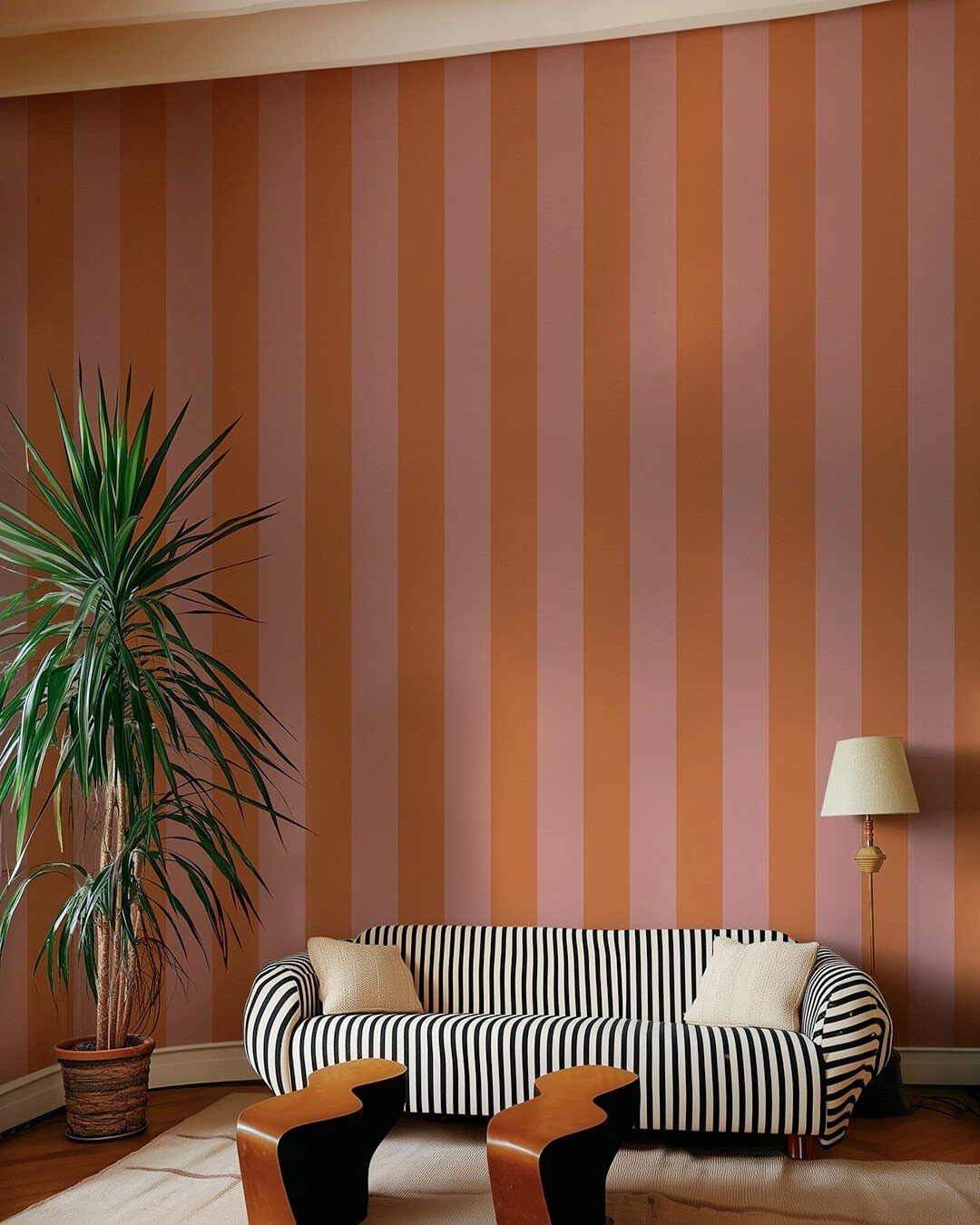
Two colors in vertical bands stretch a wall taller than it is wide, which helps low-ceilinged living rooms in older split-levels especially.
Terracotta and dusty pink read as warm neutrals, not circus stripes; the scale of the bands matters more than the colors themselves.
Painter’s tape and a level are the whole tool list. I would mark the stripe widths on the wall in pencil first, then step back; uneven spacing shows from across the room even when the lines are straight.
Matte finish on both colors keeps the texture consistent where they meet.
Horizontal stripes widen instead of heighten, and they fight most sofa placements. For a room that already feels tall and narrow, flip the direction or pick a different idea entirely.
10. Wood Slat and Stone Feature Wall
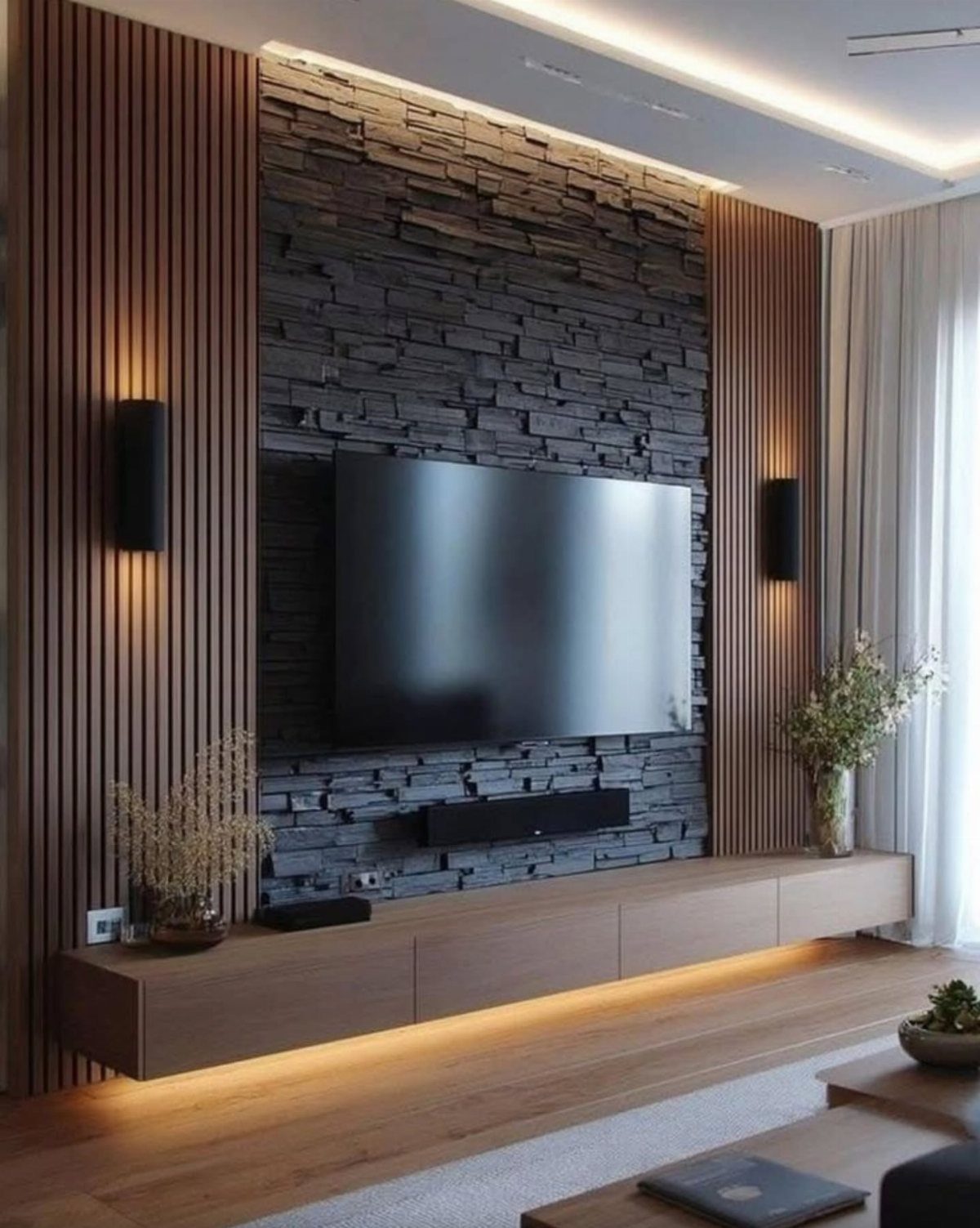
Stone texture in the center panel and wood slats on the flanks give the TV wall three materials to break up the mass.
Dark stone reads almost as shadow, which helps the screen disappear when it is off; the wood adds warmth without competing.
This wants a stud finder and some comfort with a saw. The slats need spacing consistent enough that the gaps read as rhythm, not mistake, and the stone panel wants adhesive rated for its weight.
I would build the whole thing on the floor first, then lift it in one piece if the room allows.
The built-in shelves with their own lighting are a separate project; add them only if you have objects worth displaying.
11. Backlit Jagged Stone Wall
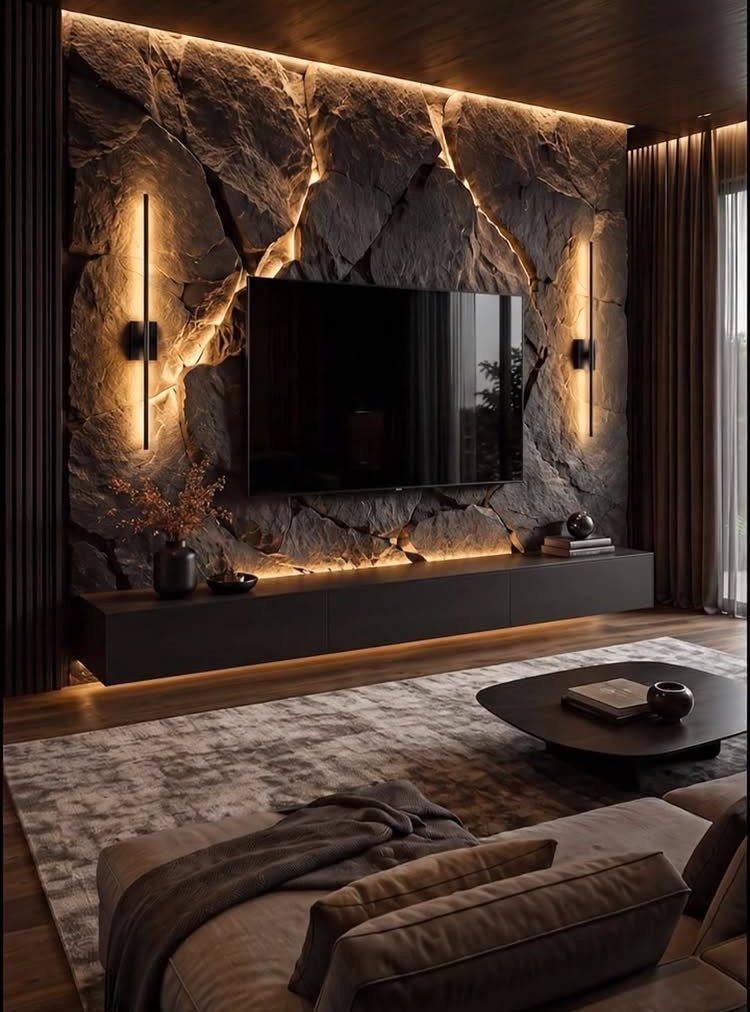
Jagged stone with light tucked into the gaps turns a TV wall into something that glows after dark.
The rocks look quarried, not cultured, with faces that catch the light differently from every angle; the warmth comes from the LED color, not the stone itself.
The lighting is the tricky part. I would test the placement at night before final mounting, since a shadow line where you expected highlight is hard to fix later.
This demands a dimmer room to read properly; in a space with afternoon sun, the drama washes out and the wall just looks busy. In a basement or a room with blackout curtains, the effect justifies the work.
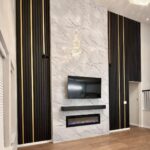
12. Marble Panel with Wood Slats
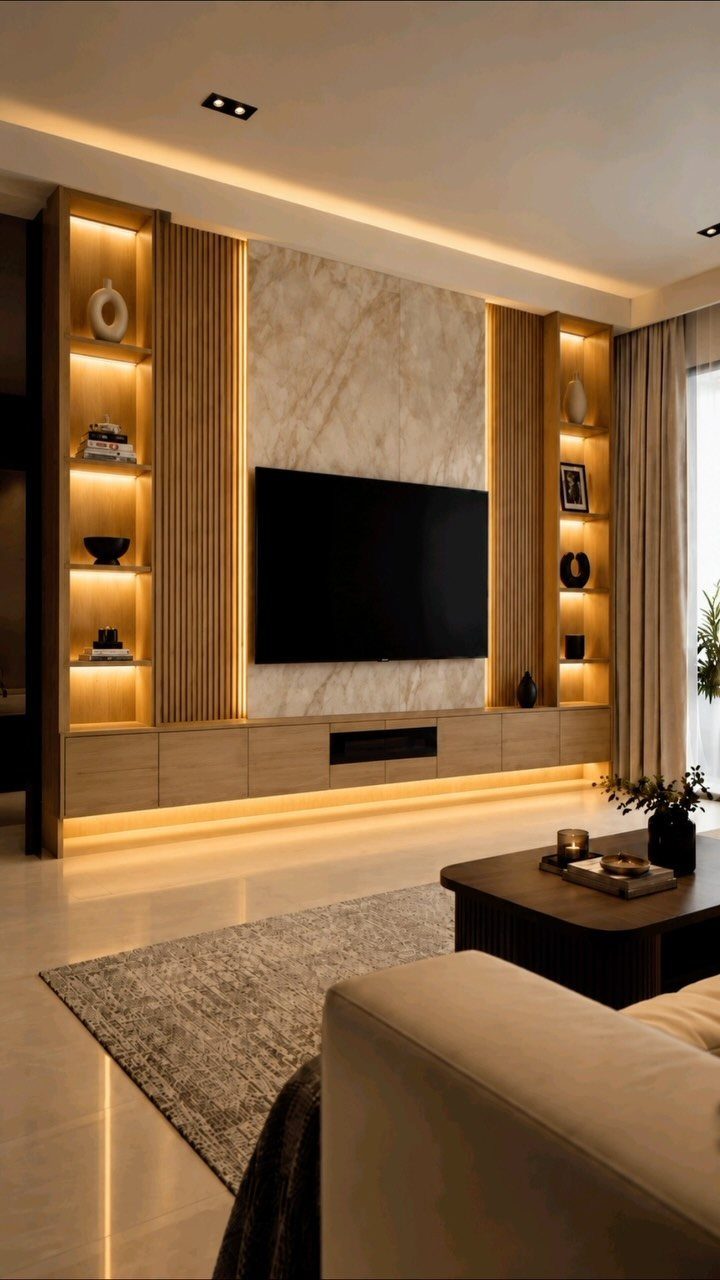
Light marble grain with pale wood slats keeps a TV wall bright in a room that does not get much natural light.
The glow from the built-in shelves bounces off the marble face and fills the corner without a ceiling fixture needing to work as hard.
The marble here is almost certainly a porcelain slab or a vinyl wrap, not real stone; at this scale, the weight of actual marble would need engineering.
I would confirm the material before ordering, since the install changes completely, and the price gap is wide enough to matter.
The vertical slats need to run true; any waver shows against the rigid panel.
For a room where the TV wall faces the entry door, this reads as finished furniture, not an afterthought, and the shelf lighting gives you something to look at when the screen is dark.
Accent Wall Color Choices
Deep navy or soft sage on one wall can make a cramped living room feel intentional rather than tight.
The white trim you already have keeps them from closing in, and a matte finish forgives the brush marks you’ll leave behind.
Lighter shades maintain brightness where windows are scarce or small. A north-facing room that reads grey all day wants a warm color with some body to it, not another pale neutral that disappears.
One painted wall is still the cheapest reset button for a room you have stared at too long.
Buy the sample jar first and live with it at every hour; the color that looked soft at 10 AM can turn harsh by lamp light.
Accent Wall Trends
Open-plan layouts still need something to stop the eye, which is why a single bold wall keeps working.
One painted wall does what a doorway used to: it tells you where the living room ends and something else begins without building anything.
The real advantage is reversibility. Six months in, a color you loved can feel like a mistake, and one wall is a Saturday to fix.
A whole room of it is a project you postpone until you move.
I would watch for the trend toward single, bold moves rather than layered decoration. A gold chevron wall, a chalkboard nursery, a stone panel with light behind it: each is one decision that carries the room.
That suits renters and first-home owners who want impact without the accumulation of objects.
DIY Accent Wall Options
Painting is not the only way. Duct tape in a geometric pattern gives a rental wall texture that peels off at move-out, and wood panels turn a flat surface into something that reads as built-in architecture.
I’d group these by commitment level.
Cost splits wide here. Painter’s tape and a level can get you a geometric wall in one evening; a slat or panel system asks more of your budget and your Saturday.
The wood slat and stone feature wall in the list sits at the high end of DIY, while vertical planks behind a TV can come from a single afternoon with store-bought boards.
Frequently Asked Questions
What’s a good accent wall color for a living room?
Deep navy and soft sage green are the two I’d point at first.
In a sunlit room, navy gives you the depth of black without the flatness, and crisp white trim draws a clean border that keeps the color from closing in.
Sage has a warmth with wood that grey can’t match, yet it still sits right with a grey sofa if that is what you already own.
Are accent walls out of style in 2026?
Accent walls are still a straightforward, cost-effective method to revitalize a space. Paint companies still push the idea hard, and it holds for anyone who wants definition without a full room reset.
What is the rule for accent walls?
The wall you already look toward, or the one with the fireplace or TV, is usually the right one to carry the color.
A darker shade pops against pale neighbors, but in a room that lacks light, a lighter accent wall bounces what sun there is back into the space.
One wall only for bold colors like mustard; two turns the room into a warning sign.
Can I use patterned paint on an accent wall?
Yes. Geometric stencils or faux finishes introduce unique character, but keep surrounding walls simpler so the room has somewhere to rest.
The striped accent wall idea above uses painter’s tape and a level, with matte finish keeping texture consistent where colors meet.