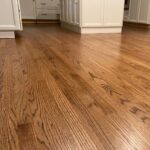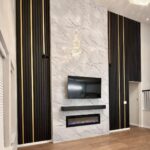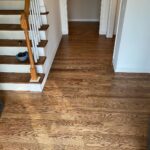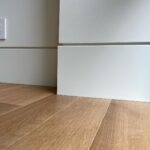
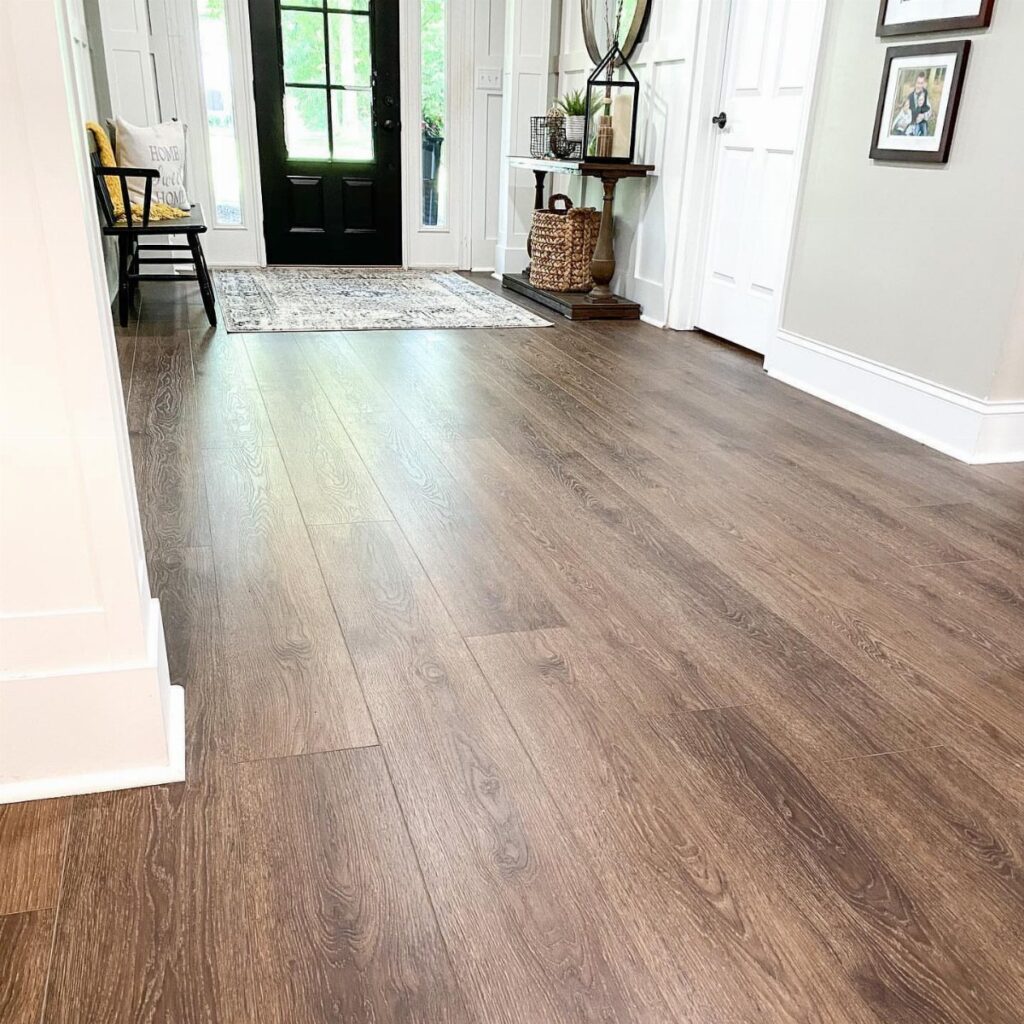
The farmhouse vinyl that shows up in actual installs runs warm honey brown, cool grey, wide straight-lay planks, and herringbone that eats extra material and time.
Some of these choices stretch a small room wider; others anchor the whole look on their own.
A 7-inch width with a 12 mil wear layer and 5mm rigid core hits the working range for daily traffic, and the click-lock install means wall-to-wall in a weekend without glue.
[link-whisper-related-posts]1. Farmhouse Vinyl Flooring
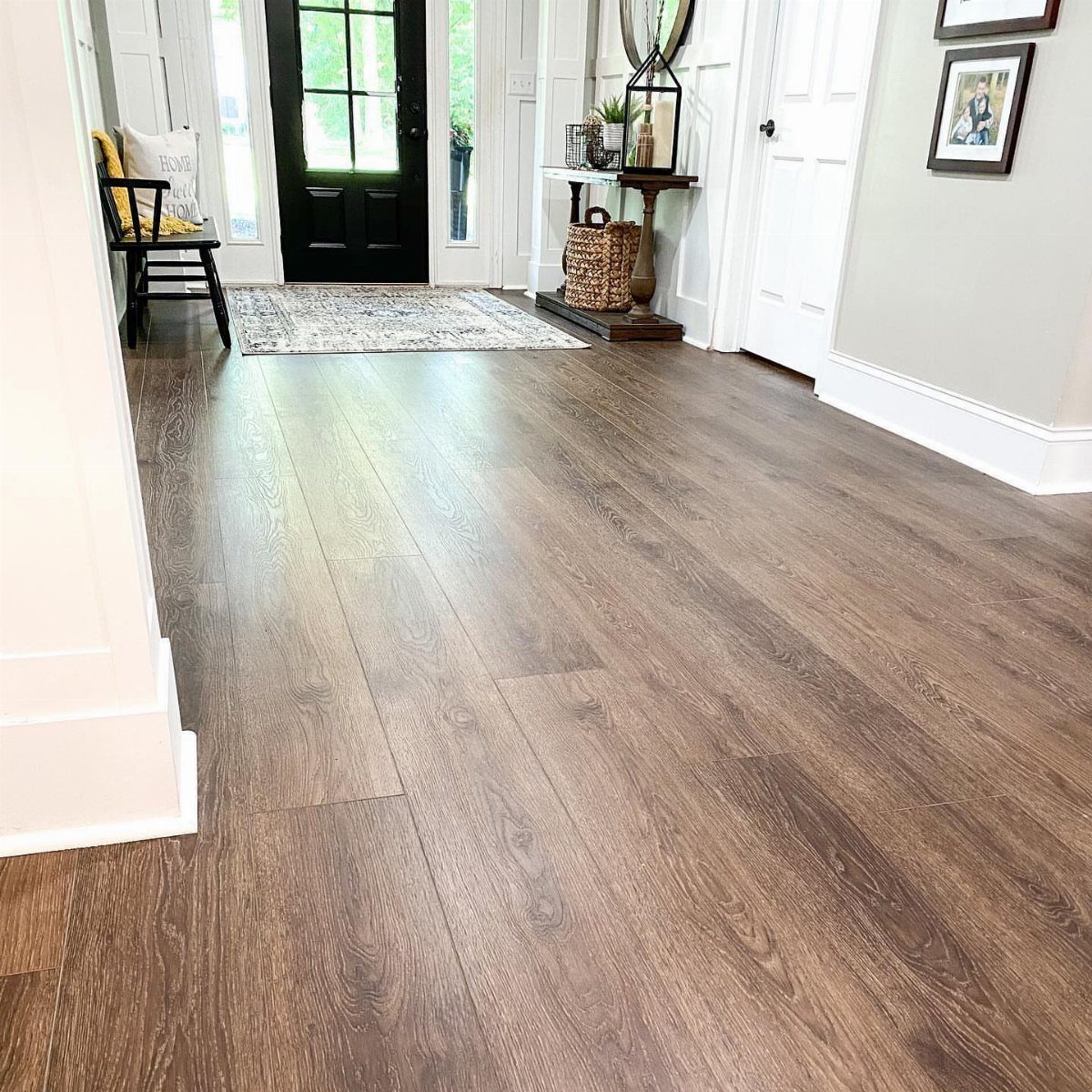
A convincing farmhouse floor starts with planks that read like they came from an actual barn: weathered grain, soft distressing, color variation from board to board. The vinyl layer underneath handles the mud, the dog, the dropped grocery bag.
I look for wear layers thick enough to survive a few years of real traffic and cores that won’t telegraph every imperfection in the subfloor underneath.
The best versions hide seams at the edges and carry the pattern through the bevel so the planks read as individual boards, not printed strips.
Check whether your sample still looks like wood in afternoon light, when cheap prints flatten out and good ones keep their depth.
2. Natural Warm Brown Vinyl Flooring
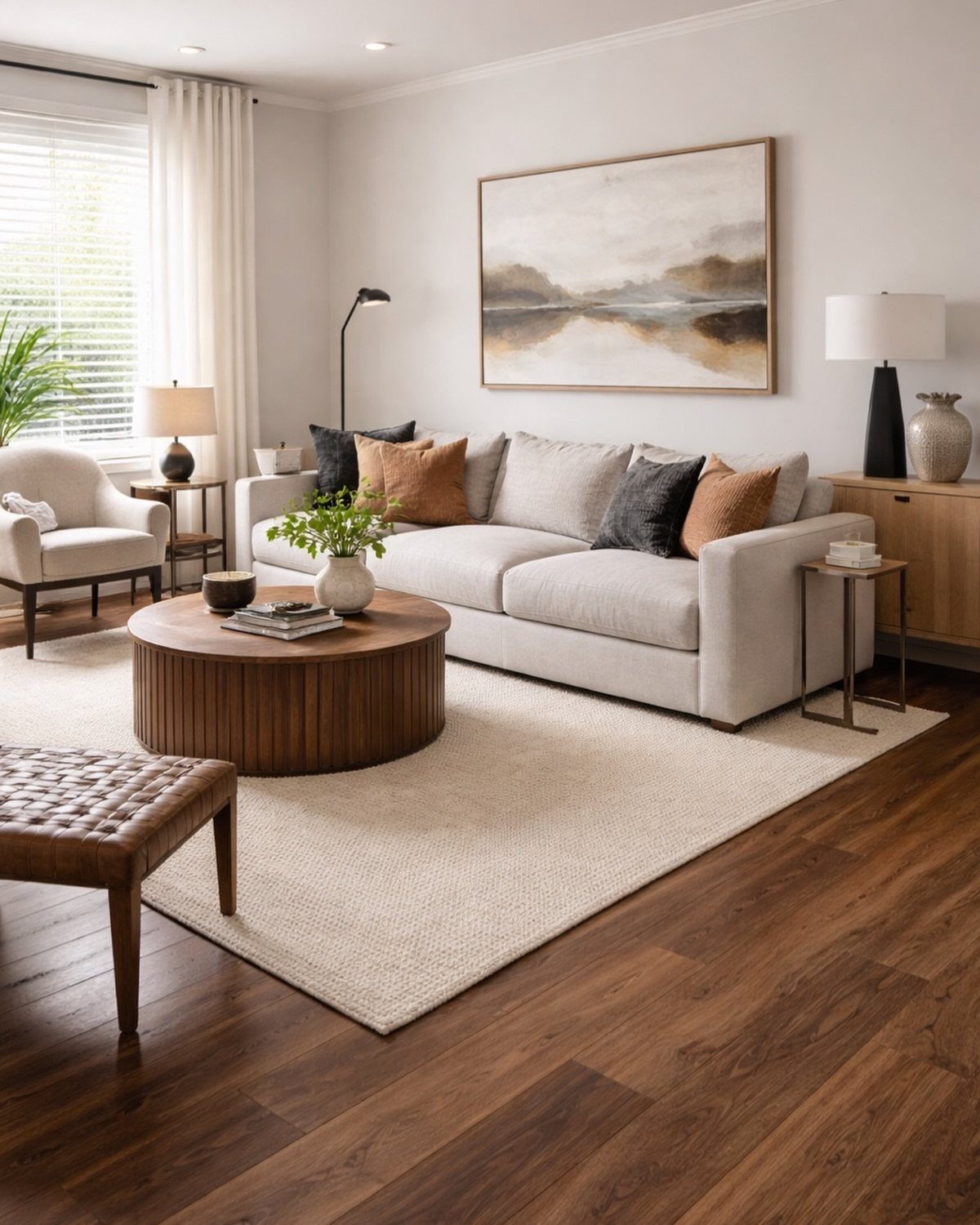
Warm browns do the heavy lifting in a farmhouse room, especially when the walls stay white and the furniture runs neutral.
Honey and oak tones pull the space toward afternoon light even on gray days; gray or bleached planks fight that warmth and read more Scandinavian than rural.
I hold samples against my baseboards and any wood already in the room because the undertone matters more than the overall darkness. A plank that shifts orange against cool white trim will nag at me for years.
The distressed, hand-scraped surface texture sells the vintage story better than a slick factory finish ever could.
3. Wide Plank Vinyl
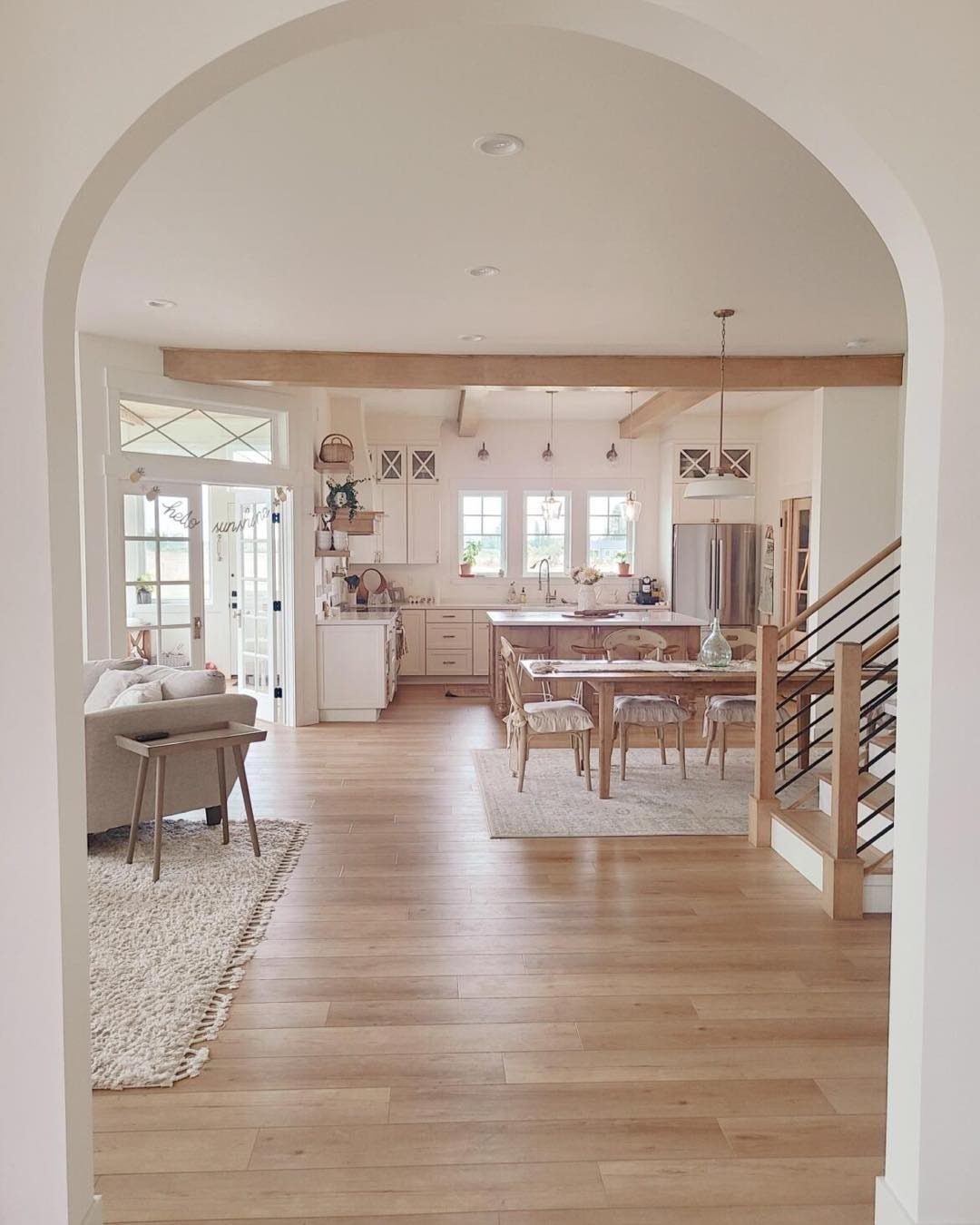
Seven to nine inches is the width that reads historic, the dimension old farmhouses used because boards that wide were what the sawmill could handle and the owner could afford.
Fewer seams across the same room means the eye travels farther without interruption, which opens up small spaces in a way narrow planks can’t match.
I check the actual labeled width before ordering because some manufacturers call narrow boards "wide" now.
Running the same plank through multiple rooms keeps the visual rhythm going; breaking to a different floor at every threshold chops the house back into small boxes.
4. Easy Maintenance
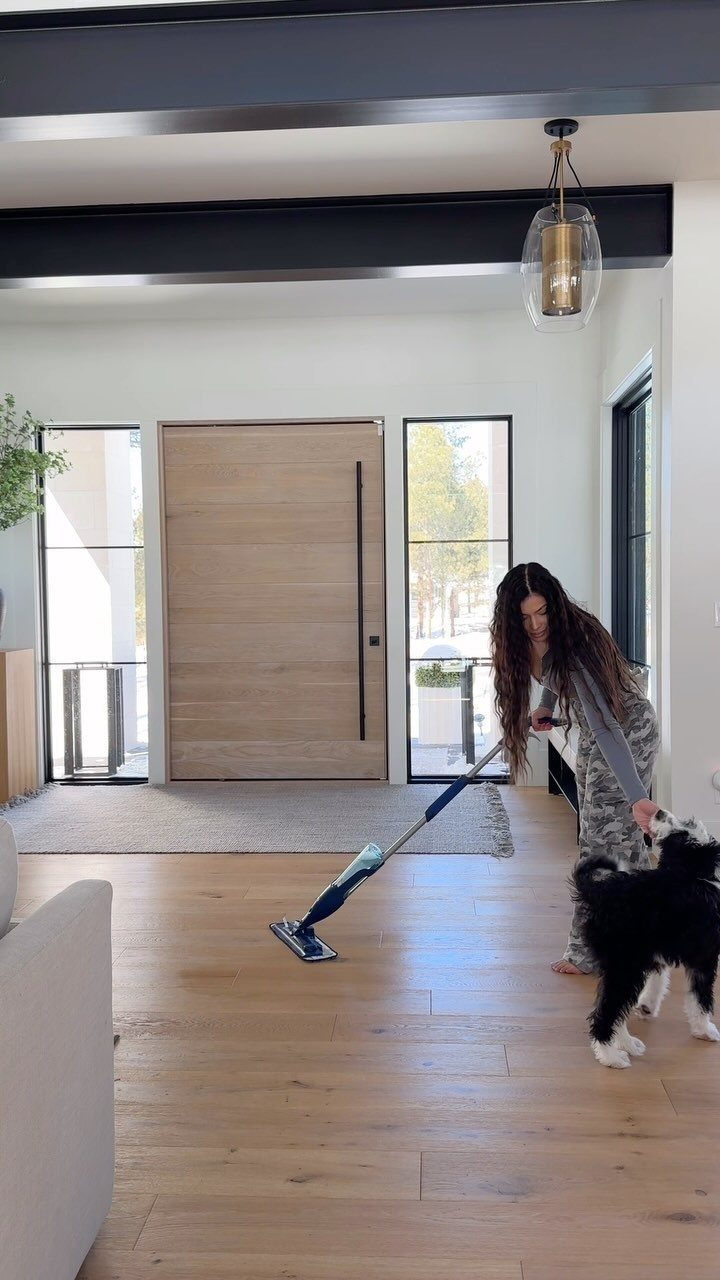
Sweeping and the occasional mop with a gentle cleaner is the whole maintenance program, which matters when the floor runs through a kitchen, a mudroom, and the hallway the dog tracks leaves through.
Real wood in those same spots would need refinishing every few years and panics at standing water. I still wipe spills promptly because even waterproof cores can let liquid sit at the seams, but the margin for error is wider.
A spray mop is about right; skip the steam cleaner, which can push moisture where it shouldn’t go and void the warranty while it’s at it.
5. Herringbone Vinyl Flooring
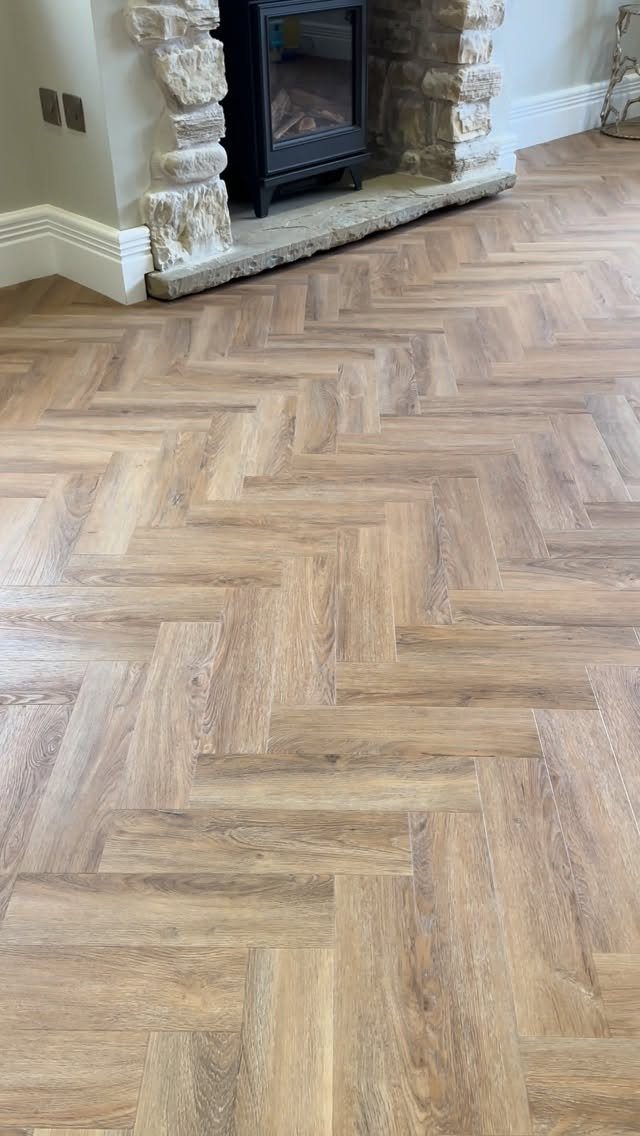
Herringbone costs more in material waste and installation time, but you get a floor that looks considered, not default.
The pattern suits a single room where you want the floor itself to be the feature: a living room with a fireplace wall, an entry that needs its own identity before the house opens up.
I would not run herringbone through an entire open plan; the busyness exhausts the eye and the extra cutting burns budget fast.
Straight lay with a occasional random width is the practical alternative for larger areas, giving some of that evolved-over-time character without the labor premium.
6. Light Wood Vinyl Planks
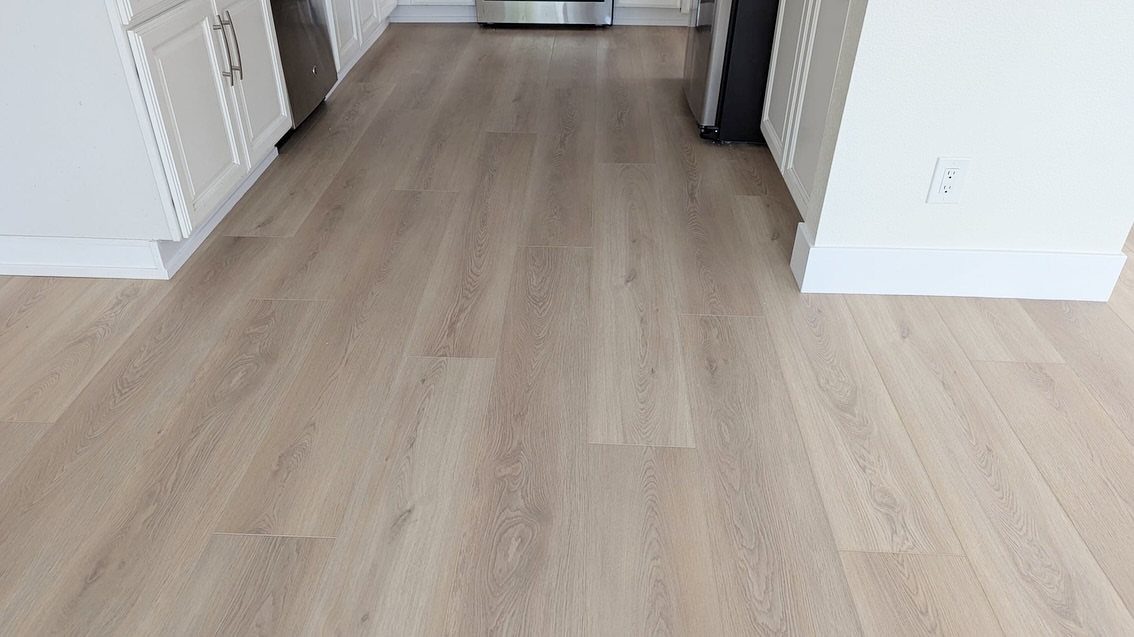
Pale planks against white cabinetry bounce light around a kitchen that might otherwise rely on overhead fixtures alone. A tone just warm of gray keeps the room from feeling sterile while still reading as fresh.
I watch for planks that go too yellow in natural light; the sample that looked perfect under store fluorescents can turn sickly at home.
Subtle grain is safer than heavy distressing in a bright kitchen because strong texture competes with countertops and backsplash.
Order samples and live with them on the actual floor for a day or two; the flat $9.99 shipping pays for itself in avoided mistakes.
7. Grey Wood Vinyl Flooring
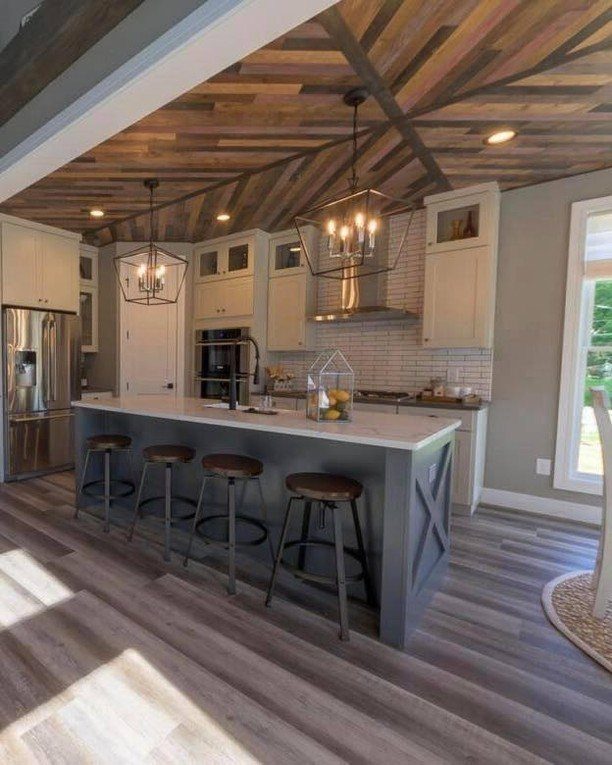
Grey wood vinyl planks read cooler than the warm browns that dominate farmhouse flooring, and that temperature shift is exactly what makes a kitchen with white cabinetry feel intentional rather than washed out.
Match your largest painted piece, like a kitchen island, to the grey undertone in your plank for a pulled-together look.
A plank ceiling overhead keeps the room from feeling too contemporary. The grey floor handles the modern half of modern farmhouse while the ceiling does the rustic work.
Wider planks suit farmhouse scale better; narrow strip flooring reads as a different era and fights the relaxed mood.
The waterproof core that most grey vinyl carries now matters especially in a kitchen this open to the rest of the house.
8. Rustic Knotty Vinyl Planks
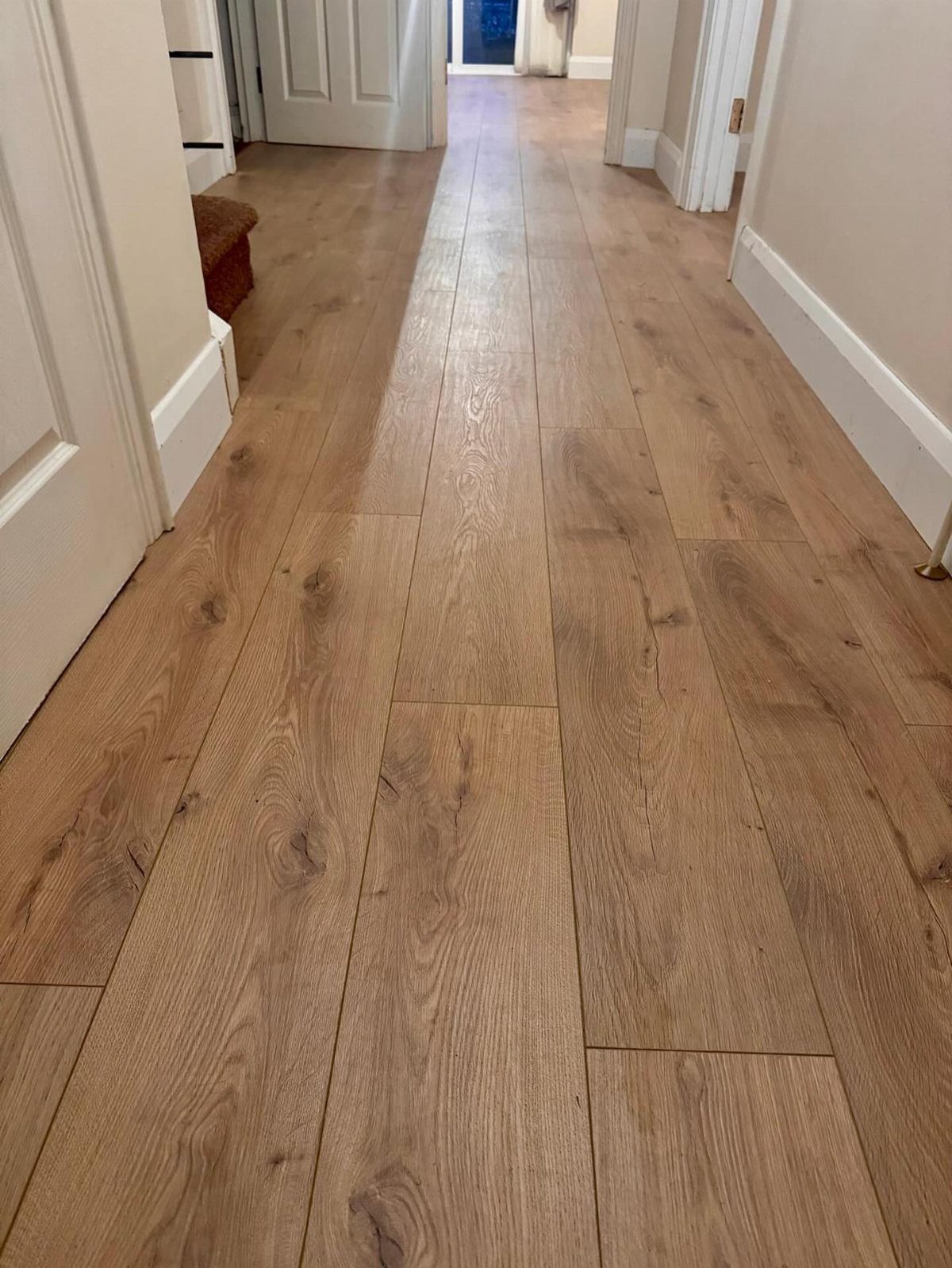
Knotty planks look like they came from a barn that actually housed things, not a barn built last Tuesday for a wedding venue.
Light brown with enough grey in the undertone stays current, while knots and grain variation supply the character.
MSI’s Barnstorm from the Cyrus collection runs 7 inches wide by 48 inches long with a 5mm rigid core and 12 mil wear layer, which is the spec range I watch for in a hallway that sees daily traffic.
The click-lock install means you can run it wall to wall in a weekend without the glue mess of older vinyl.
The variation plank to plank matters more here than in smoother styles; order 10% over your square footage so you can cull the few that read too similar and scatter the rest. Hallways especially show repeats.
This one suits the homeowner who wants farmhouse to feel collected over time, not ordered from a catalog. The trade is that heavy knots can read busy in a small room; keep the walls quiet and the baseboards simple white.
Durability of Vinyl Flooring
Luxury vinyl handles the collision of farmhouse looks and actual living better than hardwood ever could.
Pet claws, dropped cast iron, grit from the garden: the wear layer takes it without the gouges that would send me reaching for the stain marker on real wood.
A 12 mil wear layer is my floor for daily traffic; anything thinner and I start watching every heel and chair drag.
The rigidity in the plank itself keeps the surface flat over subfloors that aren’t perfect, which describes every house I’ve ever rented or bought.
Authenticity in Design
I look for weathered grain, soft distressing, the kind of imperfection that suggests age rather than manufacture. Wide-plank oak with grain you can feel carries the story better than smooth; the texture catches light like old boards do.
Whitewashed or lime-washed effects work for a lighter, more contemporary farmhouse, but I still want the grain visible underneath, not erased.
The contrast between a floor that looks hand-laid and furniture with clean, simple lines keeps the room from sliding into theme territory. It should feel collected, not decorated.
Color Trends
Warm honey and caramel shades still dominate farmhouse flooring for good reason. They pull afternoon light into a white-walled room and keep the space from feeling like a gallery.
Natural stone and wood elements, even in vinyl form, give the modern farmhouse its earthy anchor. The high-contrast black and white palette that defined early modern farmhouse style still works, but the warmth in the floor keeps it livable.
Seamless Transitions
Historic farmhouses ran the same floor through living spaces without stopping at doorways, and that continuity is worth copying with vinyl.
I run planks parallel to the longest wall when I want the room to feel stretched, which matters in the narrow farmhouses I tend to find.
Diagonal lay adds interest to a square room but costs more in cuts and waste; I save that move for a single space that needs its own identity.
Some vinyl lines build in subtle color shifts plank to plank, mimicking the natural aging that real boards pick up over decades. That variation is what sells the story.
Frequently Asked Questions
What is the best flooring for a modern farmhouse?
Luxury vinyl plank is the practical choice. It gives you weathered grain, soft distressing, and color variation that reads like actual barn wood, but the wear layer handles dogs, mud, and dropped grocery bags without refinishing.
What color vinyl flooring is in style now?
Warm honey, natural oak, and caramel browns are the tones that read farmhouse right now, especially against white walls and neutral furniture. Gray or bleached planks shift Scandinavian instead of rural.
Is luxury vinyl flooring cheap looking?
The good versions no longer read as printed strips.
Manufacturers now carry the grain pattern through the bevel, add hand-scraped surface texture, and vary the color plank to plank so the floor looks collected over time rather than ordered from a catalog.
The technology has advanced enough that the best planks pass for weathered barn wood until you get close enough to feel the warm surface underfoot.