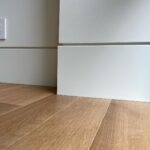

Wood wall paneling ranges from salvage pine you can pull down with a pry bar to book-matched veneer that becomes part of the house, and the deciding factor is permanence.
Decorative carved panels, reclaimed timber with bolt stains still in it, and painted wainscoting that ships flat all answer different questions about how long you plan to stay and how much quiet you need the wall to absorb.
[link-whisper-related-posts]1. Decorative Wood Panels on Walls
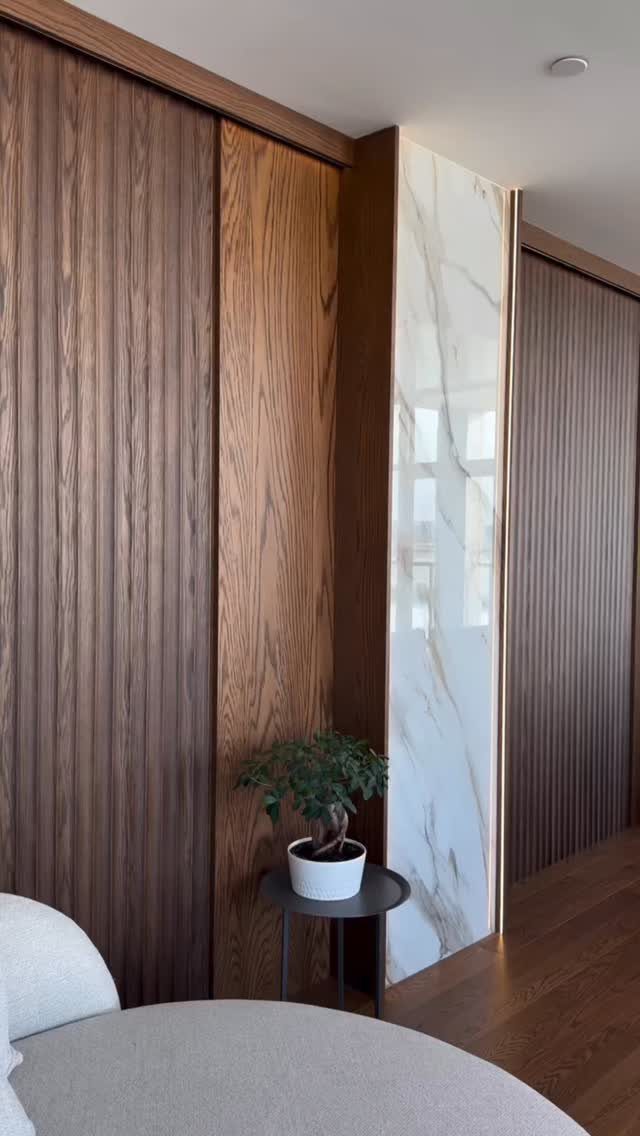
Fluted panels with a hidden LED strip turn a corner into something that reads custom-built. The paneling handles the texture, another material handles the contrast, and the lighting does the work after dark.
Solid wood takes stain or paint without the blotching you get on veneered MDF, and you can order it cut to the exact ceiling height so the flutes run continuous. Weight is the real problem.
I would not install this behind anything I might move soon. The panels are permanent in a way that shiplap is not; they are for a wall you already know is staying empty.
2. Authentic Wood Panelling on Walls
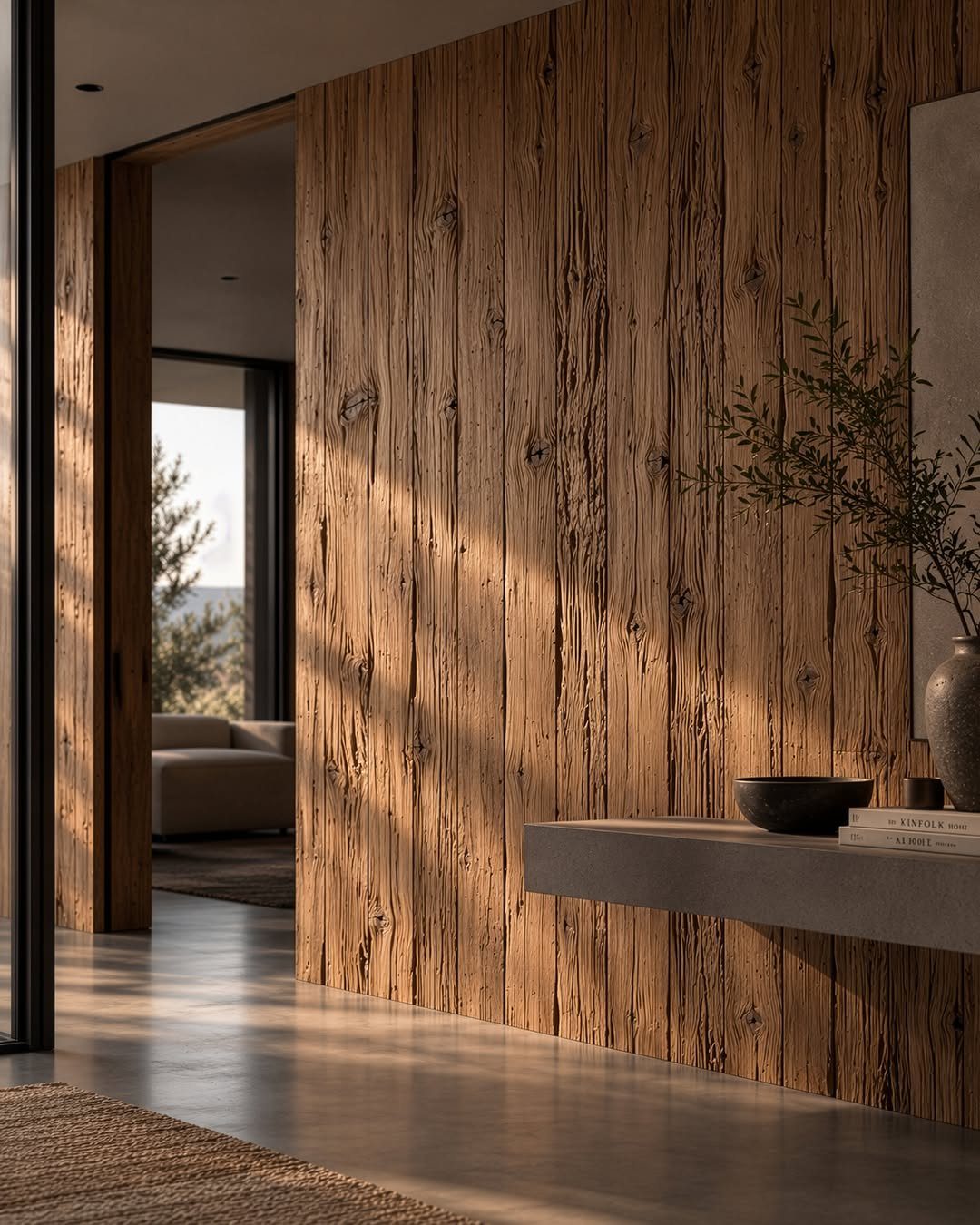
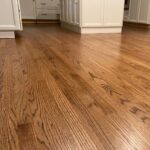
Real wood on a wall still carries temperature. In morning light you can see the grain rise and fall, and the surface warms under your hand in a way that laminate never does.
That thermal mass is what quiets a room; sound dies against solid timber instead of bouncing back at you.
Vertical planks with the knots left in mean accepting variation. Some boards will cup slightly, some will check, and the wall will look different in August than it does in February.
That works if you want the wall to read as natural; it does not work if you need the wall to read as flawless.
Budget for wider boards with a ship-lap or tongue-and-groove edge. Narrow boards with square edges gap and rattle as the seasons change.
Walnut, white oak, or even poplar if you plan to stain; each moves differently, so do not mix species on the same wall.
3. Reclaimed Timber Wood Panelling on Walls
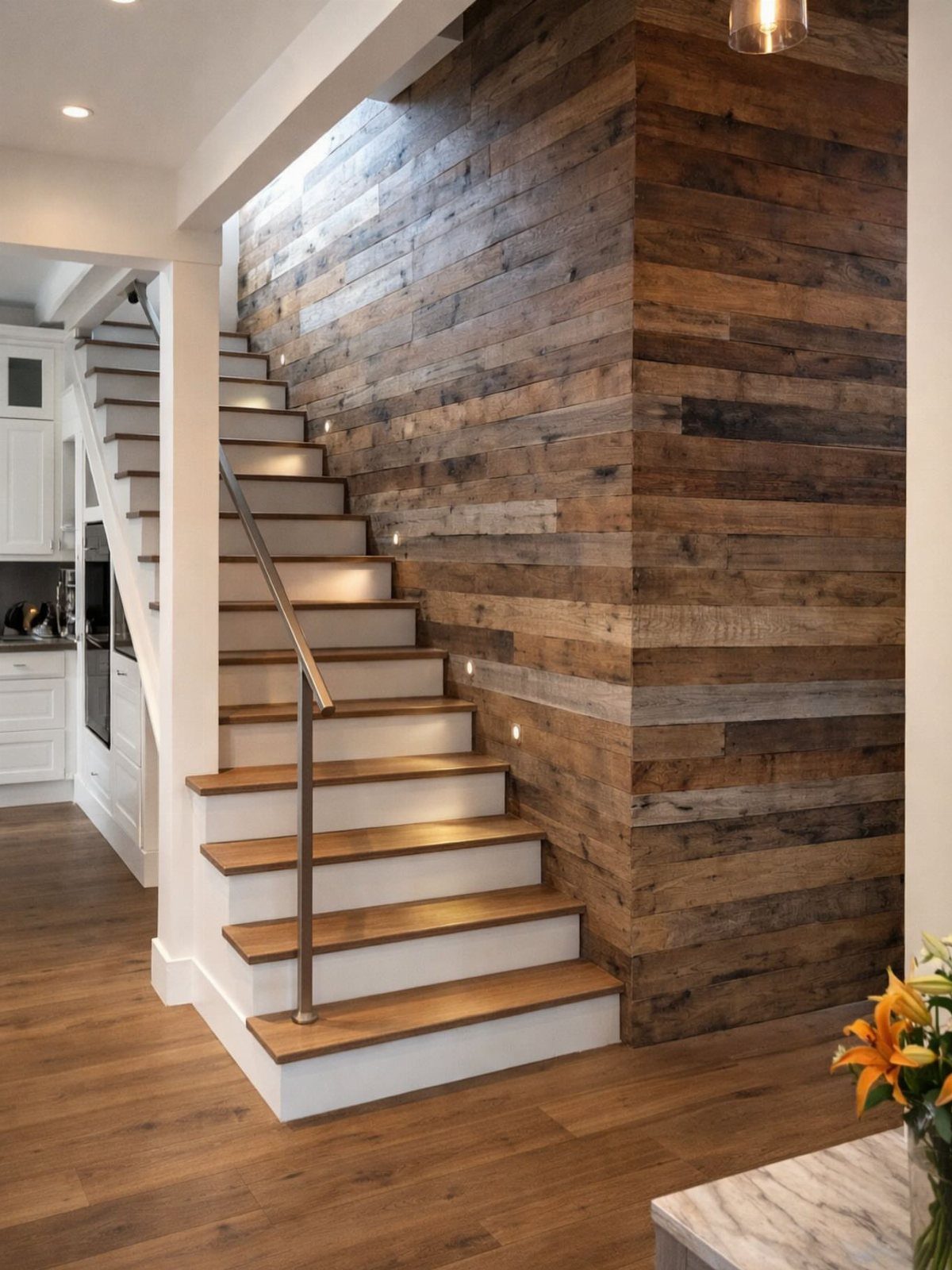
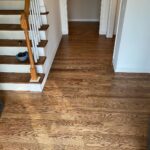
Reclaimed timber gives you what new wood cannot: color variation that took decades to earn. A staircase wall mixes tans, browns, and the occasional gray streak where a board weathered longer than its neighbor.
That randomness is the whole effect; trying to sort boards by shade defeats the purpose.
Solid reclaimed stock is usually thicker than standard boards, so check your outlet and switch box depths before you start. You may need extenders.
Nail holes, old saw kerfs, and the odd bolt stain are part of the vocabulary; sand only enough to remove splinters, not enough to erase the history.
I would use this where the wall is long and uninterrupted, the way it runs beside those stairs. A small wall looks busy; a large one looks collected.
4. Vertical Wood Slat Wall Panelling
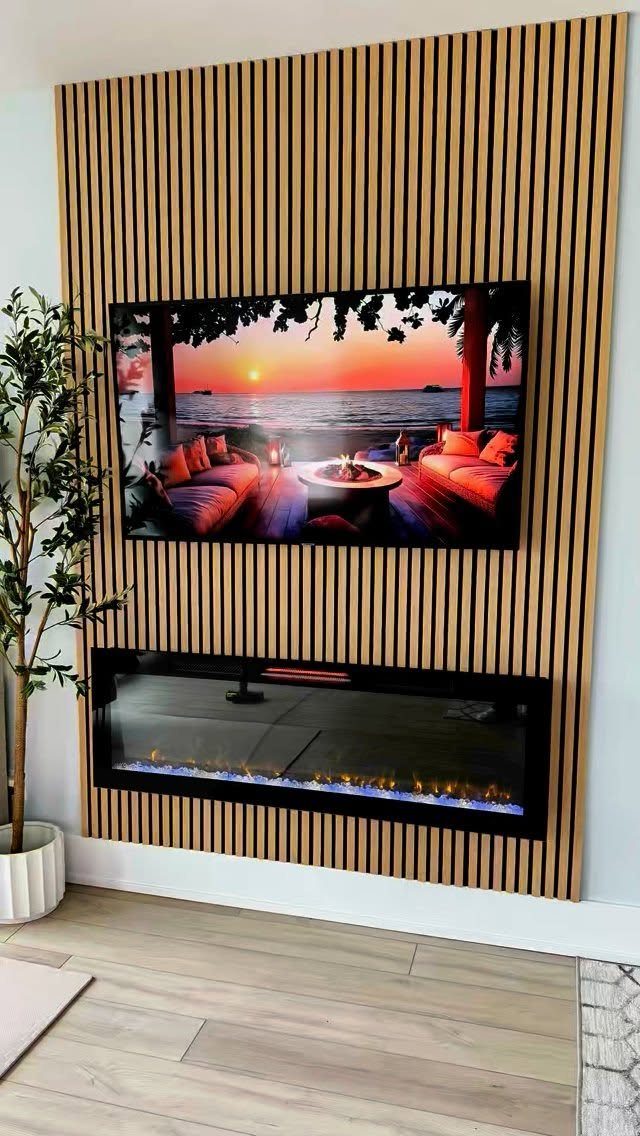
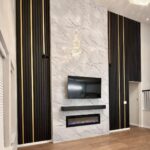
A slat wall behind the television solves two problems at once: it hides the tangle of cables and it softens the black rectangle when the screen is off. The spacing matters more than the wood species.
Tight slats read as texture from across the room; wider gaps start to look like a fence.
Slats running floor to ceiling mean the wall behind them needs to be finished to a standard you could live with if you ever remove the slats. Paint it matte black; the gaps will disappear and the wood will float.
Mount the television on an articulating arm anchored through the slats to a stud, not to the slats themselves. The slats carry almost no load; they are a screen, not a structure.
I would keep the wood tone lighter than the flooring, the way this room does, so the wall recedes instead of advancing.
5. Painted Wainscoting Wood Panelling
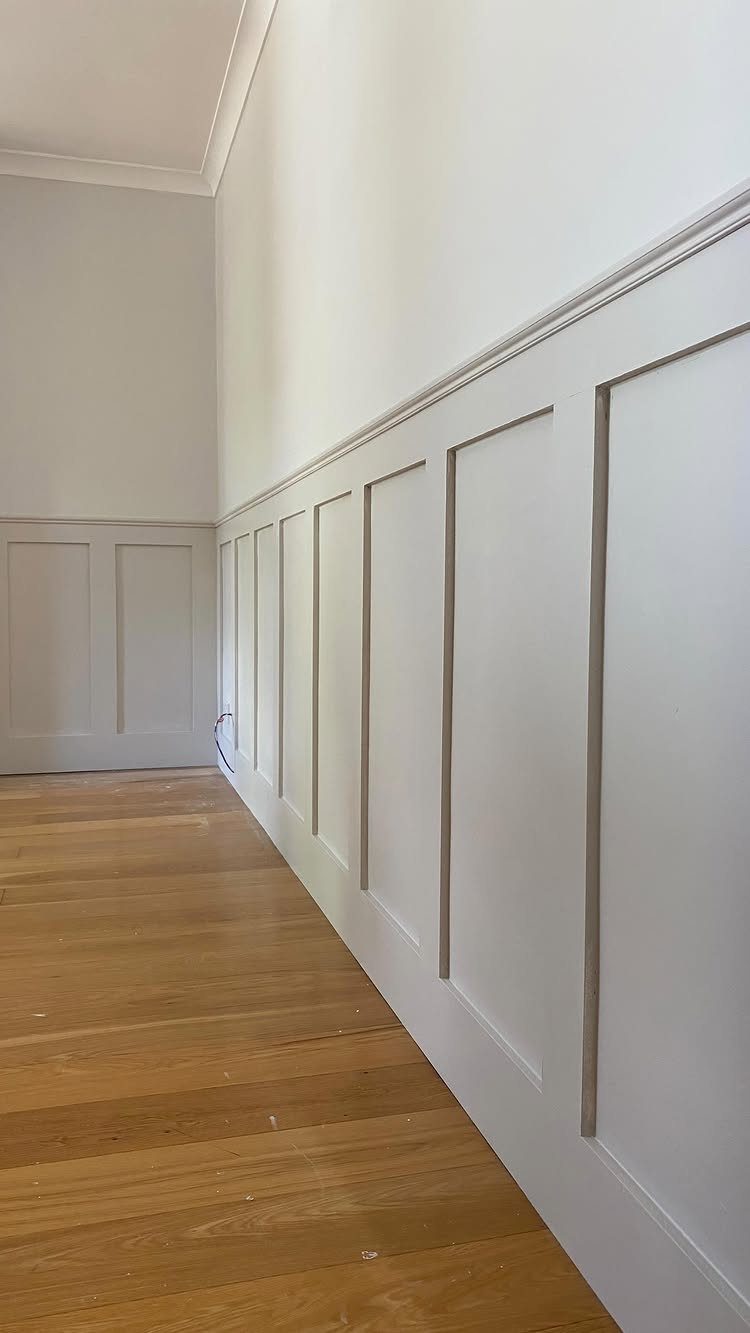
Wainscoting protects the wall you actually touch: the lower section in a hallway, the back of a chair in a dining room.
Paint it white and the molding shadows do the decoration; paint it green and the wall becomes the architecture.
Recessed rectangular panels with a top rail and a baseboard make up the traditional build. You can get the same look with MDF pre-milled into stile-and-rail frames, ready to assemble like a flat-pack cabinet.
The cost drops by half; the durability drops too, especially at the baseboard where vacuum cleaners hit.
I think green wainscoting works best in a room with north light, where white would read cold. Farrow & Ball’s Studio Green or Benjamin Moore’s Essex Green are deep enough to feel intentional without going institutional.
Prime every surface, including the back edges; moisture finds its way in through cuts you thought were clean.
6. Large Grid Wood Wall Panels
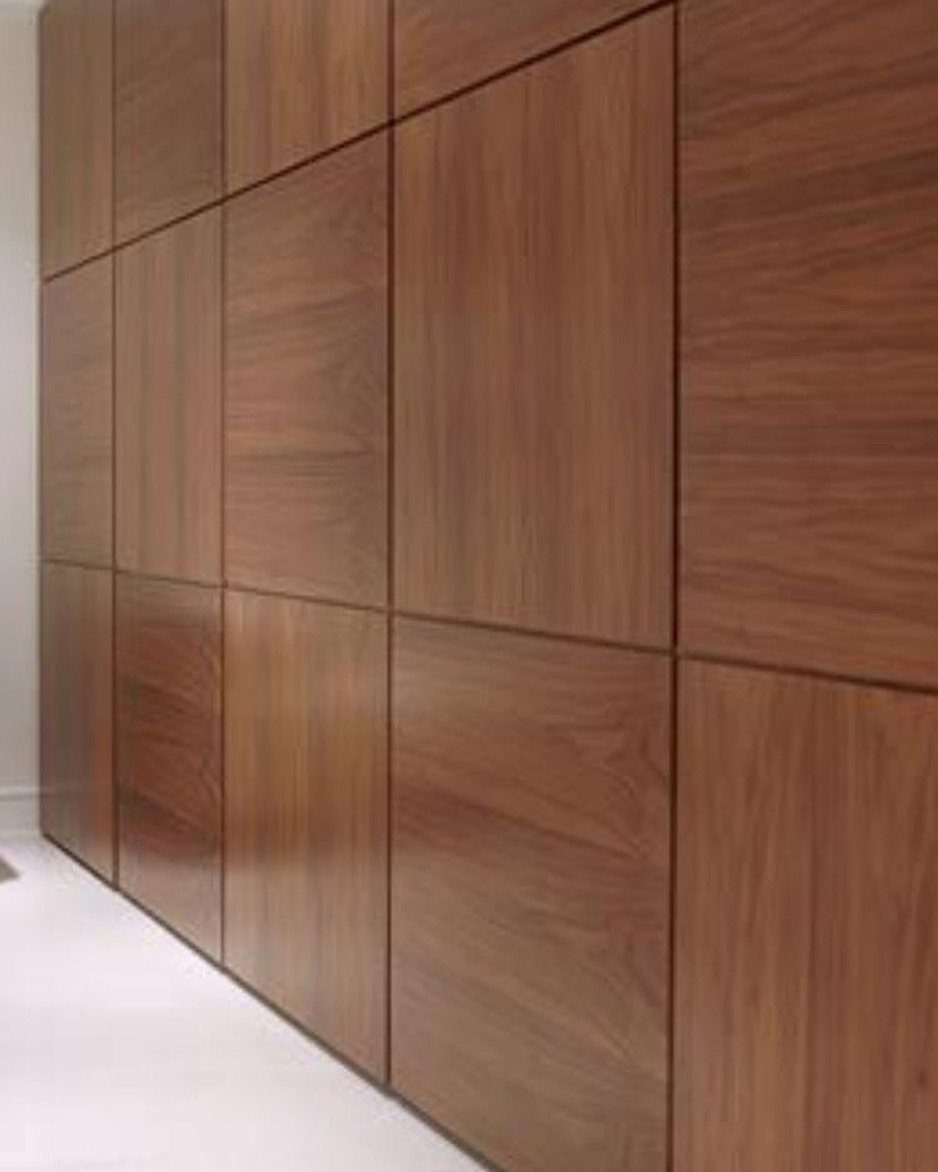
Large grid panels read as a single surface from a distance and as individual boards when you are close enough to touch them.
That shift is what makes them feel architectural rather than applied; they are the wall, not decoration on it.
The veneer is book-matched or at least sequenced, so the grain flows across the grid lines instead of fighting them. That continuity is where the money goes.
Random veneer, or veneer laid without attention to the match, breaks the illusion and looks like a dated conference room.
Installation is less forgiving than smaller formats. A large panel shows every flaw in the substrate, so the wall behind it must be flat and true.
You are hanging cabinets without the boxes; the same precision, the same need for a laser level and a patient helper.
I would use this in a room with enough floor space to step back and let the grid read as a whole. In a tight entry it feels like you are inside the furniture.
7. Traditional Vertical Tongue-and-groove Panelling
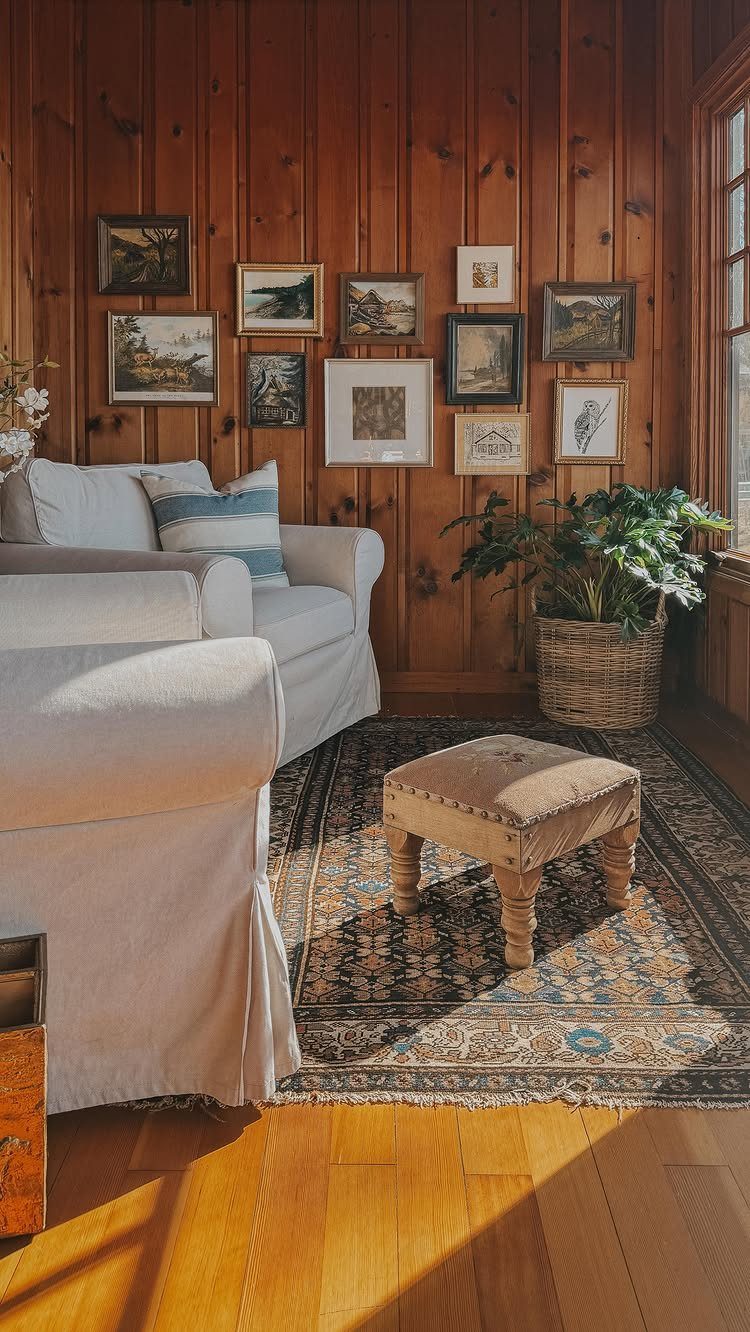
Vertical boards with interlocking edges, each slotting into the next, give a wall that reads as solid planks rather than sheets.
The joint hides fasteners and keeps the surface flat through seasonal swelling, which matters in rooms that swing between dry winters and humid summers.
Pine runs soft and takes dents, so it suits low-traffic walls behind sofas or beds rather than halls.
I would prime the back side and the groove faces before installation; unsealed wood drinks moisture from the wall cavity and cups over time. A nail gun with 18-gauge brads through the tongue keeps holes invisible.
Paint or leave it raw; a honey tone warms white furniture without competing with it. For a cottage feel, wider boards read relaxed; narrower boards lean formal, more library than living room.
Check that your boards are kiln-dried, not green, or gaps will open within a year.
8. Horizontal Rustic Wood Plank Wall
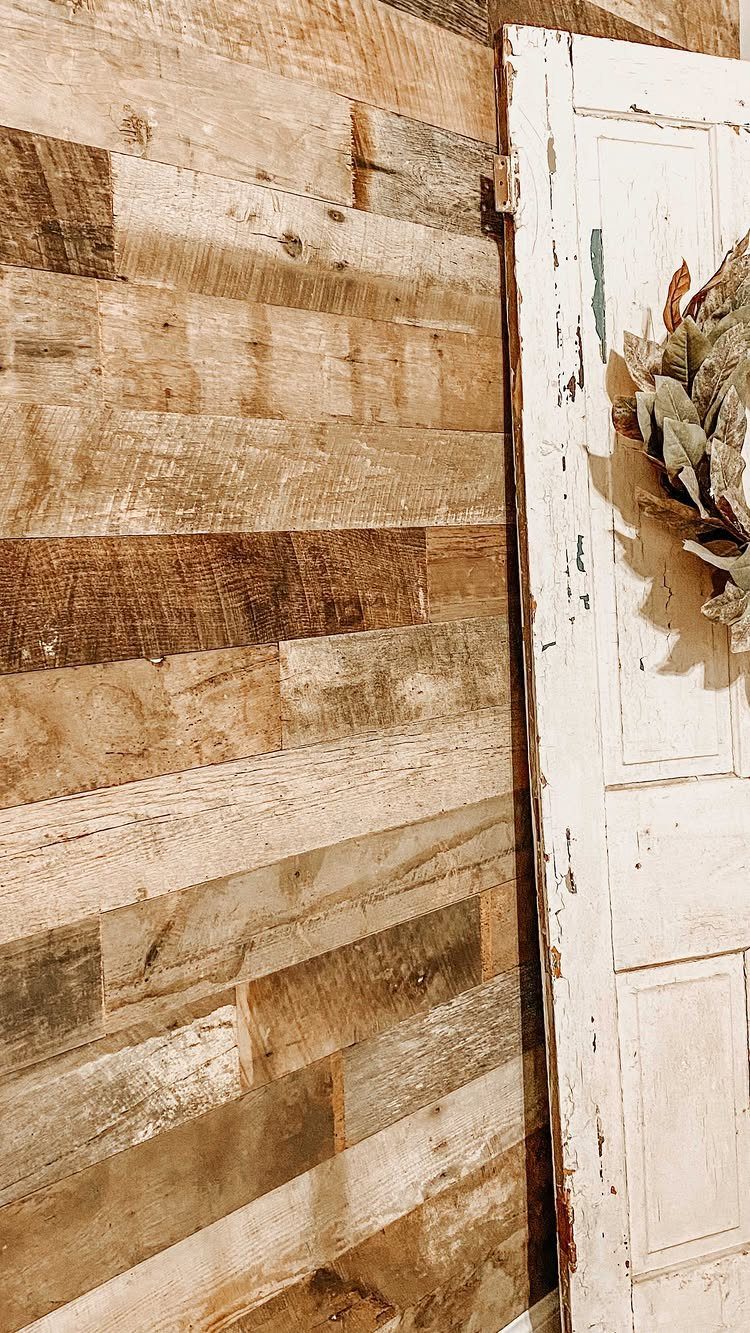
Weathered boards run sideways, their tones drifting from ash to walnut, and the wall becomes the rough spine of a room. The variation is the point: matching planks would look like flooring stood on end.
Salvage yards sell barn siding cheap, though I would sort it myself; bundles hide rot and the nail holes that split under a saw. New pine stained in layers costs more but saves the weekend of pulling old fasteners.
Either way, a dark wall behind pale furniture needs boards with real thickness or they read as veneer.
I would screw through the face and putty later; hidden fasteners fail when boards warp. Leave a hairline gap for expansion, and stagger joints so no line runs the full width.
This wall asks for simple furniture. A busy print fights the grain, and the grain already won.
Long-term Investment
Solid wood paneling costs more at the register but less across the years you live with it. Veneered MDF swells at the baseboard where mops hit, and the damage does not sand out.
Real timber can be refinished; the same wall of walnut or white oak might carry 3 or 4 different colors across a decade as your taste shifts.
I would put the money into the substrate too. A flat, dry-walled surface behind the boards prevents the telegraphing that makes cheap installs look cheap.
Skip this step and even expensive panels read as temporary.
The hidden cost is removal. Adhesives on low-grade products tear the drywall underneath, so you are rebuilding, not redecorating.
Mechanical fasteners in solid stock leave holes that patch.
Craftsmanship Importance
A fluted panel with a continuous grain match across 8 feet took someone time at the saw and the sander. That time is what you are paying for, not just the material.
The alternative is a panel where the flutes stop short, the grain jumps at the seam, and the light catches the mismatch every evening.
I would learn to spot the shortcuts before I order. End-matched veneer, where the sheet is sliced and reassembled like a jigsaw, costs less because it wastes less.
It also breaks the visual rhythm that makes the wall feel built, not bought.
Tongue-and-groove edges that actually interlock, not merely abut, need tighter milling than square-edged boards. The difference shows up 2 winters in, when the sloppy joint gaps and the careful one does not.
Aesthetic Vs. Practicality
The cables disappear, the screen softens, and the room gains texture without losing function.
Flip that order, start with the photograph you saw online, and you end up with a wall that traps dust and shows every cord you failed to plan for.
I would test any paneling choice against the wall’s real job. Wainscoting in a hallway takes shoe scuffs and vacuum bumps; paint it dark and the marks hide longer, but the space also feels smaller.
North light changes that math. Green reads rich where it would read muddy in a dim southern room.
The practical benefit I watch most is acoustic. In an open plan with hard floors, that warmth under your hand translates to actual warmth in the noise level.
Cultural Perceptions of Design
The pressure to find wood paneling cheap comes from the same place as fast furniture: a culture that treats rooms as photographs waiting to happen.
The reveal matters more than the 6 a.m. light, more than the sound of the wall, more than whether the surface can be repaired instead of replaced.
I would rather buy less wall and better material. One wall of real pine or reclaimed oak teaches you what the room could be; 4 walls of printed fiberboard teach you what the photograph promised and the material did not deliver.
The shift toward disposable architecture is not inevitable. It is a habit, and habits break when you measure the second replacement against the first install.
The math turns fast.
Frequently Asked Questions
Is wood paneling a good choice for walls?
Real timber swallows echo better than drywall; the room just sounds calmer once the boards are up.
Stain goes on evenly and you can order boards cut to your exact ceiling height, which saves a lot of head-scratching at the saw.
The weight is what you give up; fluted panels and big grids stay put in a way that shiplap never does.
Is panelling outdated in 2026?
Quality wood paneling that reads as architecture rather than decoration does not date the way applied trends do.
Book-matched veneer on a large grid reads as architecture, not add-on, and old reclaimed boards carry color you cannot fake in a factory.
The dated look comes from random veneer laid without attention to grain flow, or from veneer thin enough to read as a conference room wall.
How do you attach wood panels to a wall?
Tongue-and-groove boards hide fasteners when you nail through the tongue with an 18-gauge brad gun. Treat slat walls like a screen, not a frame: hang the television through the gaps into the stud behind, never from the slats.
Big grids demand the same patience as cabinets: a flat wall behind them, a laser level, and someone to hold the other end while you check twice.