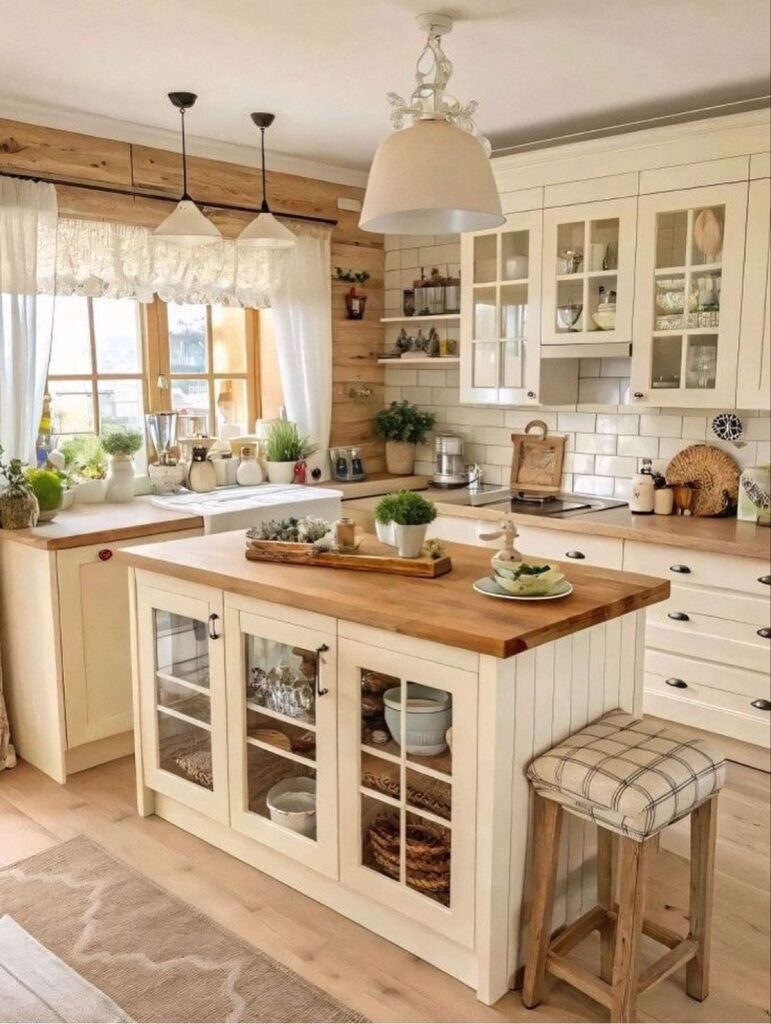
The ideas below run from a $500 Facebook Marketplace hutch to stone fireplaces that take professional install, and the one that belongs in your house depends on whether you are starting fresh or editing around what you already own.
A canopy bed frames sleep as an event; a wicker trunk just needs you to measure the sofa gap first.
[link-whisper-related-posts]1. Wrought-iron Chandeliers
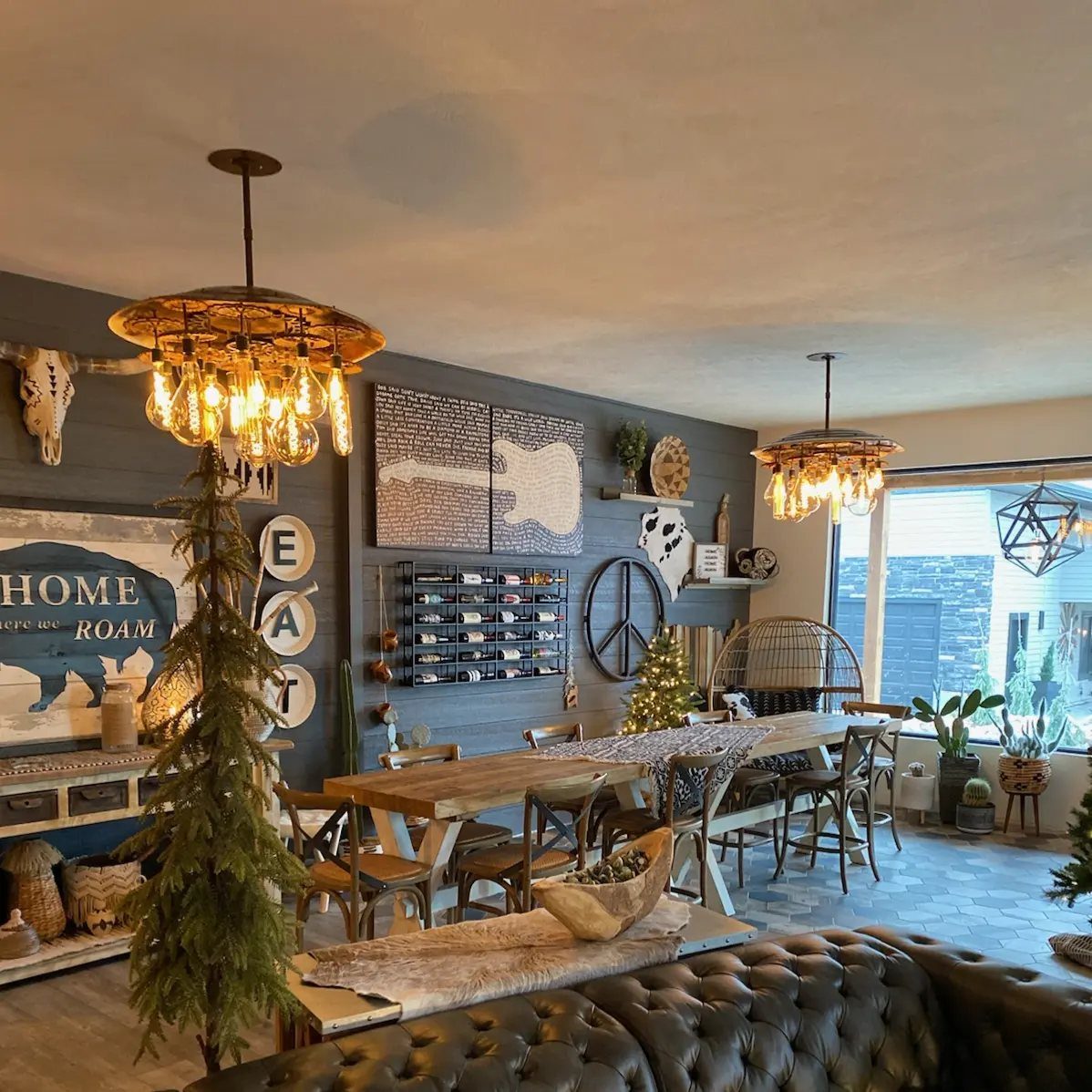
Wrought-iron chandeliers carry weight in a farmhouse room that glass pendants cannot match.
The candle-style bulbs and dark metal frame suit a dining space with long wooden tables and grey shiplap walls, where the fixture needs to hold its own against rough texture below.
The choice between iron and glass depends on what else in the room already speaks loudly.
A wall wine rack, vintage signs, or busy wallpaper need a simpler pendant; a quieter space can take the scrollwork and multiple arms of a full wrought-iron piece.
Check your ceiling height before falling for a wide diameter: a low beam or standard ceiling wants a flush or semi-flush mount, while taller ceilings can handle a chain-hung chandelier dropped closer to the table.
For industrial farmhouse, rope-and-metal mixes read cleaner. French farmhouse calls for softer gold tones.
I’d pick wrought iron for the reader who already owns the farmhouse table and needs the room to feel finished rather than furnished.
2. Vintage Mirrors
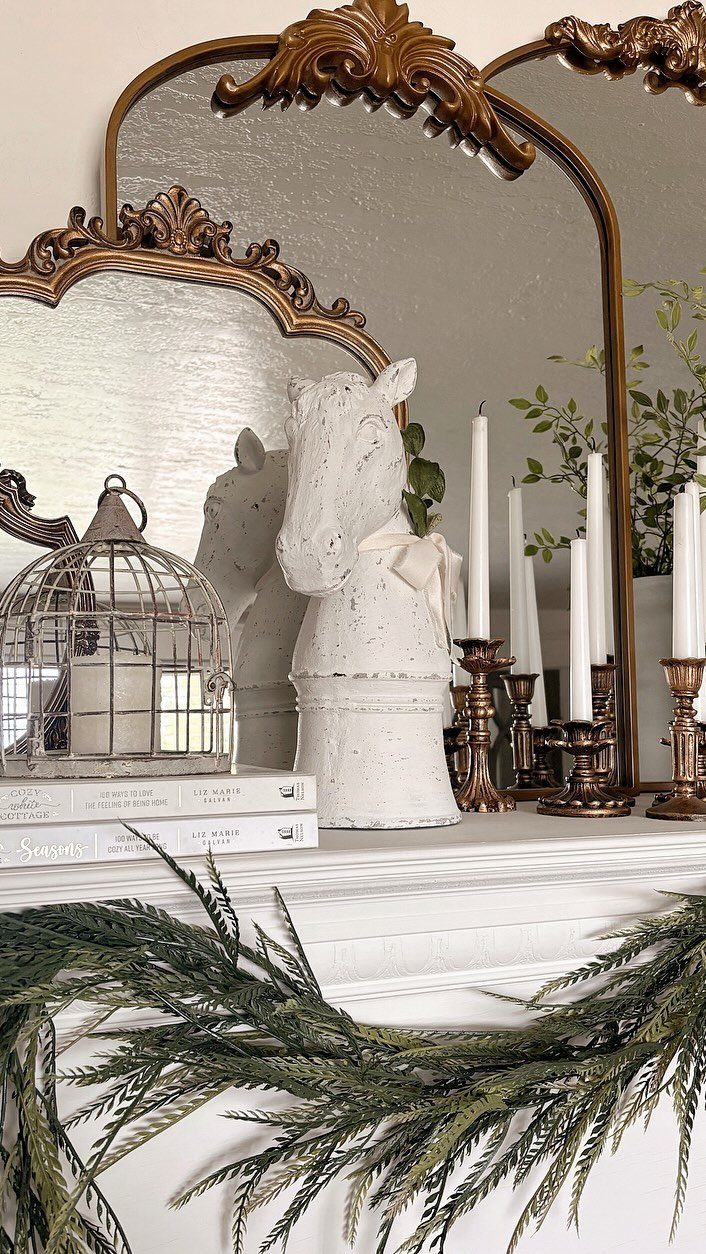
A vintage mirror does more than reflect light; it gives a wall the personality that new glass cannot manufacture. A gold ornate frame with an arched top turns a white fireplace into a deliberate composition rather than a blank rectangle.
Distressing matters less than proportion. A mantel wide enough for two framed mirrors side by side needs that pair to keep the eye moving; a single narrow mirror on a wide shelf looks like you stopped halfway.
Check your mantel depth too: a heavy frame needs enough ledge behind it or it will tilt forward and spend the holidays waiting to fall.
The white ceramic horse and stacked books sit lower than the mirror frames, which is the move: the tallest element belongs at center or back, not competing at the edges.
For a reader with a modern fireplace and no mantel at all, a leaning floor mirror against the wall trades the formality of a hung piece for something looser.
3. Vintage Trunks and Storage
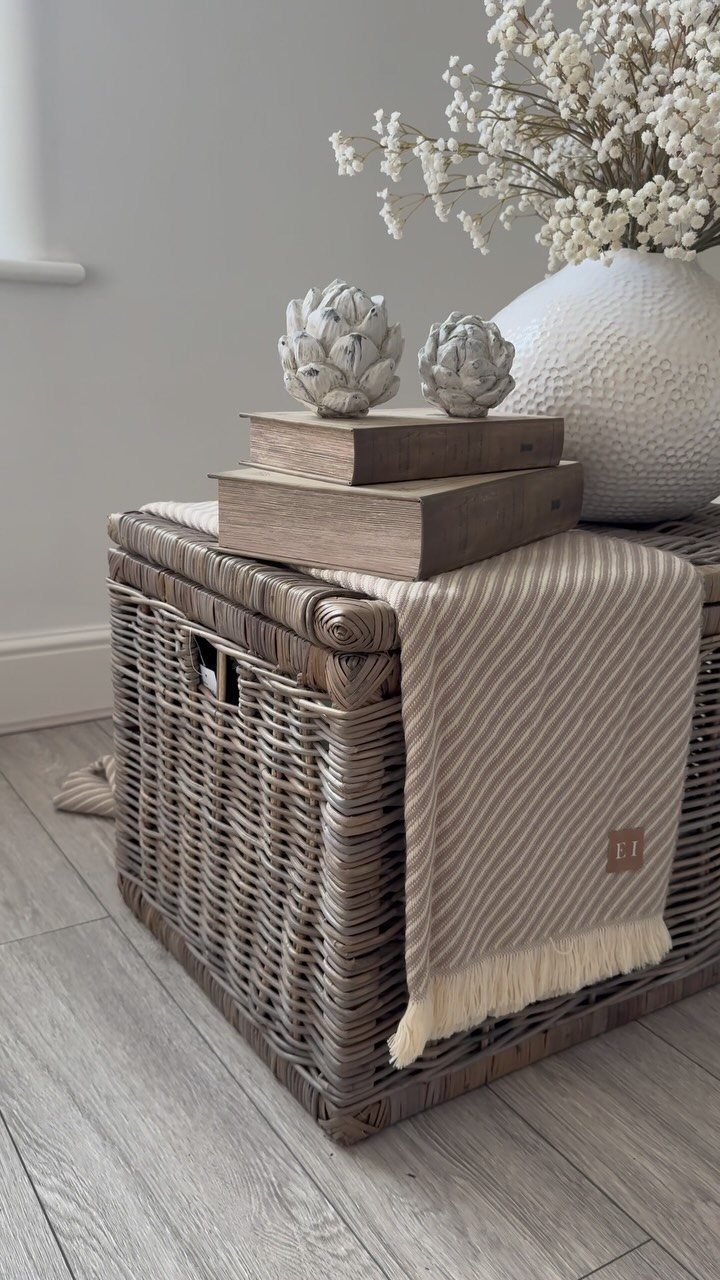
Storage that reads as furniture saves a farmhouse room from the plastic-bin look.
A wicker trunk in a grey rectangular shape with a flat top holds blankets or seasonal decor inside while carrying a vase, books, and ceramic artichokes on its surface.
The flat top is the detail to check for: curved lids look romantic but waste the usable surface, and in a small living room that lost space matters.
A trunk sized to fit most sofa sides without blocking walkways is the one to look for; measure your gap before buying, and remember the lid needs room to open upward.
Wicker keeps the texture light, but a vintage metal trunk or painted wood chest works the same way if the room already runs heavy on natural fiber.
I’d steer a reader with dogs or a vacuum robot toward wood or metal: wicker traps hair in its weave and fights the suction head.
The striped throw on top is not decoration only; it invites use and hides dust between cleanings.
4. Farmhouse Living Rooms
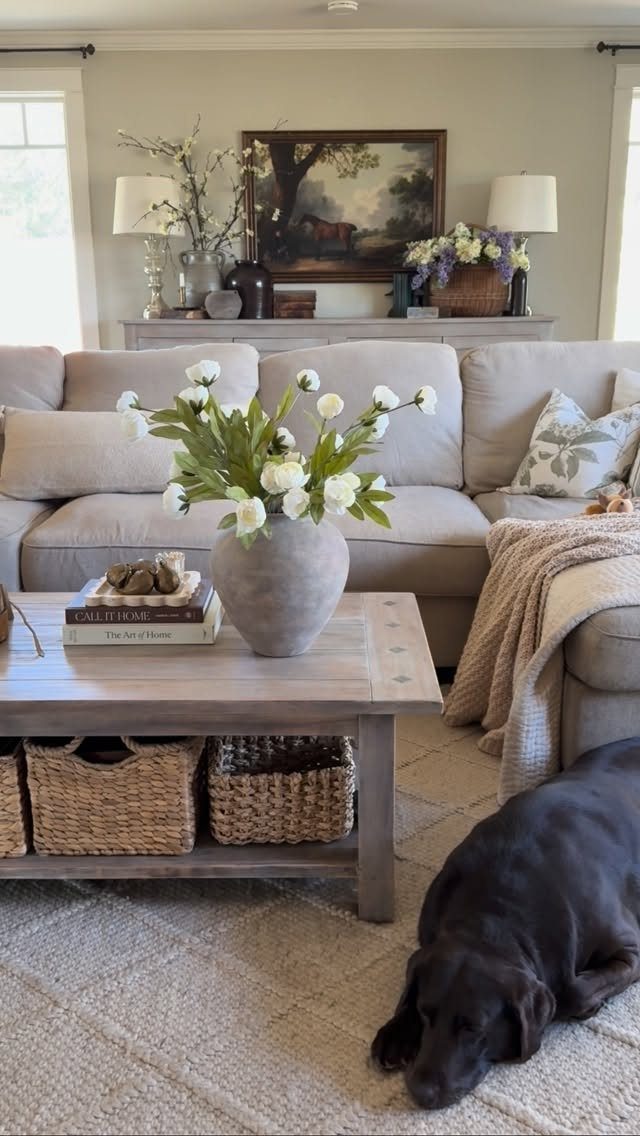
A farmhouse living room lives or dies on whether you can actually live in it.
Layering is the technique, and it starts with the largest piece.
A sectional in neutral linen or cotton twill grounds the room without defining it; the pattern and color come in through pillows and throws you can swap for the season.
The wooden coffee table needs heft to balance that upholstered mass: too thin and it looks temporary, too polished and it reads suburban rather than farmhouse.
Exposed beams or a stone fireplace, if you have either, do half the work of establishing character.
5. Shiplap Walls
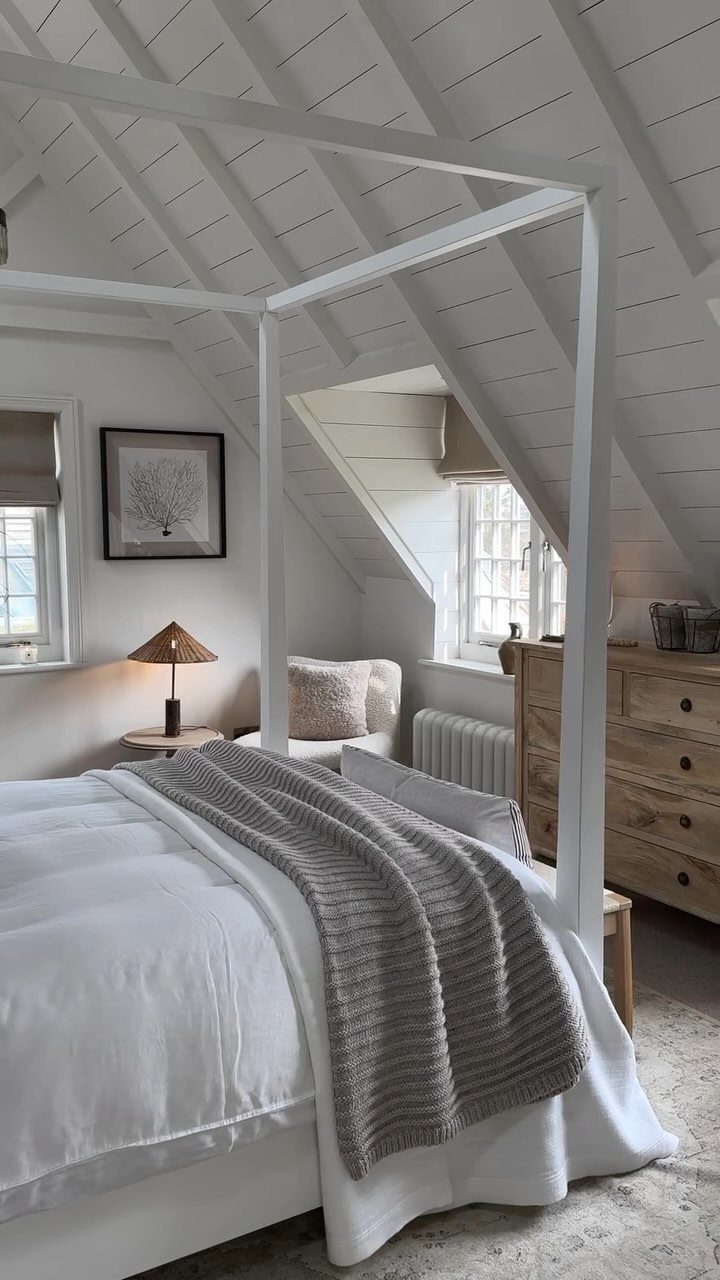
Shiplap on walls or ceilings gives a farmhouse space the rhythm that plain drywall lacks. Sloped white ceiling planks running horizontal with slight gaps between turn an attic bedroom into something intentional rather than awkward under the eaves.
Horizontal installation reads wider, vertical reads taller; a vaulted space can use both, with horizontal on the walls and the slope forcing another direction.
Paint color changes the effect more than people expect: white keeps it airy and coastal, sage or dusty blue nudges toward cottage, and bare wood stain belongs in a cabin or a very specific mountain farmhouse.
The four-poster bed and wooden dresser against that white plank wall show the pairing that works: smooth painted boards behind rougher, darker furniture. Reverse it, with rustic shiplap behind a glossy painted piece, and the furniture looks stranded.
Check your wall condition before committing: shiplap over uneven drywall or old plaster can telegraph every bump unless you add a backer board, which adds cost and depth you may not have at baseboards or window trim.
6. Weathered Wood Tables
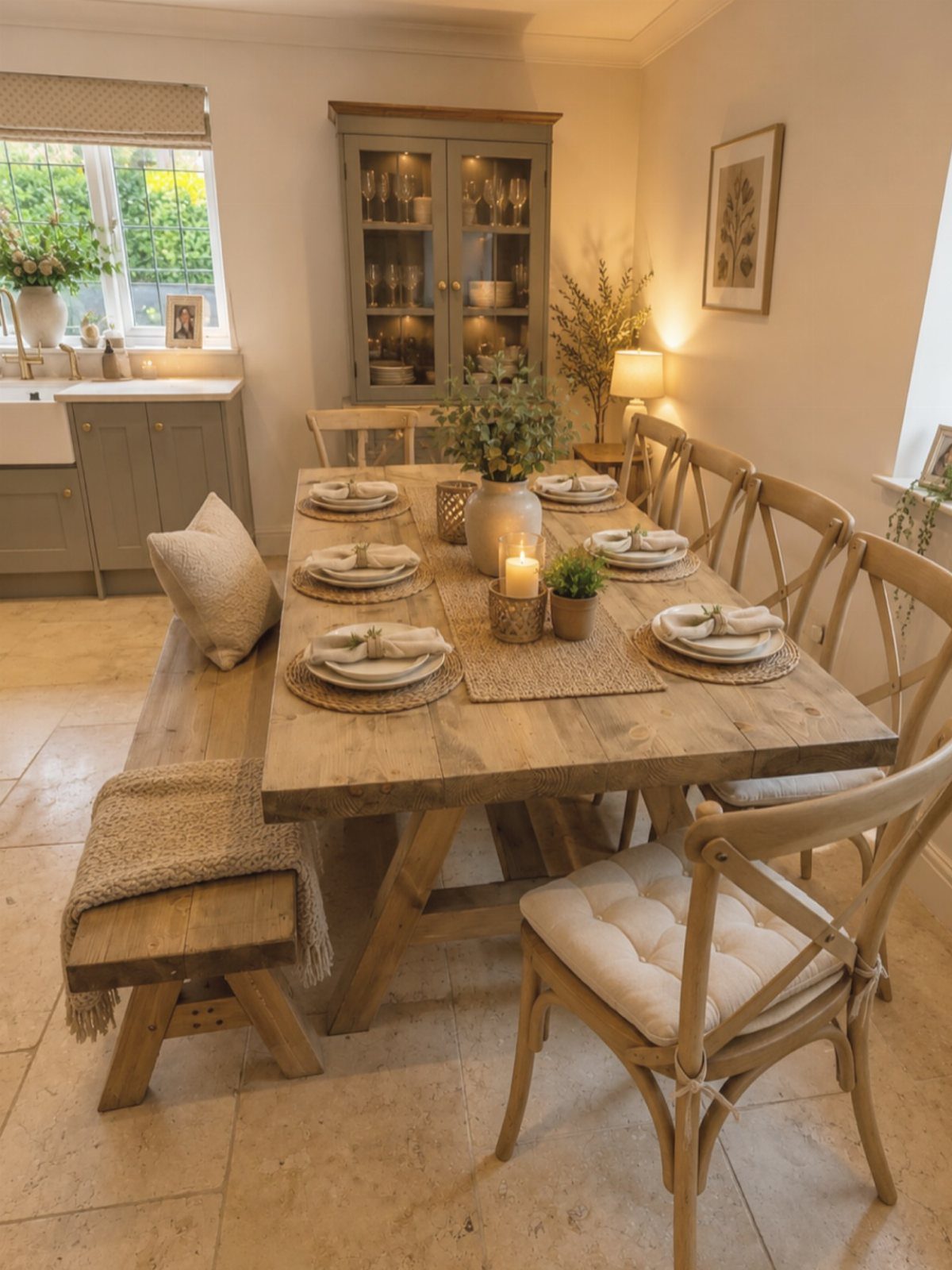
A weathered wood table carries the history that a new surface would have to fake.
A grey-toned dining table set with simple white plates has the uneven color and soft edges that come from actual use or from careful distressing; either way, it sets the temperature for the whole room.
The matching bench is the choice that matters. Cross-back chairs alone would read as a set; adding the bench breaks the formality and lets you squeeze in an extra person when needed.
Check the bench length against your table: shorter than the tabletop leaves room for chairs at the ends without crowding.
Weathered finishes hide the scratches that a glossy top would display, which makes this the right table for readers who actually eat dinner rather than photograph it.
The neutral cabinetry in the background stays quiet so the wood can speak; if your kitchen runs colorful or busy, a cleaner table surface might rest the eye better.
I’d pick this for the household that hosts Thanksgiving and does not want to worry about the gravy boat.
7. Exposed Wooden Beams
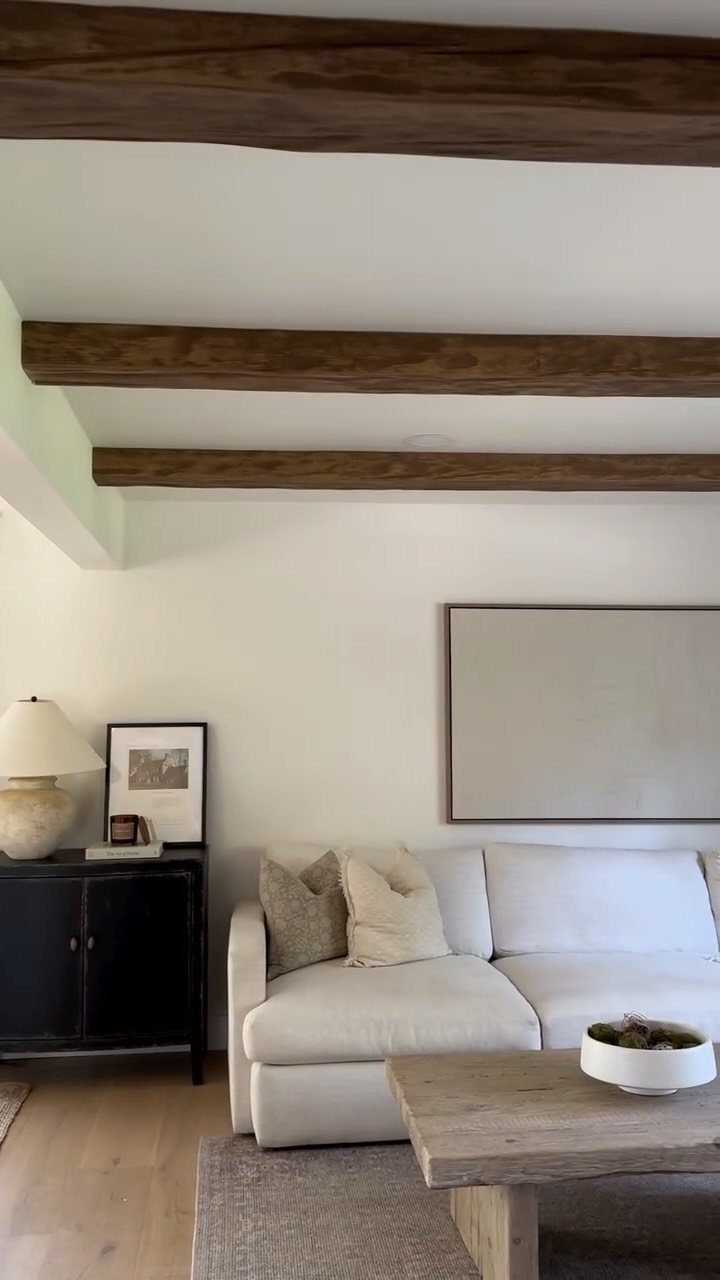
Dark wood beams against a white ceiling do what paint alone cannot: they draw the eye up and give a room its bones.
I have seen hollow beam wraps that install over a weekend and cost far less than salvaged timber, though the real thing carries weight the wraps only imitate.
If your beams run over a dining area, keep the table directly beneath them and let the lines line up. Windsor chairs and a wrought-iron chandelier complete the vertical pull without adding clutter.
Ceiling height matters more than anything here; beams hung too low press down on the room instead of opening it up. For low ceilings, skip them entirely and let shiplap or beadboard do the work instead.
8. Farmhouse Sink
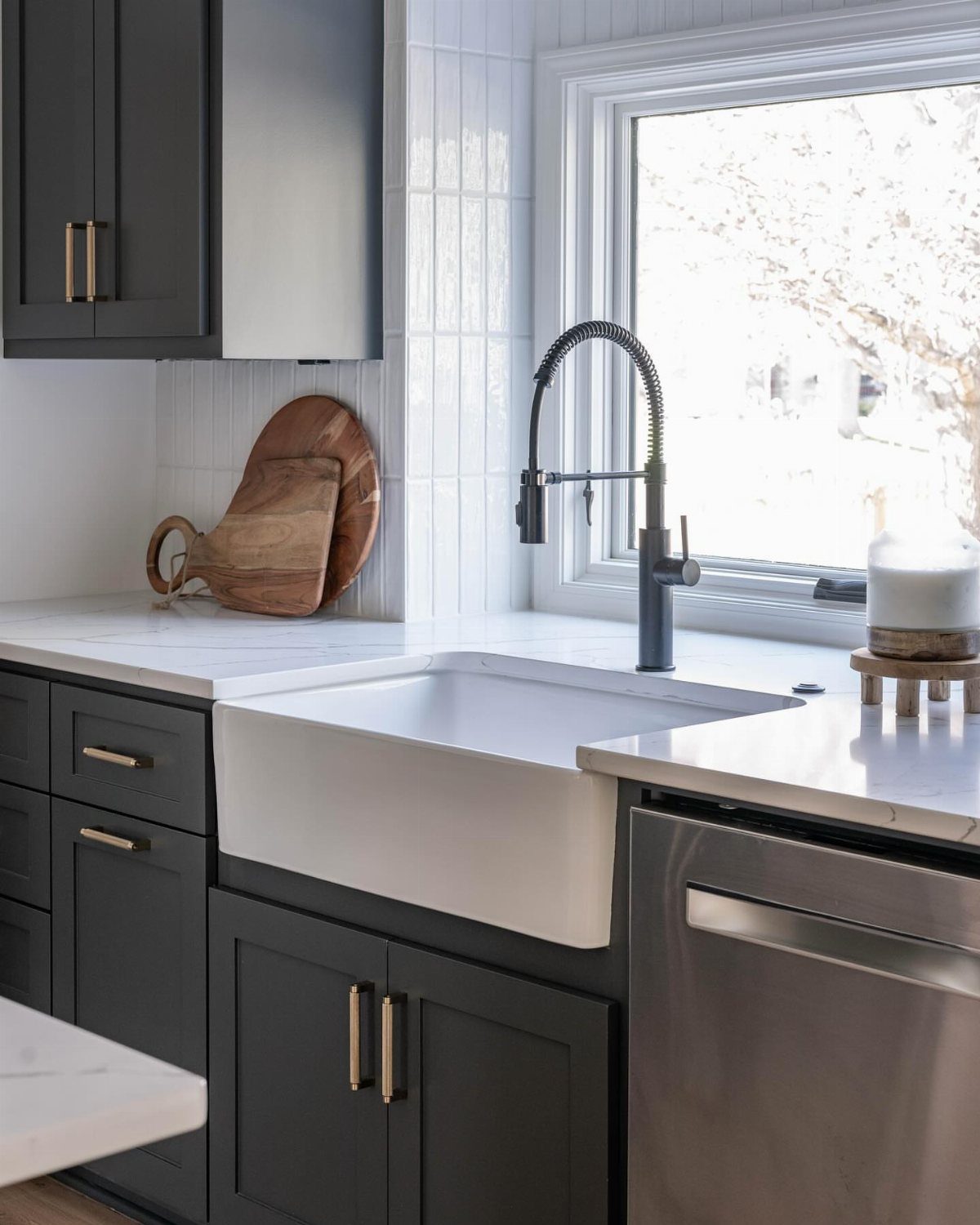
An apron-front sink turns the kitchen’s hardest-working spot into its most deliberate one.
The white basin and exposed front panel against dark grey cabinets create the contrast that defines farmhouse kitchens, and the depth handles sheet pans the way shallower sinks cannot.
Bronze hardware and a vintage-style faucet complete the look without requiring custom anything.
Apron sinks need a cabinet cut to their front profile, not a standard drop-in opening, so the install takes more planning. Plan for that labor, or choose a retrofit apron-front designed to sit in a standard base.
9. Dining Room with Mismatched Chairs
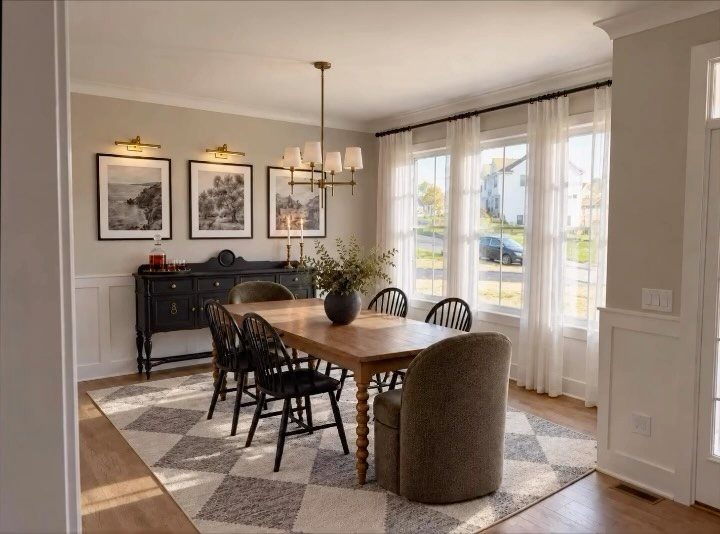
A wooden table surrounded by chairs that do not match sounds like a mistake until you see it done with intention.
The black spindle chairs and upholstered armchair in this room share nothing in design language but everything in scale and warmth, which is what keeps the look collected rather than accidental.
The maker started with an antique black server and built outward: warm wood table, two chair styles, olive upholstery, brass accents, patterned rug. The rug anchors what the chairs might otherwise scatter.
For your own table, pick one element to repeat: all chairs at the same seat height, or all in wood tones within two shades of each other. Then let everything else vary.
The risk is chaos; the guardrail is that single repeated thread.
10. Layered Textiles Through Pillows and Throws
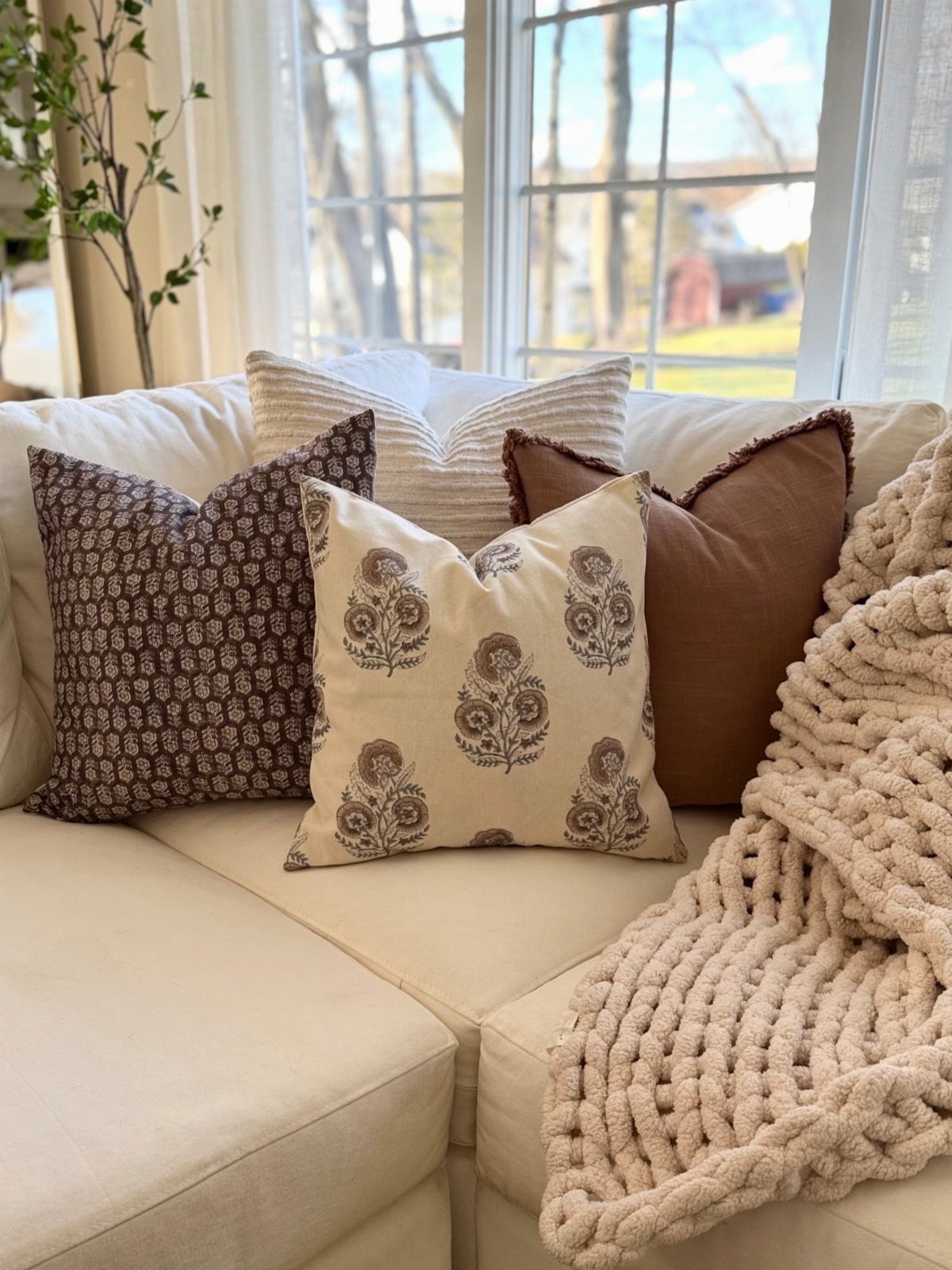
Pillows and throws are the cheapest way to shift a room’s season without moving furniture. Linen and cotton in neutral patterns layer without competing, and a chunky knit throw across a sofa arm signals that someone actually lives here.
I would start with two pillows per seat in varied sizes: larger squares with pattern, smaller ones in solid or subtle texture.
The throw should be thick enough to hold its shape when folded, not so soft it collapses into a heap.
The limit is the washing. Farmhouse textiles look better rumpled, but dog hair and dust settle fast.
Choose covers with zippers and keep a backup set for swap days. Washable rugs underneath complete the layering without the commitment of wall-to-wall.
11. White Cabinetry with Natural Wood Accents
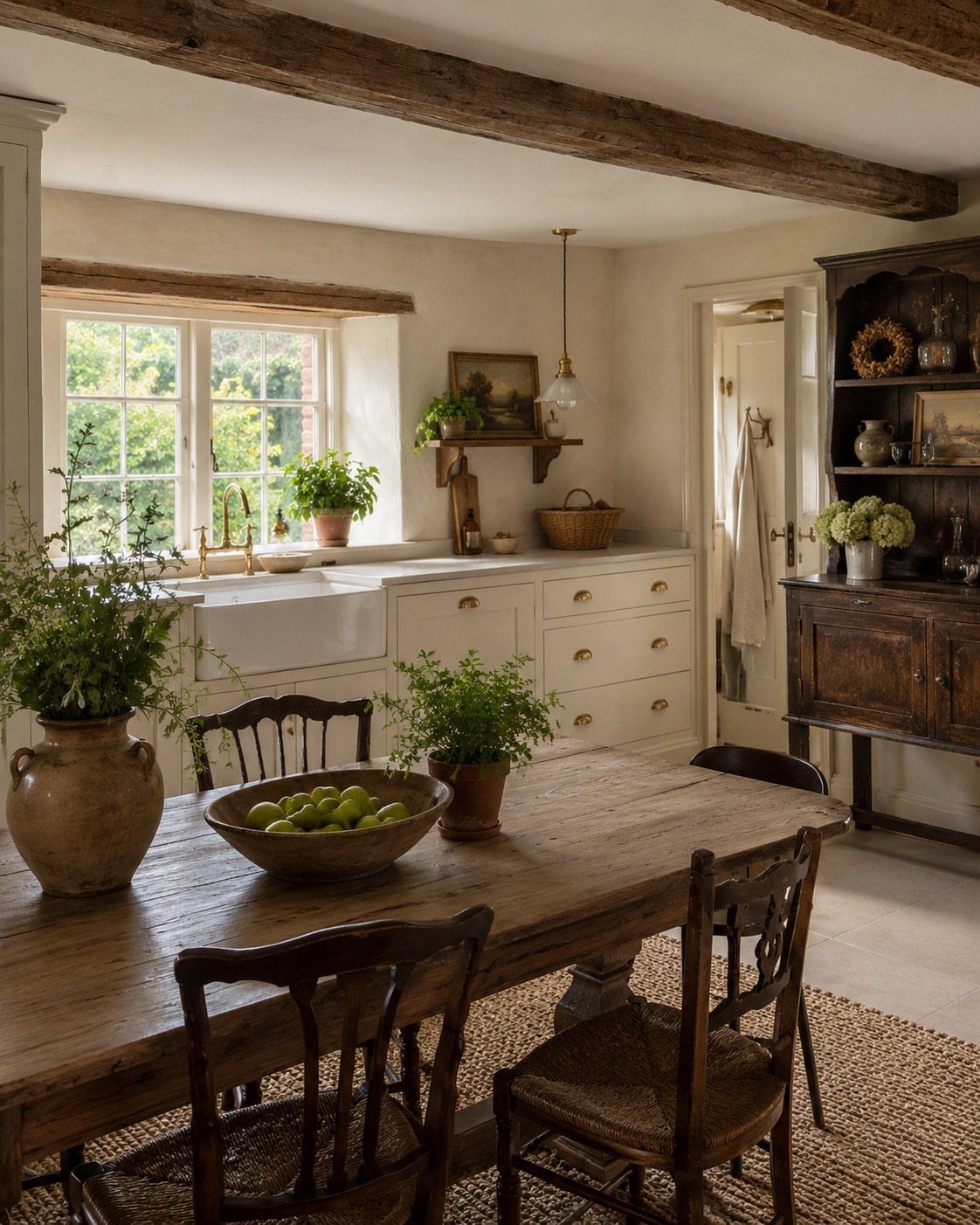
White lower cabinets with natural wood above or beside them solve the farmhouse kitchen’s central tension: how to keep it bright without making it sterile.
The cream-white cabinets here ground the room, while the dining table, ceiling beams, and hutch bring in the warmth that all-white kitchens often lack.
The hutch came from Facebook Marketplace for under $500, which is the kind of find that makes this style achievable on a real budget. Dark hardware on the cabinets bridges the two tones without introducing a third color.
If your kitchen has no existing wood to expose, add it through a table used as an island or open shelves in a matching tone.
Balance matters more than an even split; heavier white with lighter wood keeps the room feeling clean.
12. Farmhouse Kitchens with Open Shelving
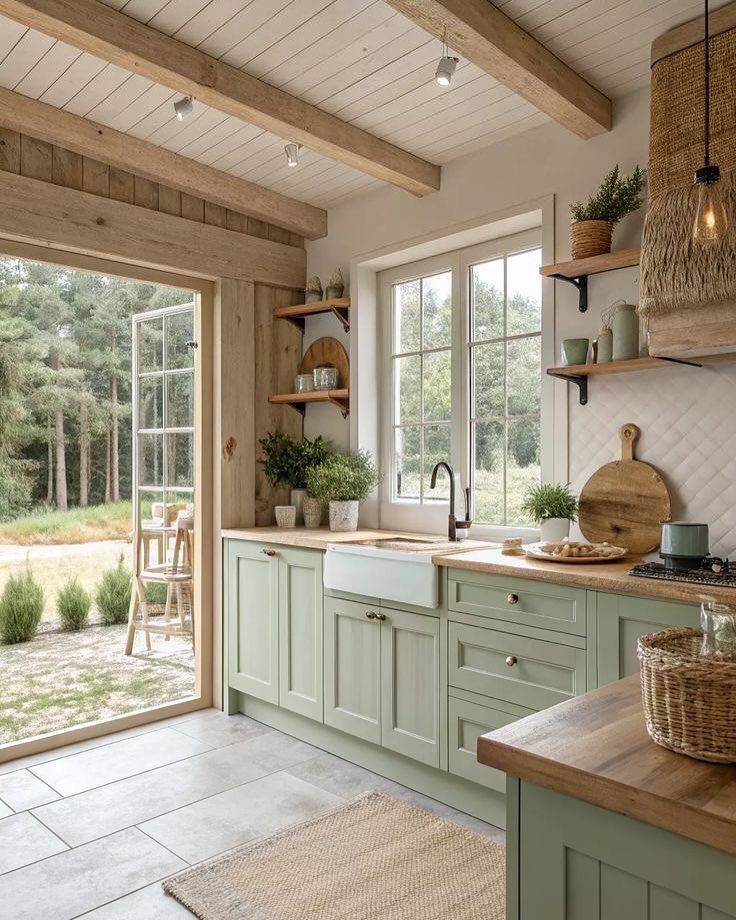
Open shelving in a farmhouse kitchen puts the dishes on display and the daily routine on view.
The sage cabinets and wooden shelves here hold plants and ceramics, turning storage into something you would actually want to look at while cooking.
I would keep the shelves to one wall, not wrap the room, and edit what sits on them: white plates, a few copper pots, one trailing plant. Everything else hides in the lower cabinets.
The window above the sink does the real work of opening the space; the shelves echo it without competing.
The cost is dust and grease settling on exposed dishes. If you cook with oil often or run the range without the hood, closed uppers near the stove save you from washing plates before every meal.
Reserve open shelving for the wall above the prep area or across from the range instead.
13. Rustic Stone Fireplace
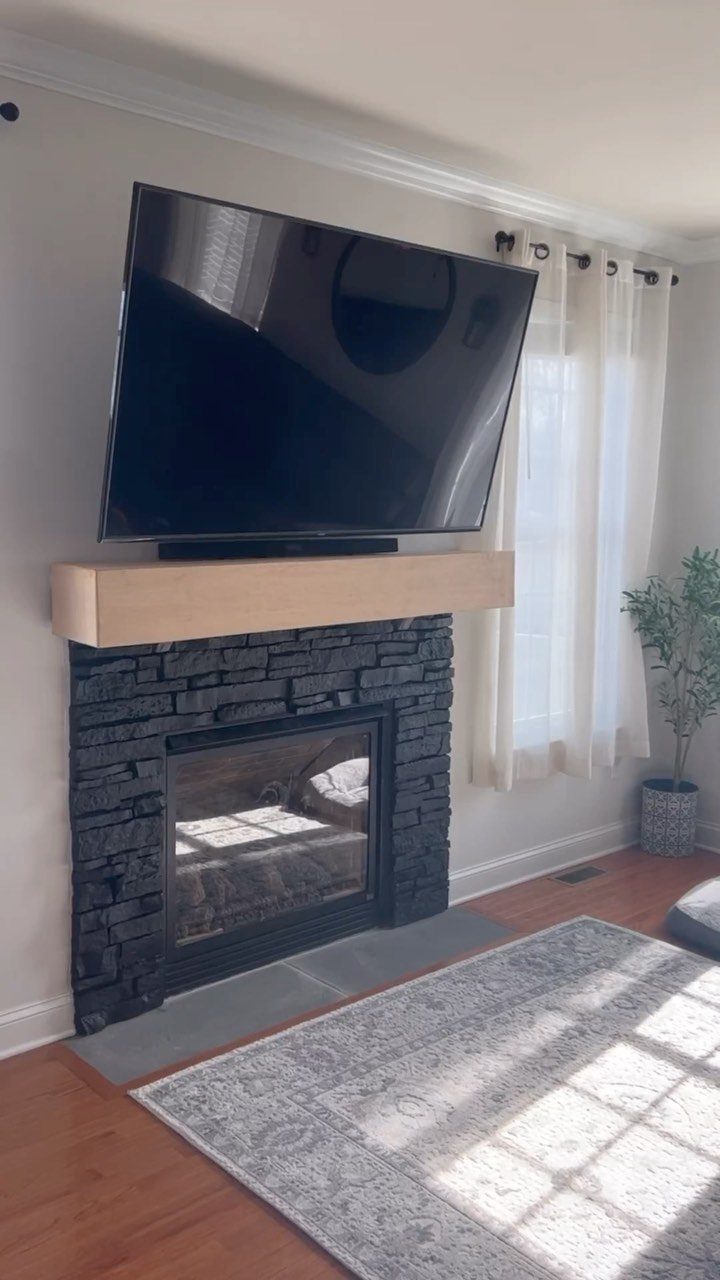
A stone fireplace turns the whole room toward it without asking permission.
Black stacked stone reads almost charcoal in daylight and goes full drama after sunset, which matters more than people admit: the stone you pick needs to look right lit and unlit.
Reclaimed wood for the mantel is worth the hunt. Boards with real age take stain unevenly, which works in your favor.
Lanterns and ceramic vases sit better there than framed photos; heat and smoke climb, and mantels are deeper than they look. Wicker baskets for firewood keep the practical stuff from looking like an afterthought.
This setup trades sharp corners for atmosphere. The grey stone plus light wood plus white walls is a specific balance; swap the wood for painted white and the room goes lodge, not farmhouse.
14. Cozy Reading Nook
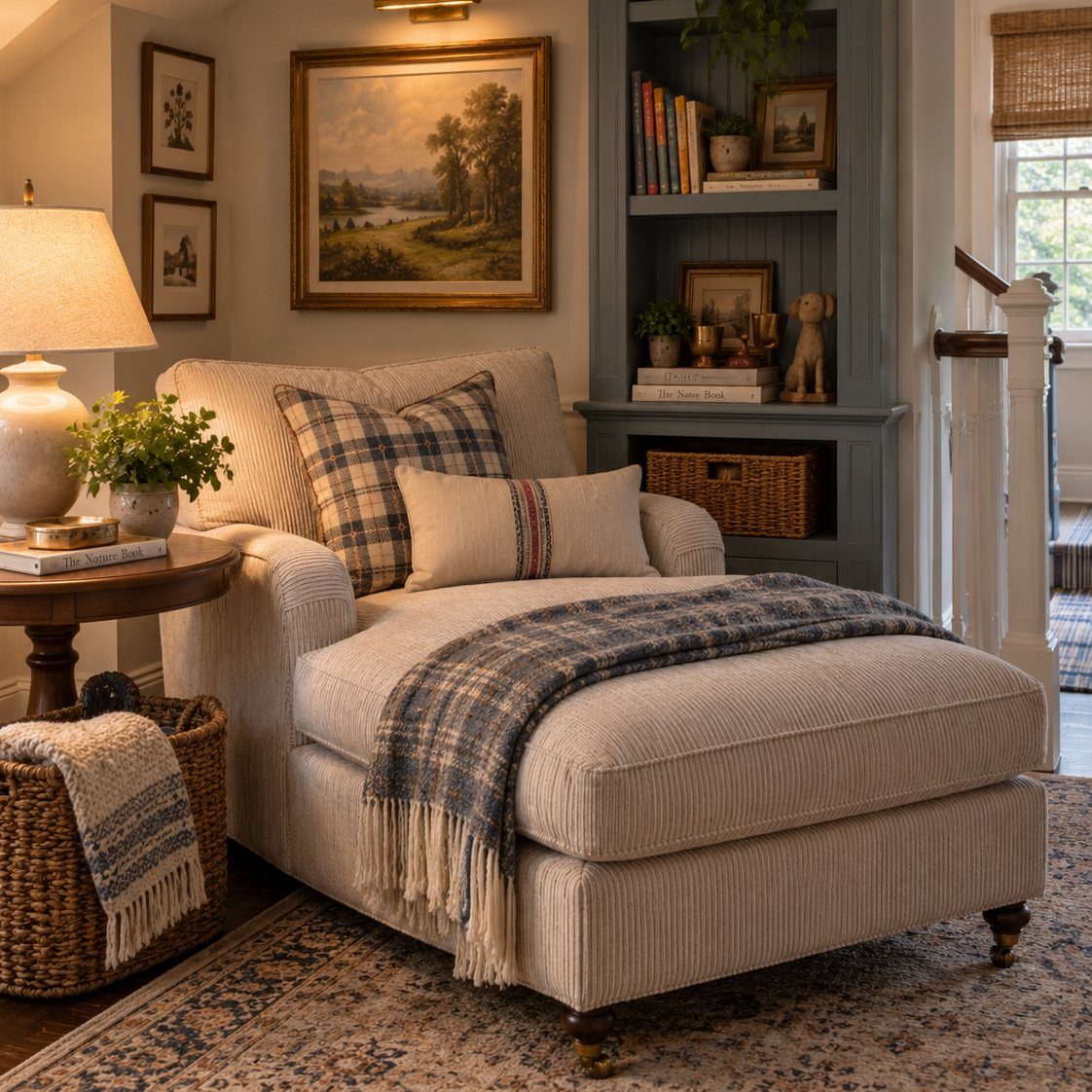
A chaise with arms that work for both lefties and righties solves a problem most reading nooks ignore. A slipcovered chair does the same job in tighter space and survives actual use better than upholstery you babysit.
Knitted throws read cozy from across the room and keep you warm without the irony of a blanket that looks too nice to unfold.
The rustic side table needs a drawer or lower shelf for the book you will definitely abandon mid-chapter. Brass or ceramic lamps both work; the ones that don’t are too small for the space the chaise commands.
Shiplap behind the nook makes sense if your wall is already speaking up. Otherwise paint is fine.
The basket for storage should live within arm’s reach or it becomes staging, not function.
15. Farmhouse Bathrooms
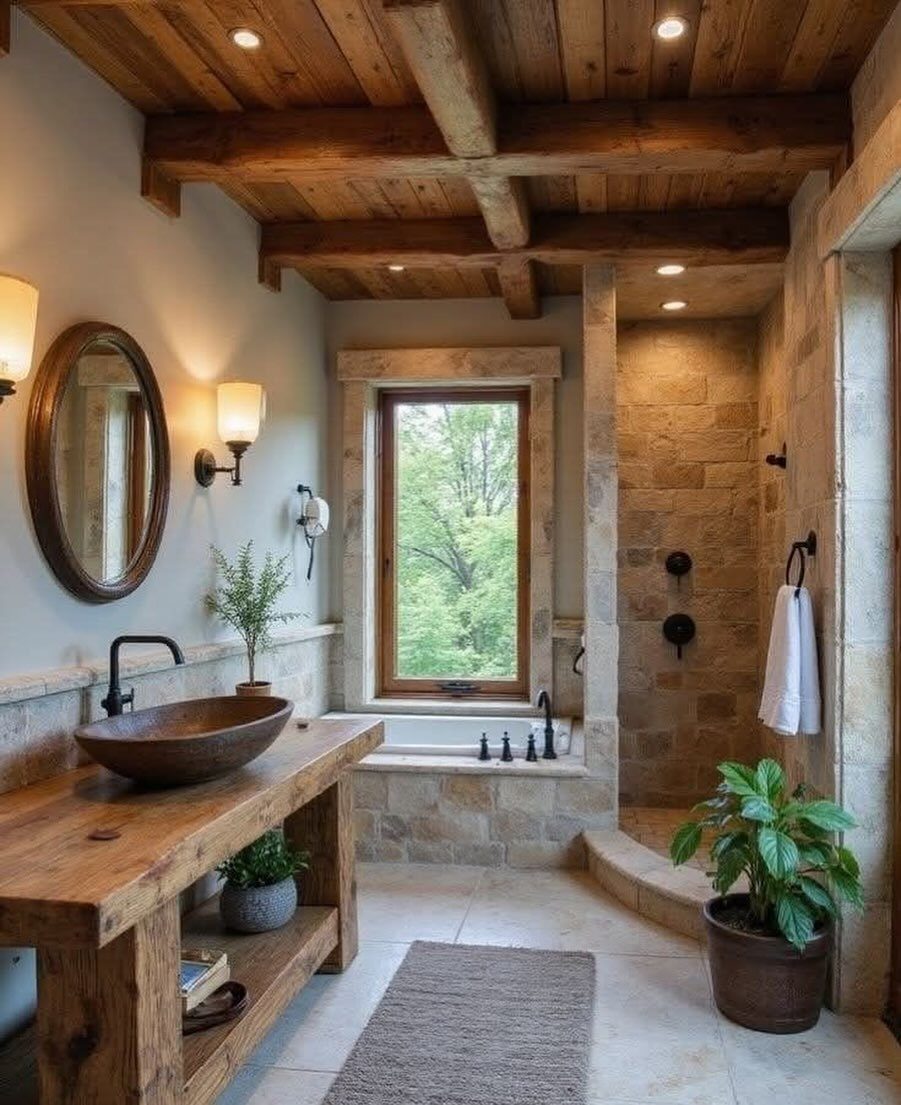
Farmhouse bathrooms get away with materials that would read busy elsewhere because the scale is small and the door closes.
Stone tub surrounds and timber ceilings do different jobs than the shiplap most people lead with; shiplap is the affordable path, stone and timber are the one-time investment.
A clawfoot tub centers the room whether you wanted it to or not. Brass fixtures age visibly, which is the point, but hard water marks show fast; oil-rubbed bronze hides the same sin.
Vertical shiplap draws the eye up toward those beams if you have them, horizontal if the ceiling is ordinary.
The reclaimed wood stool by the tub is for the towel you actually use, not display. Terracotta pots with something green survive bathroom humidity better than expected; woven cotton mats take the wet without the mildew trap of thick pile.
16. Canopy Beds in Farmhouse Bedrooms
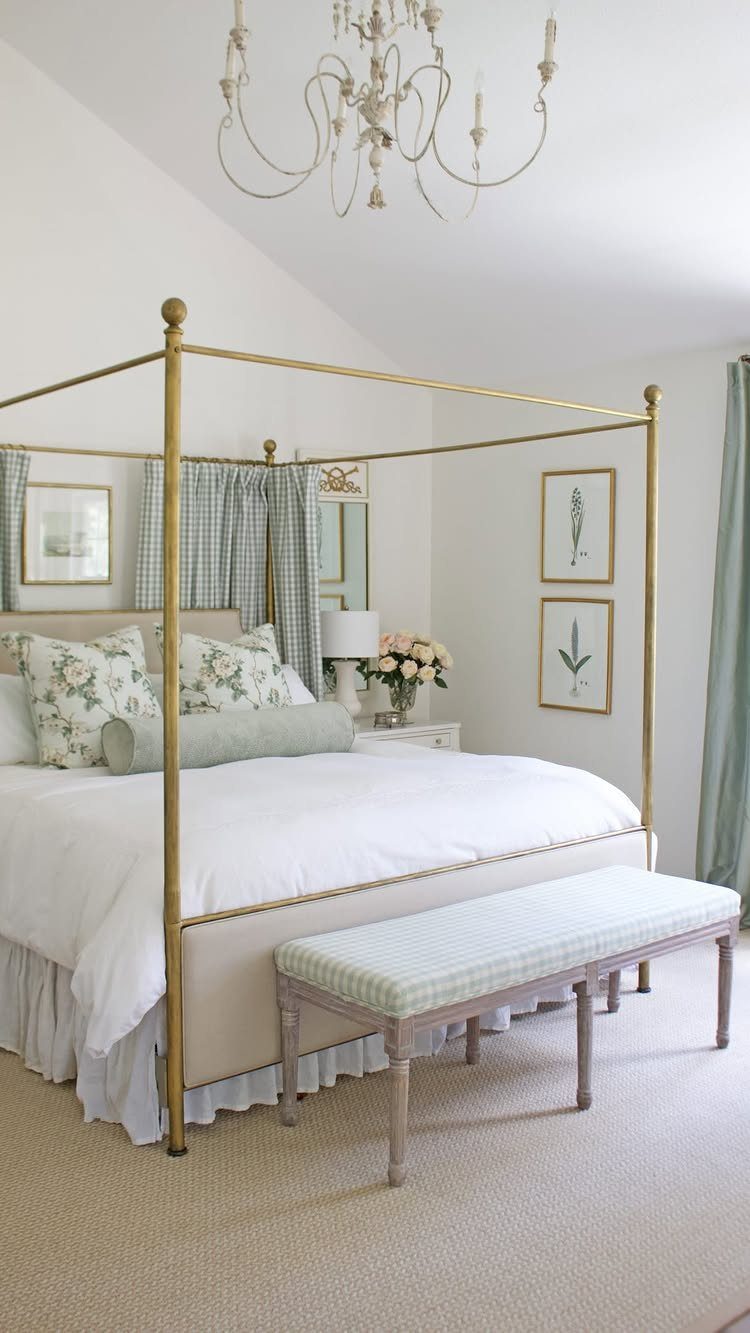
A canopy bed frames sleep as an event. Gold metal reads softer than wrought iron, more bedroom and less garden gate; white bedding keeps it from going theatrical.
Floral pillows plus gingham hangings is a specific combination that could read dated, but clean walls and a single bolster save it.
Reclaimed nightstands ground the metal in something your hand wants to touch. Ceramic lamps there beat metal ones; you already have enough hard surfaces.
The upholstered bench at the foot is for putting on shoes and for the dog; skip it if the room is narrow or the path to the bathroom shrinks to a shuffle.
Fresh greenery in terracotta is the move that keeps the room from feeling preserved.
17. Farmhouse Entryways with Rustic Benches
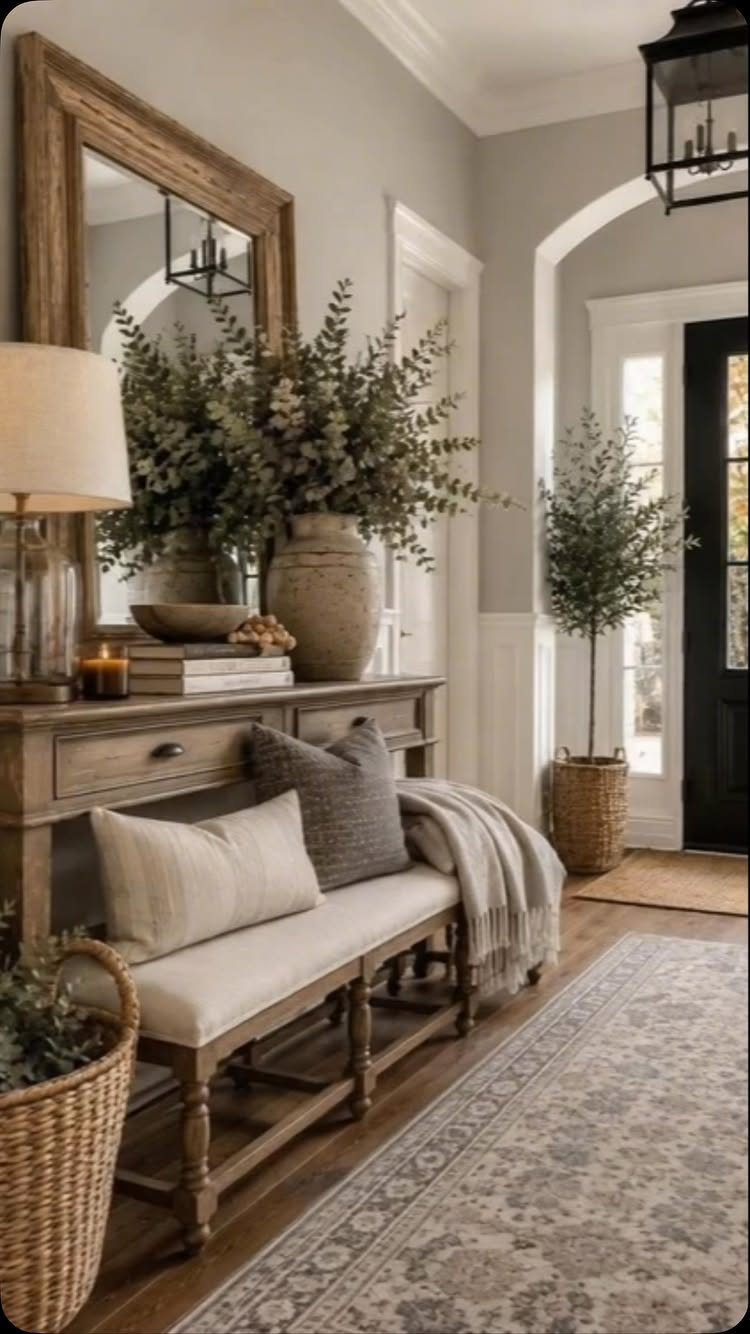
An entryway has a moment to set the terms before anyone is fully inside. A good bench does three things at once: somewhere to sit, somewhere to drop, somewhere to look.
Leah, who put this one together, looks for an anchor, something with height, and something with warmth; the mirror answers height, the bench is both anchor and warmth, and the runner plus plants finish the job.
Woven baskets under the bench store what you don’t want seen; hooks above handle coats without the closet march. A distressed console table adds surface for keys and mail, but the bench is the piece that makes guests linger.
This setup costs more floor space than a slim console alone. In a narrow entry, swap the bench for a wall-mounted shelf with hooks below; you lose the seat but keep the function.
The black-and-white photos in wood frames work because the scale matches the mirror; scatter small frames and the wall goes to clutter fast.
Farmhouse Style Popularity
Farmhouse style keeps drawing searches because it adapts without losing its core. The neutral palette of white, cream, beige, and soft gray lets a room shift with the seasons by swapping pillows or a throw rather than repainting.
Natural materials age in place: a wooden table gains marks that become part of its character, not flaws to hide.
The modern version trims the clutter while keeping the warmth. Clean lines on the cabinetry or lighting pair with rustic wood and vintage finds, which is why the style works in new construction and in houses built a century ago.
Washable rugs in vintage patterns handle the practical side; the farmhouse look is not meant for rooms you only photograph.
The interior designer also recommends “going back to grassroots” when it comes to property’s materials, suggesting people opt for organic elements or items already in circulation. “Farmhouses were all about utilitarianism and using the means of the land,” she says.
Creating a Cozy Atmosphere
A farmhouse room reads cold until the textiles arrive. Linen curtains filter light without blocking it, and cotton throws over a sofa arm signal that the seat is meant for use, not display.
The warmth comes from restraint, not volume. One knitted throw, a woven basket for storage within arm’s reach, and vintage-inspired artwork you actually chose beat a shelf of items bought to fill space.
Slipcovers matter here; they survive the dog, the spilled coffee, and the wash cycle that follows.
Balancing Rustic and Modern
The balance between rustic and modern lives in the textures, not the labels. A woven basket beside a clean-lined lamp bridges the gap without either piece shouting for attention.
Vintage furniture, like a farmhouse table, gains its place when the surrounding chairs or lighting stay contemporary.
Scale keeps the mix from tipping into clutter. A massive antique hutch in a small kitchen overwhelms; the same piece in a room with high ceilings anchors the space.
White, gray, and black stay quiet enough that rustic wood and modern metal can talk to each other without shouting.
Functional Design Principles
Function in farmhouse design starts with storage that works harder than it looks. Built-in shelving, under-bed drawers, and ottomans with hidden compartments keep the surfaces clear without adding furniture.
Comfort is the other half. Oversized sofas in fabrics you can wash, soft rugs underfoot, and throws within reach of the seat make a room you actually sit in.
Natural light matters, but so does the arrangement: place the seating to catch the window and the lamp both, so the room works at noon and at nine.
Frequently Asked Questions
Is farmhouse still in style for 2026?
Yes.
The style keeps drawing searches and new builds because it adapts rather than dates itself; white shiplap and apron sinks now share space with sage cabinets and black metal accents that read current rather than copied from a decade ago.
What is farmhouse interior style?
Farmhouse interior design takes its cues from rural buildings and the materials at hand: weathered wood, linen, stone, and iron used in ways that feel practical first and pretty second.
The look centers on comfort and actual use, with neutral colors and furniture you can live on rather than around.