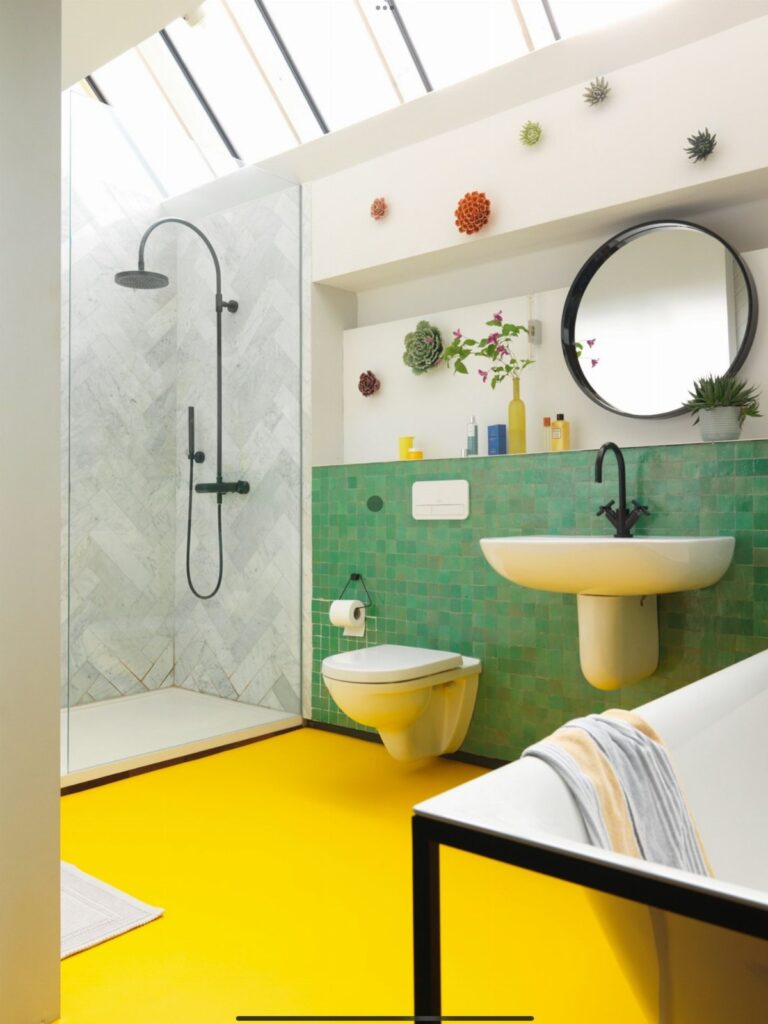
Vinyl flooring design runs from a single sheet of concrete-look vinyl to herringbone planks that eat a whole weekend and a table saw.
The deciding factor is how much of the room you want the floor to own: a small bath can handle a solid yellow or a bold geometric, while an open living area usually needs the quiet of wood-look planks or soft stone.
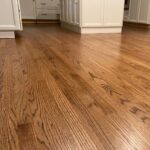
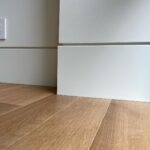
The 7-inch and up widths on modern planks, with beveled edges that cast shadow lines like real boards, are what sold me on how far the printing has come.
[link-whisper-related-posts]1. Patterned Vinyl Flooring
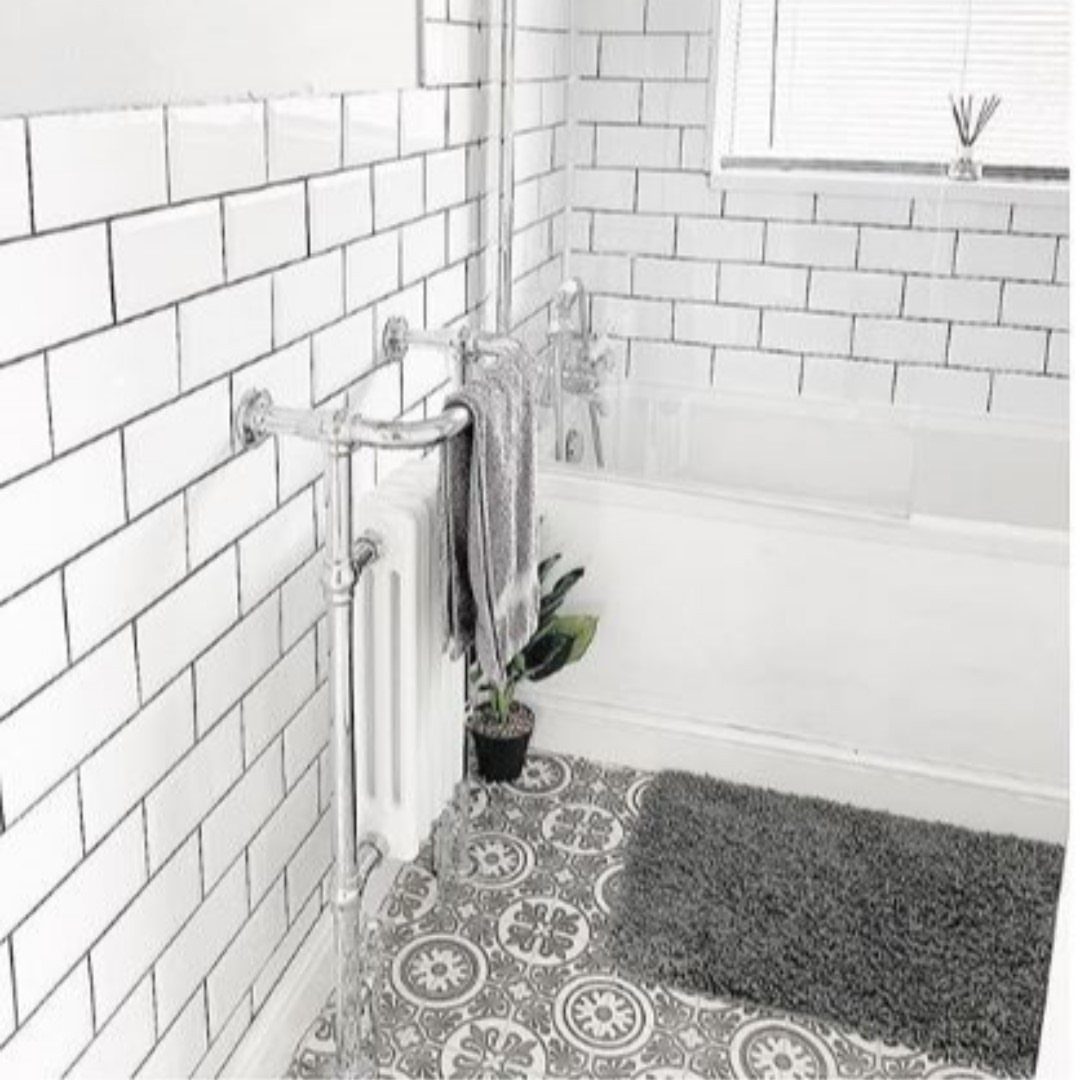
Patterned vinyl works best in a room that already has plain walls and simple fixtures. White walls and fixtures let a patterned floor do all the talking in a small bathroom.
Geometric prints, encaustic reproductions, and Art Deco lines all print cleanly on vinyl at a fraction of what tile would cost. Some manufacturers let you mix colors for a custom border or feature strip.
I would use this in a small bath or entry where you want one strong moment without committing to patterned tile. A busy floor competes with busy walls; quiet surroundings let the pattern work.
2. Wood-Look Vinyl Planks
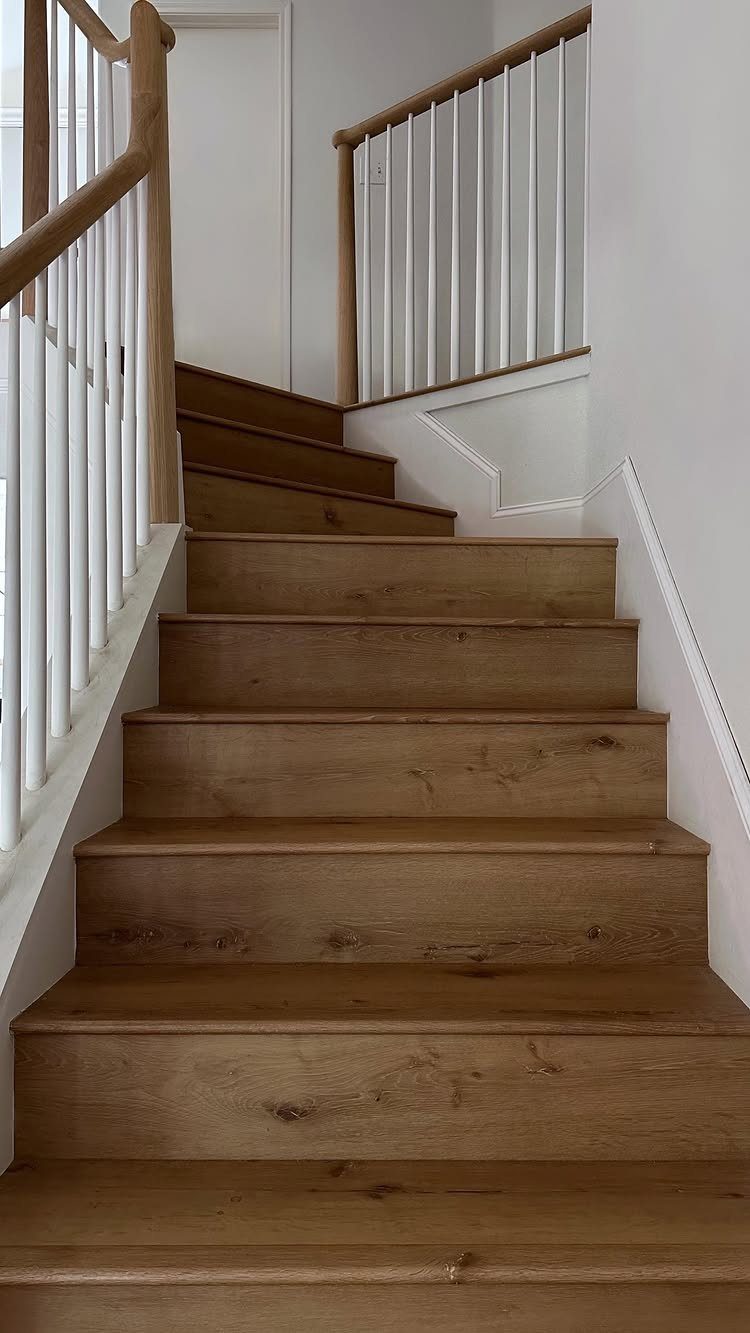
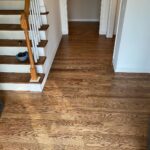
Wood-look planks have gotten convincing enough that I have to look twice at stairs like these to tell.
Modern printing catches grain variation and color shift across the plank, and beveled edges add the shadow lines you expect from real boards.
Wider planks, 7 inches and up, read more contemporary and open up a living area. Lighter tones, whitewashed or gray-washed, brighten rooms that do not get much natural light.
This is the safe choice for a rental or a first home: the warmth of wood without the refinishing bill if a dog scratches it or a sink leaks near it.
3. Bold and Vibrant Colors Vinyl Flooring
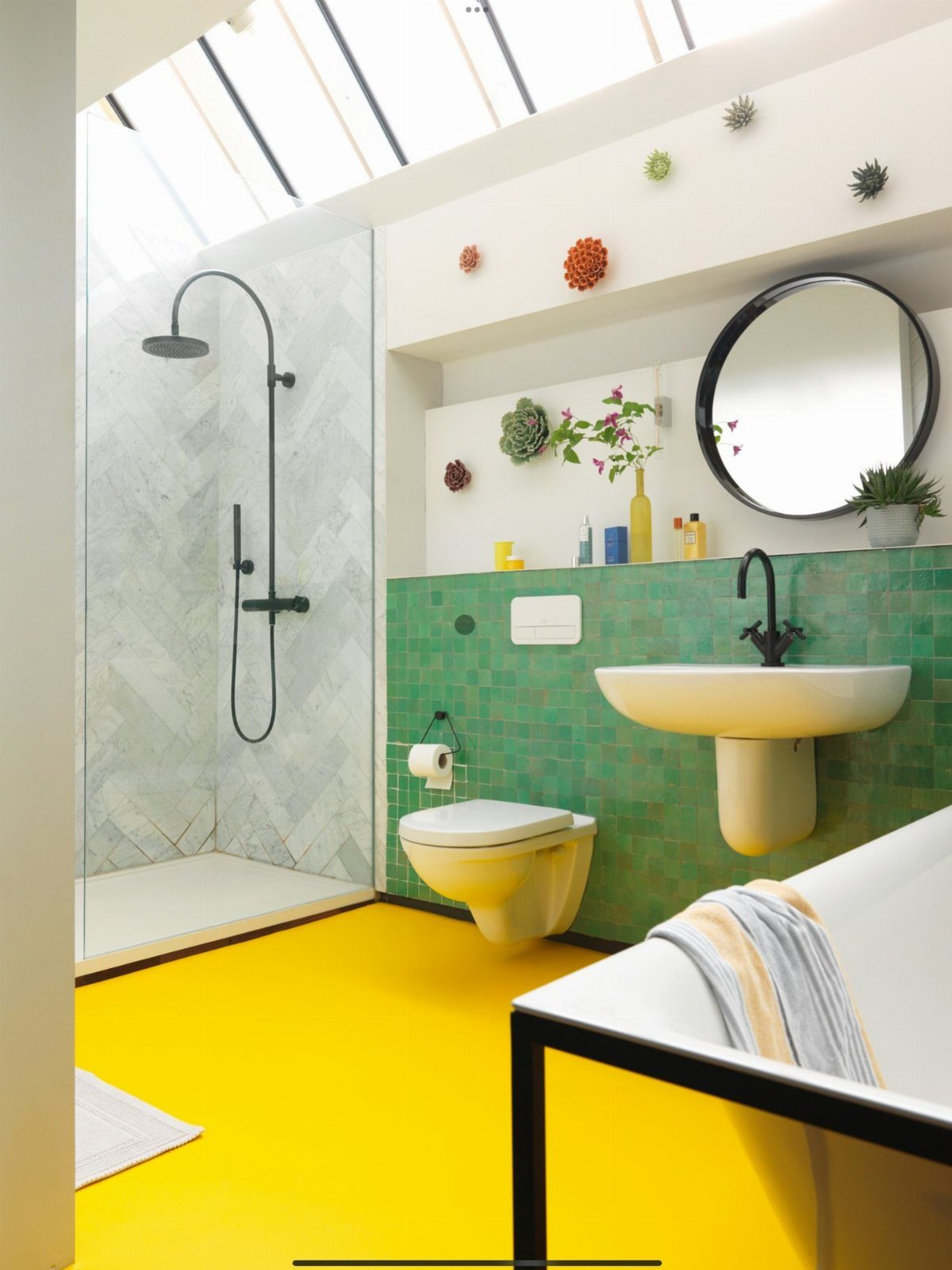
A solid yellow floor sounds like a risk until you see it under a skylight, where the color reads as energy rather than weight.
Cherry red, turquoise, and royal blue vinyl all exist off the shelf now, and jewel tones like emerald and sapphire are showing up more in 2025 lines.
The move is keeping it to a small room: a bath, a laundry, a powder room where you are in and out. In a bigger space the color swallows the room; here it just wakes it up.
Pair it with neutrals on the walls and let the floor be the one loud thing. If you are nervous, a patterned option that mixes the bright with gray or white steps the intensity down.
4. Retro and Graphic Patterns Vinyl Flooring
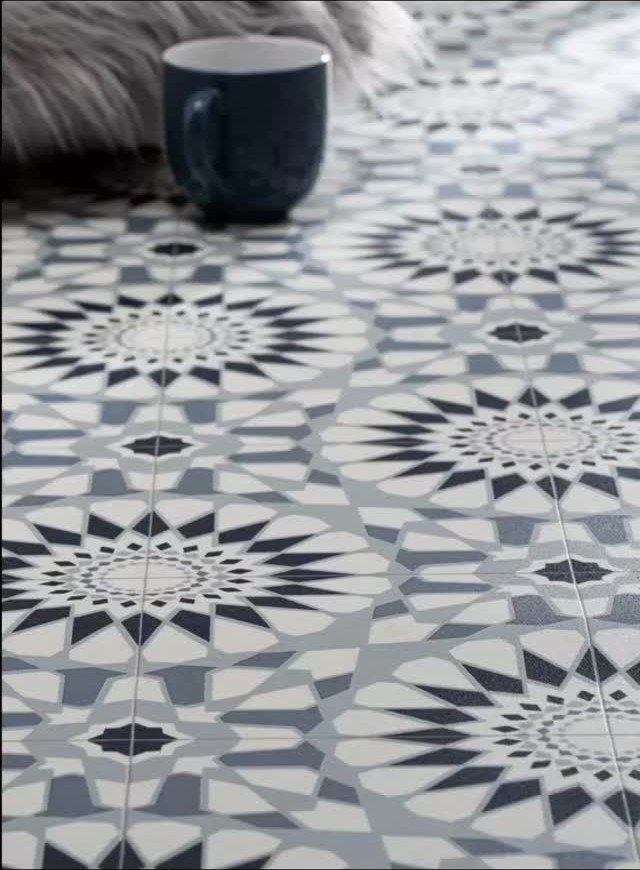
Retro graphic vinyl, circles and scallops and sharp geometry, suits a room that feels too plain and needs character without clutter. A mandala-style print becomes floor art when the rest of the room stays simple.
The question is which shape you keep noticing. Start there.
A color you are drawn to, a graphic you have saved somewhere, a period look you want to nod to. You do not need the whole room planned before you pick the floor.
This pattern type works on tile or sheet vinyl. Tile lets you replace a damaged piece; sheet gives you no seam lines across the pattern.
I would go sheet for a small bath, tile for a kitchen where drops and drags happen.
5. Stone-Look Vinyl Tiles
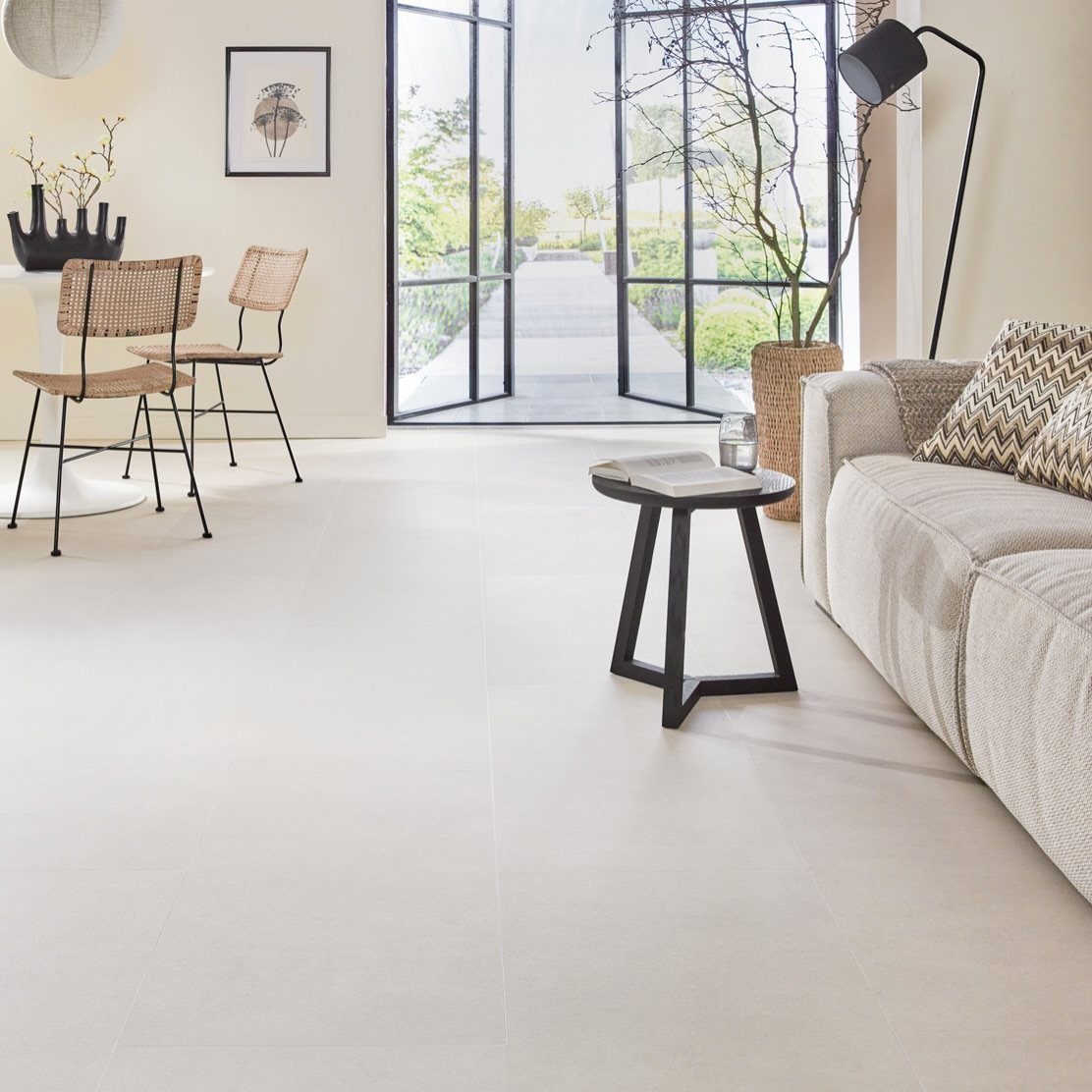
Stone-look vinyl in large formats, 12 by 24 inches or bigger, cuts down on grout lines and reads more like actual stone slab.
Light beige tiles pick up the tones of a linen sofa and wicker chairs without trying to match them exactly.
Marble, slate, travertine, and limestone all replicate well now, with surface texture that adds grip and catches light like real mineral variation. The marble looks especially make sense in kitchens and baths where real stone would stain or etch.
Soft grays and warm whites are the colors I have never tired of after years of living with them. I would use this where I want the cool of stone but not the cold underfoot or the sealing schedule.
6. Herringbone Vinyl Flooring
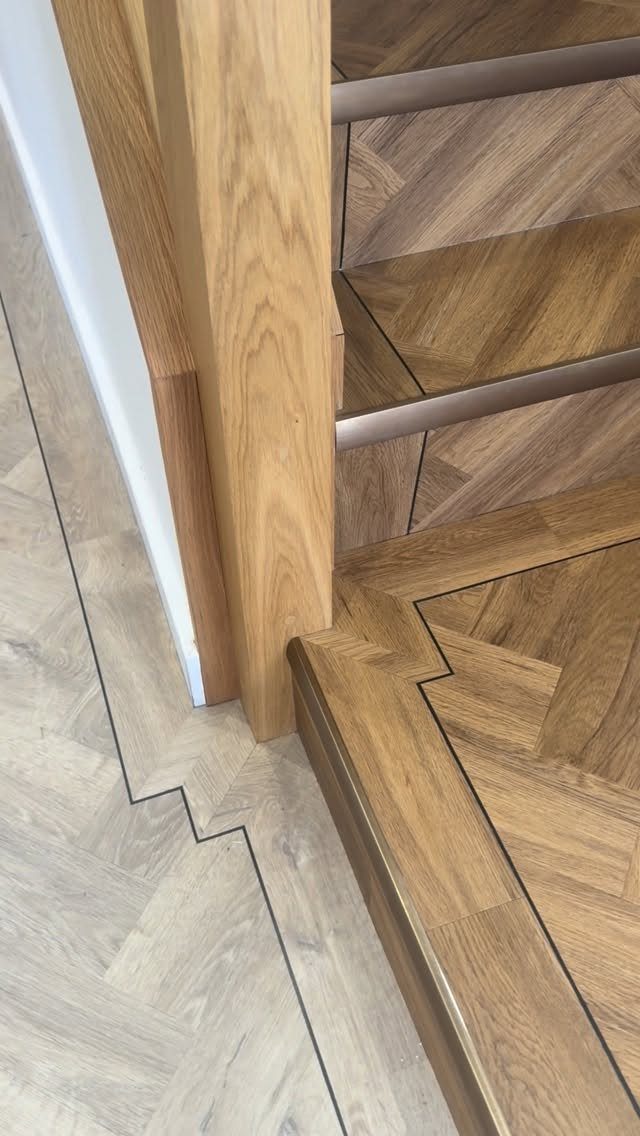
Rectangular planks laid in herringbone form a zigzag by meeting each plank at a right angle. A dark inlay border where the herringbone meets the stairs sharpens the geometry and gives the edge a clean finish.
This pattern pulls the eye across a room and can stretch a smaller space visually. It works in entries, dining rooms, and baths where you want the floor itself to be the design feature.
Every angle cut means waste, and the math gets real when you are buying planks by the box. Every plank needs precise angles, and the layout is unforgiving if the walls are not square.
I would hire this out unless you have a table saw and patience. Chevron, the close cousin, cuts planks to meet in points rather than overlapping; even fussier, even sharper looking.
7. Checkerboard Vinyl Flooring
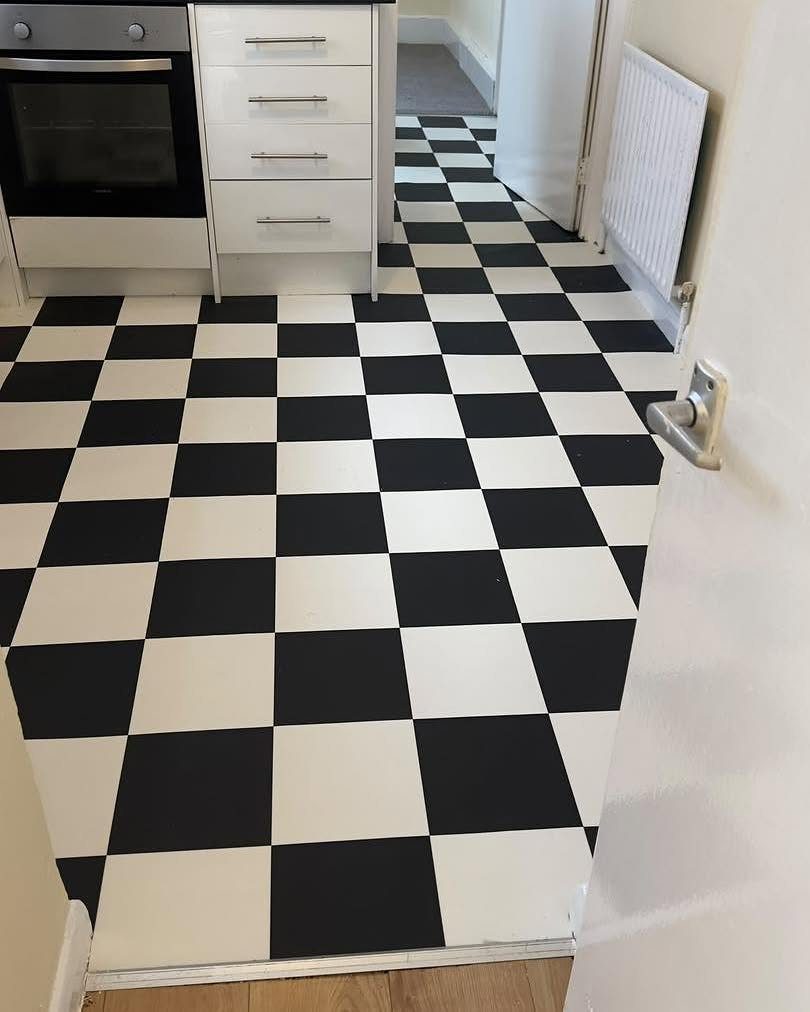
Checkerboard vinyl flooring runs on nothing more than alternating squares of two colors, usually black and white, laid in a grid.
The pattern works in sheet vinyl or tile, and you can spin it softer by pairing two shades of the same color instead of the high contrast.
Installation is straightforward if you start from the center and work outward, but the edges of a kitchen like this one will need partial cuts that eat time. Budget an extra half-day for fitting around cabinets and doorways.
The look reads retro to some eyes and classic to others; it suits a kitchen that already has clean lines and not much visual noise.
In a busy household, the busy pattern shows crumbs and scuffs less than you would expect, though the pale squares need regular sweeping.
Move the sofas closer to the coffee table so people can actually set down a drink.
8. Seamless Concrete-Look Vinyl
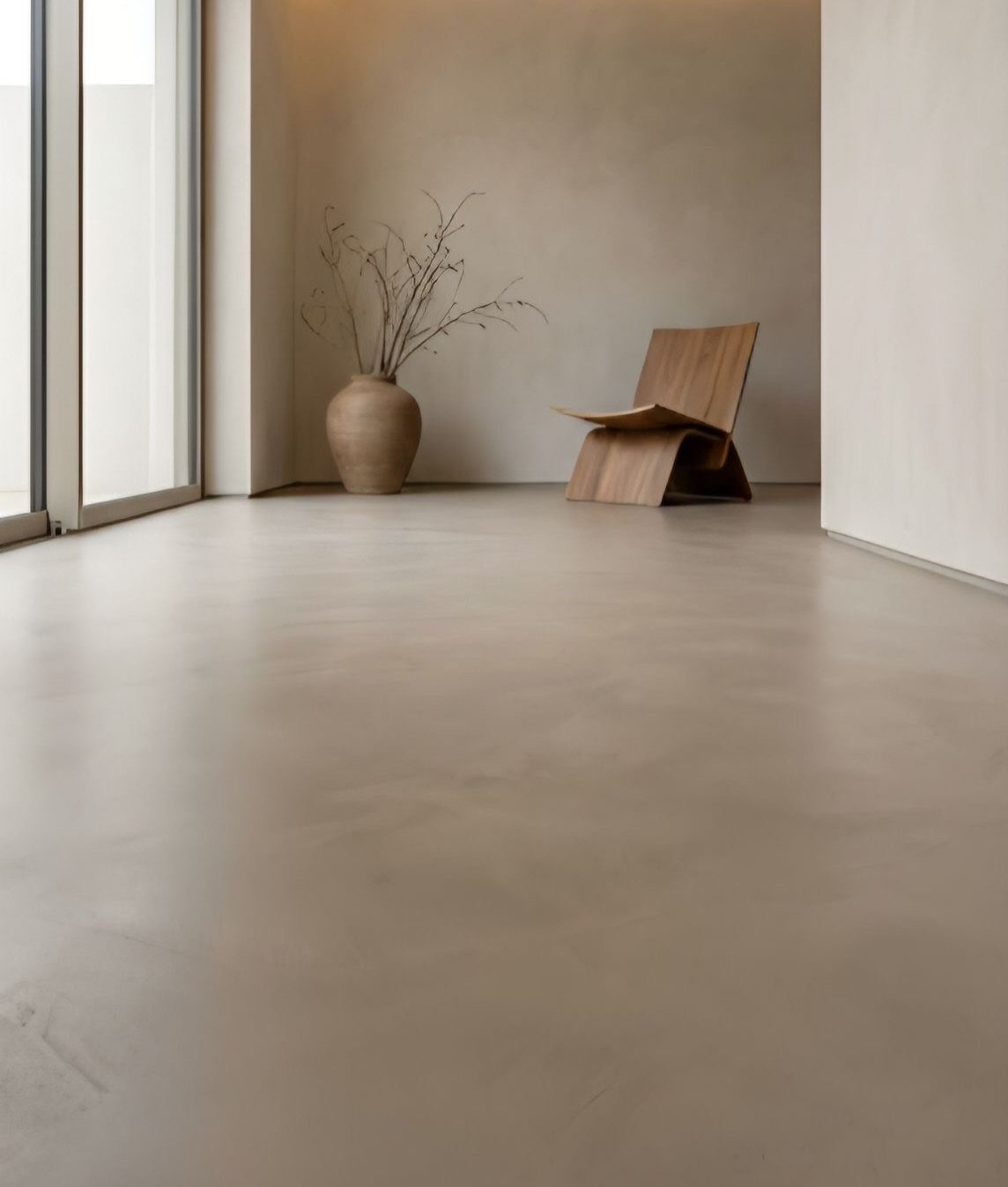
A concrete-look vinyl sheet gives the cool, flat surface of poured concrete without the cold hardness or the crack risk.
Sheet vinyl is the only way to get truly seamless across a large room; tiles will show joints.
Order a single piece sized to your space with extra for trimming, and plan on a perfectly flat subfloor, any bump telegraphs through.
In a loft or open-concept plan, this flooring lets furniture and light become the story. In a smaller room with standard ceilings, it can read flat; a textured concrete-look tile might serve you better there.
Installation Considerations
Most vinyl plank installs go right over the existing floor after a quick sweep and a look for anything loose or uneven.
That is the appeal for a weekend project: no tearing up old tile or leveling compound curing for days.
I would still walk the subfloor with a level. Any bump or dip telegraphs through, especially with thinner planks.
Rigid core products like Nucore or Duralux forgive more, but I would not skip the check.
For wet areas, waterproof vinyl is the right call. Sheet vinyl seams at the edges; plank systems rely on tight locking.
I have seen both work in baths, but sheet feels safer if the toilet ring ever leaks.
Durability and Maintenance
Vinyl handles water, scratches, and stains better than wood or laminate. That is why it ends up in kitchens, baths, and entries where boots and paws hit hard.
Rigid core lines like Nucore and Duralux add dent resistance under heavy furniture or dropped pans. I would spend the small premium for rigid core in a high-traffic house.
The surface keeps its look with regular sweeping and an occasional damp mop. Harsh cleaners are not necessary; warm water and a mild soap do the job.
I would avoid steam mops, which can force moisture into seams over time.
Choosing the Right Style
Start with what you already own. A linen sofa, wicker chairs, or a particular cabinet finish gives you the tone to match or contrast against.
Light catches vinyl differently than it catches tile or wood. A sample that reads warm under a store spotlight may turn flat under your kitchen’s LEDs.
I would hold samples against the wall color at the hour you actually use the room, morning or evening.
If the walls are busy or the furniture is loud, stone-look or concrete-look vinyl quiets the floor so the rest can breathe.
Sample Testing
Order samples for any shortlist. A 4-inch square on a screen hides how the pattern repeats at full scale, and color shifts with the light in your room, not the photographer’s.
Some suppliers send a reduced-scale print. Ask for a visual proof at intended scale before production if you are ordering custom patterned vinyl.
I would lay samples on the actual floor and watch how they look from morning light through evening lamp light before deciding. The one you keep walking past favorably is the one.
Frequently Asked Questions
What is the best pattern for vinyl flooring?
The best pattern depends on what you want the room to do. Hexagons, Moroccan tile prints, and bold repeating shapes all print cleanly on vinyl and wake up a plain room without extra furniture.
Herringbone stretches a small space visually; checkerboard reads retro or classic depending on the colors you pick.
What are the negatives of vinyl flooring?
Sheet vinyl needs a perfectly flat subfloor; any bump telegraphs through.
Is luxury vinyl flooring cheap looking?
Modern printing has gotten convincing enough that I have to look twice at some wood-look stairs to tell.